
Shankaracharya Temple
Jyeshteshwara Temple · Gopadri Temple · Takht-i-Sulaiman
About
Gopadri Hill rises steeply above Srinagar, and near its summit stands a Temple whose sacred lineage is considered the oldest in the Kashmir Valley. Consecrated to Shiva, worshipped here as Jyesthasvara, the shrine commands a panorama that encompasses Dal Lake, the Jhelum river, and the wider Kashmir Valley. Pilgrims and devotees reach it either by a road that branches from Boulevard Road near Gagribal or by ascending roughly 240 stone steps cut into the hillside.
The structure itself is built on a solid rock foundation. An octagonal plinth about six metres high, each of its eight faces roughly 4.5 metres wide, carries a square chamber on top. Within, the inner sanctum takes a circular form: a dim, contemplative space approximately 6.6 metres across, its ceiling upheld by four octagonal pillars. At the centre rests a basin holding a Liṅgam encircled by a serpent. An enclosed stairway running between two flanking walls leads up to the terrace surrounding this inner chamber, and a doorway on the far side from the stairs opens into the sanctum.
The hill has gathered many names across the centuries, Gopadri, Sandhimana-parvata, Koh-e-Suleman, and Takht-i-Sulaiman among them. The Dharmarth Trust has overseen the shrine's management since the nineteenth century and has constructed two small shelters on the slopes for wandering ascetics. Both the Temple and the land immediately around it are classified as a Monument of National Importance, maintained under the Archaeological Survey of India. On Herath, the Kashmiri name for Maha Shivaratri, the hilltop fills with worshippers, and during the Amarnath Yatra, on the new-moon night, a rite of bringing Shiva's holy mace here is observed.
History
Kalhana's twelfth-century chronicle, the Rajatarangini, names this hill Gopadri and credits King Gopaditya with granting land at its foot to Brahmin settlers and with raising a shrine to Jyestheshvara at its summit, a founding tradition places around 371 BCE. Jammu and Kashmir's own tourism authorities separately record a belief that a shrine here was first built by a son of the Mauryan emperor Ashoka in the second century BCE. Scholars have long disputed the age of the structure standing today: writing in 1899, James Fergusson placed its visible superstructure in the seventeenth or eighteenth century, while Aurel Stein, examining the same stones, judged the base and stairway far older. Kashmiri Hindus hold that Adi Shankara himself climbed this hill and there composed the Saundarya Lahari, and it is from his name that both hill and Temple are now known. The Dogra ruler Gulab Singh built the stone steps on the Durga Nagar side in the nineteenth century, the Maharaja of Mysore endowed electric lighting for the shrine in 1925, and in 1961 the Shankaracharya of Dwarka Peetham placed a statue of Adi Shankara within.
Significance
Held by devotion and by scholarship alike to be the oldest Temple in Kashmir, the shrine draws Kashmiri Hindus in particular force on Herath, the Kashmiri observance of Maha Shivaratri, and during the Amarnath Yatra, when Lord Shiva's holy mace is carried here on the night of the new moon. Its terrace holds the most celebrated panorama in Srinagar, Dal Lake, the Jhelum, and Hari Parbat spread below, so that a climb undertaken for worship becomes, at the summit, a vision of the whole valley. Protected today as a Monument of National Importance under the Archaeological Survey of India, it continues as a living shrine rather than a relic, its ancient Lingam still anointed within the small circular sanctum at its heart.
Architecture
Ancient Kashmiri Temple architecture on a solid-rock foundation; an octagonal plinth roughly six metres high carries a square chamber, its circular inner sanctum ringed by four octagonal pillars
Visiting
Hours
Hours not listed.
Contact
No contact details listed yet.
Address
Engage with Shankaracharya Temple
Through the four pathways
Seva सेवा — Service
Offer your time and skills here. The following opportunities are open at Shankaracharya Temple:
No Seva offerings listed yet.
Sādhana साधना — Practice
Learn the worship and practice associated with Shankaracharya Temple:
No Sādhana offerings listed yet.
Sandhāna सन्धान — Wisdom
Unite with the wisdom of this tradition:
No Sandhāna offerings listed yet.
Sādhya साध्य — Giving
Support this sacred place according to your means:
No Sādhya offerings listed yet.
All giving flows directly to Shankaracharya Temple. Adisthan does not take a commission.
Festivals & Events
- Mar
Herath (Maha Shivaratri)
6 March 2027 · annual
The Kashmiri observance of Maha Shivaratri and the valley's foremost Hindu festival, when Kashmiri Hindus gather at the hilltop shrine to keep vigil for Lord Shiva.
Gallery
Related sacred places
 Hinduism
Airavatesvara Temple, Darasuram
Darasuram (Kumbakonam) · India · temple
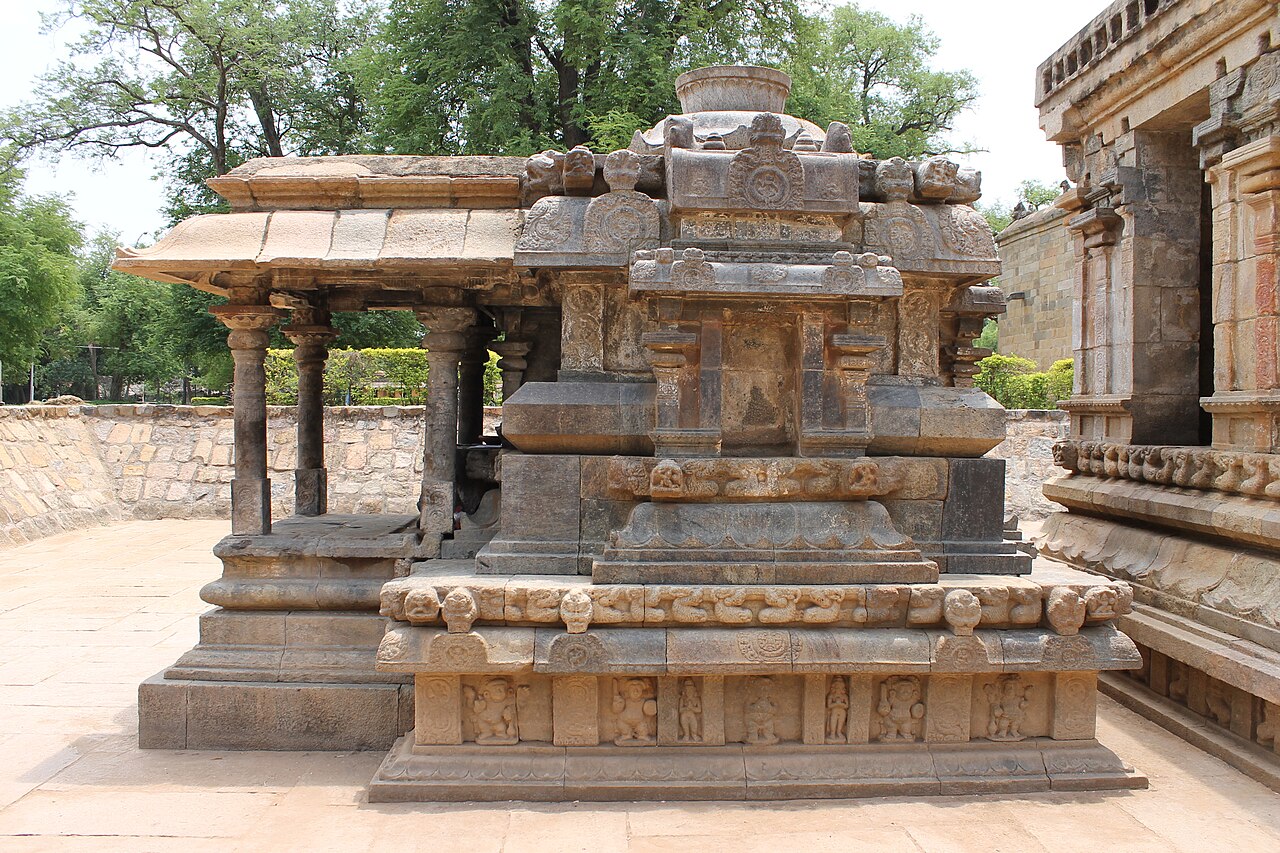
The third of the Great Living Chola Temples, raised by Rajaraja Chola II around 1166 CE at Darasuram near Kumbakonam: a chariot-form shrine of Lord Shiva as Airavatesvara, famed for its carved stone wheels, its singing steps, and worship that has continued for over eight centuries.
Aisanyesvara Siva Temple
Bhubaneswar · India · temple
A living thirteenth-century Shiva shrine in the Old Town of Bhubaneswar, standing close to the western wall of the great Lingaraj Temple, where a Shivalinga set within a circular yonipitha still receives daily worship in the Kalinga architectural tradition.
 Hinduism
Akhadachandi Temple
Bhubaneswar · India · temple
A tenth-century Kalinga-style shrine on the southwestern bank of Bhubaneswar's sacred Bindusagar tank, Akhadachandi Temple honours Maa Mahishasuramardini, the Goddess in her form as slayer of the buffalo demon, within the dense cluster of ancient shrines that fills the city's Old Town.
 Hinduism
Akshardham
New Delhi · India · temple
A vast contemporary Hindu mandir campus on the Yamuna's west bank in East Delhi, raised without structural steel by 11,000 artisans and volunteers, and recognised by Guinness World Records in 2007 as the world's largest comprehensive Hindu Temple.
 Hinduism
Amarnath Temple
· India · temple
A high Himalayan cave shrine in Jammu and Kashmir where a naturally forming ice lingam is venerated as Lord Śiva, drawing one of India's great seasonal pilgrimages.
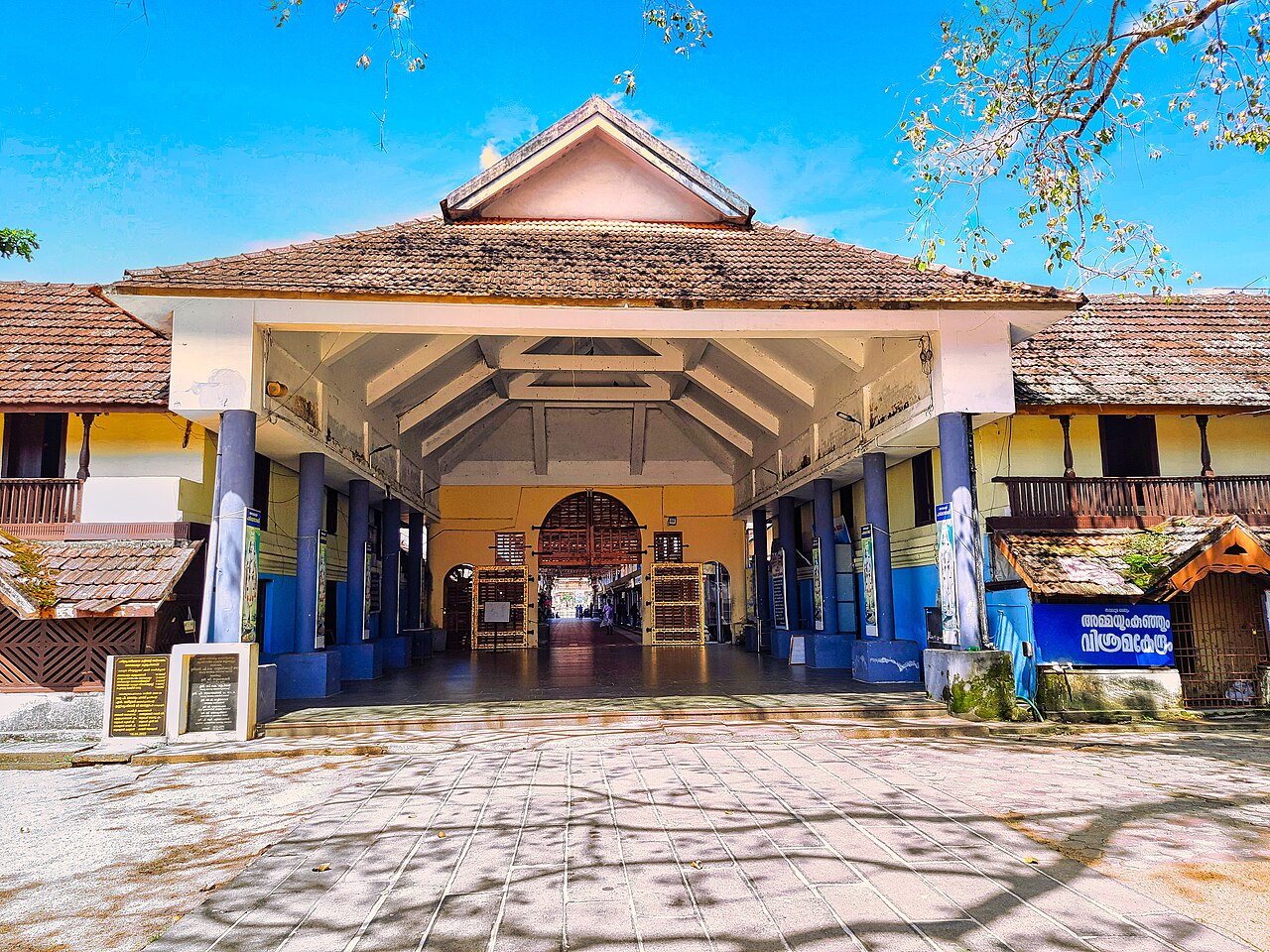 Hinduism
Ambalappuzha Sri Krishna Temple
Ambalappuzha · India · temple
A Vaishnava shrine on the Kerala backwaters consecrated to Sri Krishna in his Parthasarathy form, counted among the seven great Temples of the former kingdom of Travancore and famed across South India for its Ambalapuzha Paal Payasam offering.