I shall be active and vigorous even from the tomb, he said. Shirdi lives inside that promise.
Be the first to check in
Coming up: Vijayadashami · Shri Sai Baba Punyatithi · 20 OctEntry tended 1 Jul 2026
Open 4:45 am · Shej Aarti 10 pm Four aartis daily, Kakad at 5:15 am Punyatithi · 20 Oct 2026 Darshan free · paid pass ₹200 Free meals for all at the Prasadalaya
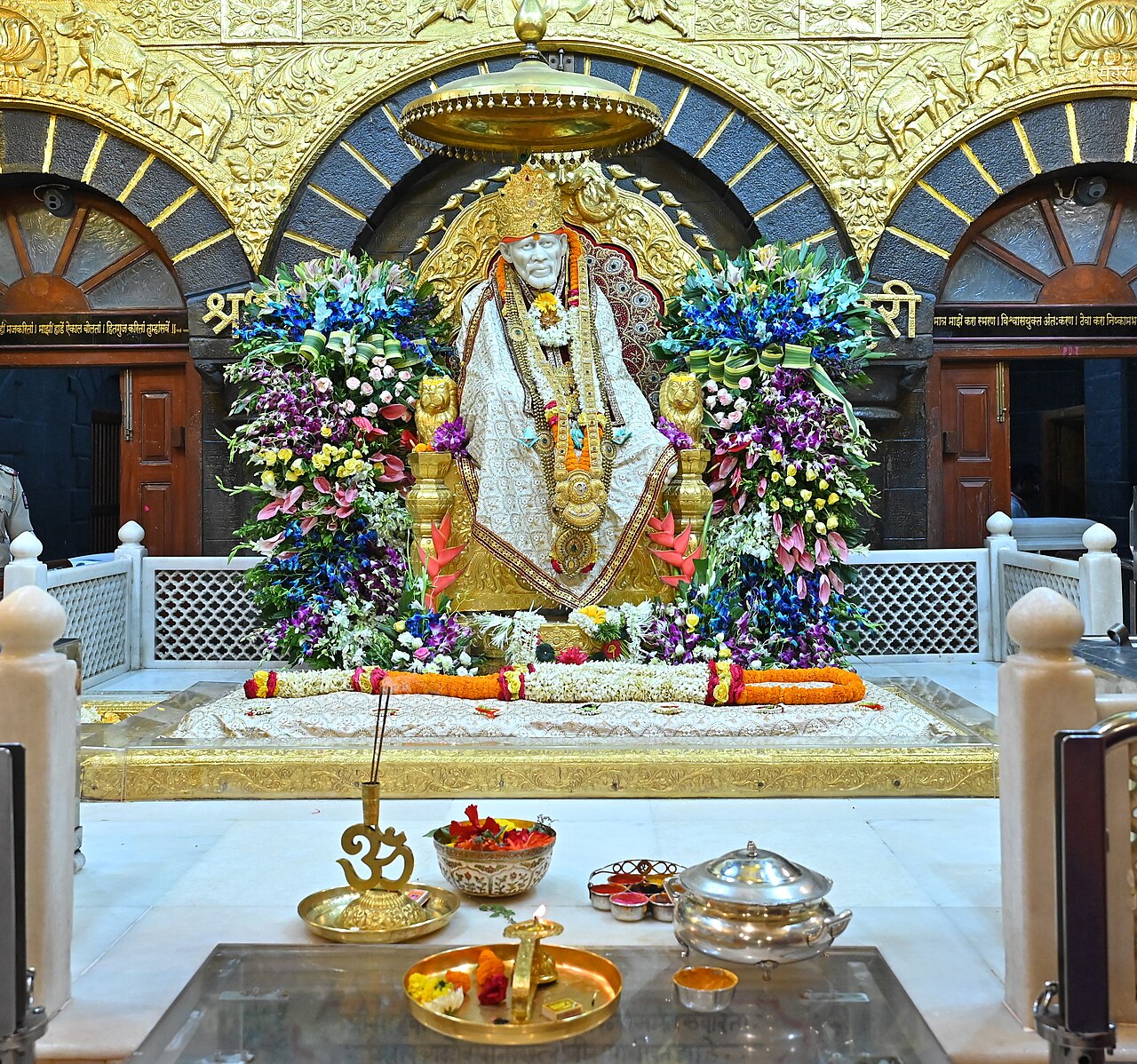
Long before the gates you hear it: Sai Ram, Sai Ram, a murmur moving with the queue like slow water. Marigold sellers call out, incense drifts over the lane, and above the grey stone the golden spire catches the light. Inside, a white marble figure sits above the tomb, dressed and garlanded each day like a living guest. Walk two minutes further and you are standing in a mosque, before a fire that has never gone out. A Temple and a mosque hold this village together, and no one in Shirdi finds that strange.
Beneath the marble statue rests Shri Sai Baba himself, interred here in 1918. He told his devotees, "I shall be active and vigorous even from the tomb", and Shirdi treats his samadhi not as a memorial but as a living presence.
A short walk away stands Dwarkamai, the small mosque that was Baba's home for most of his life. The dhuni, the sacred fire he lit and tended, is kept perpetually burning, and its ash, udi, is still given to devotees as his blessing.
Hindus and Muslims worshipped him side by side in his lifetime and do so still. Asked which faith was his, he refused to choose between them, and his teaching holds the village together to this day: Sabka Malik Ek, one Master governs all.
The fakir who stayed
Around 1858 a young fakir arrived in Shirdi and sat beneath a neem tree, silent, absorbed in meditation. Mhalsapati, priest of the Khandoba Temple, greeted the stranger as Sai, and the name stayed. For years the tree was his only shelter; the spot beneath it is honoured today as Gurusthan, the place of the Guru, where Baba said the tomb of his own teacher lay. He then made his home in a ruined village mosque, and gave it a name no one expected: Dwarkamai, after Krishna's own city.
In that mosque he lived out his years. He kept a fire burning day and night and gave its ash as a blessing and a cure. The name of Allah was ever on his lips while he welcomed Hindu worship and ritual around him. In 1897 he blessed an Urs fair in the village; from 1912 the same days carried the celebration of Ram Navami, and the two festivals have walked together in Shirdi ever since. From around 1909 he slept on alternate nights at the Chavadi across the lane, carried there in procession, and the aartis that now shape every Shirdi day began around that rhythm.
In his last years a wealthy devotee, Bapusaheb Booty, dreamt that Baba told him to build a wada with a shrine inside. The great stone house rose beside the mosque, its sanctum intended for a statue of Murlidhar Krishna. On Vijayadashami day, 15 October 1918, Baba left his body, and tradition holds he had already told his devotees where he would rest. The space prepared for Murlidhar received Sai Baba himself, and Buti Wada became the Samadhi Mandir.
What you'll actually see
1
The marble form above the tomb
In the sanctum of the old stone wada, Baba's tomb of white marble lies before his statue, carved by the sculptor Balaji Vasant Talim and installed in 1954, thirty-six years after his mahasamadhi. The figure sits at ease under a gilded canopy, dressed and garlanded daily, and pilgrims say the eyes follow you as you pass.
2
Dwarkamai and the fire that never went out
The mosque Baba named Dwarkamai keeps the dhuni he first kindled, tended without interruption behind a low rail. Devotees receive udi, the fine grey ash of this fire, as Baba gave it in his lifetime. The room is small, smoke-darkened and utterly unadorned; many pilgrims call it the heart of Shirdi.
3
Gurusthan and the Chavadi
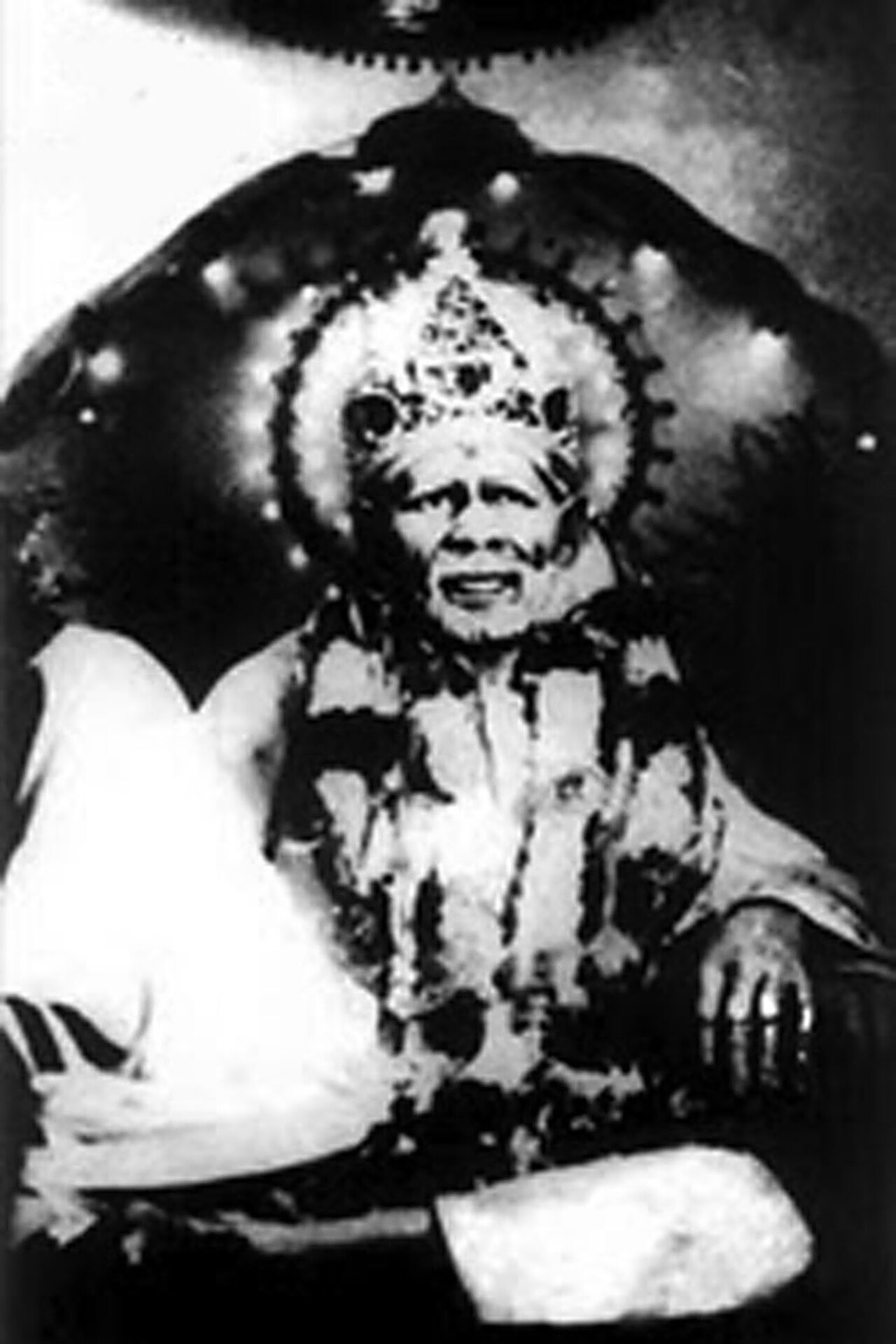
At Gurusthan the neem tree that sheltered the young fakir still stands, over marble padukas installed in 1912 while Baba lived. Across the lane is the Chavadi, the village hall where he slept every other night in his last decade, now kept as a shrine, its mirrors and chandeliers surviving from a renovation his devotees made for him.
The samadhi and marble statue of Shri Sai Baba dressed and garlanded inside the Samadhi MandirSai Baba of Shirdi himself, photographed seated in the Chavadi wearing a crown placed by his devotees
Within the Samadhi Mandir, and Sai Baba himself at the Chavadi · photos CC BY-SA 4.0 and public domain, Wikimedia Commons
THE DAY HE CHOSE
Vijayadashami, the Punyatithi of Shri Sai Baba
Sai Baba left his body on Vijayadashami day, 15 October 1918, and every year since, Shirdi has kept Vijayadashami as his Punyatithi, the anniversary of his samadhi. The Sansthan marks it as one of the three great festivals of the year, with unbroken reading of the Shri Sai Satcharita and the palkhi and chariot processions through the lanes Baba walked between Dwarkamai and the Chavadi. In 2026 Vijayadashami falls on Tuesday 20 October.
Expect Shirdi's largest crowds of the year; book accommodation and any darshan or aarti passes on online.sai.org.in well in advance.
Plan your visit
By air
Shirdi Airport (SAG) about 17 km from the Temple; Aurangabad about 112 km; Pune about 201 km.
By rail
Sainagar Shirdi station about 4 km; Kopargaon about 17 km; Manmad Junction about 61 km.
By road
On the Ahmednagar to Manmad road, NH 160; Ahmednagar 80 km, Nashik 90 km. State and private buses run from Mumbai, Pune, Nashik, Aurangabad and Hyderabad.
Timings
Temple opens 4:45 am with Bhupali; Kakad Aarti 5:15 am, Madhyan Aarti 12 noon, Dhoop Aarti at sunset, Shej Aarti 10 pm. Darshan queue runs roughly 6 am to 9:30 pm.
Passes
Darshan is free. A paid darshan pass is ₹200; seats at the aartis cost ₹400 to ₹600, Kakad the dearest. Book only at online.sai.org.in or the Sansthan's own counters.
Best time
Come for Kakad Aarti at dawn, when the queue is shortest and the mandir is quietest. Thursdays, Baba's own day, bring the evening palkhi procession and the biggest ordinary-day crowds.
Dress
No strict gate rule, but modest dress is expected inside the Samadhi Mandir: shoulders and knees covered.
On foot
Samadhi Mandir, Dwarkamai, the Chavadi and Gurusthan all stand within one small complex, a few minutes' walk apart.
Mobile phones are not allowed inside the Samadhi Mandir; lockers and a cloakroom near the entrance hold phones, bags and shoes for a nominal charge.
The Sai Prasadalaya, open 10 am to 10 pm, serves a full free meal of dal, chapati, rice, vegetables and a sweet to every visitor; its kitchen runs on 73 rooftop solar dishes and has been cited as the largest solar cooking system in the world.
Udi, the ash of the Dwarkamai dhuni, is the prasad of Shirdi; devotees carry it home as Baba's blessing.
The Sansthan authorizes no agents; book darshan, aarti seats and rooms only through online.sai.org.in or at the Temple's own offices.
Questions pilgrims ask
Is Shirdi Sai Baba the same as Sathya Sai Baba?
No. Shri Sai Baba of Shirdi lived in this village and took mahasamadhi here in 1918. Sathya Sai Baba of Puttaparthi (1926 to 2011) was a later teacher who took the name. This page is the Shirdi shrine, where Sai Baba himself is interred.
Was Sai Baba Hindu or Muslim?
He never answered that question with one word, and his devotees stopped needing him to. He lived in a mosque he named Dwarkamai, spoke the name of Allah, welcomed Hindu worship around him, and is buried in a Temple. Both communities revered him in his lifetime and both come to his samadhi today.
Is darshan free, and how long is the wait?
Darshan of the samadhi is free for everyone. On ordinary days the queue can take an hour or more, and several hours on Thursdays and festival days. A ₹200 paid pass from online.sai.org.in moves you through a shorter line, and seated places at the four daily aartis can be booked for ₹400 to ₹600.
What is udi?
Udi is the fine ash of the dhuni, the sacred fire Baba kept burning in Dwarkamai. In his lifetime he gave it to visitors as blessing, protection and medicine, and the fire is still tended so that udi can be given today.
Can people of any faith visit?
Yes. Devotees of every faith take darshan in the Samadhi Mandir, sit in Dwarkamai, and eat together in the Prasadalaya. Sabka Malik Ek, Baba taught: one Master governs all.
Dharamshalas and guest houses near this Sthan, shared by devotees. Adisthan takes no bookings and no money; contact each stay directly.
No stays are listed here yet. Know one that serves pilgrims well?
Are you with the Shree Saibaba Sansthan Trust? Claim this page to keep timings, festival dates and darshan guidance true for the devotees who plan their journey here.