Arulmigu Subramaniya Swamy Temple
Five camps remember the war. This hill remembers the peace that followed it.
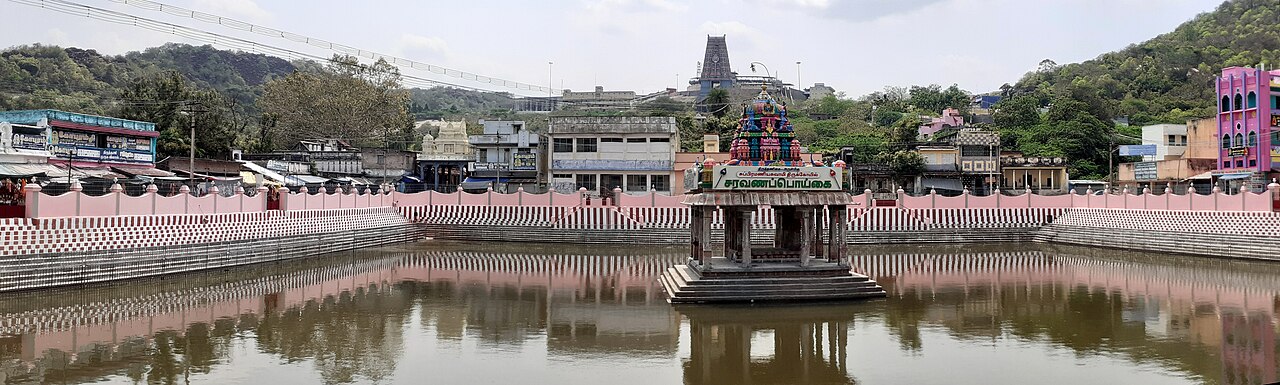
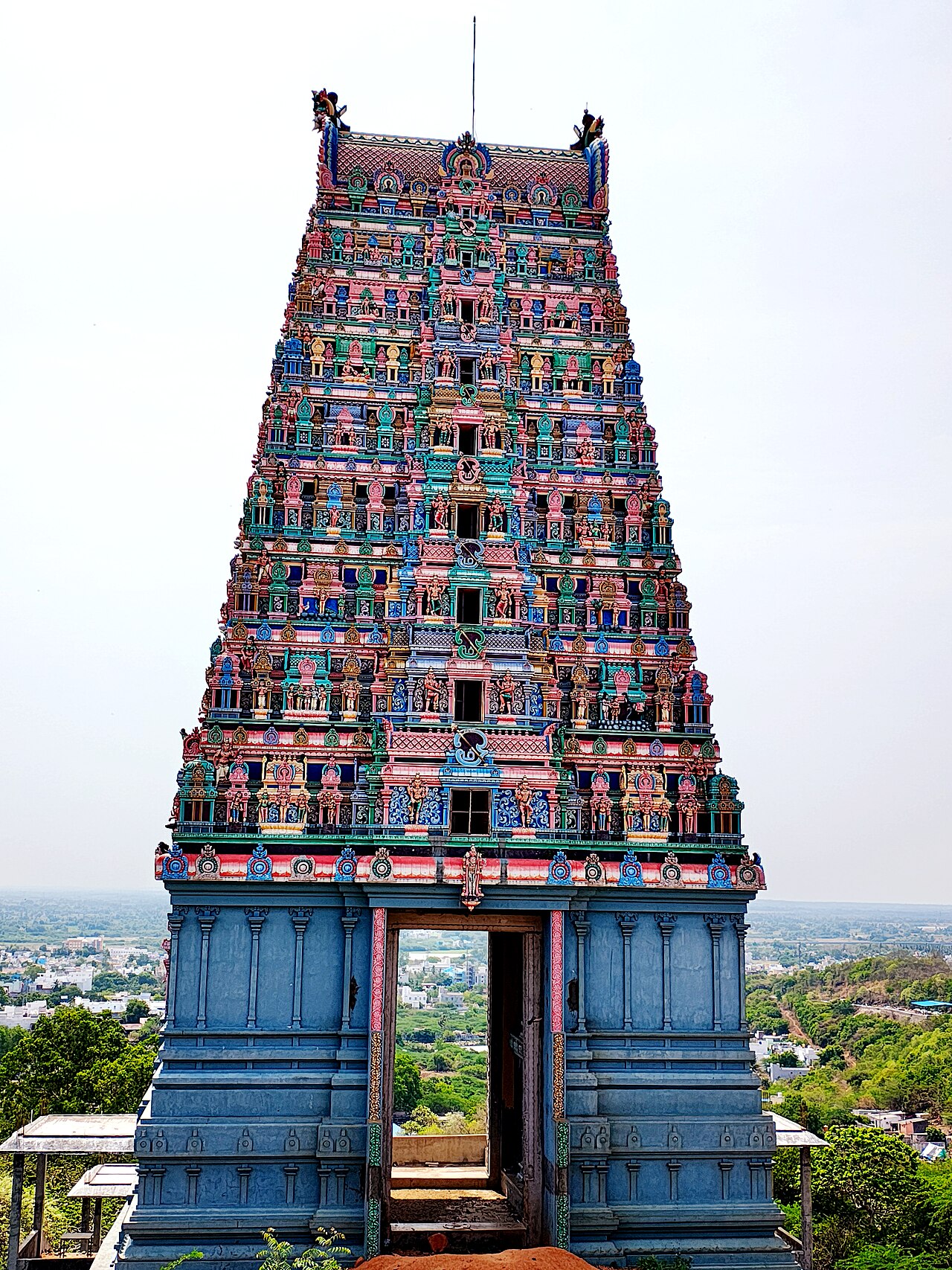
You count as you climb, because these steps ask to be counted: three hundred and sixty five of them, one for each day of the year, rising out of the town toward a painted gopuram against the sky. Below you the square tank of the Saravana Poigai holds the hill's reflection still; around you pilgrims climb with milk pots on their heads, murmuring His name. The other camps of Lord Murugan remember His war. Tiruttani is the hill where He set His anger down. This is the camp of peace.
The hill where the war ended
The legend says that when the long war against the asura Surapadman ended at the seashore of Tiruchendur, Lord Murugan did not rest there among the spoils. He came inland, to a quiet hill above the plains, and here the heat of battle finally left Him. The Tamil name keeps the memory: seru, anger, and thani, sated. Tiruttani is the hill where the Lord's anger was quenched, and the old texts call the place Shantipuri, the city of peace. Tradition adds a promise the Lord made on this hill: that whoever worships Him here with heart and soul for five consecutive days will be blessed in this life and beyond it.
Peace brought love. In the forests of Vallimalai close by, tradition holds, the Lord took the form of a hunter to win Maa Valli, the honey gatherer's daughter, and the tellings of this Temple say He married Her at Tiruttani and made the hill Their home. Maa Deivanai, raised by Indra and wed to the Lord at Thiruparankundram, abides here too: both consorts have Their own shrines beside Him, and the Temple keeps both weddings in its calendar, Maa Deivanai's in Chithirai and Maa Valli's in the Masi festival.
The hill has been sung for as long as Tamil has been written. The Sangam poem Thirumurugatrupadai, attributed to the poet Nakkirar, guides the seeker through six abodes of the Lord, and its fifth movement, Kunruthoradal, the Lord Who dances on every hill, is counted at Tiruttani above all hills. The saint Arunagirinathar raised his Thiruppugazh hymns to this shrine in the fourteenth century, and a statue of him stands in the courts. Centuries later the young Muttuswami Dikshitar received sugar candy from the Lord's own hand here, tradition says, and answered with the first kriti of Carnatic music's great trinity. The stone that holds all this rose under the Cholas and the Vijayanagara kings.
What you'll actually see
Aadi Krithigai · 6 August 2026
Krittika is the star of the Lord's birth, and when it rises in the Tamil month of Aadi, Tiruttani becomes a moving river of devotees. Lakhs come by train and on foot, and the 365 steps disappear under a sea of pushpa kavadis, arches of flowers and peacock feathers swaying shoulder high, and pal kudams of milk carried up to the sanctum. The Lord and Maa Valli are borne in procession from the Saravana Poigai at the foothills up to the hilltop shrine, and for three evenings, 6 to 8 August 2026, decorated floats carry the deities across the waters of the tank in the Theppotsavam. In 2026 the Krittika star enters on the evening of Thursday 6 August, and the Temple keeps the festival from that evening.
Plan your visit
Find your way
Get directions →Good to know
- The name Tiruttani is read as seru plus thani, anger quenched: this is the hill where the Lord's wrath cooled after the war, and its old names include Shantipuri, the abode of peace.
- Tradition holds that at this shrine Lord Murugan placed sugar candy on the tongue of the young Muttuswami Dikshitar, who answered with his first kriti, Srinathadi Guruguho, and signed every composition thereafter with the Lord's name Guruguha.
- On the night of 31 December, bhajana parties climb through midnight singing Thiruppugazh and lighting camphor on each of the 365 steps, one flame for each day of the year ahead, a custom begun under the British Raj by Vallimalai Swamigal.
- Arunagirinathar sang Thiruppugazh hymns to this hill in the fourteenth century; his statue stands within the Temple.
Questions pilgrims ask
The living calendar
Continue your Yatra
Where pilgrims rest
Dharamshalas and guest houses near this Sthan, shared by devotees. Adisthan takes no bookings and no money; contact each stay directly.
No stays are listed here yet. Know one that serves pilgrims well?