Sun Temple, Modhera
Modhera Sun Temple · Surya Mandir, Modhera · सूर्यमंदिर, મોઢેરા
About
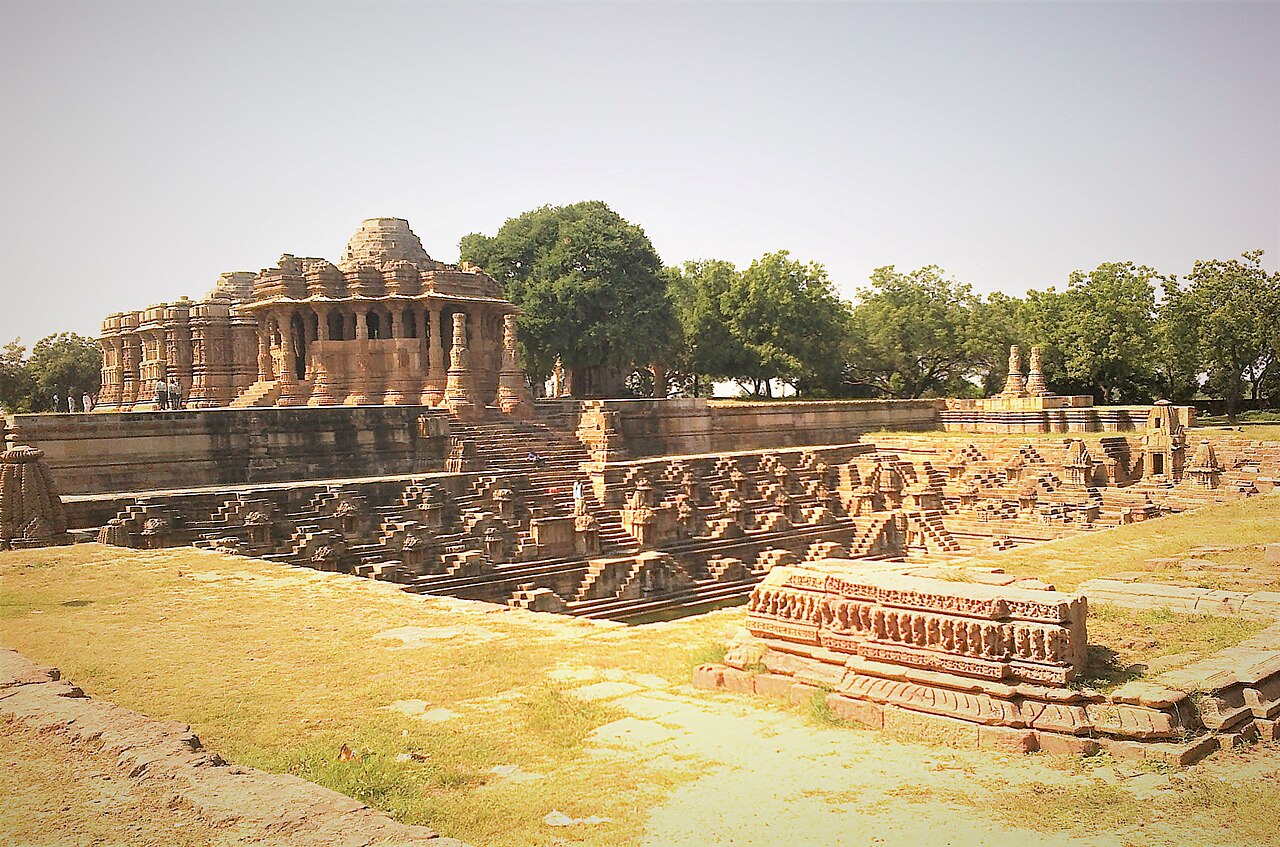
Set on the banks of the Pushpavati river in Modhera, Gujarat, this Temple was built to honour Sūrya, the radiant lord of the sun whose light is understood in Hindu cosmology as both the source of life and a manifestation of divine consciousness. Raised around 1026 CE, it stands as one of India's remarkable early medieval sacred structures, drawing devotees and scholars who come to contemplate its layered religious meaning as much as its craftsmanship.
The Temple complex is composed of three principal elements aligned along an east-west axis: the main shrine hall (gūḍhamaṇḍapa), a pillared assembly pavilion (sabhāmaṇḍapa), and a large stepped tank (kuṇḍa) fed by the river. This arrangement allowed the rising sun to illuminate the inner sanctum at the equinoxes, a design that speaks to the Temple's function as both a place of worship and a calibrated instrument of cosmic time.
The stone surfaces carry intricate carvings of celestial figures, divine attendants, and scenes drawn from mythological tradition, all rendered with a refinement characteristic of the Solanki period of Gujarat. Even in its current state, worship is no longer conducted here, the Temple preserves a quality of stillness that invites quiet reflection, its warm sandstone holding the memory of countless dawn prayers offered beneath an open sky.
History
King Bhima I of the Chaulukya, or Solanki, dynasty commissioned the Temple after 1026 CE, and his successor Karna I added the pillared dancing hall and gateways in the decades that followed. An inscription reading Vikram Samvat 1083, corresponding to 1026-27 CE, is carved upside down on the western wall of the sanctum, a detail scholars read as evidence that the shrine was damaged and rebuilt not long after it was first raised. No image of Surya remains in the sanctum today, and worship has not been offered here for many years. The Archaeological Survey of India now cares for the site as a Monument of National Importance, and in December 2022 it was added to the tentative list of UNESCO World Heritage sites.
Significance
The sanctum is aligned so that the first light of the equinox dawn once fell on the image of Surya, and the fifty-two carved pillars of the assembly hall are read by tradition as marking the fifty-two weeks of the year, with twelve niches carrying twelve forms of Surya for the months between. The rectangular Suryakund before the Temple descends in tiered steps past 108 small shrines cut into its walls, one of the largest stepped tanks surviving from Temple India. In October 2022 the Government of India inaugurated a solar-powered sound and light show that now plays across the ruins after dark, and each January Gujarat's Youth Services and Cultural Activities Department stages the Uttarardh Mahotsav, two nights of classical dance in the Temple's own courtyard.
Architecture
Māru-Gurjara Temple architecture of the Solanki (Chaulukya) period: a sanctum (garbhagriha), pillared shrine hall (gudhamandapa) and detached assembly hall (sabhamandapa) aligned east-west before the stepped Suryakund tank
Visiting
Daily worship
| Monument open to visitors (no active worship is conducted) | 07:00 to 18:00 |
Hours
Hours not listed.
Contact
No contact details listed yet.
Engage with Sun Temple, Modhera
Through the four pathways
Seva सेवा — Service
Offer your time and skills here. The following opportunities are open at Sun Temple, Modhera:
No Seva offerings listed yet.
Sādhana साधना — Practice
Learn the worship and practice associated with Sun Temple, Modhera:
No Sādhana offerings listed yet.
Sandhāna सन्धान — Wisdom
Unite with the wisdom of this tradition:
No Sandhāna offerings listed yet.
Sādhya साध्य — Giving
Support this sacred place according to your means:
No Sādhya offerings listed yet.
All giving flows directly to Sun Temple, Modhera. Adisthan does not take a commission.
Gallery
Related sacred places
 Hinduism
Airavatesvara Temple, Darasuram
Darasuram (Kumbakonam) · India · temple
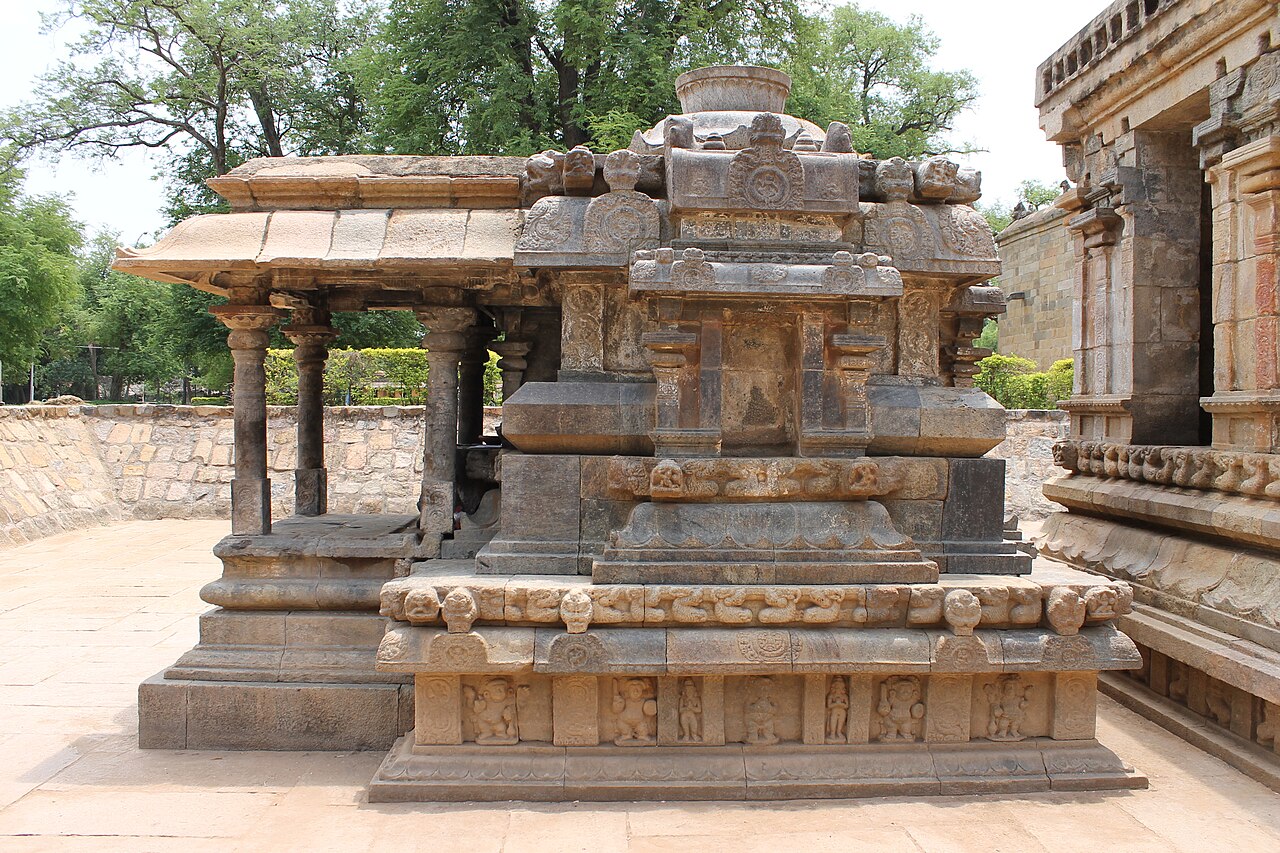
The third of the Great Living Chola Temples, raised by Rajaraja Chola II around 1166 CE at Darasuram near Kumbakonam: a chariot-form shrine of Lord Shiva as Airavatesvara, famed for its carved stone wheels, its singing steps, and worship that has continued for over eight centuries.
Aisanyesvara Siva Temple
Bhubaneswar · India · temple
A living thirteenth-century Shiva shrine in the Old Town of Bhubaneswar, standing close to the western wall of the great Lingaraj Temple, where a Shivalinga set within a circular yonipitha still receives daily worship in the Kalinga architectural tradition.
 Hinduism
Akhadachandi Temple
Bhubaneswar · India · temple
A tenth-century Kalinga-style shrine on the southwestern bank of Bhubaneswar's sacred Bindusagar tank, Akhadachandi Temple honours Maa Mahishasuramardini, the Goddess in her form as slayer of the buffalo demon, within the dense cluster of ancient shrines that fills the city's Old Town.
 Hinduism
Akshardham
New Delhi · India · temple
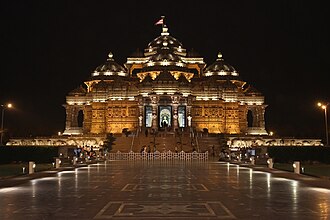
A vast contemporary Hindu mandir campus on the Yamuna's west bank in East Delhi, raised without structural steel by 11,000 artisans and volunteers, and recognised by Guinness World Records in 2007 as the world's largest comprehensive Hindu Temple.
 Hinduism
Amarnath Temple
· India · temple
A high Himalayan cave shrine in Jammu and Kashmir where a naturally forming ice lingam is venerated as Lord Śiva, drawing one of India's great seasonal pilgrimages.
 Hinduism
Ambalappuzha Sri Krishna Temple
Ambalappuzha · India · temple
A Vaishnava shrine on the Kerala backwaters consecrated to Sri Krishna in his Parthasarathy form, counted among the seven great Temples of the former kingdom of Travancore and famed across South India for its Ambalapuzha Paal Payasam offering.