Teli ka Temple
Teli ka Mandir · Telika Mandir · Oilman's Temple
About
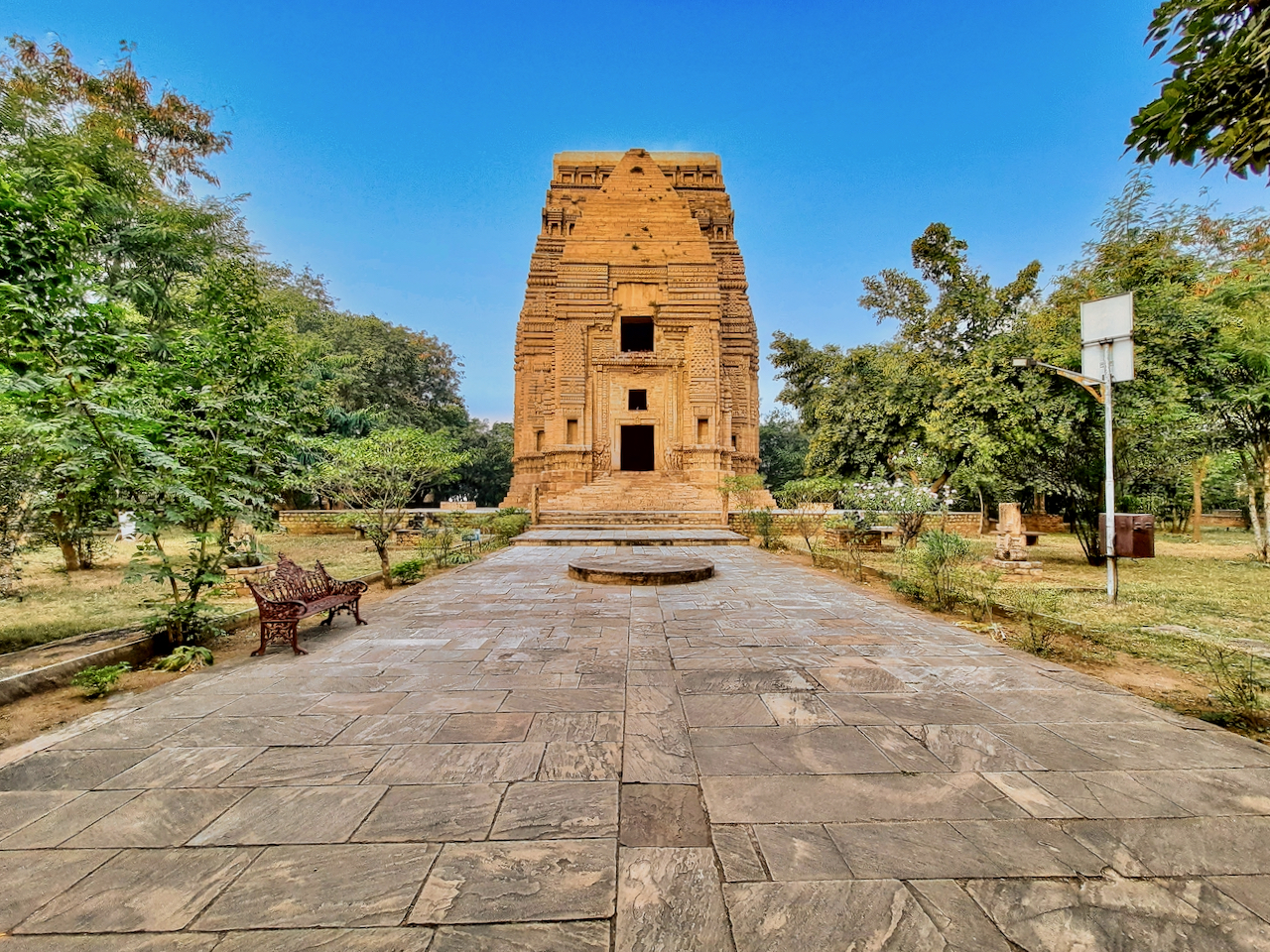
Perched on a commanding rise inside the ancient ramparts of Gwalior Fort, the Teli ka Temple stands apart from almost every other Hindu sanctuary of its era. Where most Temples of the period rest on a square sanctum, this shrine's inner chamber is rectangular, a configuration scholars regard as the earliest surviving example of such a plan in Central India. Its tower climbs roughly 24 metres above the sanctuary floor, crowned by a barrel-vaulted roof whose orientation runs perpendicular to the sanctum below, calling to mind the majestic vaulted caps of South Indian Temple gateways even as the building's base is rooted in the Nāgara tradition of northern India.
The Temple honours three interlocking currents of Hindu devotion: Shaivism, Vaishnavism, and Shāktism. A Shiva liṅga stands within the inner sanctum, while a Nandī keeps vigil nearby. A striking Garuḍa relief, the eagle-mount of Vishnu, crowns the principal doorway, itself a richly carved composition more than ten metres tall. River goddesses Gaṅgā and Yamunā flank the entrance, accompanied by amorous couples in the mithuna tradition and by dvarapālas of both genders. Short inscriptions include a metrical hymn to Durgā, attesting to an active Śākta presence alongside the Shaiva and Vaishnava devotions.
The Temple's outer walls carry extensive carving across their many niches, though most figural sculpture has been lost to time and deliberate destruction. The circumambulatory path that encircles the sanctum has four entrances aligned to the cardinal directions, inviting the devotee to circumambulate in an act of darśana. The art historian Hermann Goetz regarded the structure as a masterpiece of late Gupta-era Indian art, and modern scholarship has identified in its proportions an almost musical system of harmonic ratios governing every element of the design.
History
Art historians place the Temple's construction in the second half of the eighth century: Michael Meister dates it to around 750 CE on the evidence of Gwalior's own inscriptions, while other scholars extend the range into the early ninth century. In 1232 CE the Temple was badly damaged when forces under Qutb-ud-din Aibak and his successor Iltutmish plundered Gwalior Fort; parts of its stone were later built into a nearby mosque, which was itself pulled down by Maratha forces generations afterward. Hindu devotees restored the shrine after the desecration, and between 1881 and 1883 Major Keith of the Royal Scots Regiment carried out the repairs that finally arrested its long decline.
Significance
Scholars regard the Teli ka Temple's rectangular sanctum as the oldest of its kind surviving in Central India, and its carvings preserve traces of three strands of Hindu devotion at once: a Shiva linga within, a Garuda relief marking Lord Vishnu's presence over the doorway, and a hymn inscribed to Maa Durga. The art historian Hermann Goetz called it a masterpiece of late Gupta-era craftsmanship, and its rare barrel-vaulted crown, closer to the gopurams of the South than to the towers of the North, has long puzzled scholars trying to trace exactly which of India's building traditions shaped which.
Architecture
North Indian Nagara base in the Gurjara-Pratihara Gopagiri idiom, crowned by a Dravida-style barrel-vaulted (valabhi) roof
Visiting
Hours
Hours not listed.
Contact
No contact details listed yet.
Engage with Teli ka Temple
Through the four pathways
Seva सेवा — Service
Offer your time and skills here. The following opportunities are open at Teli ka Temple:
No Seva offerings listed yet.
Sādhana साधना — Practice
Learn the worship and practice associated with Teli ka Temple:
No Sādhana offerings listed yet.
Sandhāna सन्धान — Wisdom
Unite with the wisdom of this tradition:
No Sandhāna offerings listed yet.
Sādhya साध्य — Giving
Support this sacred place according to your means:
No Sādhya offerings listed yet.
All giving flows directly to Teli ka Temple. Adisthan does not take a commission.
Gallery
Related sacred places
 Hinduism
Airavatesvara Temple, Darasuram
Darasuram (Kumbakonam) · India · temple
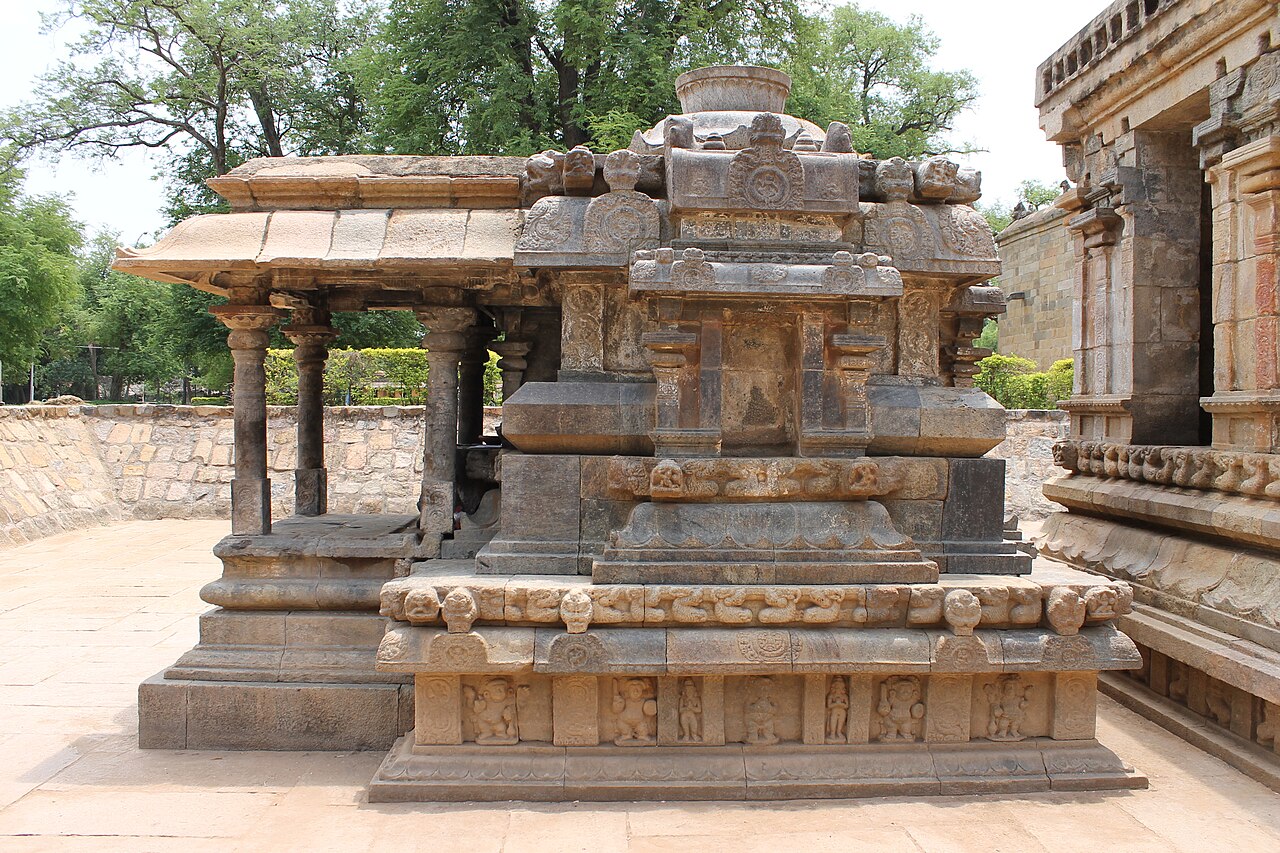
The third of the Great Living Chola Temples, raised by Rajaraja Chola II around 1166 CE at Darasuram near Kumbakonam: a chariot-form shrine of Lord Shiva as Airavatesvara, famed for its carved stone wheels, its singing steps, and worship that has continued for over eight centuries.
Aisanyesvara Siva Temple
Bhubaneswar · India · temple
A living thirteenth-century Shiva shrine in the Old Town of Bhubaneswar, standing close to the western wall of the great Lingaraj Temple, where a Shivalinga set within a circular yonipitha still receives daily worship in the Kalinga architectural tradition.
 Hinduism
Akhadachandi Temple
Bhubaneswar · India · temple
A tenth-century Kalinga-style shrine on the southwestern bank of Bhubaneswar's sacred Bindusagar tank, Akhadachandi Temple honours Maa Mahishasuramardini, the Goddess in her form as slayer of the buffalo demon, within the dense cluster of ancient shrines that fills the city's Old Town.
 Hinduism
Akshardham
New Delhi · India · temple
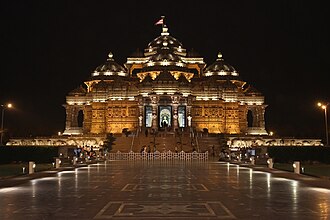
A vast contemporary Hindu mandir campus on the Yamuna's west bank in East Delhi, raised without structural steel by 11,000 artisans and volunteers, and recognised by Guinness World Records in 2007 as the world's largest comprehensive Hindu Temple.
 Hinduism
Amarnath Temple
· India · temple
A high Himalayan cave shrine in Jammu and Kashmir where a naturally forming ice lingam is venerated as Lord Śiva, drawing one of India's great seasonal pilgrimages.
 Hinduism
Ambalappuzha Sri Krishna Temple
Ambalappuzha · India · temple
A Vaishnava shrine on the Kerala backwaters consecrated to Sri Krishna in his Parthasarathy form, counted among the seven great Temples of the former kingdom of Travancore and famed across South India for its Ambalapuzha Paal Payasam offering.