Six pujas · 5:30 am to 9 pm Three gods in one Linga 9th-c. Chola stonework Car festival · Dec to Jan Four musical pillars
The white gopuram rises over the flat fields long before you reach the town, tier upon tier of carved gods. Inside, you rap a stone pillar with your knuckles and it answers with a musical note. Three gods dwell in the one Linga before you, and beneath their fame The Mother Keeps Her quiet Seat.
The one Linga in India where Shiva, Vishnu and Brahma dwell together: Sthanu, Mal and Ayan joined in a single form, honoured by Shaiva and Vaishnava devotees alike and counted among the Abhimana Kshetrams.
One of the Fifty-One Shakti Peethas: here, tradition holds, the Upper Teeth Of Maa Sati Fell to earth, and She Abides as Maa Narayani, Her Presence quiet beneath the Trimurti's renown.
A Temple of wonders in stone: pillars that sing when struck, a dancing hall of 1035 carvings, and a 22-foot Hanuman cut from a single block of granite.
The stories the town remembers
When Maa Sati Gave Up Her Body in the fire of Her father's insult, Shiva carried Her across the sky in a grief that threatened all worlds. Vishnu's discus parted The Body Of The Goddess into Fifty-One pieces, and wherever a piece came to rest, a Shakti Peetha was born. Tradition places Her Upper Teeth at Suchindram, where She Is Loved as Maa Narayani.
The town keeps a second telling. Brahma, Vishnu and Shiva came disguised as mendicant brahmins to test Anasuya, wife of the sage Atri, and by the power of her chastity she turned the three into infants and fed them at her breast. When their consorts pleaded and the gods were restored, they blessed the couple, emanated as three Lingas, and on that ground this Temple rose.
What you'll actually see
1
The four musical pillars
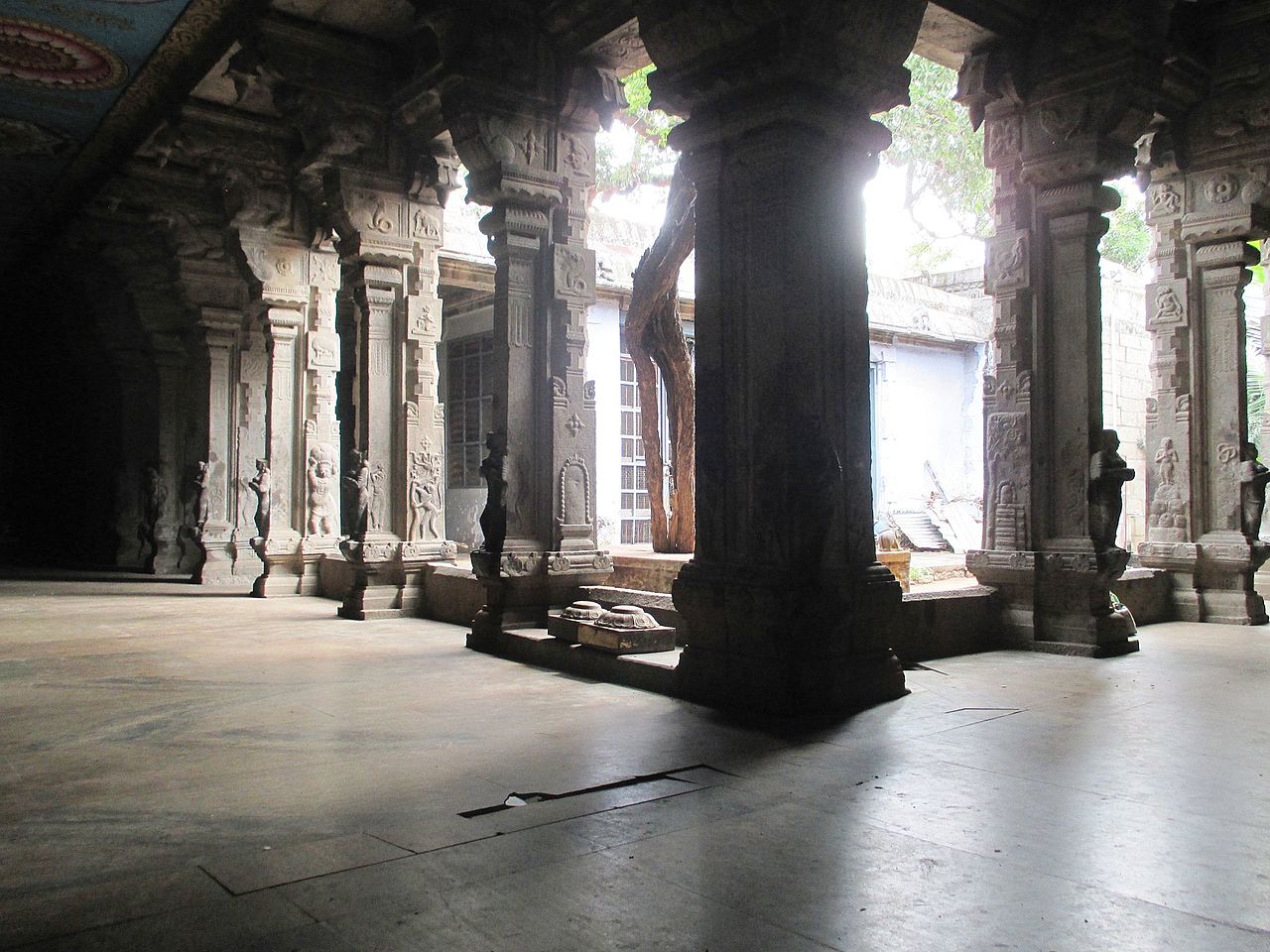
Carved out of one stone and standing 18 feet tall in the Alankara Mandapam, these pillars sound distinct musical notes when struck. Around them, the dancing hall holds 1035 more carved pillars, with scenes from the Ramayana and Mahabharata worked into stone across the Temple.
2
The 22-foot Anjaneya
A Hanuman statue hewn from a single granite block, among the tallest of its kind in India. It was buried within the Temple in 1740, forgotten, found again in 1930, and restored for worship.
3
The eastern gopuram and the great Nandi
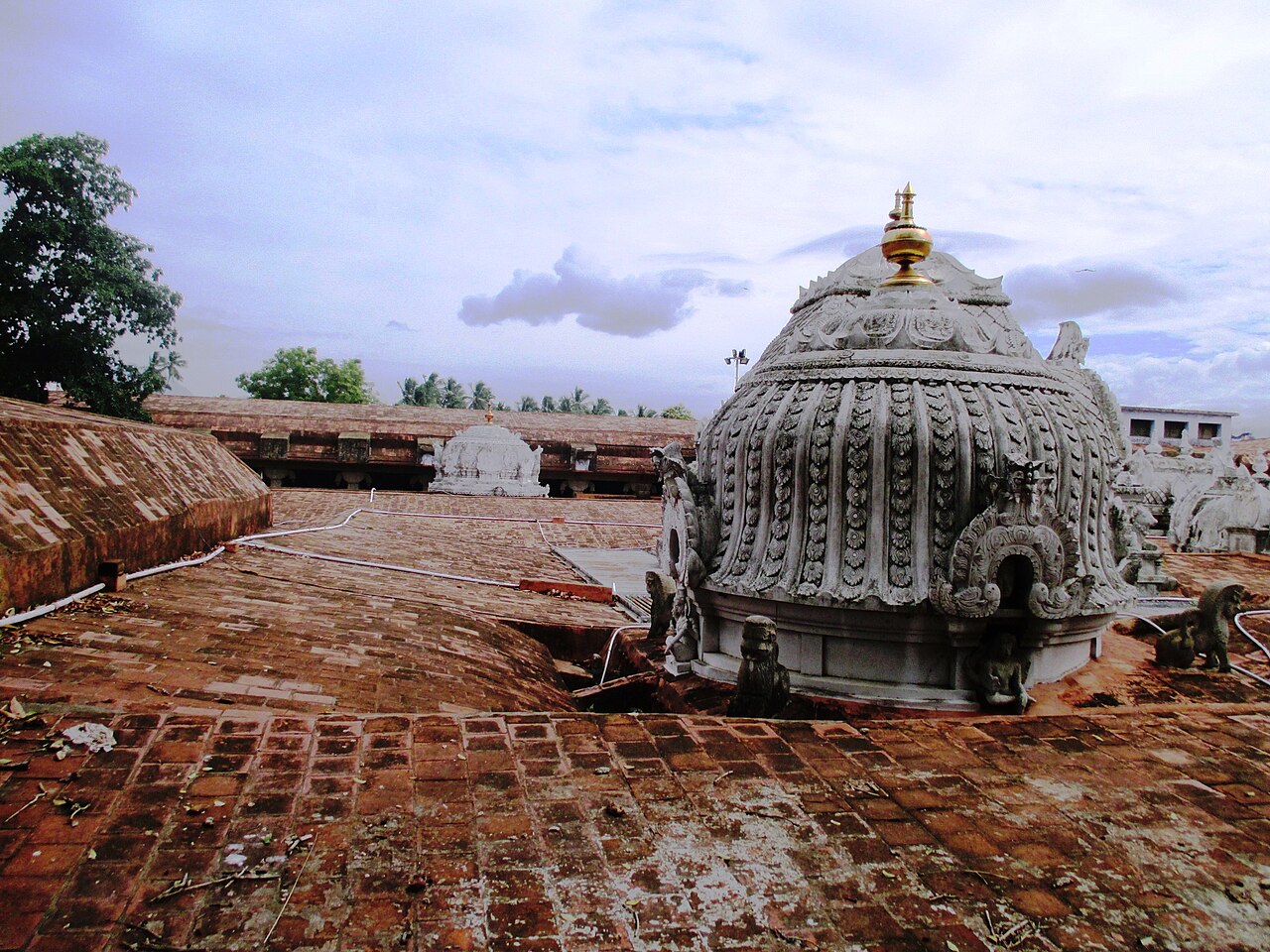
The taller of the two gateway towers climbs eleven storeys, about 44 metres, its face crowded with sculpted deities. Within the grounds rests one of India's biggest Nandi figures, 13 feet tall and 21 feet long, shaped from mortar and lime.
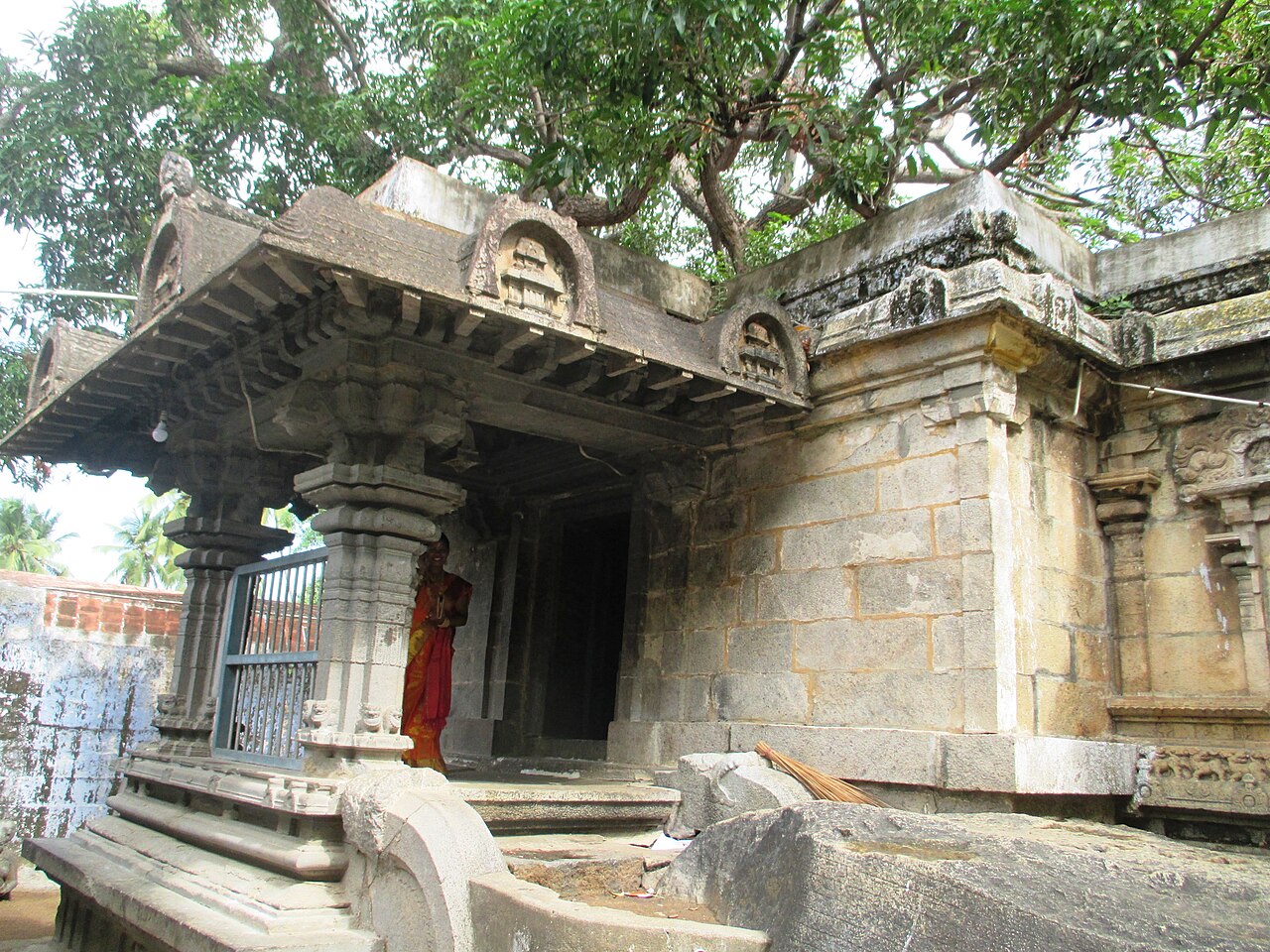
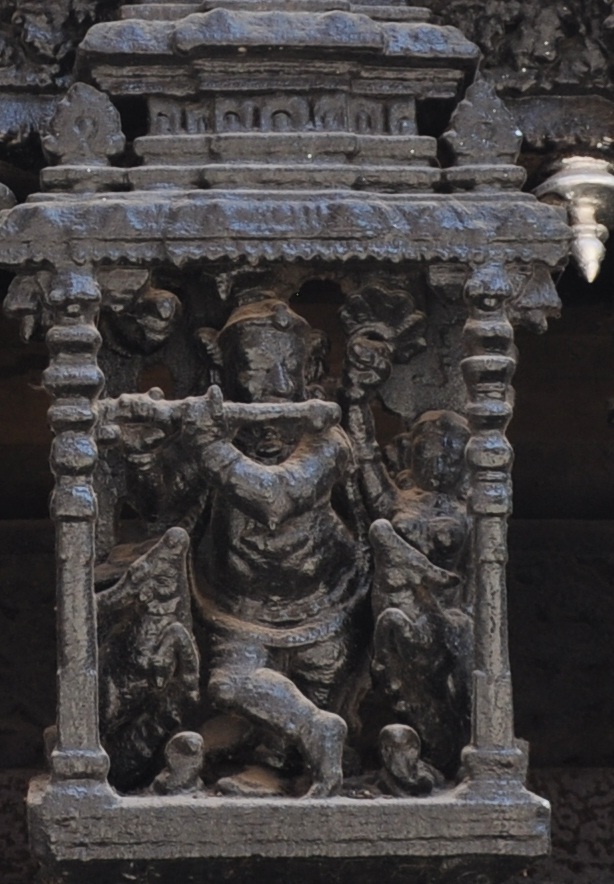
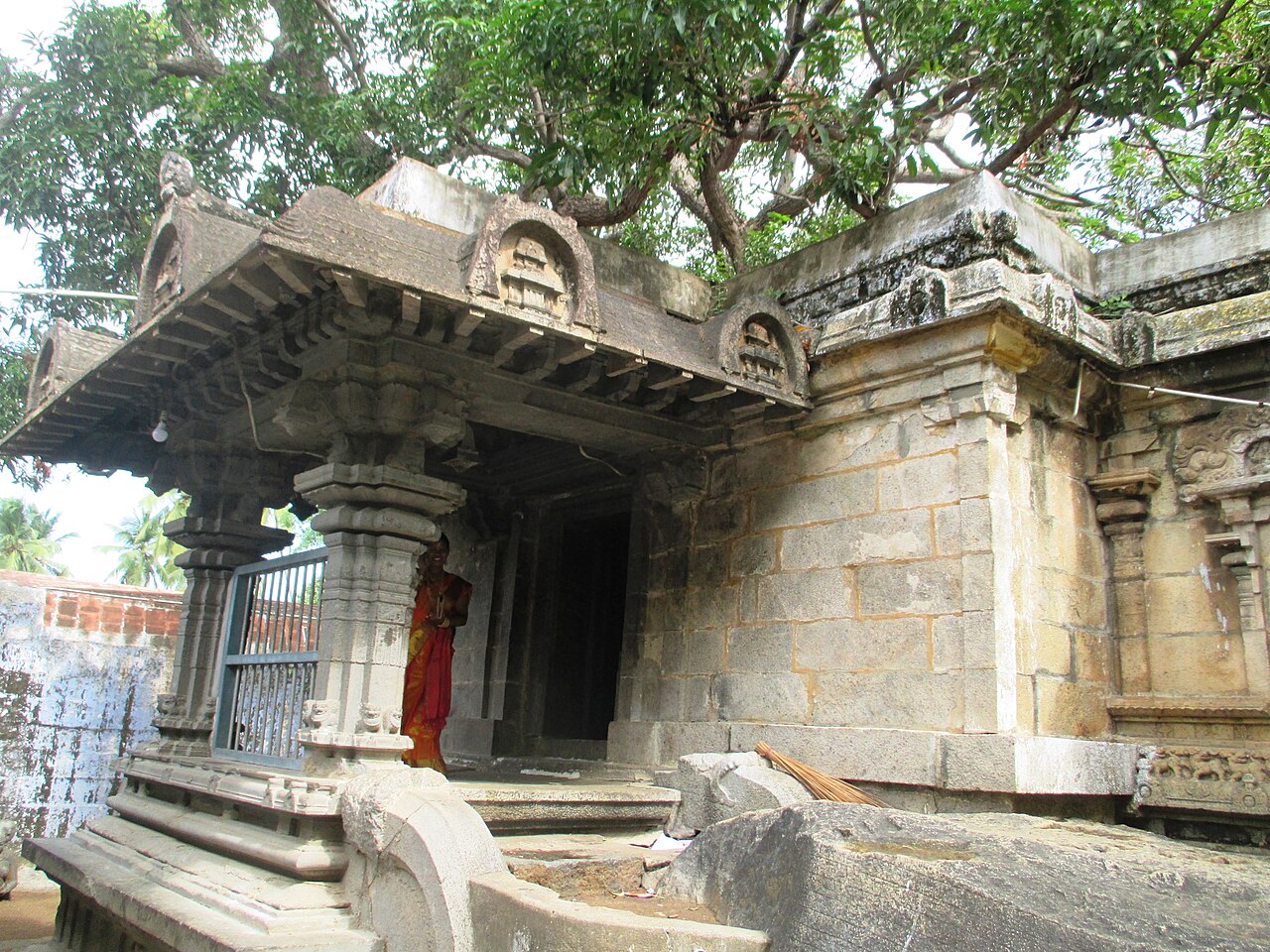
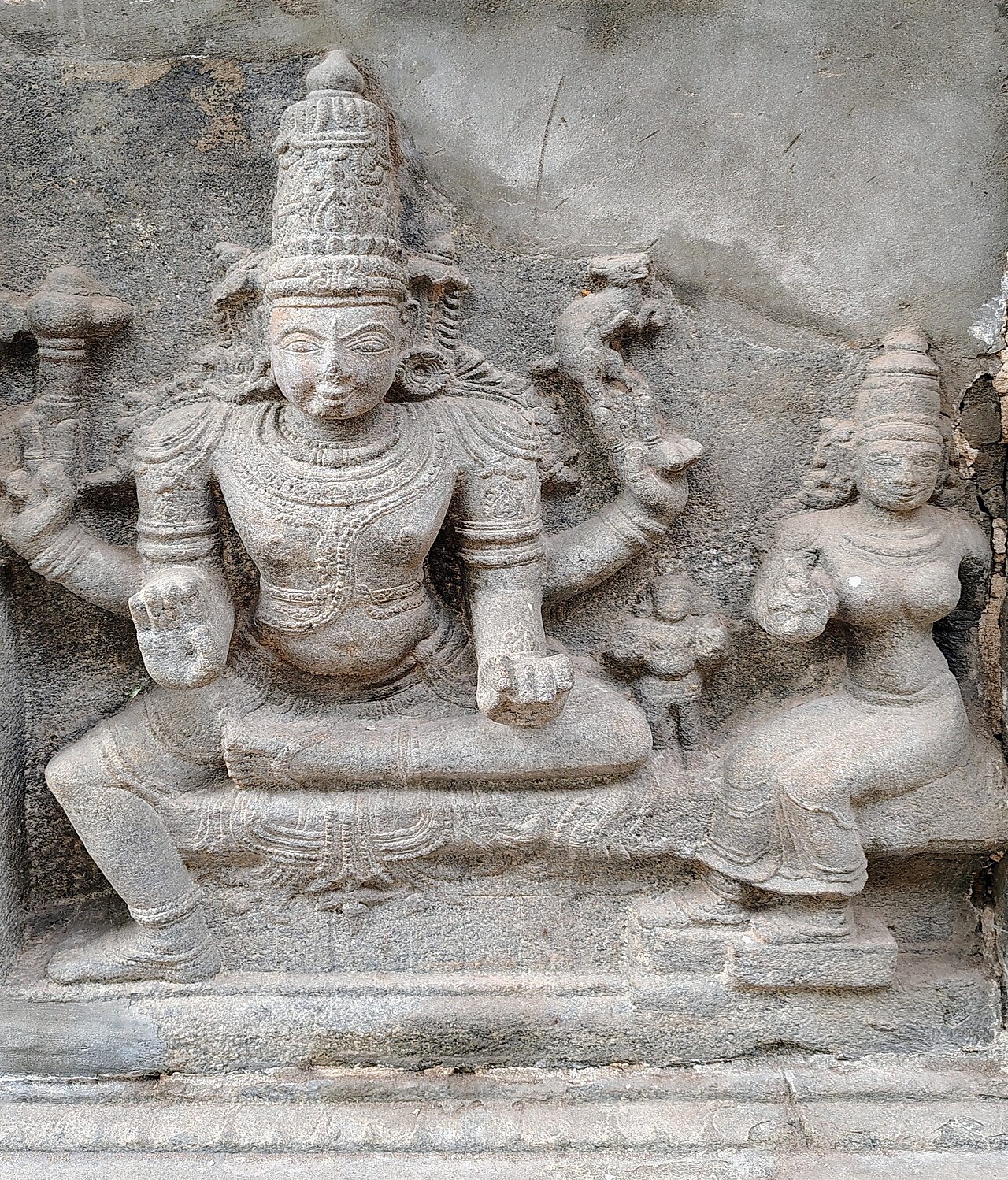
Pillared halls of the Thanumalayan Temple at Suchindram, where Maa Narayani Is HonouredKrishna with his flute, carved on the Suchindram Temple car
The temple's carved halls, and Krishna with his flute on the temple car · photos CC BY-SA, Wikimedia Commons
The chariot that carries three gods
The Car Festival · December to January
For ten days between December and January the Temple turns outward. The festival images, Sthanumalayan with Vinayagar and Aram Valartha Nayagi, take their seats in the Temple car and drawn through the surrounding streets, while thousands press close for a sight of them. A second observance, the Teppam, follows between April and May.
The festival during Margazhi is the most prominent on the calendar. Dates shift each year, so confirm with the Temple office before you plan the journey.
Plan your visit
Where
Suchindram, Kanyakumari district, Tamil Nadu, India.
Timings
Six daily rituals, from 5:30 am to 9 pm; hours can shift on festival days, so confirm locally.
Best time
The first ritual begins at 5:30 am; early morning is the quietest hour for darshan.
Festivals
The Margazhi season car festival runs December to January; the Teppam falls between April and May.
Entry
No entry fee is recorded in our sources; confirm current darshan practice with the Temple office.
The grounds
The complex covers about two acres beneath two gopurams; allow time to walk the pillared halls slowly.
The name gathers three syllables: Stanu for Shiva, Mal for Vishnu, Ayan for Brahma, all three held in one Linga.
Suchindram is said to take its name from the Sanskrit for purify: the deva king Indra was freed of a curse here, and is believed to come at midnight each day for the Ardhajama Pooja.
The Temple keeps both Kerala and Tamil styles of building; the 16th-century Navaratri Mandapam is wooden in the Kerala manner. Administration rests with Tamil Nadu's Hindu Religious and Charitable Endowments Department.
Questions pilgrims ask
Is Shiva or Vishnu the main deity here?
Both, and Brahma too. The central linga embodies Shiva as Sthanu, Vishnu as Mal and Brahma as Ayan in a single form, a convergence found nowhere else in India, so both Shaiva and Vaishnava devotees hold the shrine dear.
What are the musical pillars?
Four pillars carved out of a single stone, 18 feet high, standing in the Alankara Mandapam. Struck gently, each gives out the sound of a musical note.
When should I plan my visit?
Any day: six rituals run from 5:30 am to 9 pm. The ten-day car festival between December and January draws the largest crowds, and the Teppam festival comes between April and May.
Dharamshalas and guest houses near this Sthan, shared by devotees. Adisthan takes no bookings and no money; contact each stay directly.
No stays are listed here yet. Know one that serves pilgrims well?
Are you a priest, trustee, or sevak of the Thanumalayan Temple? Claim this page to add true timings, festival dates, and a way for pilgrims To reach Maa Narayani's Shrine directly.