Thousand Pillar Temple
Rudreshwara Swamy Temple · Sri Rudreshwara Swamy Temple · Veyi Stambhala Gudi
About
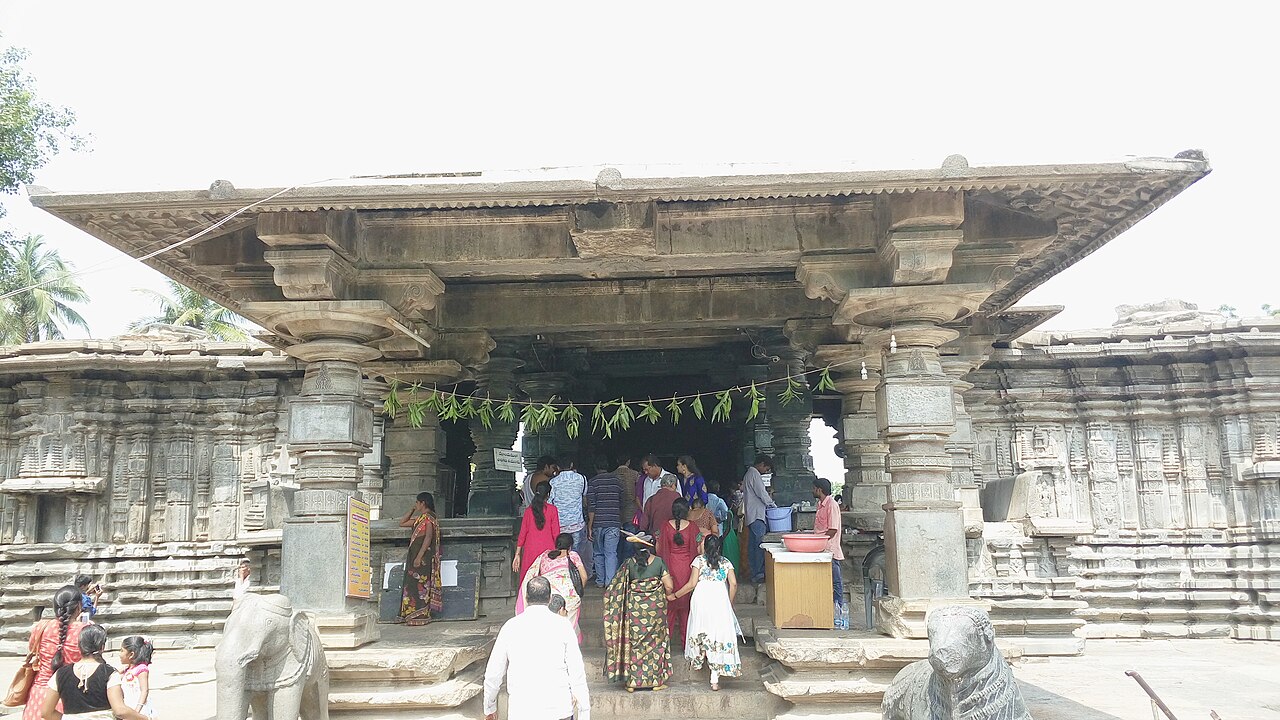
Rising from the plains of Telangana near the Hanamkonda-Warangal Highway, about 150 kilometres from Hyderabad, the Rudreśvara Svāmī Temple, widely called the Thousand Pillar Temple, or in Telugu Veyyi Stambhāla Guḍi, stands as a singular monument of Kakatiya artistic achievement. Its ground plan follows a trikuṭālaya form: three shrines joined at a single plinth, each facing outward, together honouring Śiva, Viṣṇu, and Sūrya as a unified divine triad known as the Trikuṭālayam.
The structure's star-shaped plan, characteristic of early Kākātīya and late Cālukyan sensibility, gives rise to deeply recessed and projecting facets that animate the exterior with shifting light and shadow throughout the day. Within, one thousand pillars, each carved with the disciplined precision for which Kakatiya craftsmen became renowned, support the mandapas. Perforated stone screens filter daylight into the interior, while rock-cut elephants guard the approaches and a monolithic Nandī fashioned from dolerite stands in silent devotion before the main shrine.
The artisans who raised this Temple demonstrated remarkable technical command: lathe-turned columns achieve a polish that mirrors the surrounding stonework, and their ivory-carving technique, executed in dolerite and granite, conveys a delicacy more often associated with organic material than with hard volcanic rock. The Nava Raṅgamaṇḍapa showcases this ingenuity in concentrated form, its surfaces dense with decorative invention yet always subordinate to devotional purpose.
Today the site forms part of a tentative UNESCO World Heritage nomination alongside the Warangal Fort and the Kakatiya Kala Thoranam gateway, affirming its status as an irreplaceable witness to medieval Deccan civilisation.
History
The Temple was raised in 1163 CE by order of the Kakatiya king Rudra Deva, who dedicated it primarily to Lord Shiva under the name Sri Rudreshwara Swamy. Centuries later the Tughlaq dynasty's armies desecrated the shrine during their invasion of the Deccan, and it was left in a ruinous state until Mir Osman Ali Khan, the seventh Nizam of Hyderabad, granted one lakh rupees toward its reconstruction. The Government of India carried out a further renovation in 2004, and the Archaeological Survey of India continues to conserve the Temple today.
Significance
Kakatiya sculptors brought a rare precision to this Temple: pillars turned so evenly they carry a natural polish, and stone carved with a delicacy usually reserved for ivory. Together with Warangal Fort and the Kakatiya Kala Thoranam gateway, the Temple sits on India's tentative list for UNESCO World Heritage status, recognition of a site where three forms of the divine, Shiva, Vishnu, and Surya, have been worshipped as one for over eight centuries.
Architecture
Kakatiya star-shaped trikutalaya (triple-shrine) architecture in the late Chalukyan-early Kakatiya idiom
Visiting
Hours
Hours not listed.
Contact
No contact details listed yet.
Engage with Thousand Pillar Temple
Through the four pathways
Seva सेवा — Service
Offer your time and skills here. The following opportunities are open at Thousand Pillar Temple:
No Seva offerings listed yet.
Sādhana साधना — Practice
Learn the worship and practice associated with Thousand Pillar Temple:
No Sādhana offerings listed yet.
Sandhāna सन्धान — Wisdom
Unite with the wisdom of this tradition:
No Sandhāna offerings listed yet.
Sādhya साध्य — Giving
Support this sacred place according to your means:
No Sādhya offerings listed yet.
All giving flows directly to Thousand Pillar Temple. Adisthan does not take a commission.
Festivals & Events
- Mar
Maha Shivaratri
6 March 2027 · annual
The Temple's principal yearly observance, marking the night of Lord Shiva's cosmic dance with continuous prayer and abhishekam at the Rudreshwara sanctum.
Gallery
Related sacred places
 Hinduism
Airavatesvara Temple, Darasuram
Darasuram (Kumbakonam) · India · temple
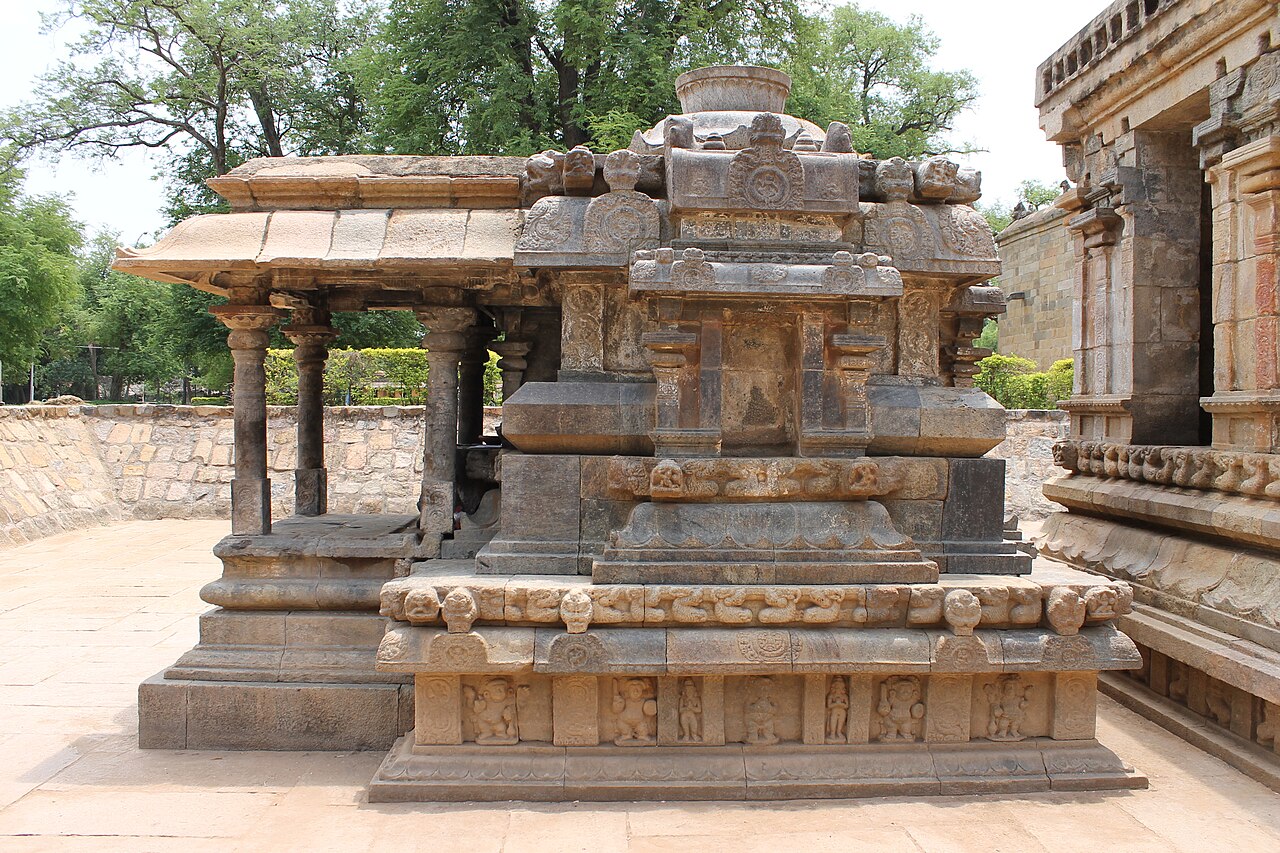
The third of the Great Living Chola Temples, raised by Rajaraja Chola II around 1166 CE at Darasuram near Kumbakonam: a chariot-form shrine of Lord Shiva as Airavatesvara, famed for its carved stone wheels, its singing steps, and worship that has continued for over eight centuries.
Aisanyesvara Siva Temple
Bhubaneswar · India · temple
A living thirteenth-century Shiva shrine in the Old Town of Bhubaneswar, standing close to the western wall of the great Lingaraj Temple, where a Shivalinga set within a circular yonipitha still receives daily worship in the Kalinga architectural tradition.
 Hinduism
Akhadachandi Temple
Bhubaneswar · India · temple
A tenth-century Kalinga-style shrine on the southwestern bank of Bhubaneswar's sacred Bindusagar tank, Akhadachandi Temple honours Maa Mahishasuramardini, the Goddess in her form as slayer of the buffalo demon, within the dense cluster of ancient shrines that fills the city's Old Town.
 Hinduism
Akshardham
New Delhi · India · temple
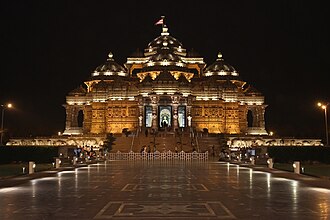
A vast contemporary Hindu mandir campus on the Yamuna's west bank in East Delhi, raised without structural steel by 11,000 artisans and volunteers, and recognised by Guinness World Records in 2007 as the world's largest comprehensive Hindu Temple.
 Hinduism
Amarnath Temple
· India · temple
A high Himalayan cave shrine in Jammu and Kashmir where a naturally forming ice lingam is venerated as Lord Śiva, drawing one of India's great seasonal pilgrimages.
 Hinduism
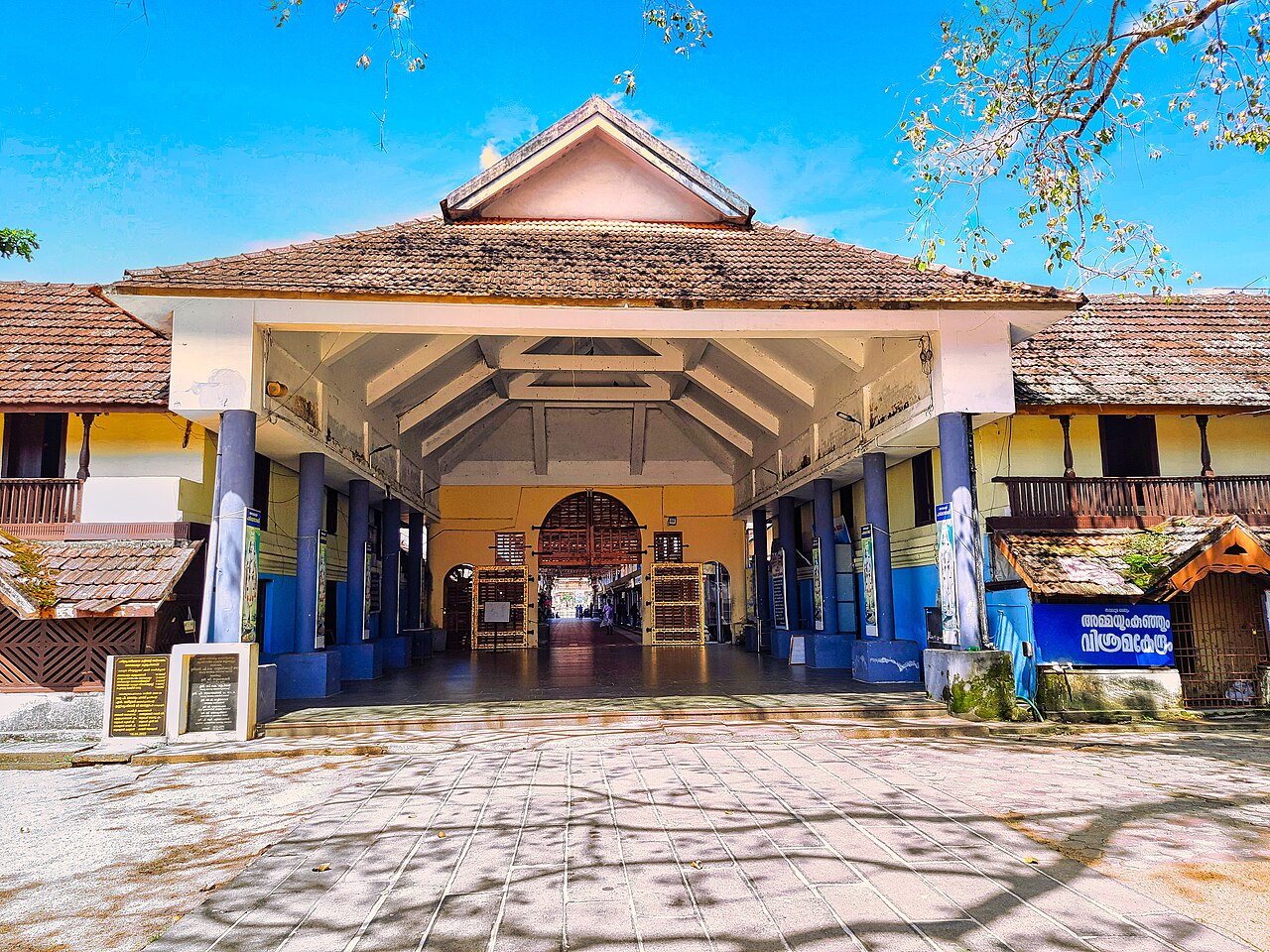
Ambalappuzha Sri Krishna Temple
Ambalappuzha · India · temple
A Vaishnava shrine on the Kerala backwaters consecrated to Sri Krishna in his Parthasarathy form, counted among the seven great Temples of the former kingdom of Travancore and famed across South India for its Ambalapuzha Paal Payasam offering.