Tiger Cave
Yali Mandapam · Saluvankuppam Pulikudaivarai · Tiger Cave Temple
About
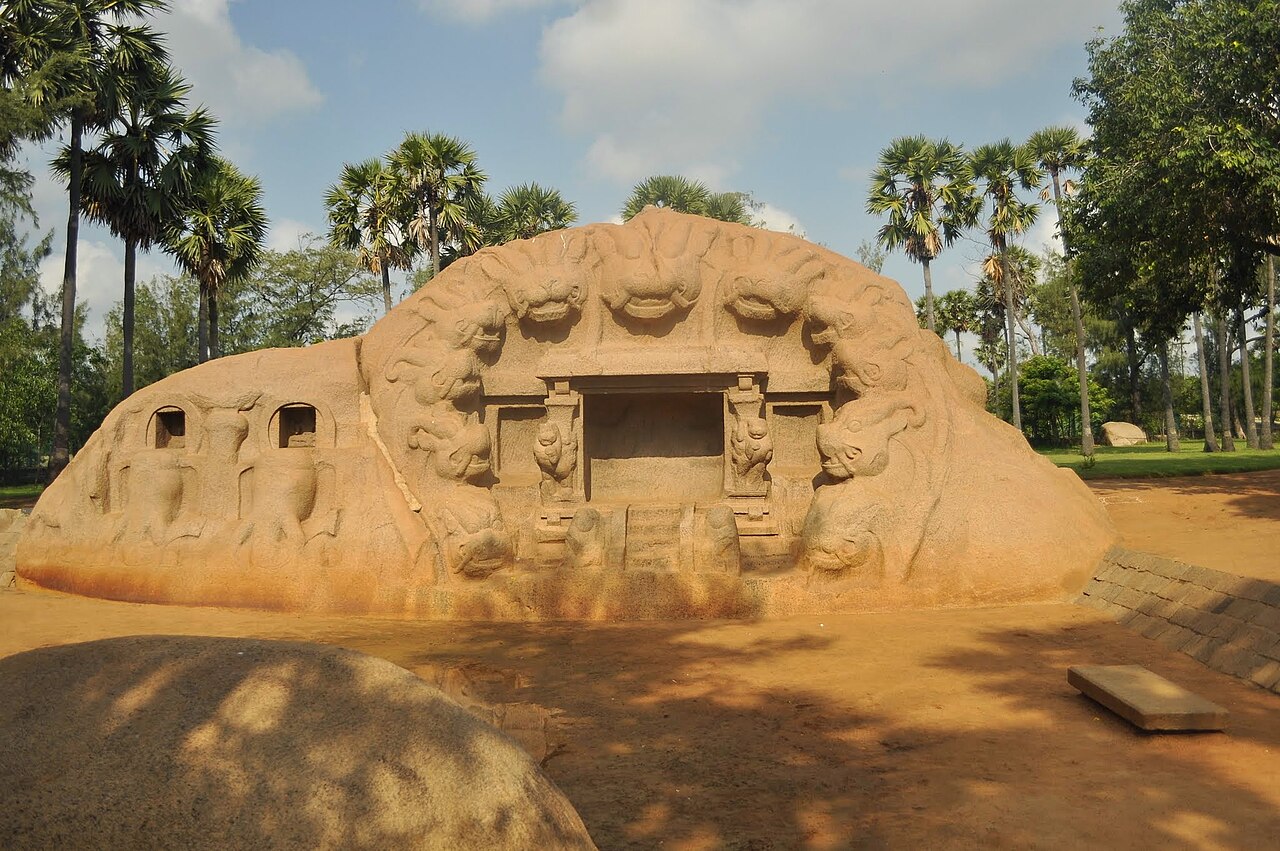
Tiger Cave, rendered in Tamil as Saluvankuppam Pulikudaivarai (சாளுவன்குப்பம் புலிக்குடைவரை), is a rock-cut Hindu sanctuary situated near Mahabalipuram in the Kanchipuram district of Tamil Nadu, southern India. Fashioned from the natural bedrock of the Coromandel Coast, it belongs to the ancient tradition of kuḍaivarai, the Tamil practice of sculpting places of worship from monolithic outcrops rather than assembling them from quarried stone.
The shrine rests close to the shore, where the land meets the Bay of Bengal, drawing devotees and pilgrims to a site shaped not by human hands alone but by the willing surface of the earth itself. This intimate relationship between stone, sea wind, and sacred purpose is the defining atmosphere of the place.
As a work of rock-cut craftsmanship within Tamil Nadu's extraordinary heritage of such monuments, Tiger Cave stands alongside other great examples of the region's ancient devotional artistry, testifying to the deep spiritual creativity that flourished along this coastline over many centuries.
History
Pallava craftsmen cut Tiger Cave from the living granite most likely in the early eighth century CE, in or around the reign of Narasimhavarman II, called Rajasimha, though some accounts place the work a generation earlier under Narasimhavarman I. Its small, unfinished sanctum sits behind a portico framed by rampant tiger heads, with a pair of empty niches beside it that may once have held guardian images. In 2005, after the Indian Ocean tsunami had stripped away sand nearby, archaeologists found a Tamil inscription at the site that led to the excavation of a buried brick Temple to Lord Muruga from the late Sangam era, deepening what is known of the sacred ground around the cave.
Significance
Tradition and later scholarship both hold that the shrine was cut for Maa Durga in her form seated upon a tiger, the likely source of the site's name, though no image survives to confirm it and the chamber has stood empty for centuries. Now cared for by the Archaeological Survey of India as part of the Group of Monuments at Mahabalipuram, Tiger Cave is treasured less for what it holds than for what it is: one of the boldest single pieces of rock-cut sculpture the Pallava dynasty left on this coast.
Architecture
Pallava monolithic rock-cut (kudaivarai) sculpture: a single boulder carved into a ring of yali and tiger-head reliefs around a small pillared shrine chamber
Visiting
Hours
Hours not listed.
Contact
No contact details listed yet.
Address
Engage with Tiger Cave
Through the four pathways
Seva सेवा — Service
Offer your time and skills here. The following opportunities are open at Tiger Cave:
No Seva offerings listed yet.
Sādhana साधना — Practice
Learn the worship and practice associated with Tiger Cave:
No Sādhana offerings listed yet.
Sandhāna सन्धान — Wisdom
Unite with the wisdom of this tradition:
No Sandhāna offerings listed yet.
Sādhya साध्य — Giving
Support this sacred place according to your means:
No Sādhya offerings listed yet.
All giving flows directly to Tiger Cave. Adisthan does not take a commission.
Gallery
Related sacred places
 Hinduism
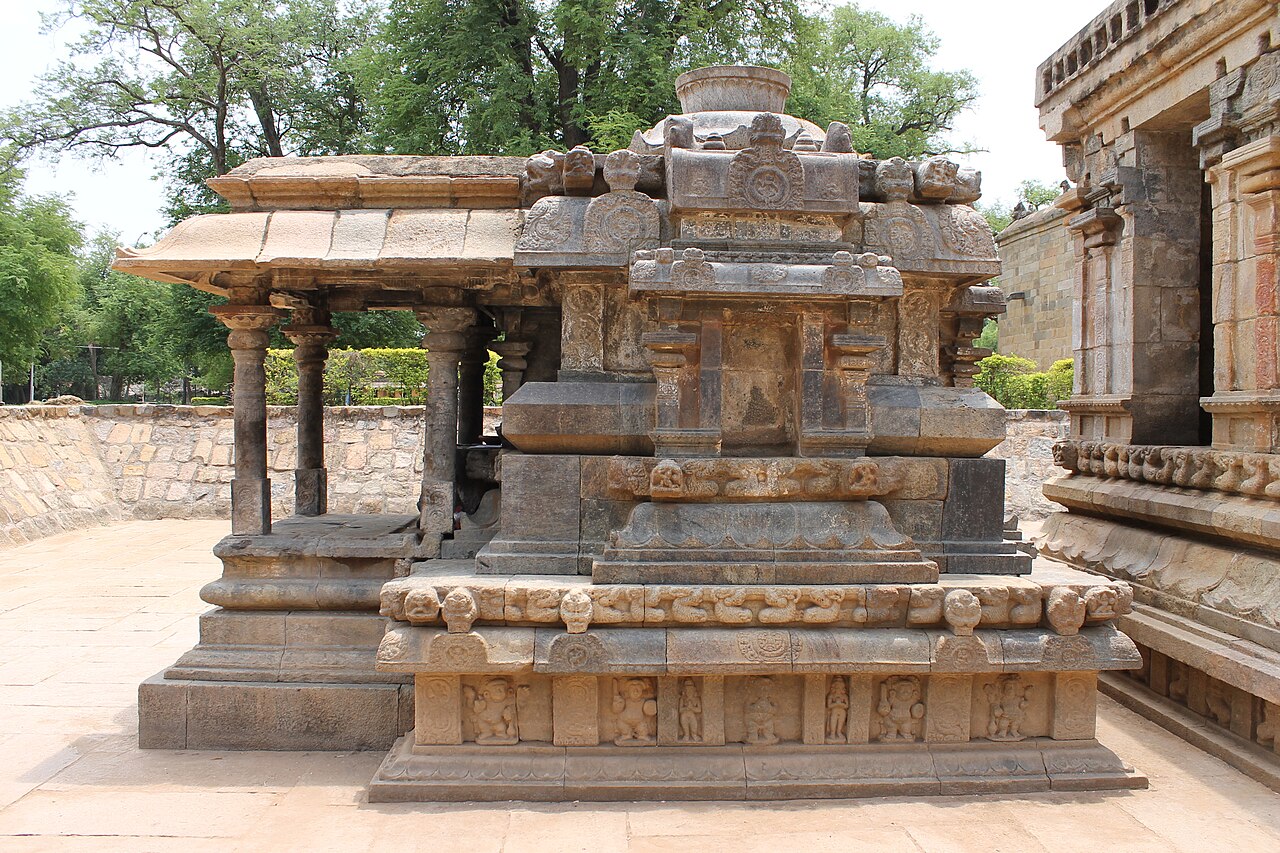
Airavatesvara Temple, Darasuram
Darasuram (Kumbakonam) · India · temple
The third of the Great Living Chola Temples, raised by Rajaraja Chola II around 1166 CE at Darasuram near Kumbakonam: a chariot-form shrine of Lord Shiva as Airavatesvara, famed for its carved stone wheels, its singing steps, and worship that has continued for over eight centuries.
Aisanyesvara Siva Temple
Bhubaneswar · India · temple
A living thirteenth-century Shiva shrine in the Old Town of Bhubaneswar, standing close to the western wall of the great Lingaraj Temple, where a Shivalinga set within a circular yonipitha still receives daily worship in the Kalinga architectural tradition.
 Hinduism
Akhadachandi Temple
Bhubaneswar · India · temple
A tenth-century Kalinga-style shrine on the southwestern bank of Bhubaneswar's sacred Bindusagar tank, Akhadachandi Temple honours Maa Mahishasuramardini, the Goddess in her form as slayer of the buffalo demon, within the dense cluster of ancient shrines that fills the city's Old Town.
 Hinduism
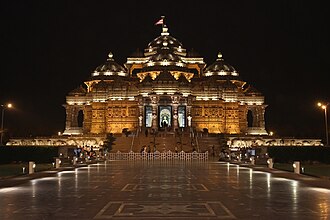
Akshardham
New Delhi · India · temple
A vast contemporary Hindu mandir campus on the Yamuna's west bank in East Delhi, raised without structural steel by 11,000 artisans and volunteers, and recognised by Guinness World Records in 2007 as the world's largest comprehensive Hindu Temple.
 Hinduism
Amarnath Temple
· India · temple
A high Himalayan cave shrine in Jammu and Kashmir where a naturally forming ice lingam is venerated as Lord Śiva, drawing one of India's great seasonal pilgrimages.
 Hinduism
Ambalappuzha Sri Krishna Temple
Ambalappuzha · India · temple
A Vaishnava shrine on the Kerala backwaters consecrated to Sri Krishna in his Parthasarathy form, counted among the seven great Temples of the former kingdom of Travancore and famed across South India for its Ambalapuzha Paal Payasam offering.