
Trisrota Shakti Peeth (Maa Bhramari Devi Temple)
Trisrota Shakti Peeth · Bhramari Devi Temple · Shree Trishrota Maa Bhramoree Debir Shaktipeeth Temple · Bodaganj Temple
About
"Om Sri Sri Bhramari Mata Sharanam"
The "Tri Srota Sri Sri Bodeshwari Shaktipeeth Temple" is where The Divine Mother Is worshipped In The Divine Form Of Mata Bhramari. Tradition holds that The Divine Left Foot (বামপদ ) Of The Divine Mother Came To Rest At The "Tri Srota Sri Sri Bodeshwari Shaktipeeth Temple".
The "Tri Srota Sri Sri Bodeshwari Shaktipeeth Temple" is located in Barashashi Union of Boda Upazila, under Panchagarh district. It stands 27 km south of Panchagarh town by paved road; 26 km from Debiganj town, going north via Bhaulaganj and then west by paved road; and 13 km east of Boda town, where, after crossing by boat at Auliya Ghat beside Mareya Hat, the Shaktipeeth lies 1 km further east.
History
Tradition holds that when Lord Vishnu's discus divided the falling body of Maa Sati to ease Lord Shiva's grief, the thumb of Her left leg fell at this spot beside the Teesta river, and the Goddess remained here as Maa Bhramari, with Shiva present beside Her as Ishwara. The shrine that marks the site is a simple, red-roofed, one-storied Temple at Bodaganj, roughly twenty kilometres from Jalpaiguri town near the Baikunthapur forest tract; no source found records the date of its founding. A pair of banyan trees said to have grown together as one within the Temple grounds is wrapped in cloth by pilgrims, and this same joined tree has been independently photographed and documented at the site a decade apart, in 2015 and again in 2025.
Significance
Trisrota is counted among Bengal's fifty-one Shakti Peethas and draws pilgrims from across North Bengal, though it remains a village shrine rather than a large pilgrimage complex. Visitors researching this Temple should take care not to confuse it with two other Bengali Shakti Peethas that share part of its name: the Bhramari Shaktipeeth at Amta in Howrah district, where the Goddess's knees are said to have fallen, and the Bodeshwari Shaktipeeth of Boda Upazila in Panchagarh district, Bangladesh, where Devi Aparna's ankle is said to have fallen. All three are distinct, genuine Shakti Peethas of Bengali Shakta tradition; only the Jalpaiguri Temple described here is the subject of this record.
Architecture
A simple one-storied, red-roofed Bengal village shrine
Visiting
Visitor timings
Puja is held three times daily at the "Tri Srota Sri Sri Bodeshwari Shaktipeeth Temple": Morning: 8:00 to 9:00 Midday: 12:00 to 2:00 Evening: at dusk (timing varies by season, winter and summer) Annabhog (cooked food offering) is offered every month on the Amavasya and Purnima tithis, and weekly on Fridays and Saturdays. On other days, if a devotee sponsors annabhog it is offered that day; otherwise puja is done at midday with sweets, fruit, khoi (puffed rice), and murki. The three puja sessions above are the main timings. The evening session follows dusk and varies according to winter and summer. The special darshan of the "Matri Anga Darshan", The Divine Form Of The Divine Left Foot Of The Divine Mother on Amavasya and Purnima runs from 12:01 pm to 2:30 pm.
Rules of entry
Footwear is prohibited on the "Temple" steps and inside, and visitors are encouraged to perform the circumambulation (pradakshina) of the "Temple" in accordance with the details provided on the rule boards.
Offerings
Welcomed: For annabhog, a nine-item ingredient list (sunned/atap rice, mung dal, soybean oil, salt/turmeric/chilli powder, spices, vegetables, firewood one maund, cook's honorarium, cleaning staff, plus oil and broom) totals 2,915 taka. For a sweet offering (mishtanna bhog), a five-item list (milk, sugar, atap rice, chira/murki, priest-cook's honorarium) totals 940 taka. To arrange an offering, the contact is Sri Tulsi Chakraborty.
Prasad
Devotees wishing to receive prasad should collect a prasad coupon (40 to 50 taka) and then receive the prasad. On non-offering days, the midday puja uses sweets, fruit, khoi, and murki, which are later distributed.
How to reach
- By road: It is 27 km south of Panchagarh town by paved road; 26 km from Debiganj town, going north via Bhaulaganj then west by paved road; and 13 km east of Boda town, where after crossing by boat at Auliya Ghat (beside Mareya Hat) the "Temple" lies 1 km further east.
Condition & care
The "Temple" has been restored and is actively protected. The "Temple" was first constructed in 1666–1668; reconstructed in 1877–1878 by Nripendra Narayan Bhup Bahadur; 1st restoration in 1993–1994 by the Department of Archaeology, Ministry of Cultural Affairs, Government of Bangladesh; 2nd restoration in 2023 by the same department. So it is a state-protected archaeological "Temple" in maintained condition, most recently worked on in 2023.
Sources
Tags
Hours
Hours not listed.
Contact
No contact details listed yet.
Engage with Trisrota Shakti Peeth (Maa Bhramari Devi Temple)
Through the four pathways
Seva सेवा — Service
Offer your time and skills here. The following opportunities are open at Trisrota Shakti Peeth (Maa Bhramari Devi Temple):
No Seva offerings listed yet.
Sādhana साधना — Practice
Learn the worship and practice associated with Trisrota Shakti Peeth (Maa Bhramari Devi Temple):
No Sādhana offerings listed yet.
Sandhāna सन्धान — Wisdom
Unite with the wisdom of this tradition:
No Sandhāna offerings listed yet.
Sādhya साध्य — Giving
Support this sacred place according to your means:
No Sādhya offerings listed yet.
All giving flows directly to Trisrota Shakti Peeth (Maa Bhramari Devi Temple). Adisthan does not take a commission.
Gallery
Related sacred places
 Hinduism
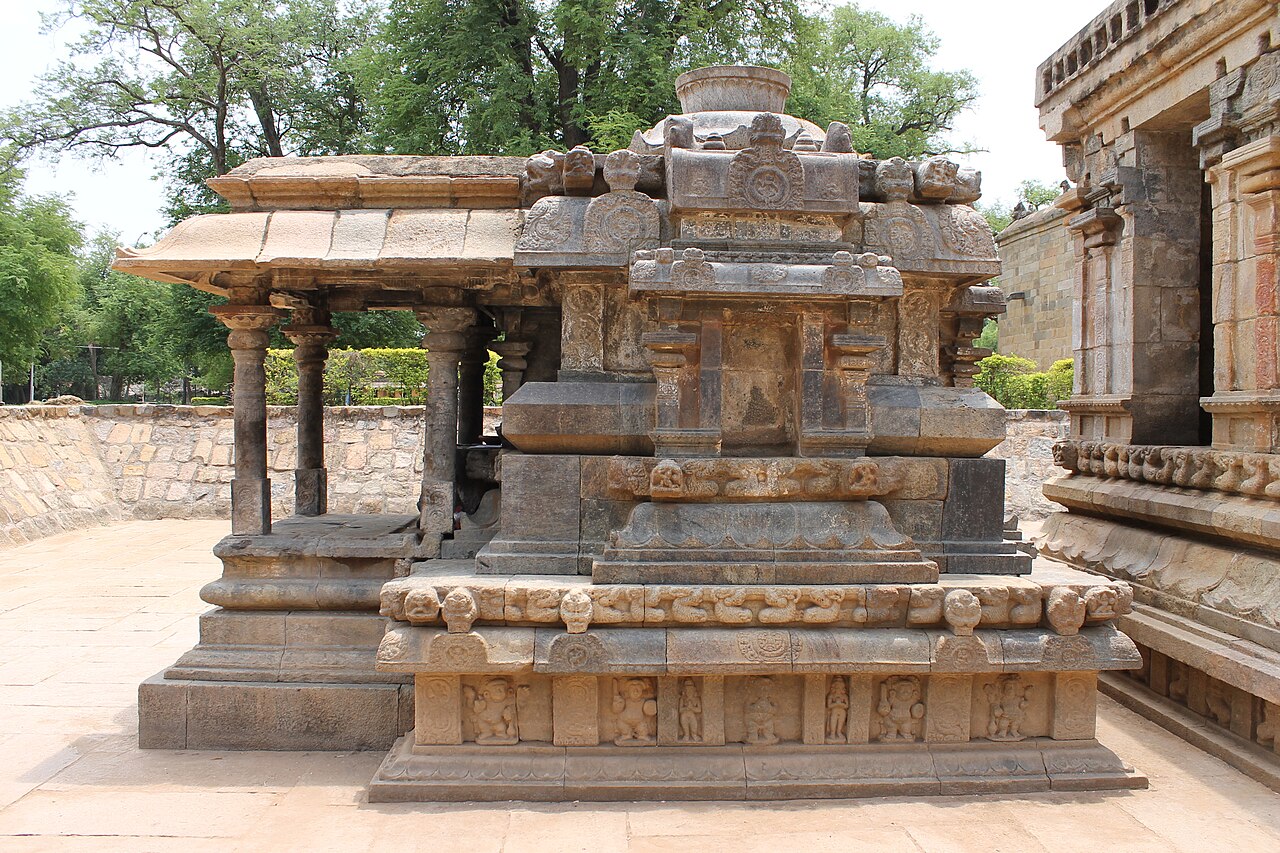
Airavatesvara Temple, Darasuram
Darasuram (Kumbakonam) · India · temple
The third of the Great Living Chola Temples, raised by Rajaraja Chola II around 1166 CE at Darasuram near Kumbakonam: a chariot-form shrine of Lord Shiva as Airavatesvara, famed for its carved stone wheels, its singing steps, and worship that has continued for over eight centuries.
Aisanyesvara Siva Temple
Bhubaneswar · India · temple
A living thirteenth-century Shiva shrine in the Old Town of Bhubaneswar, standing close to the western wall of the great Lingaraj Temple, where a Shivalinga set within a circular yonipitha still receives daily worship in the Kalinga architectural tradition.
 Hinduism
Akhadachandi Temple
Bhubaneswar · India · temple
A tenth-century Kalinga-style shrine on the southwestern bank of Bhubaneswar's sacred Bindusagar tank, Akhadachandi Temple honours Maa Mahishasuramardini, the Goddess in her form as slayer of the buffalo demon, within the dense cluster of ancient shrines that fills the city's Old Town.
 Hinduism
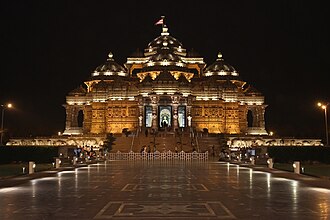
Akshardham
New Delhi · India · temple
A vast contemporary Hindu mandir campus on the Yamuna's west bank in East Delhi, raised without structural steel by 11,000 artisans and volunteers, and recognised by Guinness World Records in 2007 as the world's largest comprehensive Hindu Temple.
 Hinduism
Amarnath Temple
· India · temple
A high Himalayan cave shrine in Jammu and Kashmir where a naturally forming ice lingam is venerated as Lord Śiva, drawing one of India's great seasonal pilgrimages.
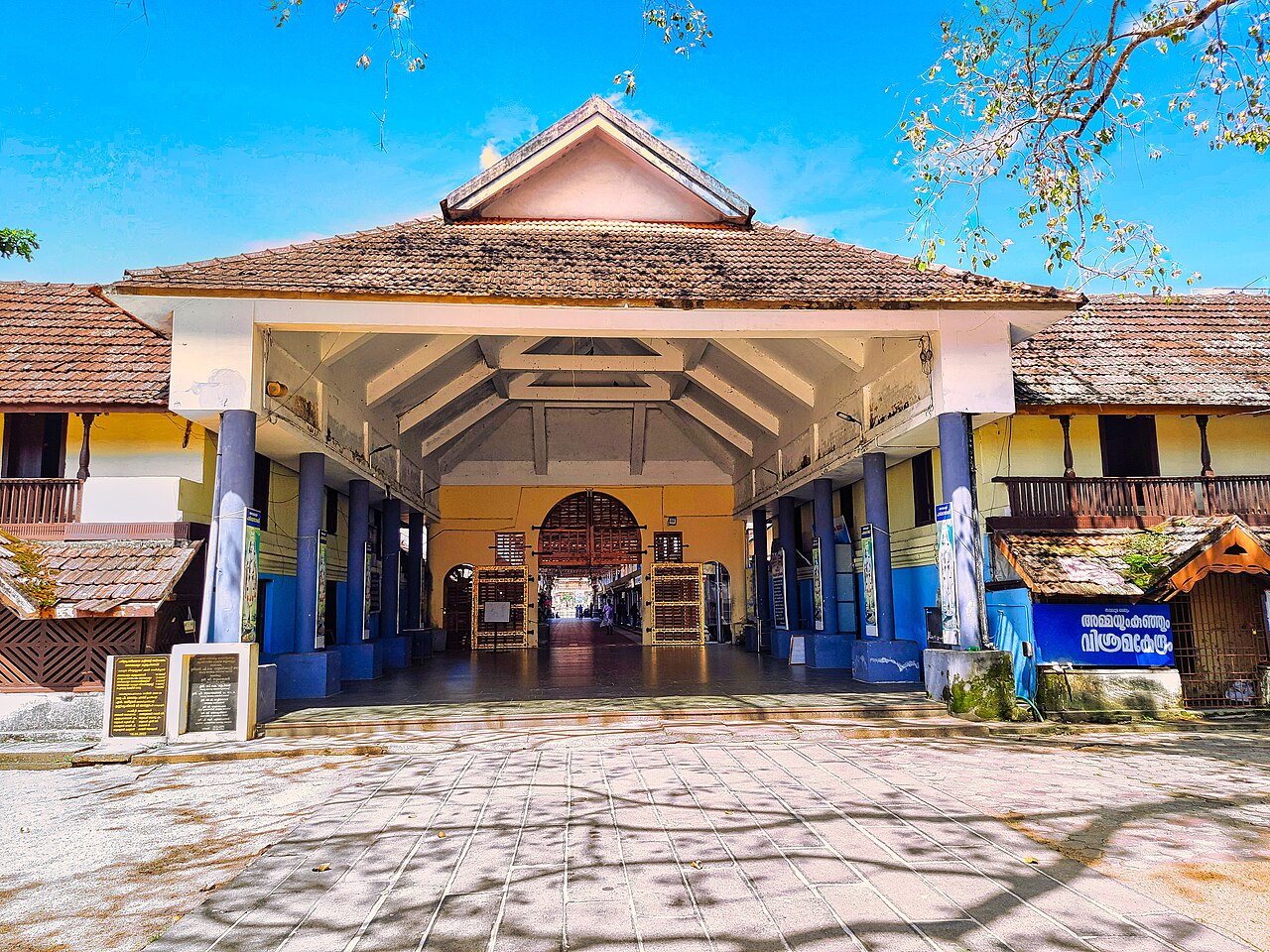 Hinduism
Ambalappuzha Sri Krishna Temple
Ambalappuzha · India · temple
A Vaishnava shrine on the Kerala backwaters consecrated to Sri Krishna in his Parthasarathy form, counted among the seven great Temples of the former kingdom of Travancore and famed across South India for its Ambalapuzha Paal Payasam offering.
Page history · 2 recent changes
- 5 Jul 2026 · place status published
- 5 Jul 2026 · place submitted