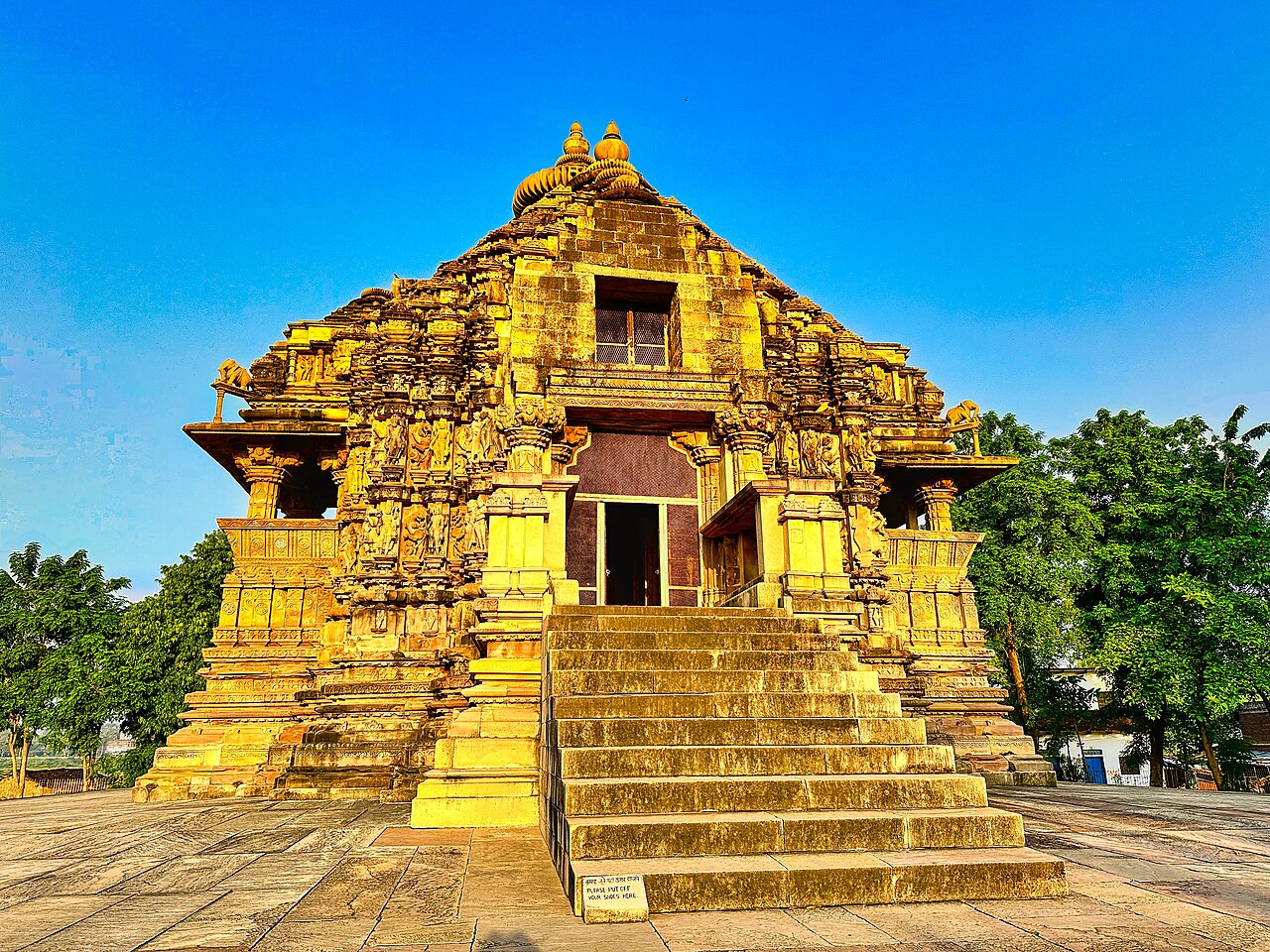
Vamana Temple, Khajuraho
Vaman Mandir
About
Nestled in the quieter eastern quarter of Khajuraho, roughly two hundred metres north-east of the Brahma Temple, the Vāmana Temple rises with the unhurried dignity characteristic of Chandela craftsmanship. Its principal deity is Vāmana, the fifth avatāra of Lord Viṣṇu, who in sacred lore took the form of a small brāhmaṇa boy to reclaim the three worlds through three cosmic strides.
Structurally, the Temple articulates the full vocabulary of the Nagara style in a compact form: a garbhagṛha (inner sanctum), an antarāla (vestibule) leading the devotee inward, a mahā-maṇḍapa (great pillared hall) furnished with lateral transepts that lend the plan its characteristic cruciform silhouette, and an entrance porch that draws the eye upward as one approaches. The spire crowning the sanctum embodies the mountain cosmology central to North Indian Temple design.
The monument belongs to the Khajuraho Group of Monuments, which UNESCO inscribed on its World Heritage List in recognition of the ensemble's extraordinary architecture, sculptural art, and enduring witness to the Chandela dynasty's cultural flowering. Within this celebrated assembly of Temples, the Vāmana shrine offers a moment of relative quietude, inviting unhurried contemplation of a tradition that honoured the divine through stone with extraordinary devotion.
History
Chandela-era builders raised the Vamana Temple between 1050 and 1075 CE, in the mature period of Temple building at Khajuraho, some two hundred metres northeast of the Brahma Temple. The Temple sets out the full Nagara vocabulary in miniature: a garbhagriha, an antarala, a maha-mandapa with lateral transepts that give the plan its cruciform shape, and an entrance porch beneath a curvilinear shikhara crowned by a beehive-shaped spire. Inside the sanctum, a four-armed image of Vamana stands flanked by Shankhapurusha and Chakrapurusha, while the outer walls carry two bands of sculpture, graceful surasundaris among them, with niches showing Lord Vishnu's Varaha and Narasimha avatars alongside Vamana himself.
Significance
As part of the Khajuraho Group of Monuments, inscribed by UNESCO in 1986 for its exceptional architecture and testimony to Chandela civilisation, the Vamana Temple carries the same artistic inheritance as its more visited neighbours while offering a quieter place to sit with it. Its dedication to Vamana, the avatara in which Lord Vishnu took the form of a small brahmana boy to reclaim the three worlds in three strides, gives the shrine a particular meaning within Vaishnava devotion, divine humility measuring and overturning the pride of a king.
Architecture
Central Indian Nagara Temple architecture of the Chandela period, curvilinear sandstone shikhara
Visiting
Hours
Hours not listed.
Contact
No contact details listed yet.
Engage with Vamana Temple, Khajuraho
Through the four pathways
Seva सेवा — Service
Offer your time and skills here. The following opportunities are open at Vamana Temple, Khajuraho:
No Seva offerings listed yet.
Sādhana साधना — Practice
Learn the worship and practice associated with Vamana Temple, Khajuraho:
No Sādhana offerings listed yet.
Sandhāna सन्धान — Wisdom
Unite with the wisdom of this tradition:
No Sandhāna offerings listed yet.
Sādhya साध्य — Giving
Support this sacred place according to your means:
No Sādhya offerings listed yet.
All giving flows directly to Vamana Temple, Khajuraho. Adisthan does not take a commission.
Gallery
Related sacred places
 Hinduism
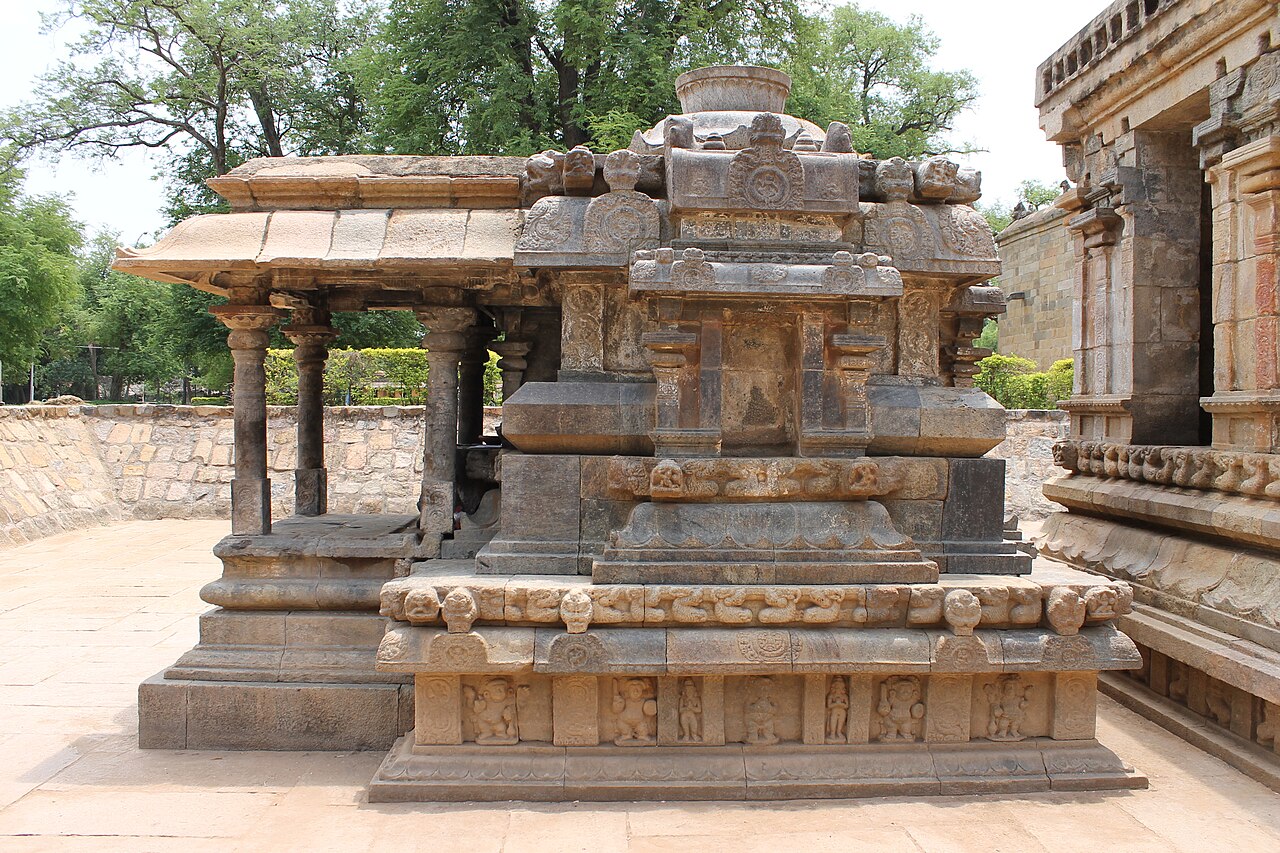
Airavatesvara Temple, Darasuram
Darasuram (Kumbakonam) · India · temple
The third of the Great Living Chola Temples, raised by Rajaraja Chola II around 1166 CE at Darasuram near Kumbakonam: a chariot-form shrine of Lord Shiva as Airavatesvara, famed for its carved stone wheels, its singing steps, and worship that has continued for over eight centuries.
Aisanyesvara Siva Temple
Bhubaneswar · India · temple
A living thirteenth-century Shiva shrine in the Old Town of Bhubaneswar, standing close to the western wall of the great Lingaraj Temple, where a Shivalinga set within a circular yonipitha still receives daily worship in the Kalinga architectural tradition.
 Hinduism
Akhadachandi Temple
Bhubaneswar · India · temple
A tenth-century Kalinga-style shrine on the southwestern bank of Bhubaneswar's sacred Bindusagar tank, Akhadachandi Temple honours Maa Mahishasuramardini, the Goddess in her form as slayer of the buffalo demon, within the dense cluster of ancient shrines that fills the city's Old Town.
 Hinduism
Akshardham
New Delhi · India · temple
A vast contemporary Hindu mandir campus on the Yamuna's west bank in East Delhi, raised without structural steel by 11,000 artisans and volunteers, and recognised by Guinness World Records in 2007 as the world's largest comprehensive Hindu Temple.
 Hinduism
Amarnath Temple
· India · temple
A high Himalayan cave shrine in Jammu and Kashmir where a naturally forming ice lingam is venerated as Lord Śiva, drawing one of India's great seasonal pilgrimages.
 Hinduism
Ambalappuzha Sri Krishna Temple
Ambalappuzha · India · temple
A Vaishnava shrine on the Kerala backwaters consecrated to Sri Krishna in his Parthasarathy form, counted among the seven great Temples of the former kingdom of Travancore and famed across South India for its Ambalapuzha Paal Payasam offering.