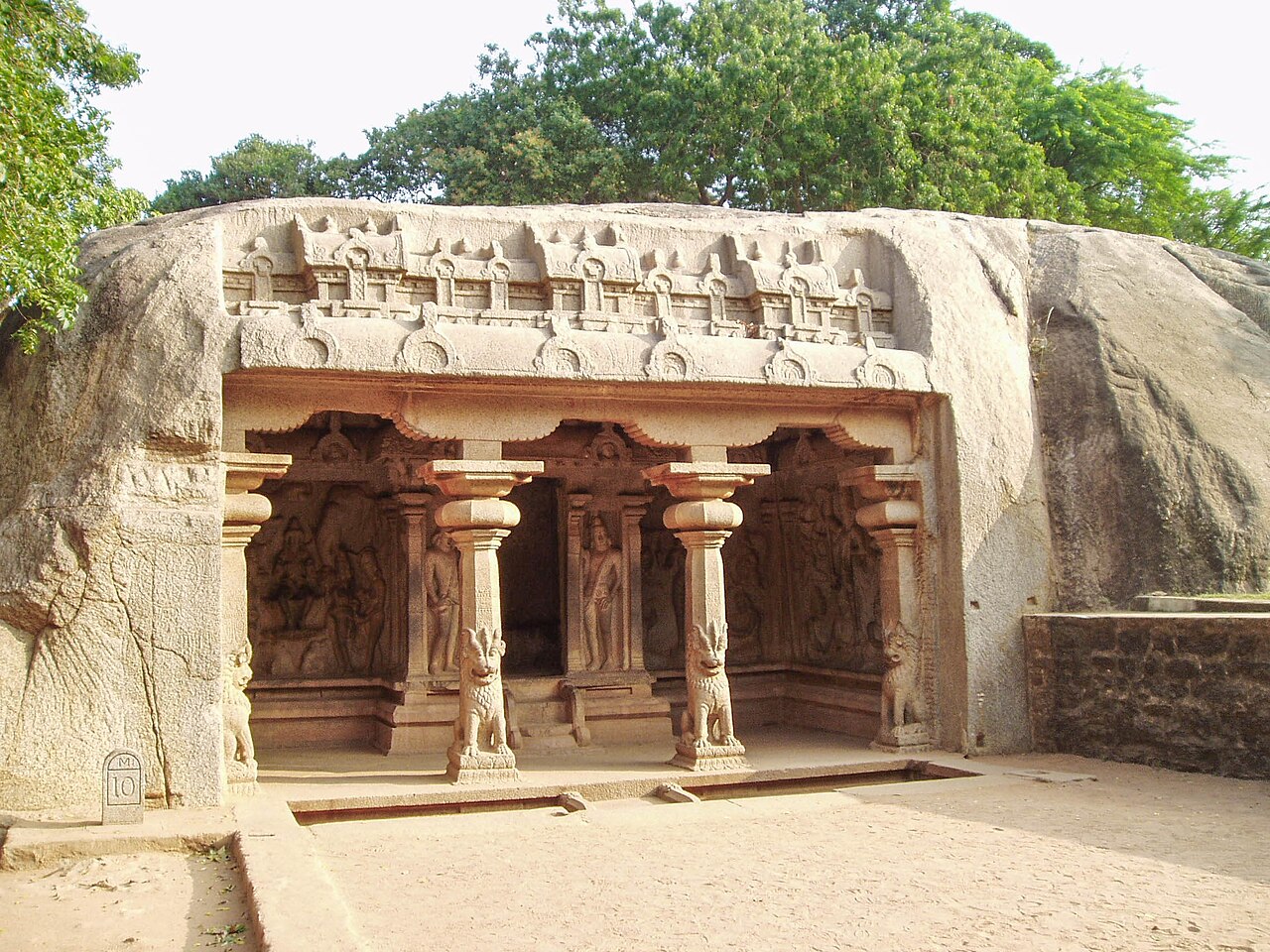
Varaha Cave Temple
Varaha Mandapa · Adivaraha Cave
About
Resting within the hill-top precinct of Mamallapuram on Tamil Nadu's Coromandel Coast, roughly 58 kilometres southwest of Chennai and about 4 kilometres north of the principal Mahabalipuram cluster of rathas and the Shore Temple, the Varaha Cave Temple stands as one of the earliest and most eloquent survivals of Indian rock-cut sacred architecture. Carved directly into outcroppings of pink granite during the late 7th century, the shrine belongs to a broader ensemble recognised by UNESCO in 1984 under criteria i, ii, iii, and iv, forming part of the Group of Monuments at Mahabalipuram.
The mandapa itself is modest in scale yet extraordinary in sculptural ambition. Fluted pillars divide the open facade; each column rests on a crouching lion and is crowned with a cushion-shaped capital, a hallmark of Pallava craftsmanship, while subtler echoes of Greco-Roman compositional sensibility can also be discerned in the seated figural groupings. The interior walls carry four monumental relief panels of remarkable quality. The Varaha panel, the cave's presiding image, portrays Vishnu in his boar avatar, four-armed and mighty, bearing Bhūdevi (the earth goddess) aloft from the primordial ocean; his rear hands hold the conch and discus, while a front arm cradles her form. The Gajalakshmi panel depicts the goddess of abundance, lotus flowers in hand, attended by four figures while two royal elephants pour consecrated water over her. The Trivikrama composition shows Vishnu striding across the three worlds as Vāmana. The Durgā panel presents the goddess overcoming Mahishāsura, rendered with a human body and a buffalo head, in a scene charged with the drama of dharma prevailing over darkness, Durgā's confident ganas advancing as the demon's forces fall back. A fifth carving of Brahmā in the sambhaga standing posture, with three heads, completes the iconographic programme.
History
The cave belongs to the reign of the Pallava king Narasimhavarman I, known as Mamalla, and is generally dated to around 650 CE, making it the oldest surviving monument at Mamallapuram. Its facade of fluted columns resting on crouching lions became a template that shaped the Temple architecture of the Tamil coast that followed. The Archaeological Survey of India has cared for the shrine since it was inscribed, with the neighbouring rathas and Shore Temple, as part of the UNESCO World Heritage Group of Monuments at Mahabalipuram in 1984.
Significance
Inside, four great relief panels tell a story of divine rescue and cosmic order: Lord Vishnu as Varaha bearing Bhudevi, the earth goddess, from the ocean; Gajalakshmi bathed by royal elephants; Lord Vishnu striding the three worlds as Trivikrama; and Maa Durga's forces overcoming the buffalo demon Mahishasura. Scholars regard the Varaha panel and the Maa Durga panel especially as masterworks of naturalistic Pallava sculpture, a high point in early Hindu rock-cut art.
Architecture
Pallava rock-cut mandapa architecture; fluted columns on crouching-lion bases with cushion capitals
Visiting
Daily worship
| Visiting hours (Archaeological Survey of India / Incredible India) | 09:00 to 18:00 |
Hours
Hours not listed.
Contact
No contact details listed yet.
Engage with Varaha Cave Temple
Through the four pathways
Seva सेवा — Service
Offer your time and skills here. The following opportunities are open at Varaha Cave Temple:
No Seva offerings listed yet.
Sādhana साधना — Practice
Learn the worship and practice associated with Varaha Cave Temple:
No Sādhana offerings listed yet.
Sandhāna सन्धान — Wisdom
Unite with the wisdom of this tradition:
No Sandhāna offerings listed yet.
Sādhya साध्य — Giving
Support this sacred place according to your means:
No Sādhya offerings listed yet.
All giving flows directly to Varaha Cave Temple. Adisthan does not take a commission.
Gallery
Related sacred places
 Hinduism
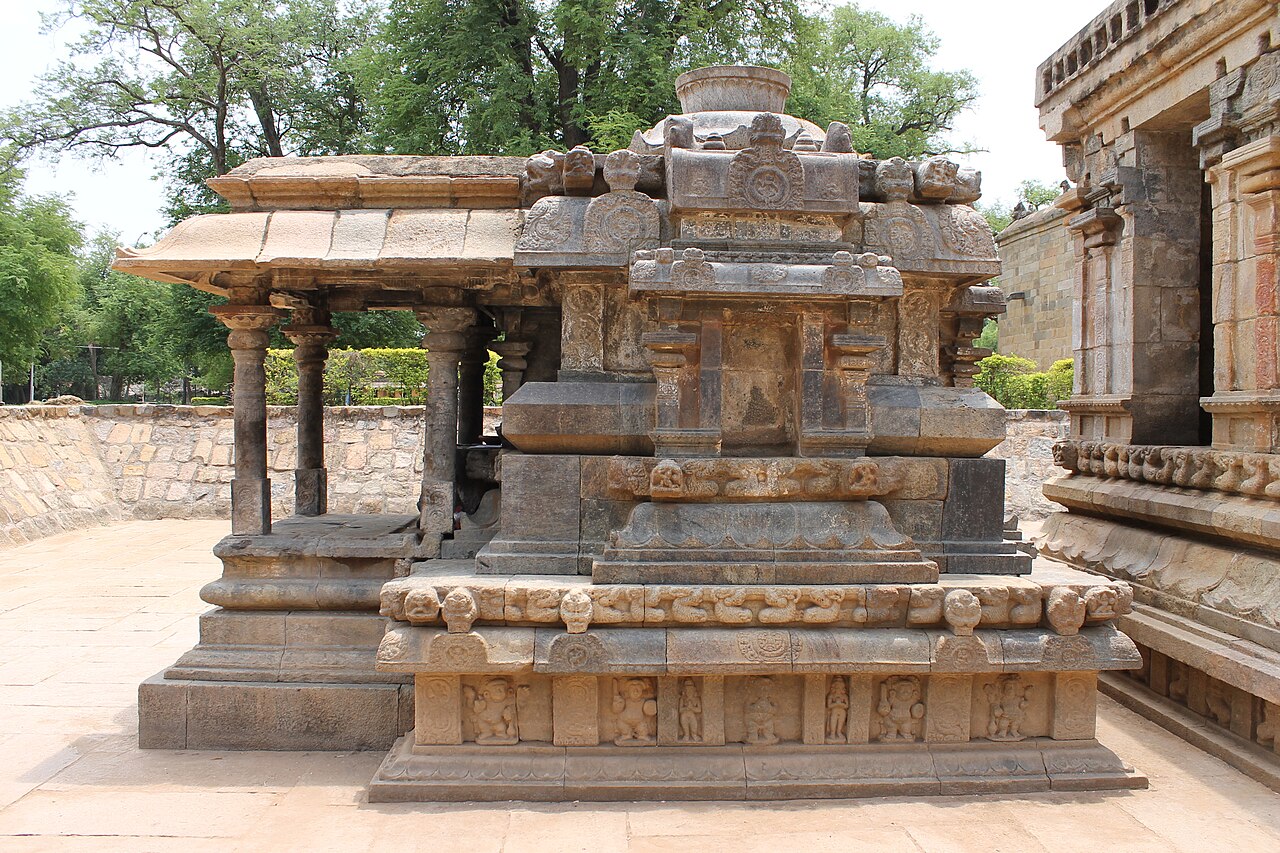
Airavatesvara Temple, Darasuram
Darasuram (Kumbakonam) · India · temple
The third of the Great Living Chola Temples, raised by Rajaraja Chola II around 1166 CE at Darasuram near Kumbakonam: a chariot-form shrine of Lord Shiva as Airavatesvara, famed for its carved stone wheels, its singing steps, and worship that has continued for over eight centuries.
Aisanyesvara Siva Temple
Bhubaneswar · India · temple
A living thirteenth-century Shiva shrine in the Old Town of Bhubaneswar, standing close to the western wall of the great Lingaraj Temple, where a Shivalinga set within a circular yonipitha still receives daily worship in the Kalinga architectural tradition.
 Hinduism
Akhadachandi Temple
Bhubaneswar · India · temple
A tenth-century Kalinga-style shrine on the southwestern bank of Bhubaneswar's sacred Bindusagar tank, Akhadachandi Temple honours Maa Mahishasuramardini, the Goddess in her form as slayer of the buffalo demon, within the dense cluster of ancient shrines that fills the city's Old Town.
 Hinduism
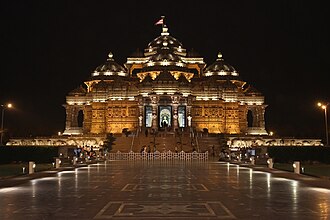
Akshardham
New Delhi · India · temple
A vast contemporary Hindu mandir campus on the Yamuna's west bank in East Delhi, raised without structural steel by 11,000 artisans and volunteers, and recognised by Guinness World Records in 2007 as the world's largest comprehensive Hindu Temple.
 Hinduism
Amarnath Temple
· India · temple
A high Himalayan cave shrine in Jammu and Kashmir where a naturally forming ice lingam is venerated as Lord Śiva, drawing one of India's great seasonal pilgrimages.
 Hinduism
Ambalappuzha Sri Krishna Temple
Ambalappuzha · India · temple
A Vaishnava shrine on the Kerala backwaters consecrated to Sri Krishna in his Parthasarathy form, counted among the seven great Temples of the former kingdom of Travancore and famed across South India for its Ambalapuzha Paal Payasam offering.