Vrindavan Chandrodaya Mandir
Chandrodaya Mandir · VCM
About
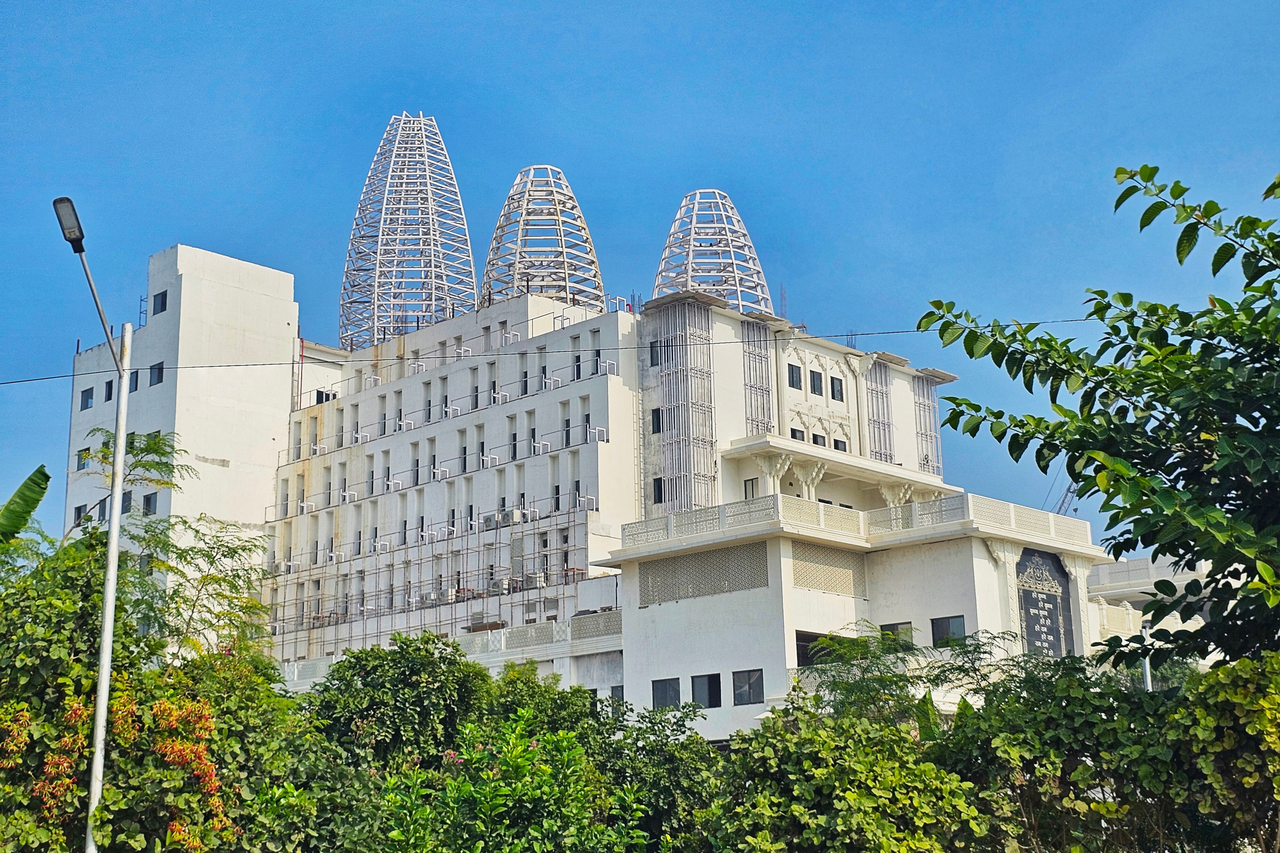
Situated in Vrindavan, one of the most spiritually charged towns in all of India, the Chandrodaya Mandir (meaning "Temple of the rising moon") is an ambitious undertaking conceived by the devotees of ISKCON Bangalore. When complete, its tower is intended to soar approximately 210 metres, the equivalent of 75 storeys, making it unprecedented in scale among religious structures anywhere on earth. The total built-up area planned for the complex extends to around 50,000 square metres.
The project occupies a vast site of roughly 260 hectares on the outskirts of Vrindavan, within Mathura district of Uttar Pradesh. A portion of this land, close to 4.9 hectares, is earmarked for visitor facilities including parking and a helipad. The presiding deity is Lord Krishna, and the entire undertaking is oriented as an act of devotion in his name, transforming what might otherwise be a worldly impulse, the desire to erect towering structures, into an offering to the divine.
At the time of writing, construction is underway and completion is anticipated around 2028. The vision behind the Temple is rooted not merely in spectacle but in a philosophy of consecrating human creative energy to sacred purpose, the principle that even grand ambitions can become pathways to the divine when directed with sincere devotion.
History
In 1972, Srila Prabhupada, founder of ISKCON, stood near the Bhajan Kutir of Sri Rupa Gosvami in Vrindavan and told his disciples that the human urge to build skyscrapers could be purified by raising an equally soaring structure for Krishna instead. Devotees of ISKCON Bangalore took up that vision, and the foundation stone of the Chandrodaya Mandir was laid on 16 March 2014, the eve of Holi. Construction continues: a completed hall in the South Wing has opened for worship, while the central spires, planned to reach roughly 210 metres across 75 storeys, still rise above a skeleton of steel and scaffolding.
Significance
Vrindavan is held sacred across the Vaishnava tradition as the earthly ground of Lord Krishna's childhood play, and the Chandrodaya Mandir aims to give that sacred geography a landmark of extraordinary scale. Its underlying teaching, that even the ambition to build tall can become an offering when turned toward the divine, is as central to the project as the building itself.
Architecture
Contemporary skyscraper Temple design merging tiered Nagara-style shikharas into a single soaring central spire
Visiting
Hours
Hours not listed.
Contact
Engage with Vrindavan Chandrodaya Mandir
Through the four pathways
Seva सेवा — Service
Offer your time and skills here. The following opportunities are open at Vrindavan Chandrodaya Mandir:
No Seva offerings listed yet.
Sādhana साधना — Practice
Learn the worship and practice associated with Vrindavan Chandrodaya Mandir:
No Sādhana offerings listed yet.
Sandhāna सन्धान — Wisdom
Unite with the wisdom of this tradition:
No Sandhāna offerings listed yet.
Sādhya साध्य — Giving
Support this sacred place according to your means:
No Sādhya offerings listed yet.
All giving flows directly to Vrindavan Chandrodaya Mandir. Adisthan does not take a commission.
Festivals & Events
- Sept
Janmashtami
5 September 2026 · annual
The birth anniversary of Lord Krishna, the most significant festival for any Krishna Temple, observed by ISKCON and Vaishnava Temples with midnight worship and elaborate decoration of the deity.
- Mar
Holi
23 March 2027 · annual
The festival of colour, with particular resonance for this Temple since its foundation stone was laid on Holi's eve in 2014, marking the start of the project itself.
Gallery
Related sacred places
 Hinduism
Airavatesvara Temple, Darasuram
Darasuram (Kumbakonam) · India · temple
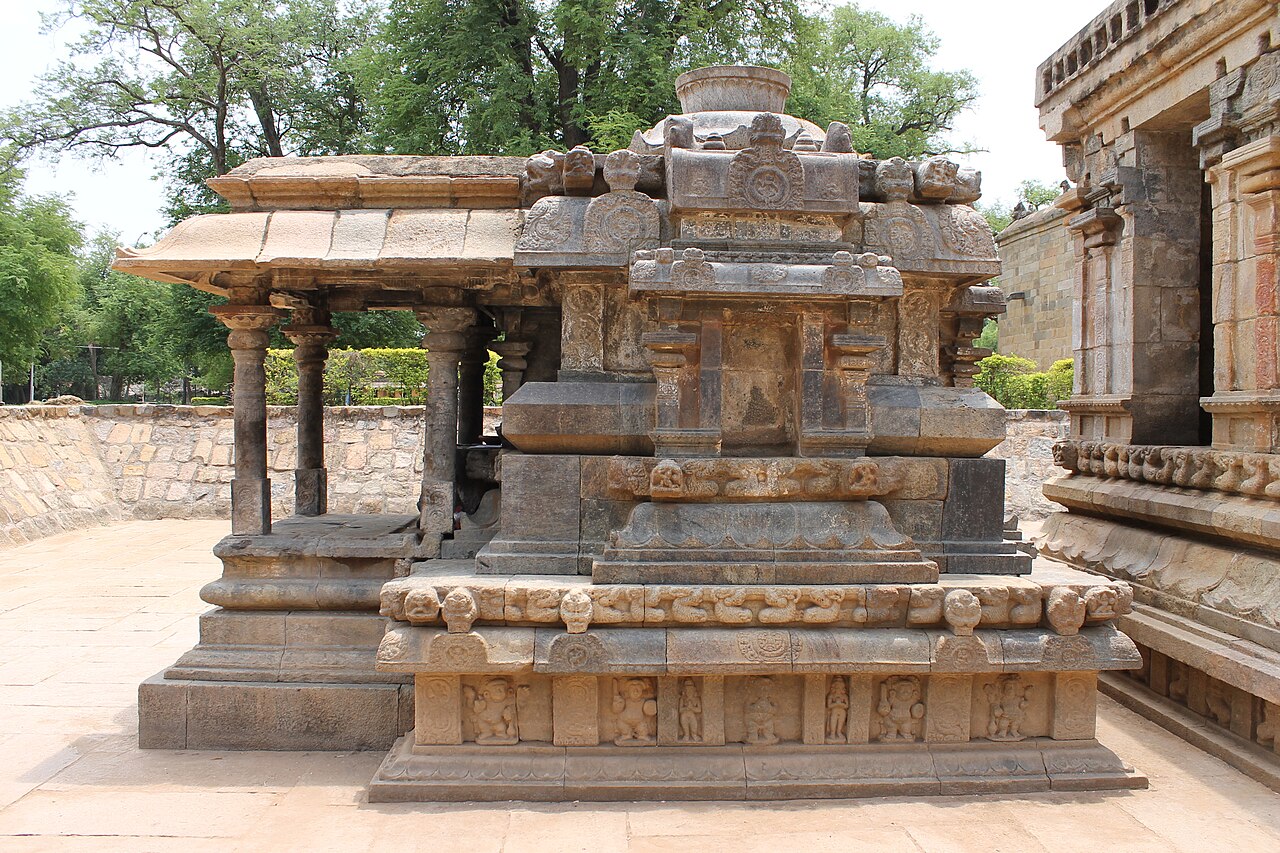
The third of the Great Living Chola Temples, raised by Rajaraja Chola II around 1166 CE at Darasuram near Kumbakonam: a chariot-form shrine of Lord Shiva as Airavatesvara, famed for its carved stone wheels, its singing steps, and worship that has continued for over eight centuries.
Aisanyesvara Siva Temple
Bhubaneswar · India · temple
A living thirteenth-century Shiva shrine in the Old Town of Bhubaneswar, standing close to the western wall of the great Lingaraj Temple, where a Shivalinga set within a circular yonipitha still receives daily worship in the Kalinga architectural tradition.
 Hinduism
Akhadachandi Temple
Bhubaneswar · India · temple
A tenth-century Kalinga-style shrine on the southwestern bank of Bhubaneswar's sacred Bindusagar tank, Akhadachandi Temple honours Maa Mahishasuramardini, the Goddess in her form as slayer of the buffalo demon, within the dense cluster of ancient shrines that fills the city's Old Town.
 Hinduism
Akshardham
New Delhi · India · temple
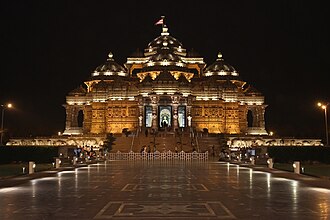
A vast contemporary Hindu mandir campus on the Yamuna's west bank in East Delhi, raised without structural steel by 11,000 artisans and volunteers, and recognised by Guinness World Records in 2007 as the world's largest comprehensive Hindu Temple.
 Hinduism
Amarnath Temple
· India · temple
A high Himalayan cave shrine in Jammu and Kashmir where a naturally forming ice lingam is venerated as Lord Śiva, drawing one of India's great seasonal pilgrimages.
 Hinduism
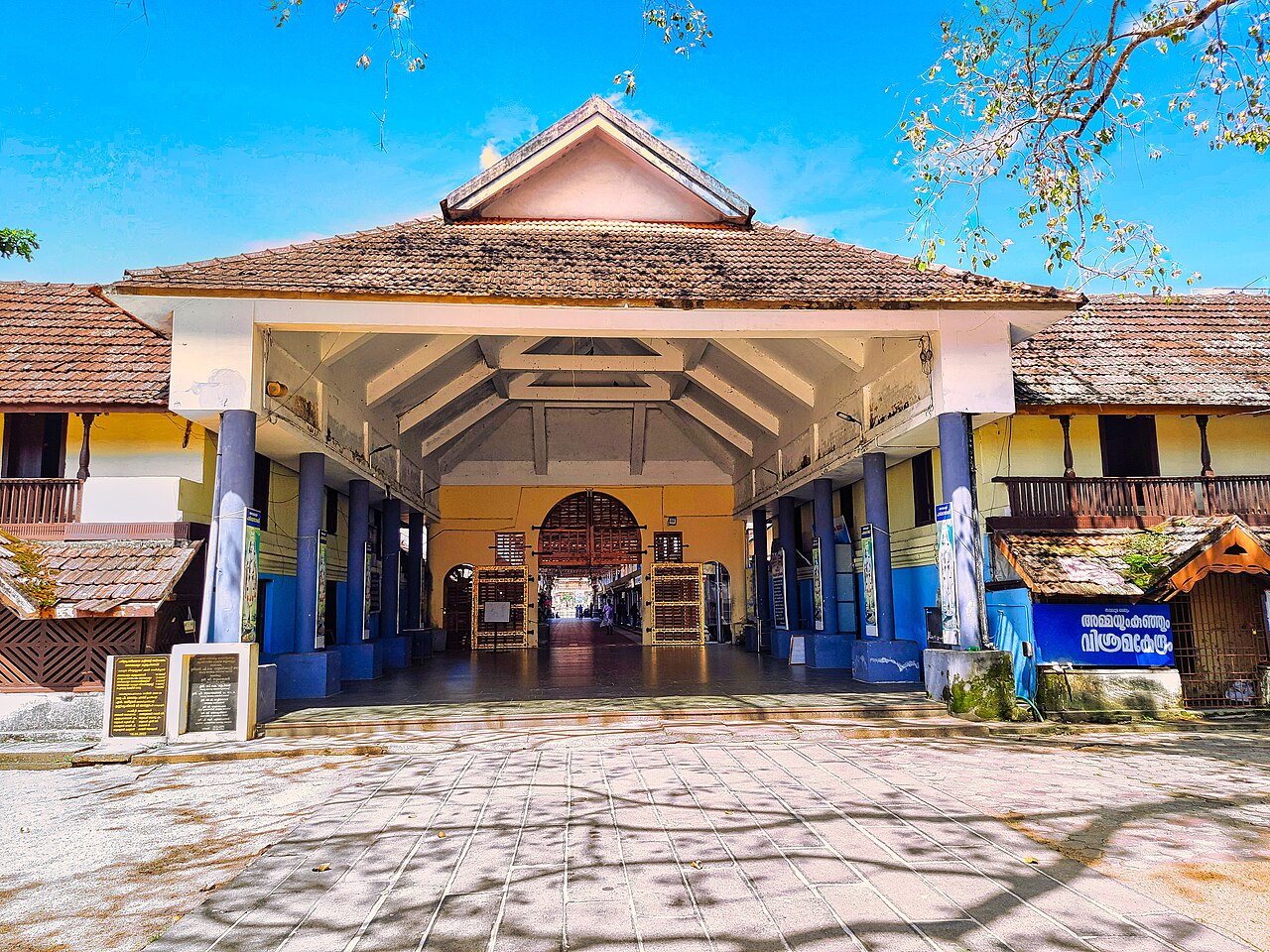
Ambalappuzha Sri Krishna Temple
Ambalappuzha · India · temple
A Vaishnava shrine on the Kerala backwaters consecrated to Sri Krishna in his Parthasarathy form, counted among the seven great Temples of the former kingdom of Travancore and famed across South India for its Ambalapuzha Paal Payasam offering.