
Walkeshwar Temple
Baan Ganga Temple · Shri Valukeshwar · Walukeshwar Temple
About
Rising above the Arabian Sea on the ridge of Malabar Hill in South Mumbai, Walkeshwar Temple, also revered as the Baan Ganga Temple, stands as one of the oldest living Śaiva shrines in the city. The Sanskrit compound Vālukā Īśvara, meaning 'Lord fashioned from sand,' names both the presiding deity and the founding legend: when Lord Rāma halted here during his southward journey to retrieve Sītā from Rāvaṇa's captivity, he is said to have moulded a liṅga from river sand after growing weary of waiting for his brother Lakṣmaṇa to bring a consecrated image from Kāśī. That improvised act of devotion became the Temple's founding moment and its enduring identity.
The adjacent Banganga Tank carries an equally luminous origin story. Thirsting after his arrival at this coastal promontory, where only salt water surrounded him, Rāma is said to have loosed an arrow that drew the Gaṅgā herself underground to this spot. The name Banganga unites bāṇa (arrow) with Gaṅgā, and the tank's waters are held to spring from a subterranean source, despite the shoreline lying just metres away.
Over the centuries the site expanded into a constellation of shrines and pilgrim amenities. By the mid-nineteenth century dozens of smaller Temples had gathered around the tank, and fifty dharmaśālās offered shelter to visiting devotees. Today the compound also hosts Shri Kavle Math and Shri Kashi Math, prominent monastic seats of the Gaud Saraswat Brahmin community, on the tank's northern and western margins respectively. Each year the site transforms into an outdoor concert hall for an annual Hindustani classical music festival; a 2005 edition brought together vocalists Rajan and Sajan Mishra alongside santūr maestro Shivkumar Sharma.
History
Tradition holds that Lord Rama rested at this spot on his journey south to rescue Sita, and grew weary of waiting for Lakshmana to bring a consecrated image from Kashi, so he shaped a linga from the sand himself. The Temple and its adjoining tank were built in 1127 CE by Lakshman Prabhu, a minister under the Shilahara dynasty. Portuguese colonial authorities destroyed the original structures in the sixteenth century, and the Temple was rebuilt in 1715 through the generosity of the Mumbai merchant Rama Kamat. Further shrines grew up around the tank through the nineteenth century, and the complex today includes the monastic seats of the Gaud Saraswat Brahmin community, whose trust maintains it.
Significance
Walkeshwar is among the few ancient Shaiva sites in Mumbai to have survived colonial demolition and the city's rapid growth while remaining a living centre of daily worship. Its Banganga Tank, believed to spring from a channel Rama drew from the Ganga itself despite sitting metres from the sea, draws ritual bathers especially at the full moon and new moon.
Architecture
Traditional Maharashtrian Temple architecture; the present sanctuary is substantially an early 18th-century reconstruction
Visiting
Hours
Hours not listed.
Contact
No contact details listed yet.
Engage with Walkeshwar Temple
Through the four pathways
Seva सेवा — Service
Offer your time and skills here. The following opportunities are open at Walkeshwar Temple:
No Seva offerings listed yet.
Sādhana साधना — Practice
Learn the worship and practice associated with Walkeshwar Temple:
No Sādhana offerings listed yet.
Sandhāna सन्धान — Wisdom
Unite with the wisdom of this tradition:
No Sandhāna offerings listed yet.
Sādhya साध्य — Giving
Support this sacred place according to your means:
No Sādhya offerings listed yet.
All giving flows directly to Walkeshwar Temple. Adisthan does not take a commission.
Festivals & Events
- Nov
Banganga Maha-Aarti
24 November 2026 · annual
A Dev Deepawali celebration on Tripurari Purnima, marking Lord Shiva's victory over the demon Tripurasura, when the GSB Temple Trust lights the tank's ghats with diyas and leads a Maha-Aarti at Banganga.
- Mar
Maha Shivratri
6 March 2027 · annual
The great night of Lord Shiva, observed with special vigil and worship at Shiva Temples across India, Temple timings at Walkeshwar are extended for the occasion.
Gallery
Related sacred places
 Hinduism
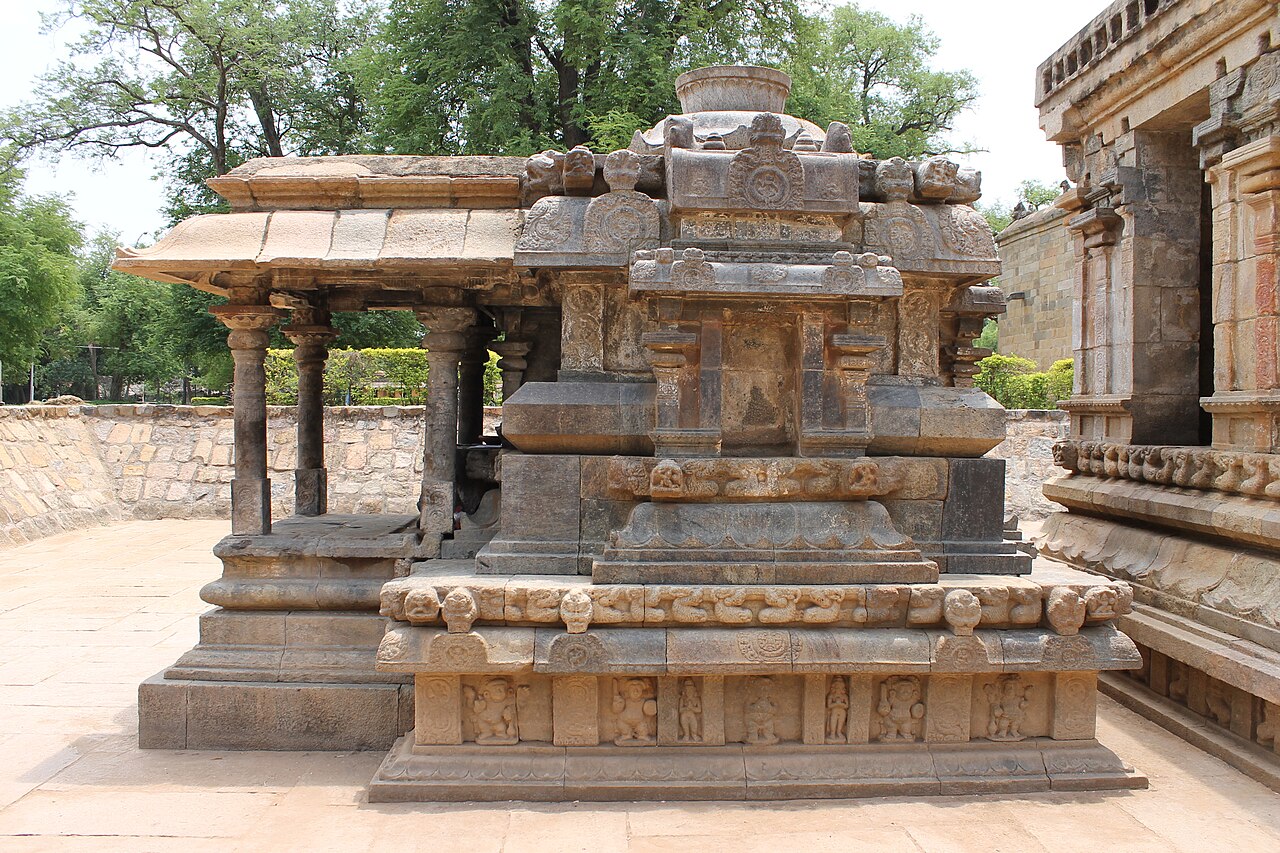
Airavatesvara Temple, Darasuram
Darasuram (Kumbakonam) · India · temple
The third of the Great Living Chola Temples, raised by Rajaraja Chola II around 1166 CE at Darasuram near Kumbakonam: a chariot-form shrine of Lord Shiva as Airavatesvara, famed for its carved stone wheels, its singing steps, and worship that has continued for over eight centuries.
Aisanyesvara Siva Temple
Bhubaneswar · India · temple
A living thirteenth-century Shiva shrine in the Old Town of Bhubaneswar, standing close to the western wall of the great Lingaraj Temple, where a Shivalinga set within a circular yonipitha still receives daily worship in the Kalinga architectural tradition.
 Hinduism
Akhadachandi Temple
Bhubaneswar · India · temple
A tenth-century Kalinga-style shrine on the southwestern bank of Bhubaneswar's sacred Bindusagar tank, Akhadachandi Temple honours Maa Mahishasuramardini, the Goddess in her form as slayer of the buffalo demon, within the dense cluster of ancient shrines that fills the city's Old Town.
 Hinduism
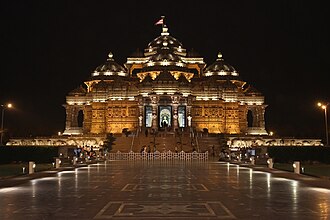
Akshardham
New Delhi · India · temple
A vast contemporary Hindu mandir campus on the Yamuna's west bank in East Delhi, raised without structural steel by 11,000 artisans and volunteers, and recognised by Guinness World Records in 2007 as the world's largest comprehensive Hindu Temple.
 Hinduism
Amarnath Temple
· India · temple
A high Himalayan cave shrine in Jammu and Kashmir where a naturally forming ice lingam is venerated as Lord Śiva, drawing one of India's great seasonal pilgrimages.
 Hinduism
Ambalappuzha Sri Krishna Temple
Ambalappuzha · India · temple
A Vaishnava shrine on the Kerala backwaters consecrated to Sri Krishna in his Parthasarathy form, counted among the seven great Temples of the former kingdom of Travancore and famed across South India for its Ambalapuzha Paal Payasam offering.