The Lord sits in silence here, and Maa Lakshmi Keeps the snow from His shoulders.
Be the first to check in
Entry tended 24 May 2026
About 3,100 m in the Garhwal Himalaya Open 23 Apr 2026 to mid November Tapt Kund bath before darshan Abhishek from 4:30 am Free darshan · yatra registration required
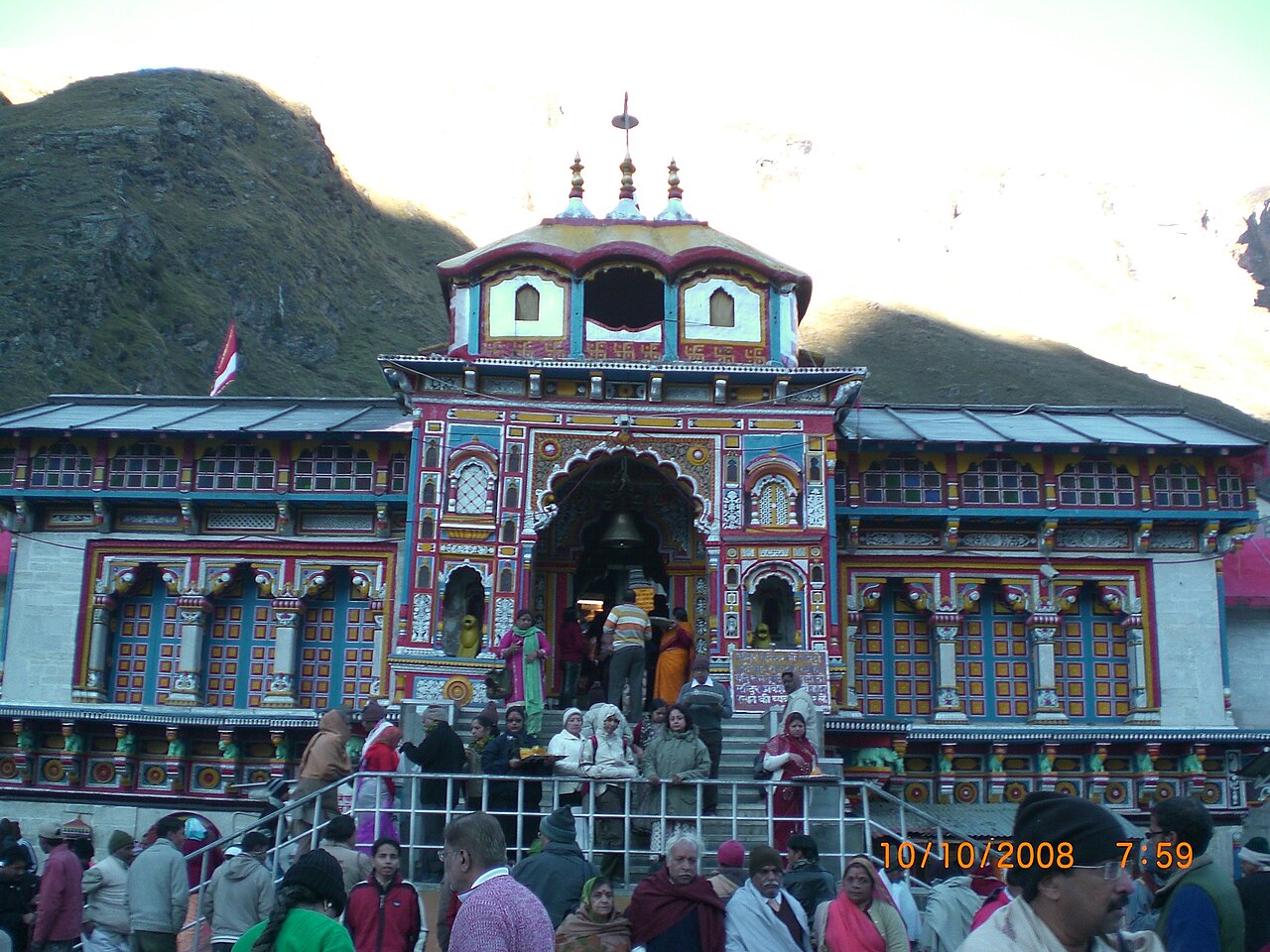
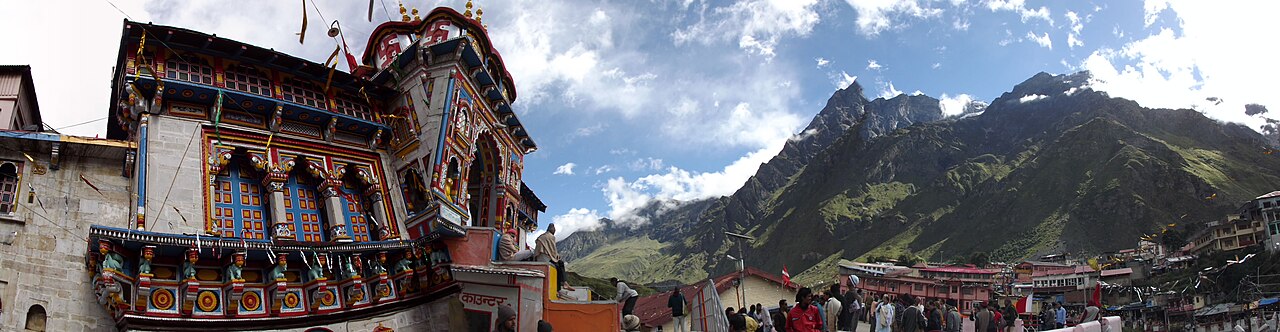
The road climbs past Joshimath through bare rock and river thunder, and the valley narrows to grey stone and old snow. Then the colours strike: a facade of red, gold, green and blue painted stone glowing against the mountainside, the Alaknanda roaring below it, steam curling off the hot spring at its bank, bells and conches carrying in the thin cold air. Step inside and the surprise is stillness. The Lord here is not standing to bless. He sits in meditation, eyes lowered, as He has beyond all memory.
The image of Lord Badrinarayan is svayam vyakta, self-manifested, carved by no human hand: a dark shaligram stone form of Lord Vishnu seated in padmasana, counted among only eight self-manifested images of the Lord on earth.
Three callings meet on one shrine. Badrinath is the northern seat of the original Char Dham of India in Adi Shankara's tradition, a station of Uttarakhand's own Himalayan Char Dham, and one of the 108 Divya Desams sung by the Tamil Alvar saints, the holiest ground of the Sri Vaishnavas.
By unbroken custom the head priest, the Rawal, is a Namboodiri Brahmin from Kerala, the homeland of Adi Shankara. Every morning at 3,100 metres, India's far south wakes its far north for worship.
The tree, the stone, and the philosopher
The legend says Lord Vishnu chose this valley for tapasya, austere and unmoving through the Himalayan seasons. Seeing Him exposed to snow and sun, Maa Lakshmi Took the form of a badri tree, the hardy wild jujube, and spread Herself over Him, sheltering His meditation for ages. Moved by Her devotion, the Lord named the place for the tree that served Him: Badrika Ashrama, the hermitage of the badri, and He Himself is called Badri Vishal and Badrinarayan, the Lord whom the badri sheltered. The sages Nara and Narayana kept their hermitage in this same valley, and the two mountains flanking the town still bear their names. The Skanda Purana says of it: there are many sacred shrines in heaven, on earth and in the netherworld, but there is no shrine like Badrinath.
The Temple's second founding is history as much as legend. In the eighth century, tradition holds, Adi Shankara came north from Kerala, recovered the self-manifested shaligram image of the Lord from Narad Kund in the Alaknanda, and enshrined it, first in a cave, then in a Temple, restoring the shrine as a great seat of pilgrimage. The line he set continues: the Rawal who touches the image today is still a Namboodiri from Shankara's own country. The buildings themselves have bowed to the mountains more than once; after the great Garhwal earthquake of 1803 the Temple was raised again by the king of Jaipur, and its painted face has been renewed by every generation since.
What you'll actually see
1
Tapt Kund, the bath before the Lord
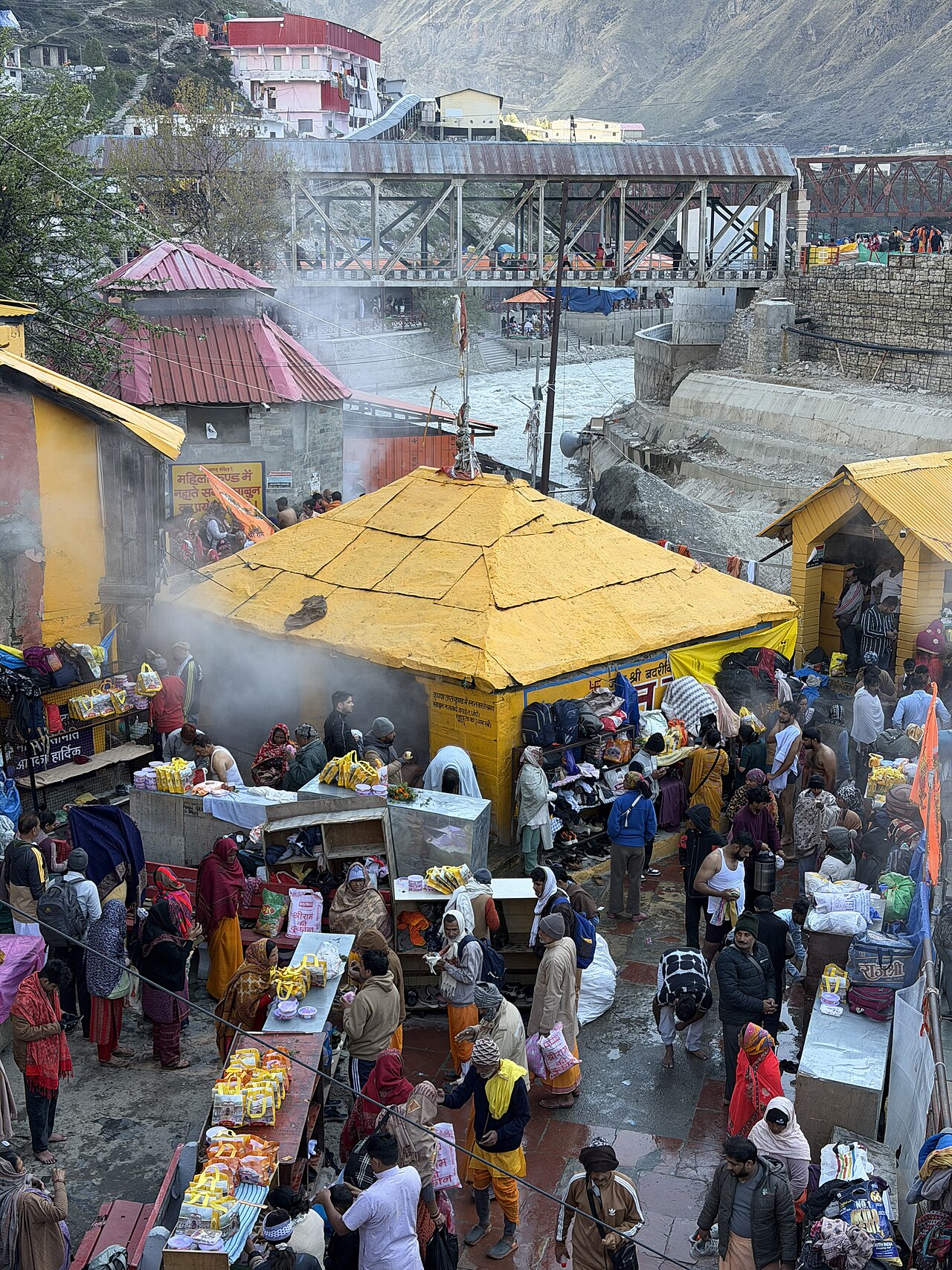
Between the Temple and the Alaknanda a hot sulphur spring steams in the mountain air, its water around 45 degrees Celsius in the Temple committee's account. Pilgrims bathe or sprinkle themselves here before climbing to darshan, warm water in a valley of glacial cold, taken as the gift of Agni.
2
The painted singh dwara
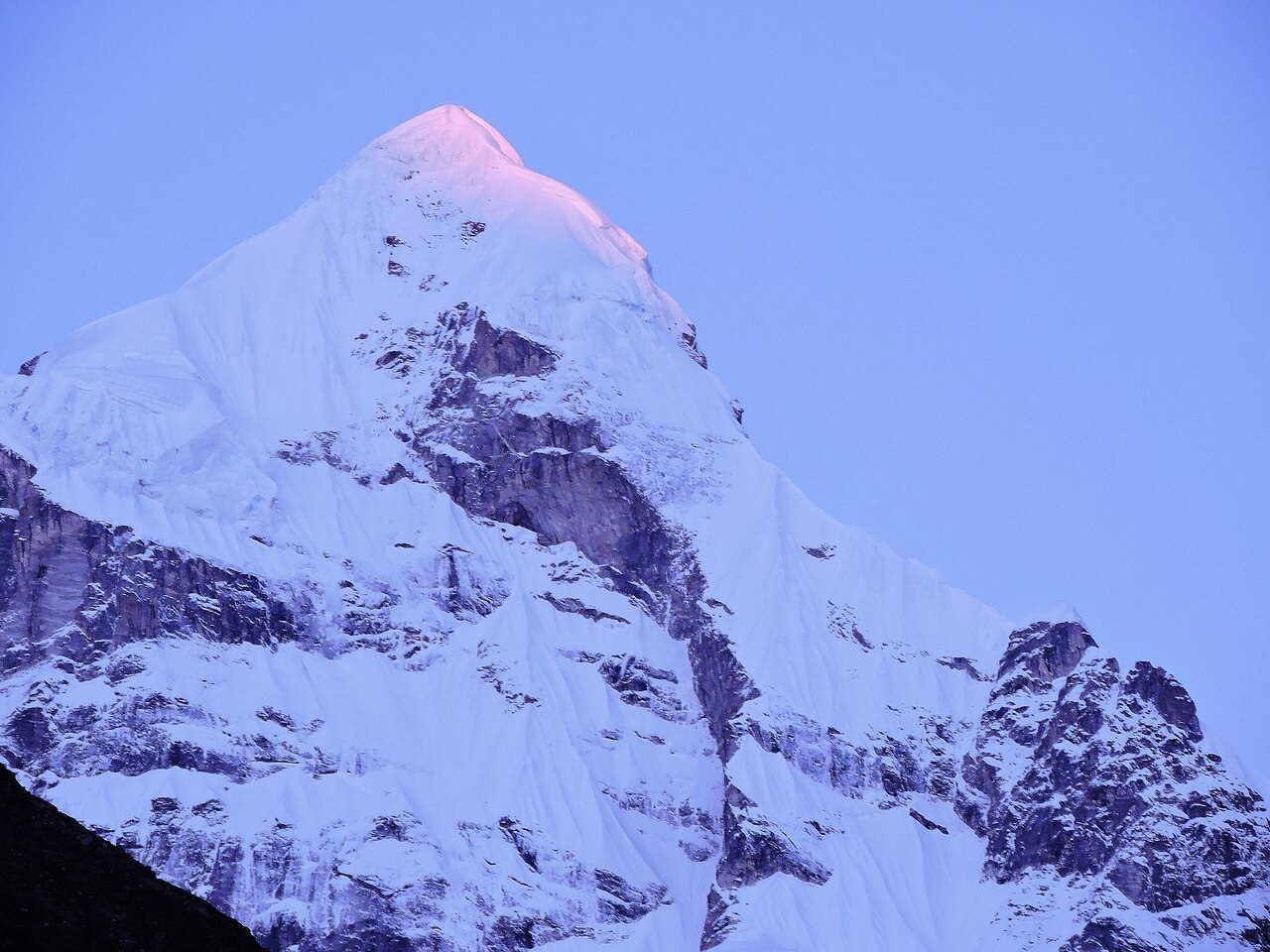
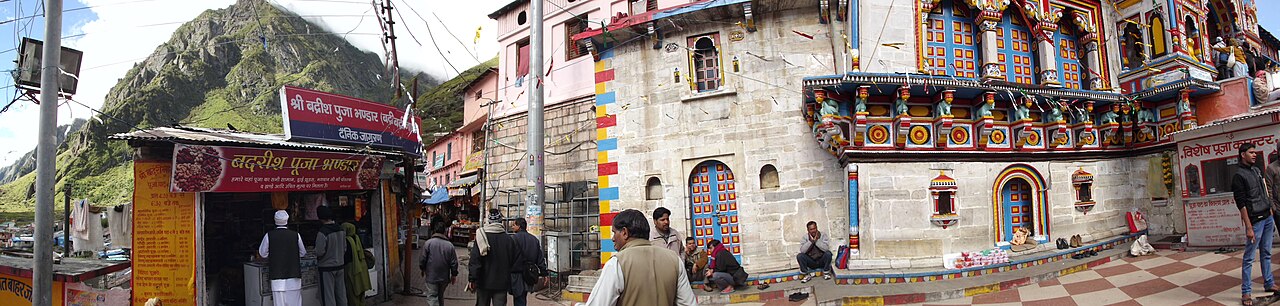
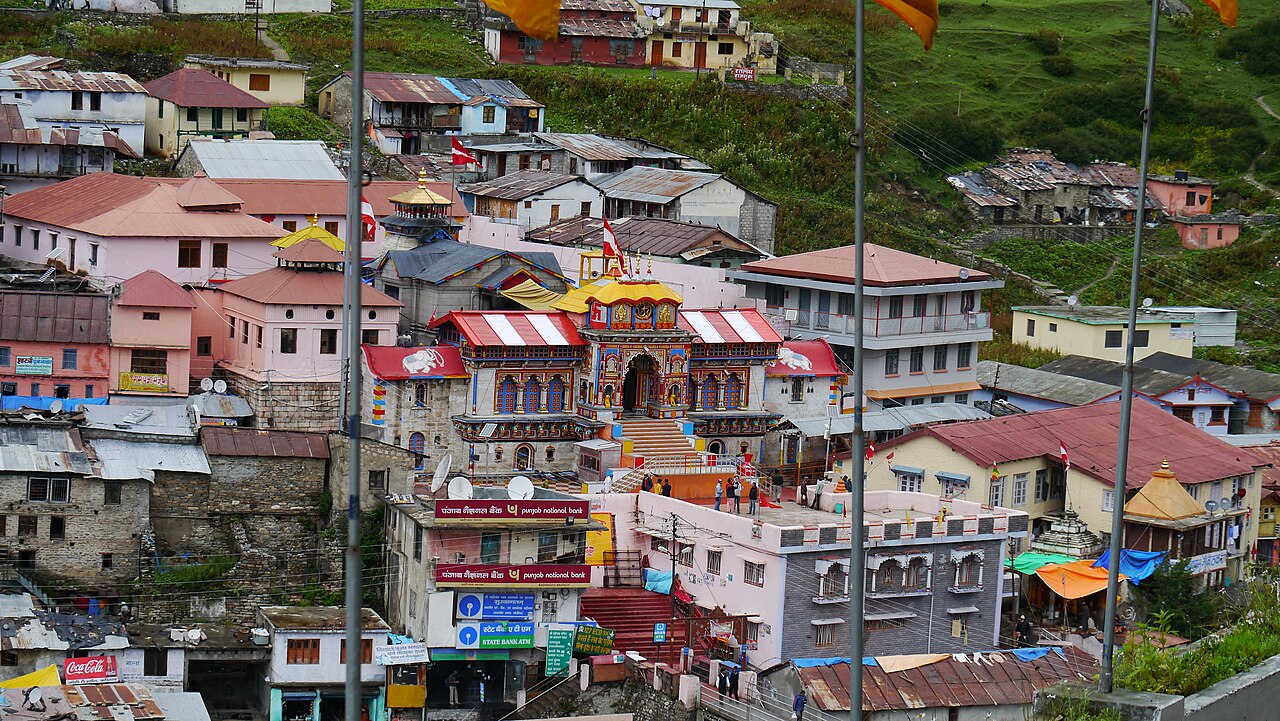
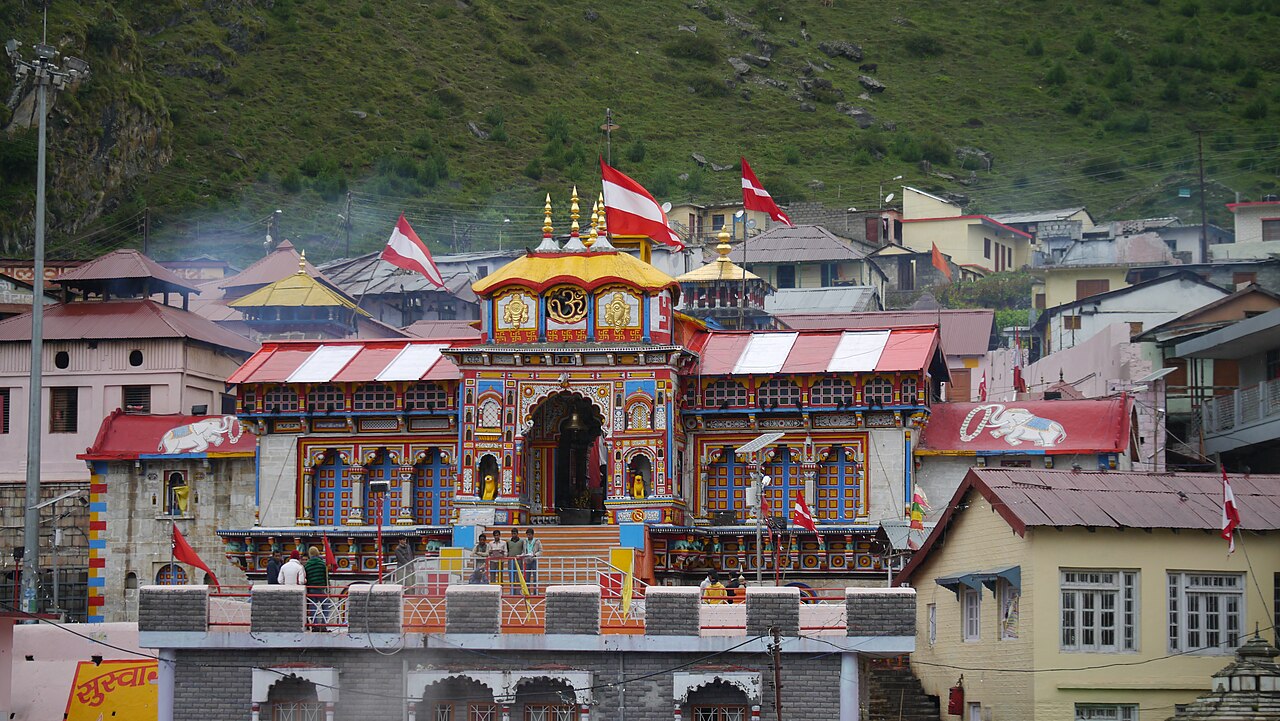
The stone facade is painted like a manuscript page: reds, golds, greens and blues around arched windows, with a great bell hung above the main door and a broad stairway rising to it. Above, the conical shikhara stands about 15 metres over the sanctum, crowned with a gilt cupola, with the snow pyramid of Neelkanth behind it on a clear morning.
3
The sanctum beneath the gold canopy
In the garbha griha the black shaligram image of Lord Badri Vishal sits in padmasana under a canopy sheeted in gold, said to recall the badri tree of Maa Lakshmi. Around Him stand images of Nar and Narayan, Kubera the treasurer, Uddhava, Narad ji and others, fifteen murtis in the complex in all.
Steam rising from the Tapt Kund hot spring below Badrinath Temple, where pilgrims bathe before darshanFirst sunlight on the snow pyramid of Neelkanth peak, seen from Badrinath
Tapt Kund and the Neelkanth peak at first light · photos CC0 and CC BY-SA 4.0, Wikimedia Commons (Shobhit Gosain, Sreyabanerjee)
THE DAY THE LORD VISITS HIS MOTHER
Mata Murti Ka Mela
Once a year, on Vamana Dwadashi in September, Lord Badri Vishal leaves His Temple. The Rawal carries the Lord's utsav image in procession up the valley to the Temple of Mata Murti, honoured as His mother, near Mana village, and He spends the day in Her courtyard while the whole valley gathers for the mela. In 2026 Vamana Dwadashi falls on 23 September. The same season carries the Badri-Kedar Utsav, an eight-day festival of devotional music held each June at both Badrinath and Kedarnath.
Reach Badrinath a day before the mela; rooms in the small town fill quickly and the morning procession is the heart of it.
Plan your visit
By air
Jolly Grant Airport, Dehradun, about 314 km; the onward drive takes 10 to 12 hours, usually broken at Joshimath or Srinagar.
By rail
Yog Nagari Rishikesh is the practical railhead, about 295 km; buses and shared taxis run the NH7 route daily in season.
By road
Badrinath is fully drivable, no trek required, unlike Kedarnath. NH7 follows the Alaknanda through Devprayag, Srinagar, Chamoli and Joshimath; from Joshimath traffic is released in timed convoys, and hill driving stops by evening.
Timings
Darshan roughly 4:30 am to 1 pm and 4 pm to 9 pm; abhishek 4:30 to 6:30 am, evening aarti about 6 pm, shayan aarti near 8:30 pm. Confirm locally, hours shift with the season.
Season 2026
The kapat opened 23 April 2026 at 6:15 am. Closing falls in mid to late November; the exact day is fixed and announced on Vijayadashami by the Temple committee.
Tapt Kund
The hot spring bath below the Temple comes before darshan by custom; separate enclosures exist for women.
Dress
Warm layers in every month; nights fall near freezing even in summer at this altitude. Modest Temple dress as at any dham.
Fee & registration
Darshan is free. Char Dham Yatra registration is mandatory and free at registrationandtouristcare.uk.gov.in; special pujas are booked on the Temple committee's portal, badrinath-kedarnath.gov.in.
The name remembers the tree: badri is the wild jujube, and the valley is Badrika Ashrama, the hermitage where Maa Lakshmi As a badri tree Sheltered the meditating Lord.
Mana, about 4 km beyond the Temple, is the last Indian village before the Tibet border; its Vyas Gufa is honoured as the cave where Veda Vyasa composed the Mahabharata.
The town stands at about 3,100 metres; walk slowly on arrival, drink water, and give yourself a night to acclimatize.
When the kapat close for winter an akhand jyoti, a great ghee lamp, burns on inside the sealed sanctum for six months; tradition holds that Narad ji keeps the Lord's worship until spring, and pilgrims prize the first darshan of that still-burning flame at the reopening.
Questions pilgrims ask
Do I have to trek to Badrinath like Kedarnath?
No. Badrinath is the one Himalayan dham the road reaches directly; buses and taxis stop in the town and the Temple is a short walk over the Alaknanda. Only the optional side trips, such as the walk beyond Mana, involve trekking.
When is the Temple open in 2026?
The doors opened on 23 April 2026 at 6:15 am and remain open until the winter closing in mid to late November, the exact day announced on Vijayadashami. In winter the Lord's worship continues at the Narasimha Temple in Joshimath, where Adi Shankara's gaddi rests, while the utsav images of Uddhava and Kubera stay at Yogdhyan Badri in Pandukeshwar.
What will I actually see in the sanctum?
A dark shaligram stone image of Lord Vishnu seated in padmasana, in deep meditation rather than standing in blessing. Devotees hold it to be self-manifested, one of eight svayam vyakta images of the Lord, recovered from Narad Kund by Adi Shankara. Darshan moves quickly in season; each pilgrim gets only moments before the image.
Why is the head priest from Kerala?
Adi Shankara, who re-established the shrine in the eighth century, came from Kerala, and the tradition he set continues: the Rawal, the only one who touches the image of the Lord, is always a Namboodiri Brahmin of that country, chosen for learning and lifelong vows. It is one of the oldest living threads binding India's south to its north.
Is bathing in Tapt Kund required?
It is the custom rather than a rule: pilgrims bathe or at least sprinkle the warm spring water on themselves before darshan. The kund is hot, the air is cold, and most find the bath one of the mercies of the journey.
Dharamshalas and guest houses near this Sthan, shared by devotees. Adisthan takes no bookings and no money; contact each stay directly.
No stays are listed here yet. Know one that serves pilgrims well?
Are you the Rawal's office, a Dharmadhikari, or a member of the Shri Badarinath Kedarnath Temple Committee? Claim this page to keep timings, puja bookings and the yearly kapat dates true for every pilgrim who seeks Lord Badri Vishal.