
Essen Minster
Essener Munster · Essen Cathedral · Essener Dom
About
Rising on the Burgplatz at the heart of Essen, this Gothic hall church serves as the mother church for the Diocese of the Ruhr. Its dedication honours the physician-martyrs Cosmas and Damian alongside Mary, a pairing that has shaped its liturgical life for centuries.
The church grew up around Essen Abbey, a community of noble canonesses founded around 845 by Altfrid, Bishop of Hildesheim. Around this religious foundation the wider city itself slowly took shape, so that the minster is older than the town surrounding it.
The present sandstone building took form after 1275, replacing earlier churches on the same ground. Surviving from the older Ottonian sanctuary are the octagonal westwork and the crypt, while the adjoining Church of St Johann Baptist and the cloister to the north preserve the wider monastic layout. The complex was reconstructed after damage in the Second World War.
Among its treasures, kept in the Domschatz, is the Golden Madonna, regarded as the oldest fully sculptural figure of Mary north of the Alps. The treasury alone draws pilgrims and scholars who come to encounter this thousand-year inheritance of devotion to the Mother of God.
History
Altfrid and the first abbess Gerswid raised the earliest church on this hill between 845 and 870, a basilica destroyed by fire in 946 and rebuilt in Ottonian style under the abbesses who followed. That church burned again in 1275, and the present Gothic hall church rose in pale sandstone over the following decades, keeping the older westwork and crypt as its foundation. Essen Abbey housed secular canonesses, not nuns bound to a monastic rule, until Prussia dissolved it in 1803 and the minster became a parish church. Bombing severely damaged the building on the night of 5 to 6 March 1943; reconstruction ran through the 1950s, and the restored minster became the cathedral of the newly founded Diocese of Essen on 1 January 1958.
Significance
The Golden Madonna, a gilded poplar figure of the Virgin some 74 centimetres high, has been venerated here since around the year 980 and remains the diocese's most treasured image of Mary. Essen Minster and the Diocese of Essen keep 26 September as the feast of Cosmas and Damian, the martyr-physicians who are patrons of both the cathedral and the city, whose relics Bishop Altfrid brought to Essen in the ninth century.
Architecture
Gothic hall church (post-1275) built over a surviving Ottonian westwork and crypt (10th-11th century)
Visiting
Daily worship
| Sunday Mass | 07:30 to | |
| Sunday Capitular Mass (sung) | 10:00 to | |
| Sunday Mass | 12:00 to | |
| Sunday evening Mass | 19:00 to | |
| Weekday Mass | 07:00 to |
Hours
Hours not listed.
Engage with Essen Minster
Through the four pathways
Seva सेवा — Service
Offer your time and skills here. The following opportunities are open at Essen Minster:
No Seva offerings listed yet.
Sādhana साधना — Practice
Learn the worship and practice associated with Essen Minster:
No Sādhana offerings listed yet.
Sandhāna सन्धान — Wisdom
Unite with the wisdom of this tradition:
No Sandhāna offerings listed yet.
Sādhya साध्य — Giving
Support this sacred place according to your means:
No Sādhya offerings listed yet.
All giving flows directly to Essen Minster. Adisthan does not take a commission.
Festivals & Events
- Sept
Fest der Stadtpatrone Kosmas und Damian
26 September 2026 · annual
The feast of the martyr-physicians Cosmas and Damian, patrons of both the cathedral and the city of Essen, marked with a commemorative service in the minster.
- Jul
Weihetag (Cathedral Dedication Day)
8 July 2027 · annual
The annual commemoration of the minster's consecration, kept as a high feast within the Diocese of Essen with a festive Mass.
Gallery
Related sacred places
 Christianity
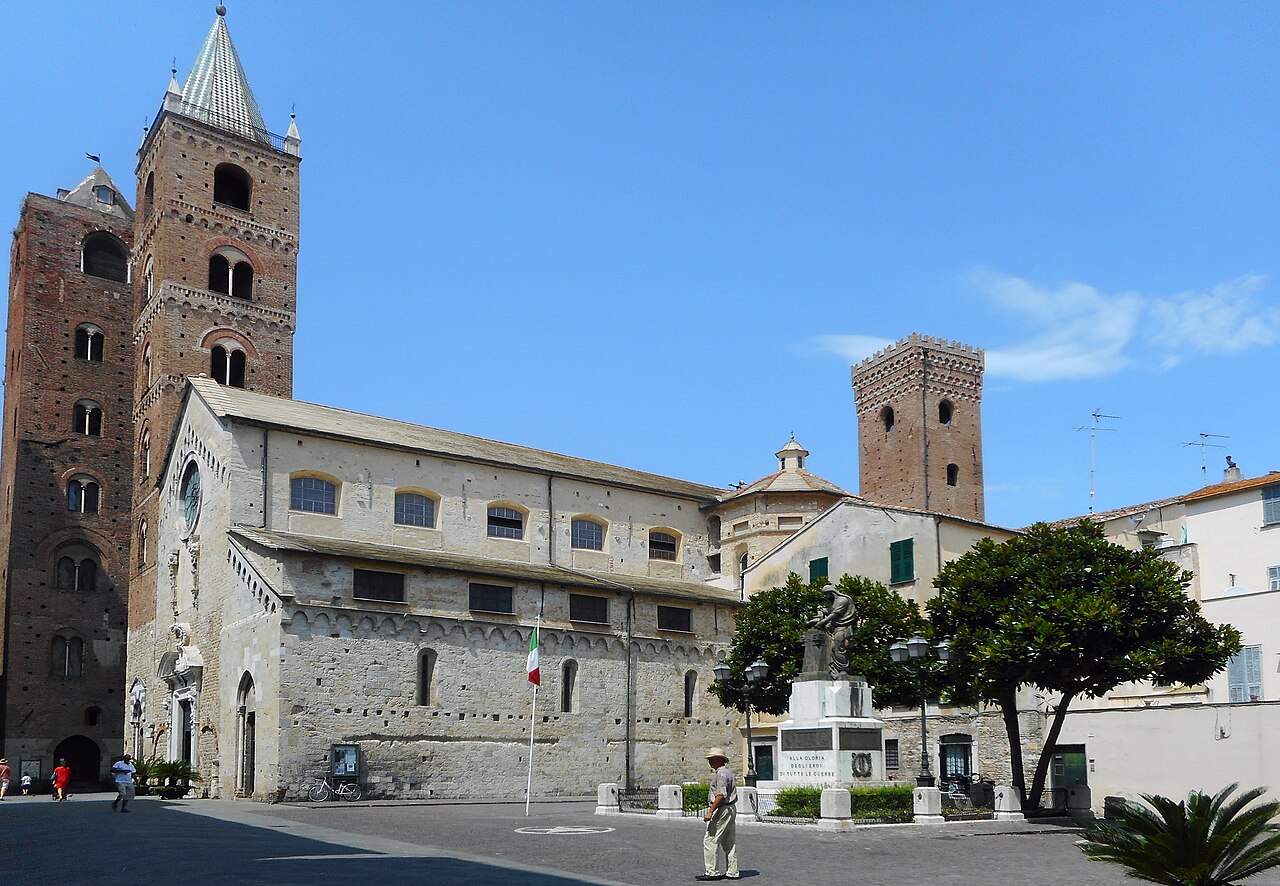
Albenga Cathedral
Albenga · Italy · church
The medieval cathedral of Albenga on Liguria's western coast, dedicated to Saint Michael the Archangel, its banded brick campanile rising over a nave first raised around 1100 on the foundations of a church from the turn of the fifth century.
 Christianity
Alexander Nevsky Cathedral
Sofia · Bulgaria · church
Sofia's golden-domed patriarchal cathedral, raised by the whole Bulgarian people as a memorial to the Russian, Bulgarian, Ukrainian, Moldavian, Finnish and Romanian soldiers who died in the 1877-1878 war that ended five centuries of Ottoman rule.
 Christianity
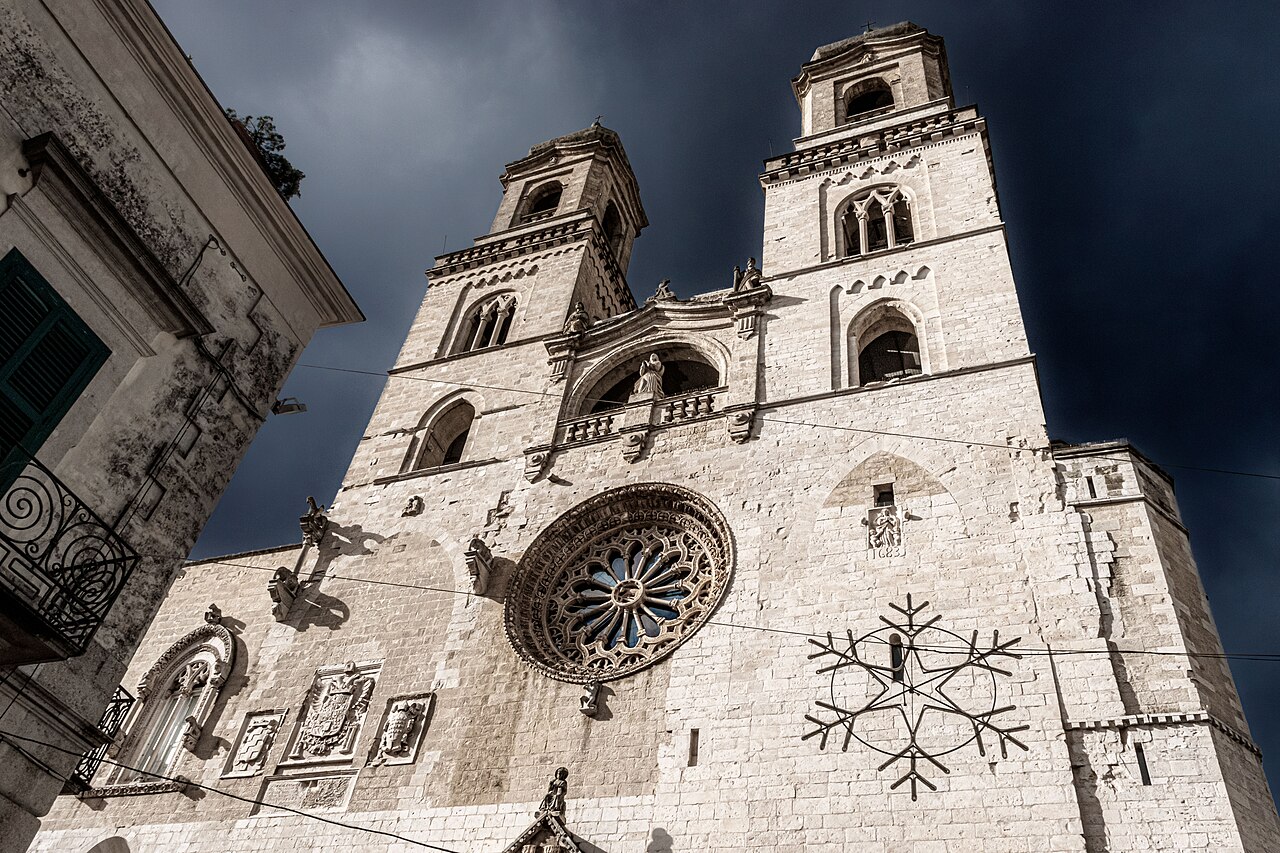
Altamura Cathedral
Altamura · Italy · church
A thirteenth-century 'palatine' cathedral in the Apulian hill town of Altamura, raised at the order of the Holy Roman Emperor Frederick II and dedicated to the Assumption of the Blessed Virgin Mary, its twin Gothic bell towers and carved rose window rising over the old town's main square.
 Christianity
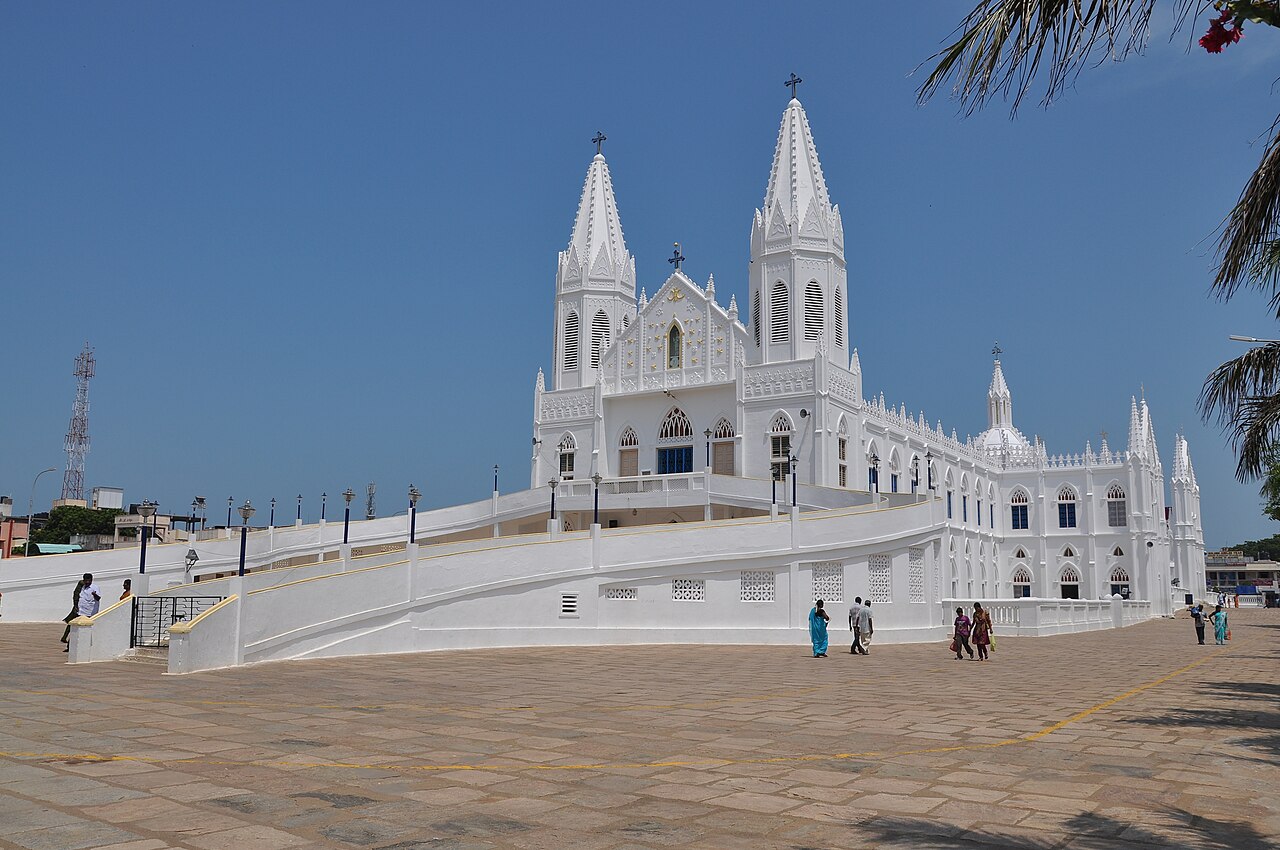
Basilica of Our Lady of Good Health
Velankanni · India · church
White Gothic Marian basilica on the Coromandel shore where Our Lady is held to have appeared to two Tamil boys in the 16th century. Called the Lourdes of the East, it draws millions of pilgrims, most of them Hindu and Muslim, to Annai Velankanni, the Mother of Good Health.
 Christianity
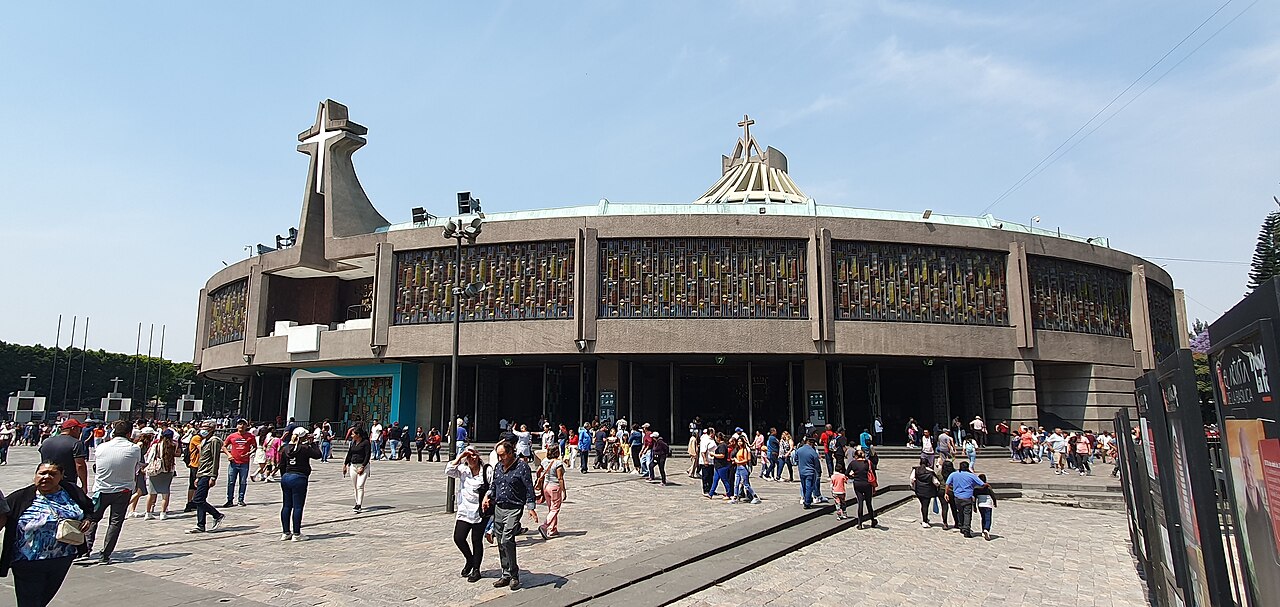
Basilica of Our Lady of Guadalupe
Mexico City · Mexico · church
The most visited Marian shrine in the world, built at the foot of Tepeyac hill where Our Lady appeared to St. Juan Diego in 1531; his tilma bearing her image hangs above the altar of the circular basilica of 1976.
 Christianity
Bolnisi Sioni
· Georgia · church
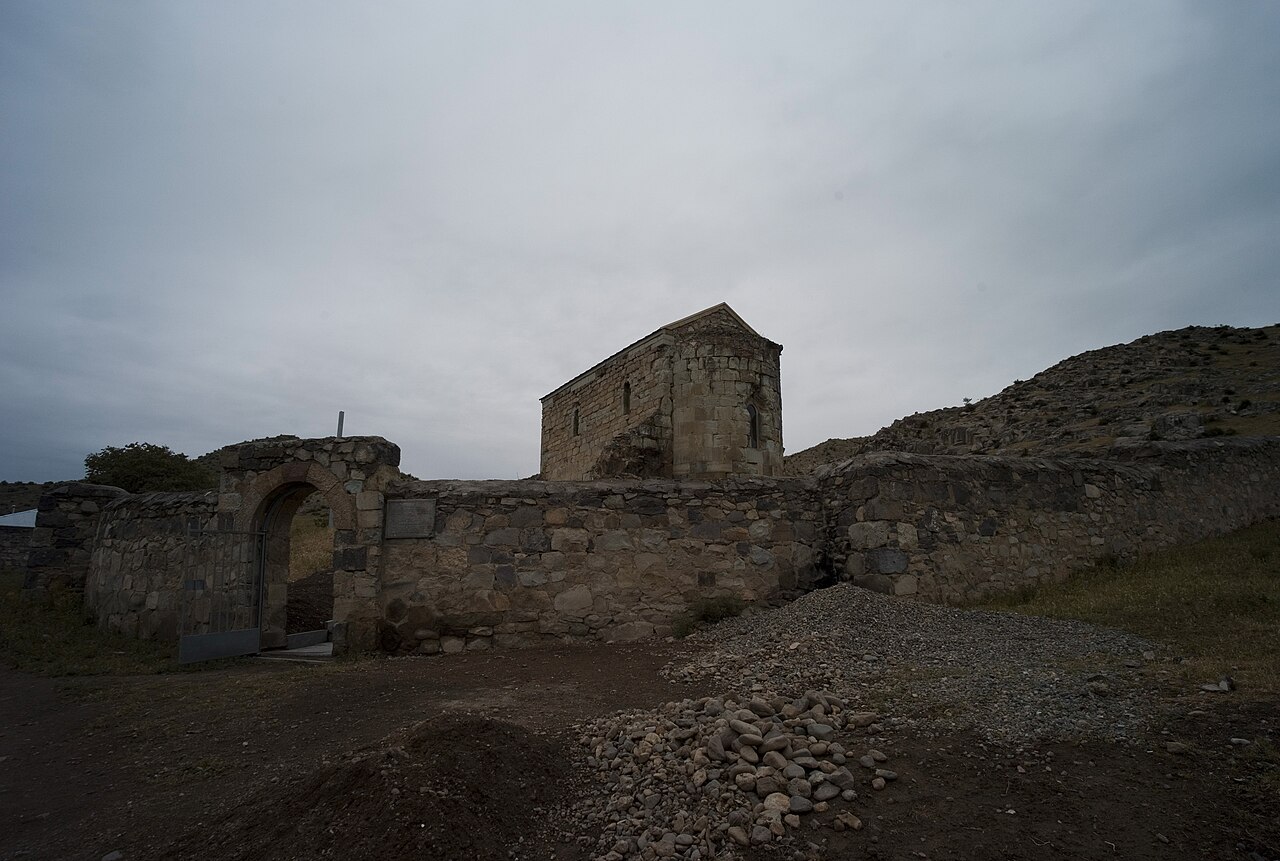
A late-fifth-century Georgian Orthodox basilica in Bolnisi, the oldest surviving church building in Georgia, famed for its early Georgian-script inscriptions.