33 km from Bogra town Shakti Maa Aparna · Bhairava Vaman Holy bath at Shakha Pukur Durgotshov each autumn Four acres of Temples
You pass through the boundary wall and the courtyard opens: the Main Temple ahead, Shiva shrines on every side, and to the north the still water of the Shakha Pukur with its bathing ghats. Pilgrims lower themselves into that pond before Darshan, because The Mother Herself once Rose from it, conch bangles shining on Her Wrists. This Is Bhabanipur, where Her Left Anklet Fell, and where She Is still called by Name: Maa Aparna, Maa Bhabani.
One of the Fifty-One Shakta Peethas: when the Body Of Maa Sati Was Cut By the Sudarshan Chakra, Her Left Anklet Is Believed To Have Fallen upon this ground.
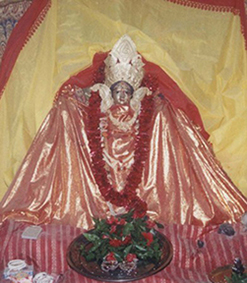
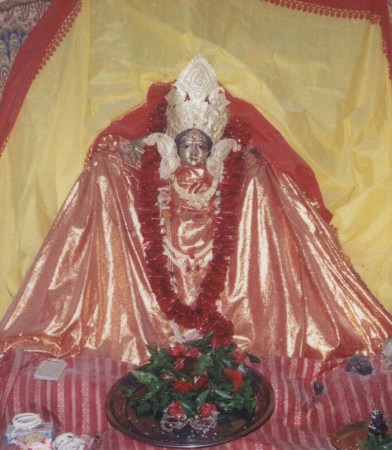
The Shakti Here Is Addressed As Maa Aparna, and Her guardian Bhairava as Vaman; local devotees call Her Maa Bhabani, The Divine Mother of this land.
The holy Shakha Pukur, the conch-bangle pond, where The Goddess Showed Her bangled Wrists to a humble bangle seller, and where pilgrims still take their sacred bath.
The story the pond remembers
In the Satya Yuga, the Purana says, King Daksha held a great yagya and left his daughter, Maa Sati, and Her husband Lord Shiva uninvited. She came anyway, and, unable to bear the insult offered To Her husband, She Gave Up Her Body in the fire of the yagya. Grief drove Shiva into a dance of destruction across the universe, until Lord Vishnu loosed the Sudarshan Chakra, and the Pieces Of Her Body and Her Ornaments Fell across the subcontinent, each landing place becoming a Shakta Peetha.
At Bhabanipur, the received account holds that Her Left Anklet Fell, though other tellings also name the ribs of Her left chest, Her right eye, and Her bedding. Here She Is Worshipped As Maa Aparna, with Vaman as Her Bhairava, for every Peetha Is a holy abode Of The Mother Goddess. Pilgrims come to Her from across the country and abroad, irrespective of sectarian differences.
What you'll actually see
1
Four acres of shrines
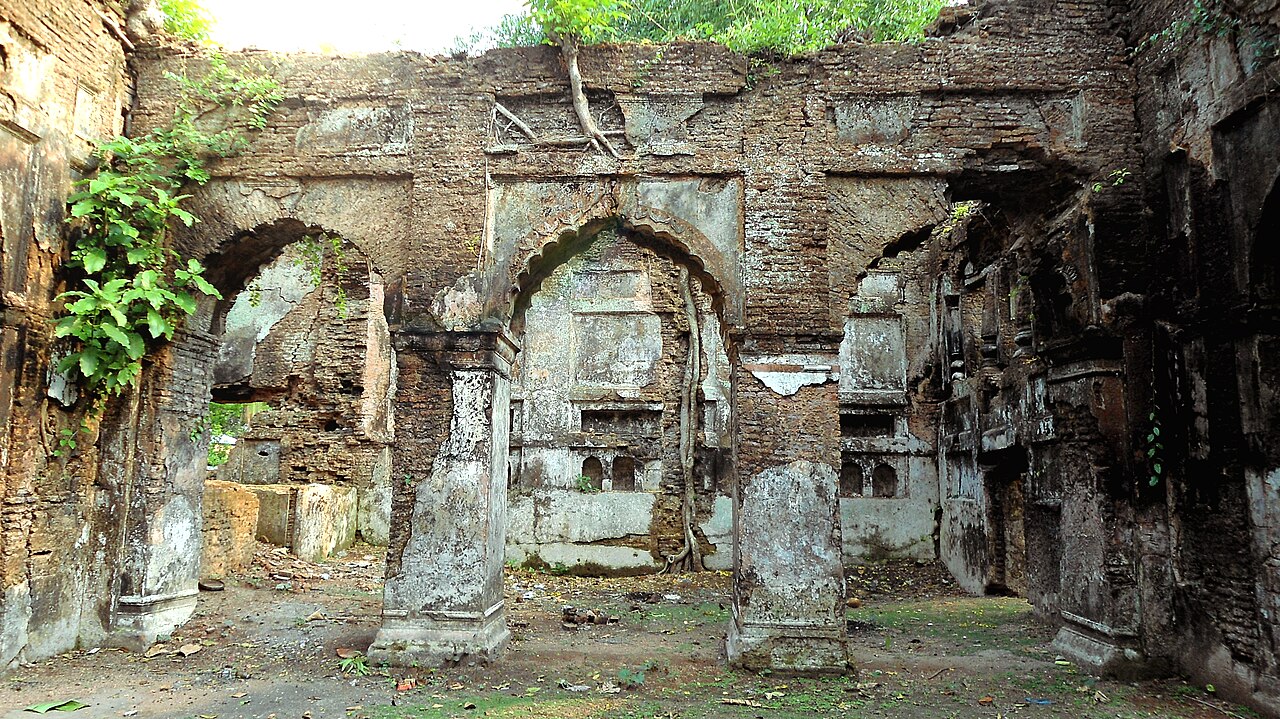
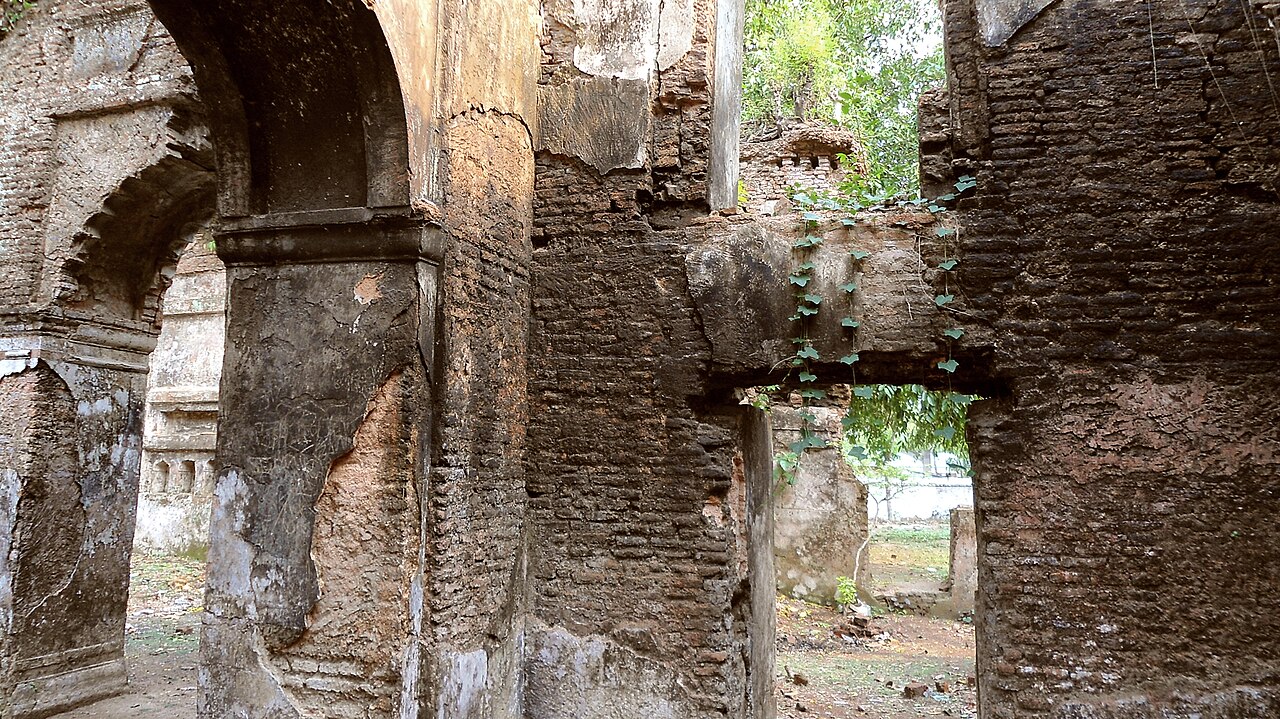
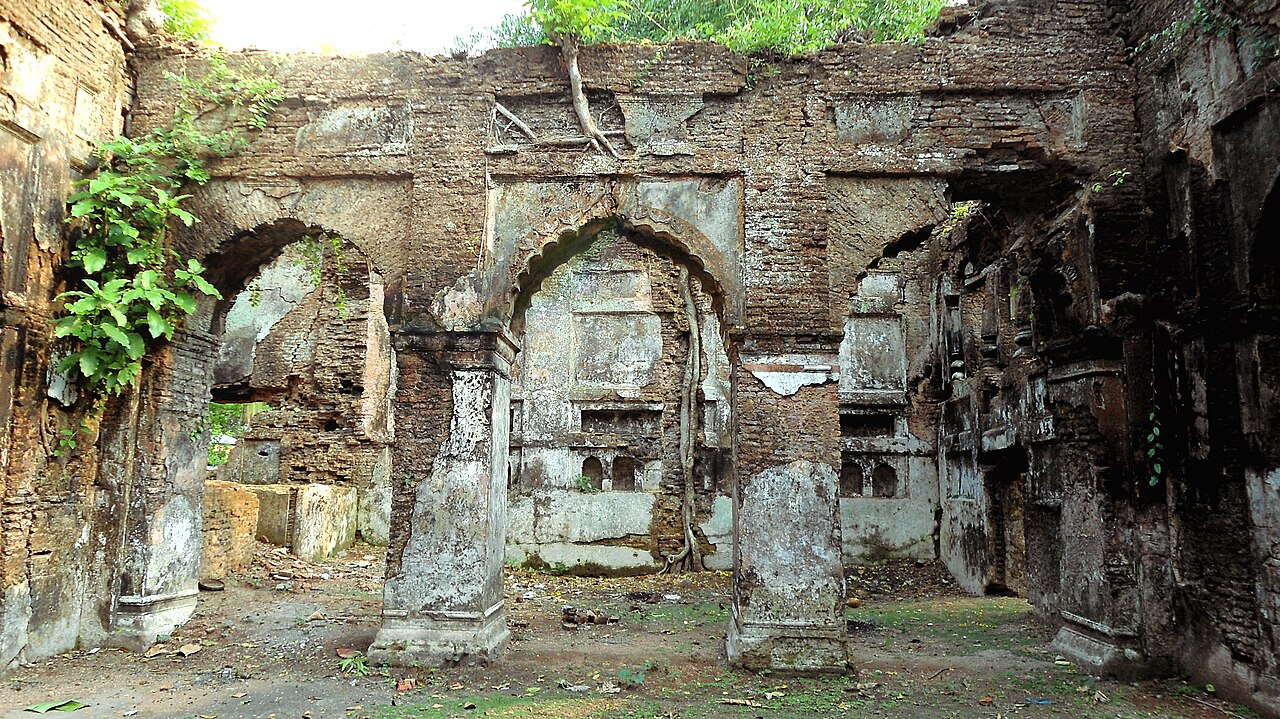
Within the boundary wall stand the Main Temple, Belbaran Tala, four Shiva Temples, the Patal Bhairava Shiva Temple, a Gopal Temple, a Bashudev Temple, and a Nat Mandir. Outside the wall, four more Shiva Temples and a Panchamunda Asana complete the sacred ground.
2
The Shakha Pukur and its ghats
On the north side lies the conch-bangle pond with two bathing ghats and the Sheba Angan beside it. Devotees take their holy bath here before approaching The Mother.
3
A day that turns around Her
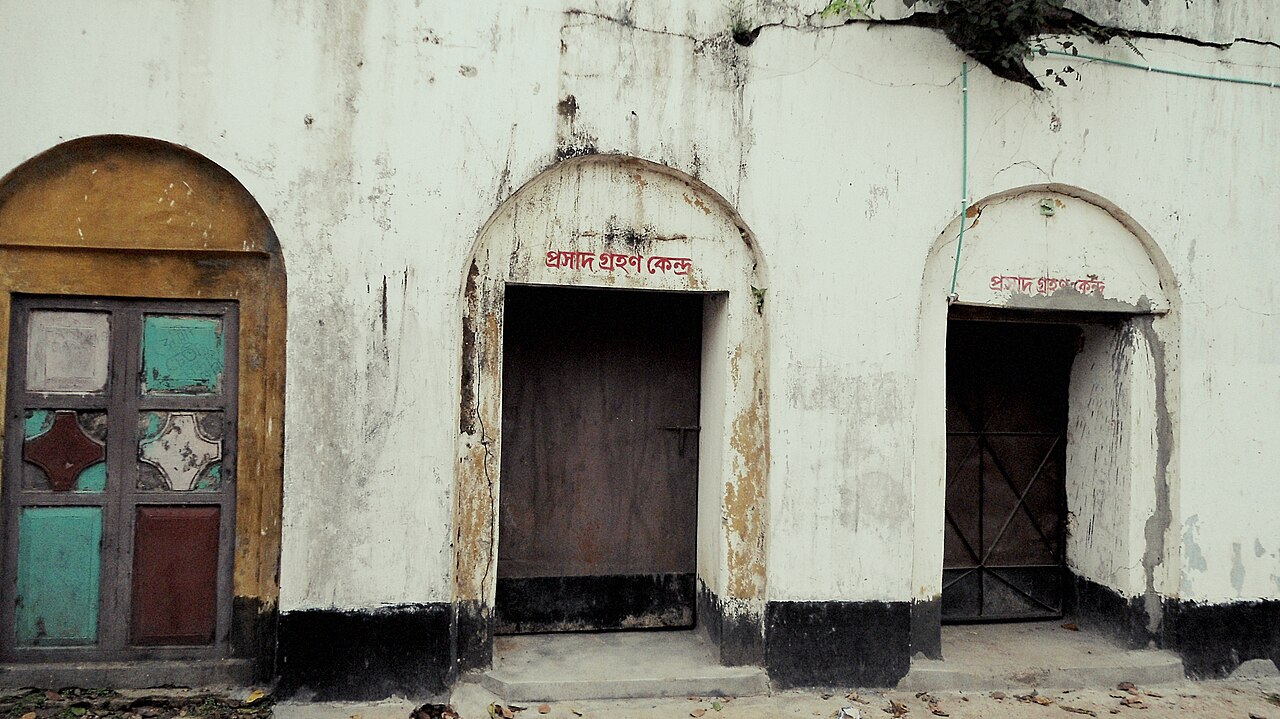
Worship moves from Pravati and Balya Bhog in the morning, To Anna Bhog at noon, To Arati and Bhog in the evening. Any devotee may offer Bhog To The Divine Mother every day and receive Prasad afterwards.
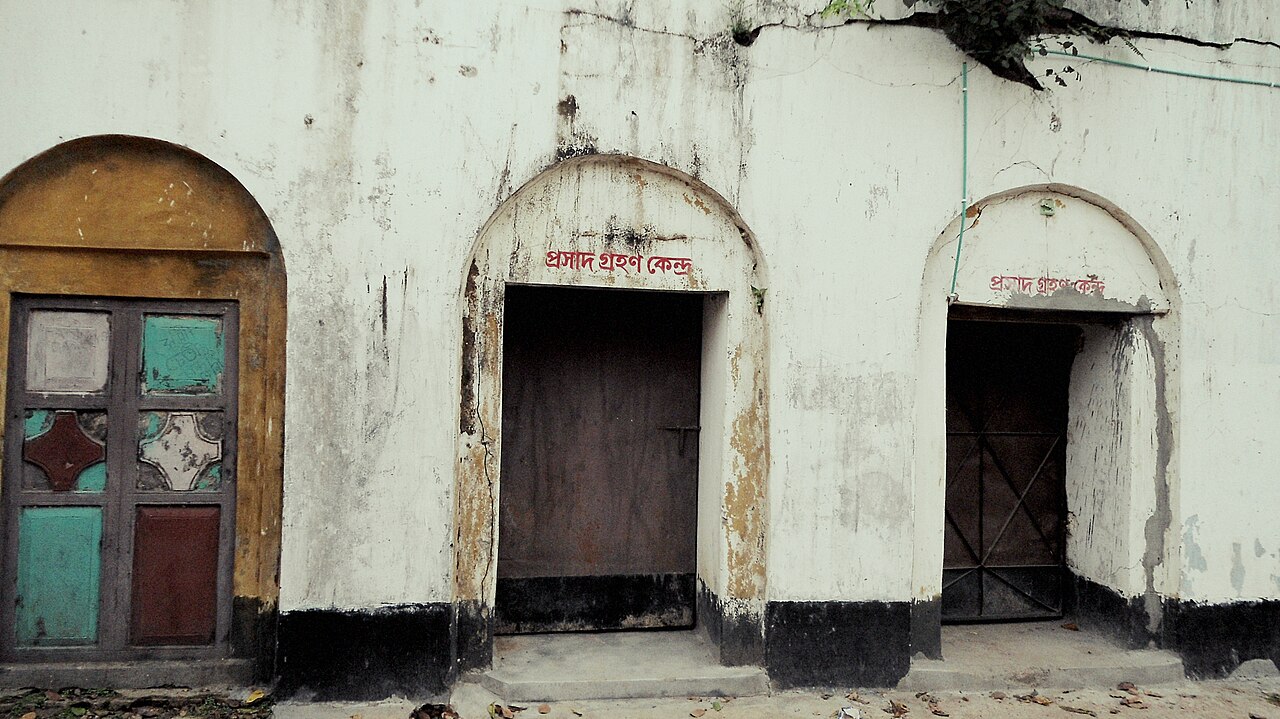
The Temple courtyard at Bhabanipur, home Of Maa AparnaShrines of the Bhabanipur Shakta Peetha under an open sky
Views of the Bhabanipur temple grounds · photos CC BY-SA, Wikimedia Commons
The legend every pilgrim tells
The Queen, the bangle seller, and The Girl by the pond
A dealer in conch bangles, passing a lonely pond in dense jungle, once met a little Girl, vermilion tipped on Her forehead, who said She was a daughter of the Natore Rajbari. She Bought a pair of bangles and sent him to the palace, where Maharani Bhabani heard his story and rushed with her men to the water's edge. At the seller's earnest prayer, Maa Bhabani Rose From the pond, Her two Wrists showing the conch bangles She Had Worn, and word of Her divinity spread across the subcontinent.
That pond is the Shakha Pukur. Take your holy bath there, as devotees do, and you step into the legend yourself.
Plan your visit
Where
Sherpur Upazila, Bogura District, Rajshahi Division, about 33 km from Bogra town.
From Dhaka
By road over the Jamuna Bridge; after Chandaikona in Sirajganj District, get down at the Ghoga Bot-tola bus stop on the highway.
From the north
Pilgrims from districts north of Bogra come via Sherpur and Mirzapur to the same Ghoga Bot-tola stop.
Last leg
From Ghoga Bot-tola, a local van or scooter carries you to the Temple gate.
Daily worship
Pravati and Balya Bhog in the morning, Anna Bhog at noon, Arati and Bhog in the evening; exact hours are not published, so confirm with the Temple office.
Before Darshan
Bathe at the Shakha Pukur on the north side, the traditional first act of pilgrimage here.
The Shakti Here Is Named Maa Aparna and the Bhairava Vaman; locally The Mother Is loved as Maa Bhabani, and Bhog offered To Her is followed by Prasad for the devotee.
Tellings differ on what Fell here Of Maa Sati: the Left Anklet is the received account, though ribs of the left chest, the right eye, and Her bedding are also named in various sources.
Entry details and timings are not published in our sources; carry the essentials for a rural pilgrimage and confirm arrangements with the Temple office before you travel.
Questions pilgrims ask
Which part Of Maa Sati Fell at Bhabanipur?
The received account says Her Left Anklet, an Ornament Of The Goddess, Fell here. Other sources name the ribs of Her left chest, Her right eye, or Her bedding, and the shrine honours Her as Maa Aparna either way.
How do I reach the Temple?
From Dhaka, travel by road over the Jamuna Bridge, pass Chandaikona in Sirajganj District, and get down at Ghoga Bot-tola on the highway; a van or scooter covers the last stretch. From districts north of Bogra, come through Sherpur and Mirzapur to the same stop.
Which festivals can I plan a visit around?
Maghi Purnima in Magh or Falgun, Ram Nabomi in Chaitra or Baishakh, Durgotshov in autumn, Dipannita Shyama Puja, and Nabanna in the month of Aghrahoyon are all kept on the Temple premises each year.
Dharamshalas and guest houses near this Sthan, shared by devotees. Adisthan takes no bookings and no money; contact each stay directly.
No stays are listed here yet. Know one that serves pilgrims well?
Are you a priest, trustee, or sevak of the Bhabanipur Shakta Peetha? Claim this page to add true timings, festival dates, and a way for pilgrims To actually reach you.