Vani · 60 km from Nashik 510 steps · 3-min funicular Eighteen-Armed Swayambhu Maa Chaitrotsav · Rama Navami to Purnima Seven Peaks of the Sahyadris
The ghat road takes its last turn and a wall of grey basalt fills the window, a blaze of saffron high on the sheer face. Around you every voice rises at once, because that saffron Is Maa Herself, open to the sky, Eighteen Arms Spread across the living rock. No mason carved Her: the mountain gave The Goddess its own face.
The peetha rolls count this gad among the Fifty-One and name Her Chin, Fallen here in Two parts; the Temple's own telling remembers Her Right Arm Coming To rest on these peaks when Vishnu's discus parted The Body Of Maa Sati.
Maa Bhadrakali Saptashrungi Devi Is Swayambhu, Self-Born from the cliff: an image about 8 feet tall, Eighteen Arms Bearing the weapons of the gods, Her form kept saffron with sindoor and Her eyes of white porcelain shining out of the rock.
Here She Took the form Of Maa Durga and Slew the buffalo demon Mahishasura. At the foot of the steps a buffalo head cut in stone still marks where his terror ended, and devotees praise Her as Mahishasura Mardhini.
The grief that made the mountain holy
Daksha, father of Maa Sati, held a great fire sacrifice and invited every god except Shiva, the husband his daughter had married out of deep love. Maa Sati went uninvited, heard her father vilify her husband, and in Her humiliation gave up Her body to the flames. Grief then walked the world: Shiva lifted Her onto his shoulders and would not set Her down.
To end that wandering, Vishnu loosed his Sudarshana Chakra, and The Body Of The Goddess fell to earth in Fifty-One pieces, each landing place becoming a Shakti Peetha. On this gad the Temple's tradition says Her Right Arm Came To rest, and the peetha rolls speak of Her Chin, in Two parts. By either name, the hill has belonged To The Mother ever since.
What you'll actually see
1
The Self-Born image in the cliff
Carved By no chisel, Maa Emerges from a cave at the base of a sheer scarp of rock, about 8 feet tall and Eighteen-Armed. In Her hands are the gifts of the gods: Shiva's trishula, Vishnu's chakra, the conch, the bell, the bow and arrow, the sword, the lotus. Her image is renewed daily with abhisheka, fresh dress, and sindoor.
2
Half of the three and a half
Maharashtra honours three and a half great seats Of The Goddess: Kolhapur, Tuljapur, Mahur, and this gad at Vani, together read as the four parts of the holy AUM. Saptashrungi is commonly called the half seat, yet the Temple's own trust declares Hers a complete pitha. Devotees do not wait for the dispute to settle; they simply come, in thousands, every day.
3
Markandeya's hill across the ravine
East of the shrine, beyond a deep ravine, rises the hill named for the sage Markandeya, holding the cave where he is said to have lived. There, tradition tells, he recited the puranas To entertain The Devi, and the Devi Mahatmya itself, seven hundred verses in Her praise, is believed to have been composed at this place.
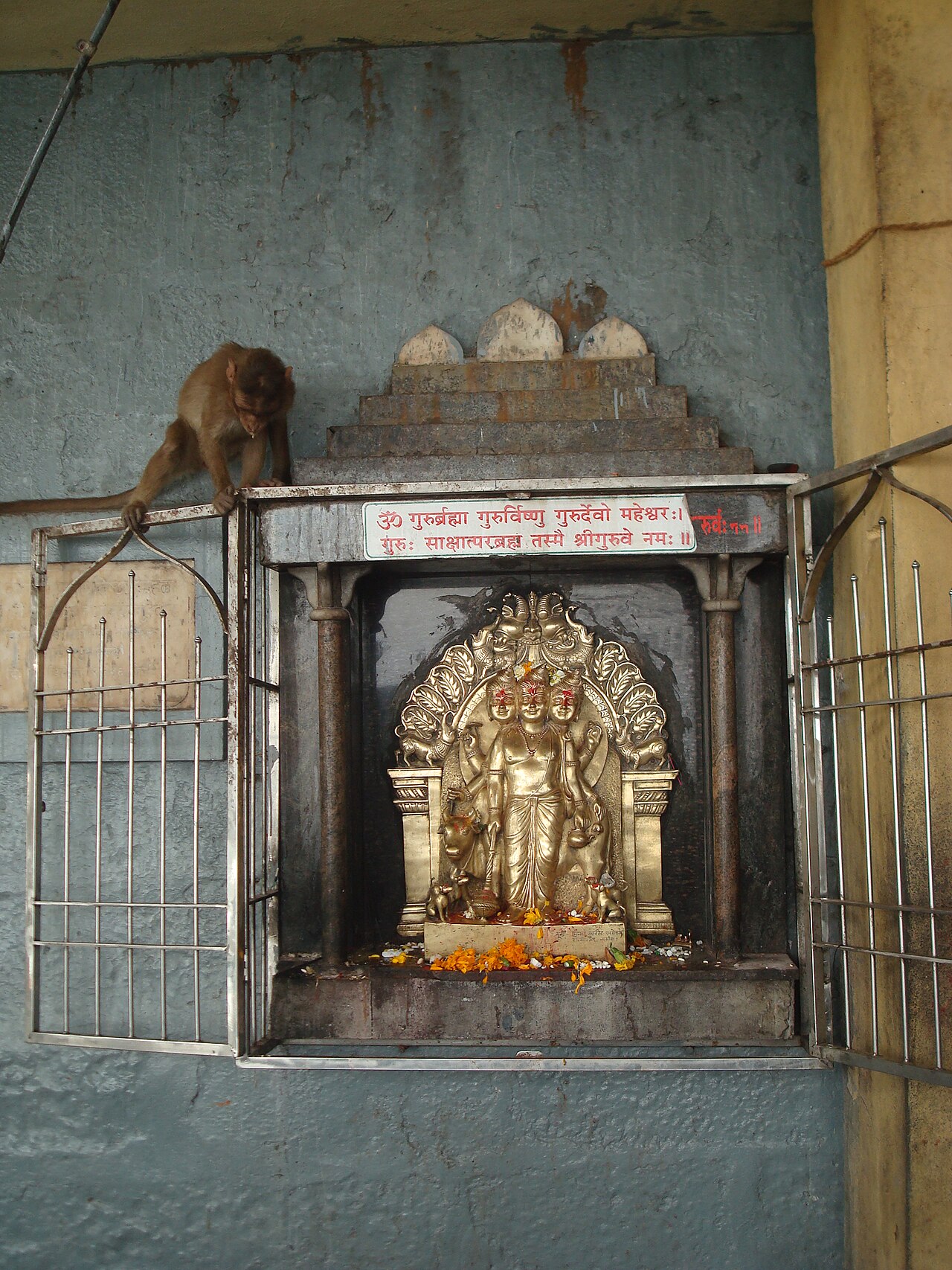
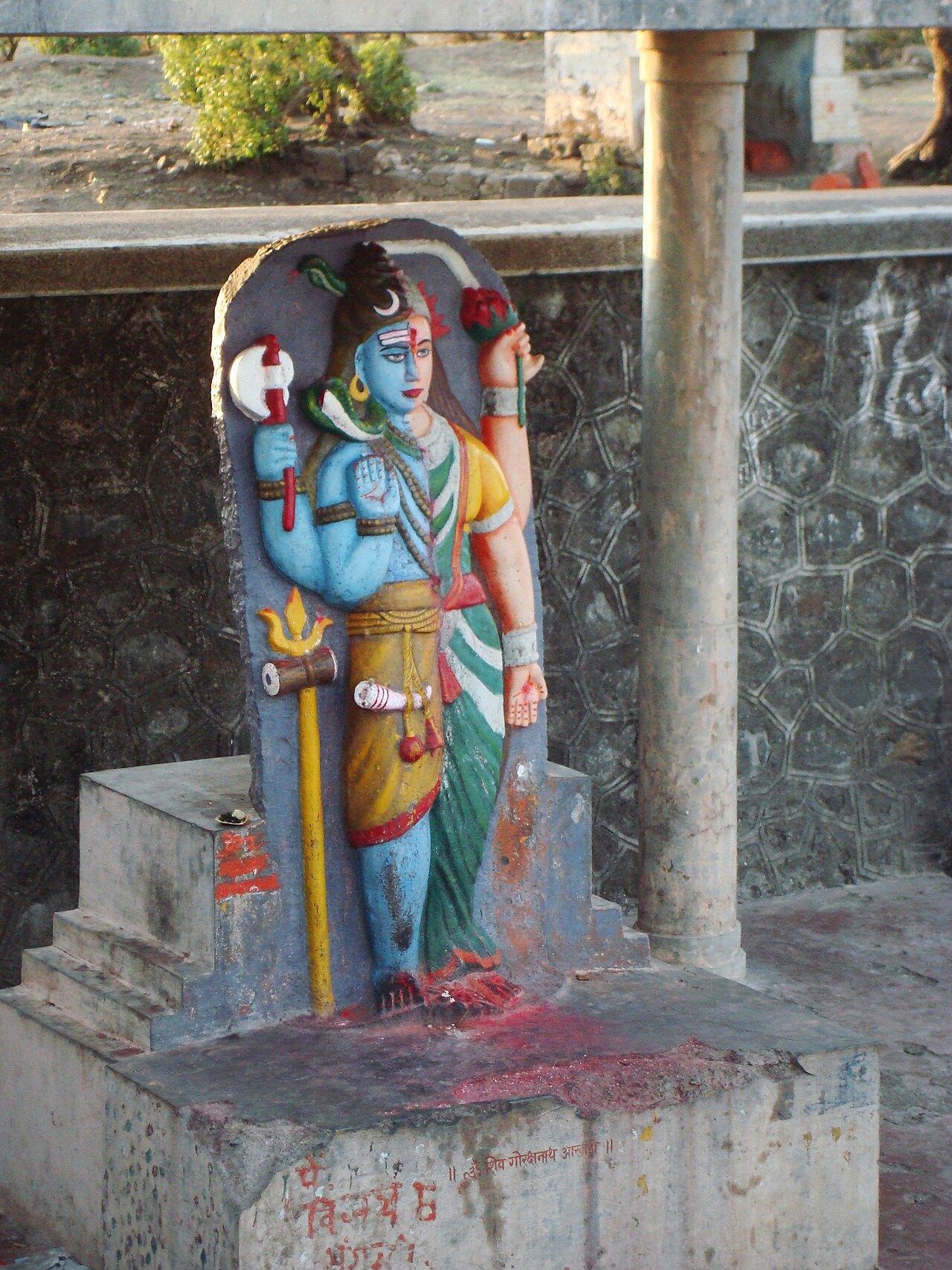
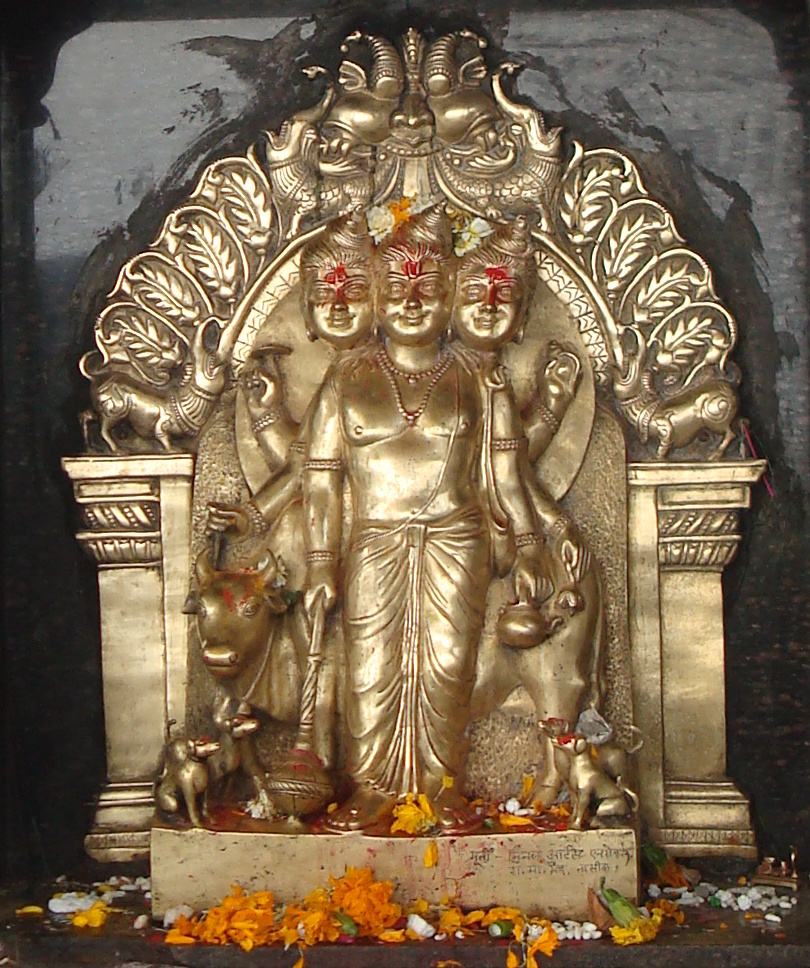
Dattatreya image on the pilgrim path To Maa SaptashrungiArdhanarinateshwar image on the Saptashrungi gad
Dattatreya and Ardhanarinateshwar on the gad · photos CC BY-SA, Wikimedia Commons
The festival that fills the mountain
Chaitrotsav · Rama Navami to Chaitra Purnima
The festival begins on Rama Navami and culminates on the full moon of Chaitra, when the banner Of Maa is paraded through the village and hoisted on the peak at midnight. Around 250,000 pilgrims come on the final day alone, and as many as a million across the last three days, some walking the whole way from Nashik, 60 km, or Dhule, 150 km, and many more arriving from Gujarat, Madhya Pradesh and Rajasthan. Through the festival She Is Bathed each day in panchamruta: honey, sugar, milk, yogurt and ghee.
Dates follow the Hindu lunar calendar and move each year; confirm them with the Temple trust. Come for the last three days if you seek the festival at its height, and a quiet weekday if you seek Her in silence.
Plan your visit
Getting there
The gad rises above Vani, 60 km from Nashik; the easiest route runs via Nadurgaon, 14 km from Vani. State transport buses reach the Temple precincts, with extra buses during festivals.
The steps
510 stone steps climb the gad, laid in 1710 by Umabai Dabhade, with figures of Rama, Hanuman, Radha and Krishna carved along the way.
Funicular & lift
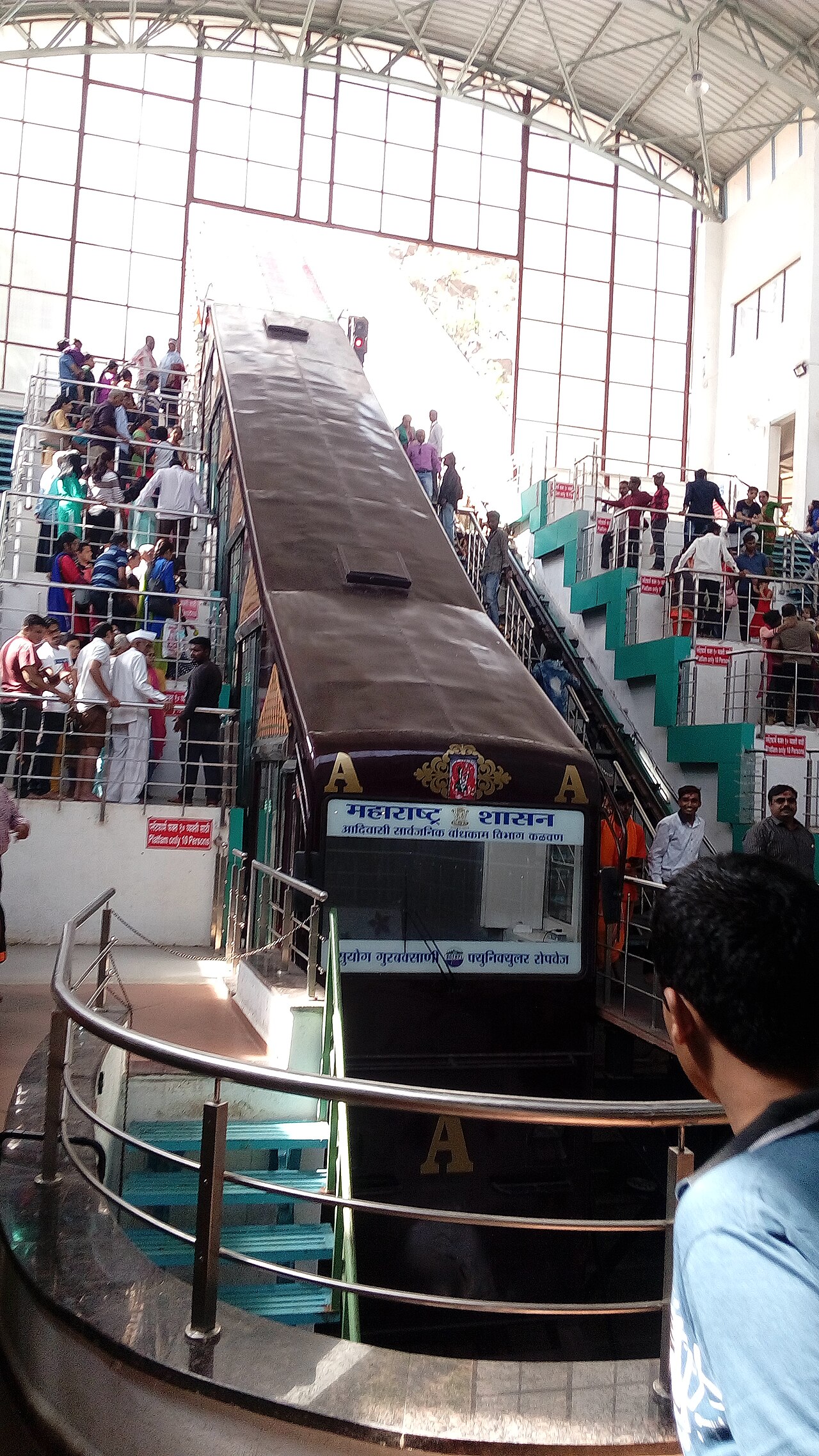
Running since 2018, the funicular trolley reaches the top in about 3 minutes; 20 to 25 stairs remain from the upper station. An elevator also leads into the Temple.
Timings
Daily darshan hours are not published in our records; confirm current timings with the Temple trust office before you travel.
Special days
Tuesdays and Fridays, and the eighth, ninth and fourteenth lunar days, are held especially sacred; Navaratri, Dussera and Chaitrotsav bring the greatest crowds.
Parikrama
Because Maa Is Set into the hillside itself, pilgrims circle the whole hill rather than the sanctum; the path crosses steep rock between roughly 1,230 and 1,350 metres, so go slowly.
Sapta is seven and shrunga is peaks: Maa Dwells within Seven Peaks of the Sahyadri range, and 108 kundas, sacred water bodies, lie scattered in the watershed of these hills.
In 2022 about 2,000 kilograms of accumulated sindoor were removed From Her image over some 45 days, revealing the ancient Self-Born form; the Prana Pratishtha followed on 8 September 2022.
The Shree Saptashrung Niwasini Devi Trust, formed in 1975, runs the Bhakta Niwas for overnight stays and serves meals at reasonable rates; the hill is prone to rockfall, so heed the barricades and warning signs.
Questions pilgrims ask
Do I have to climb all 510 steps?
No. Since 2018 a funicular trolley climbs the gad in about 3 minutes, seating 10 pilgrims in each of its 6 coaches, and from the upper station only 20 to 25 stairs remain. An elevator also reaches inside the Temple.
Is Saptashrungi a full Shakti Peetha or a half one?
Both are said. The gad Is counted among the Fifty-One Peethas of the subcontinent, and within Maharashtra among the three and a half pithas, where it is often called the half; the Temple's own trust declares Hers a complete pitha.
What offerings do devotees bring To Maa?
Coconuts, silk cloth, and a sari with choli are the traditional offerings, along with grain, flowers and eyes made of silver; many devotees also recite the Saptashati, the seven hundred verses Of Her deeds. Some families honour Her as kuldaivat, their guardian deity.
Dharamshalas and guest houses near this Sthan, shared by devotees. Adisthan takes no bookings and no money; contact each stay directly.
No stays are listed here yet. Know one that serves pilgrims well?
Are you a priest, trustee, or sevak of Maa Saptashrungi Devi Temple? Claim this page to add true timings, live darshan updates, and a way for pilgrims To actually reach you.