Darshan about 6 am to 9:30 pm Swayambhu linga · sanctum below ground Mahashivaratri · 6 Mar 2027 25 m seated Lord Shiva Darshan free
The land runs flat and salt-bright between Dwarka and the ferry road to Bet Dwarka, and then, long before the Temple, you see Him: a seated Lord Shiva the height of an eight-storey building, pale against the sky, pigeons wheeling around the golden trishul. At His feet stands a rose-red Temple with white-trimmed spires, and past its long pillared hall a few steps lead down into a small dark sanctum. The Lord of Serpents Is not enthroned on high here. He waits below the earth.
One of the Twelve Jyotirlingas: the dvadasha jyotirlinga stotra names Him Nagesham Darukavane, Nageshwar in the forest of Daruka. The linga is held to be swayambhu, self-manifested, and is worshipped in a sanctum set below ground level.
The linga is carved of the local sacred Dwarka Shila stone, marked with small chakras, and its rounded form is likened to a teen mukhi Rudraksha, a shape of the Lord found at none of the other eleven.
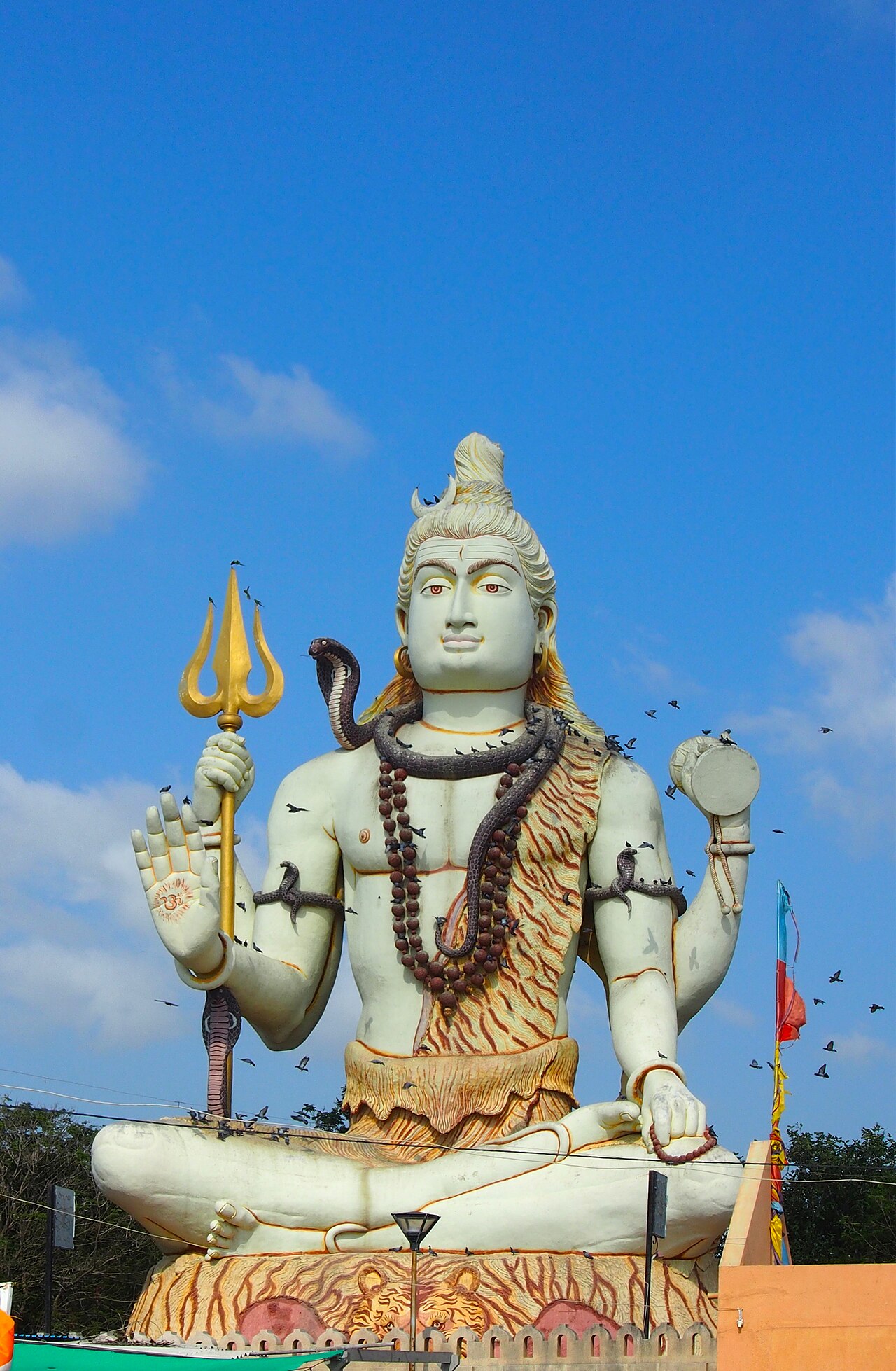
In the Temple grounds sits an 80 foot, about 25 metre, image of Lord Shiva in meditation, serpents at His arms and throat, seen from far across the coastal plain before the shrine itself comes into view.
The prisoner who would not stop chanting
The Shiva Purana tradition tells of Daruka, a demoness who had won her forest by the sea through long devotion To Maa Parvati, and of the demon Daaruka who ruled it with her. Into their prison came Supriya, a merchant utterly given to Lord Shiva, and with him many captives. Supriya would not stop his worship. He taught the prisoners the mantra, and the dungeon by the sea filled with one sound: Om Namah Shivaya. The demon came to kill him, and Lord Shiva Broke through the earth in a blaze of light, Destroyed the tormentor, and at His devotee's plea Remained in that place forever as Nageshwar, the Lord of Serpents, a Jyotirlinga of His own light.
The district's own telling adds an older layer from the Vamana Purana: the Balakhilya sages who worshipped Lord Shiva in Darukavana for an age, and the linga that fell to earth and shook the world before the Lord Took it back and Promised His presence here forever. Where the true forest of Daruka lay is honestly debated: Jageshwar in Uttarakhand and Aundha Nagnath in Maharashtra also cherish the Nageshwar tradition, and this coastal shrine near Dwarka is the one the Jyotirlinga pilgrimage most widely follows.
The Temple a pilgrim enters today is young stone over an ancient promise. By the 1990s the old shrine had grown dilapidated, and the present rose-red structure was raised through the financing of the music entrepreneur Gulshan Kumar, whose family saw the work through after his death. The sanctum kept its place below the ground, where it has always been.
What you'll actually see
1
The seated Lord of 25 metres
The first darshan happens from the road: the vast pale figure of Lord Shiva seated in meditation, trishul and damaru in hand, cobras coiled at His arms, flocks of pigeons rising and settling on His shoulders. The district administration puts the statue at 25 metres, and it holds the whole flat horizon.
2
The long hall and the descent
The Temple itself is rose-red with white-edged shikharas, its design laid out on Vaastu Shastra principles. You cross a large pillared hall to reach the sanctum, then step down: the garbhagriha sits below ground level, small, close, and dark after the coastal glare.
3
The linga of Dwarka Shila
In that underground chamber rests the Jyotirlinga, a dark stone of the sacred Dwarka Shila found on this coast, faced with small chakra markings and likened in form to a teen mukhi Rudraksha. Around the Temple spread quiet gardens and a pond, with herons and egrets working the water.
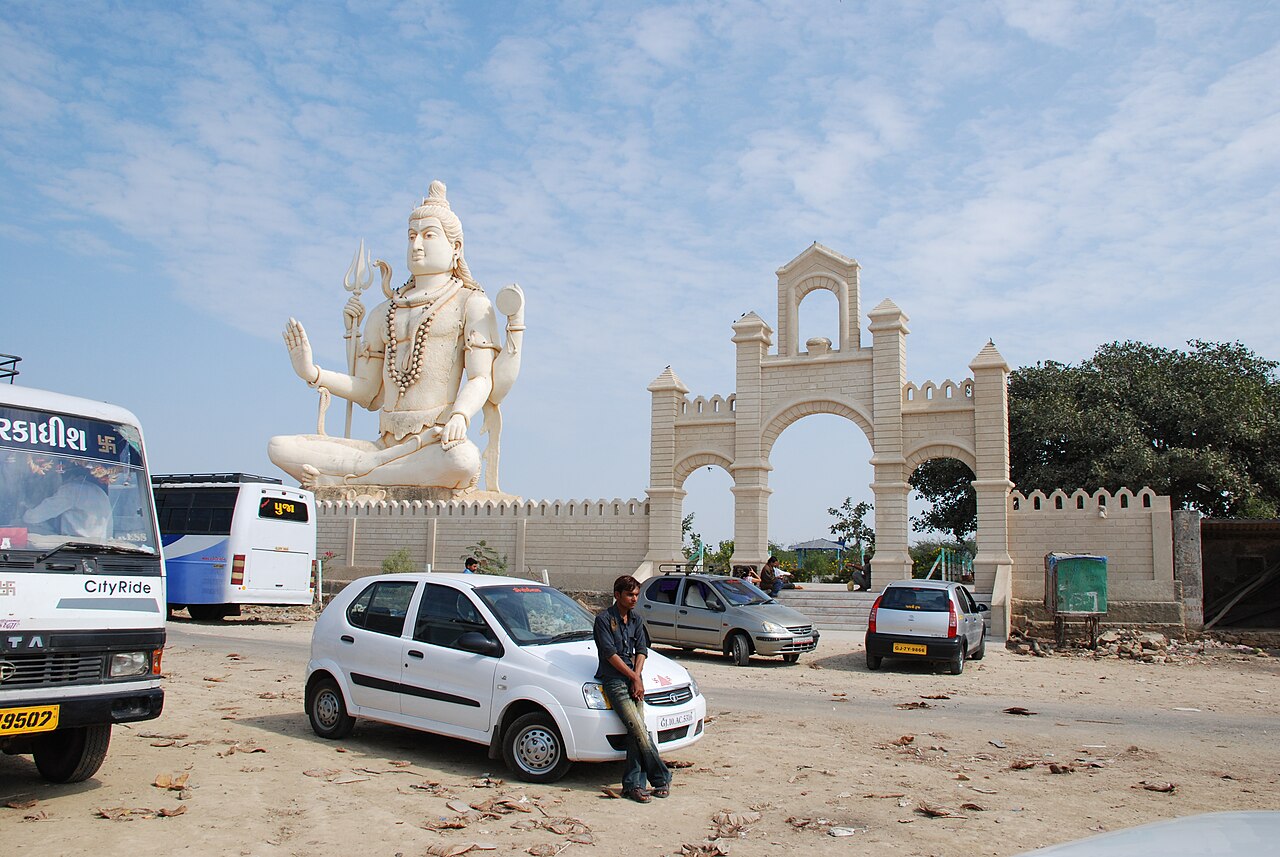
The 25 metre seated statue of Lord Shiva at Nageshwar, birds circling the golden trishulThe gateway of Nageshwar Temple on the Dwarka to Bet Dwarka road, the seated Lord Shiva rising behind it
The seated Lord Shiva, and the gateway on the Bet Dwarka road · photos by Prof Ranga Sai, CC BY-SA 4.0, and Amitparikh, public domain, Wikimedia Commons
THE GREAT NIGHT AT DARUKAVANA
Mahashivaratri · Saturday 6 March 2027
Gujarat Tourism records that Shivratri is the night this shrine lives for, celebrated with great fervour: the coastal road from Dwarka fills with pilgrims, darshan queues form in the dark, and the small underground sanctum receives an unbroken river of devotees through the night of the Lord. The month of Shravan is the longer festival tide here. Gujarat keeps the Amanta reckoning, so Shravan 2026 runs 13 August to 11 September, and its Mondays, 17, 24 and 31 August and 7 September, bring the year's fullest weekday crowds.
For quiet darshan come on an ordinary weekday between November and February; for the festival itself arrive early in the day and expect long queues.
Plan your visit
By air
Jamnagar airport is about 126 km from Dwarka and Porbandar about 107 km; taxis run onward via NH 947.
By rail
Dwarka railway station, then 16 to 18 km by road along the Bet Dwarka route; taxis, autos and Okha-bound buses ply it all day.
The Dwarka circuit
The Temple stands on the road between Dwarka and Bet Dwarka: most pilgrims take darshan of Shri Dwarkadhish in the morning, stop at Nageshwar on the way, and cross to Bet Dwarka by ferry from Okha.
Timings
There is no official Temple website and published windows vary: most pilgrim guides list about 6 am to 9:30 pm with a midday shringar closure from about 12:30 to 5 pm, though some list continuous hours. Confirm locally.
Entry
Darshan is free. Abhishek sittings are arranged with the priests at the Temple counter in the morning.
Best time
November to February for the mild coastal season, per Gujarat Tourism; Shivratri and the Shravan Mondays for the festival tide.
Nearby
Gopi Talav, the pond of the gopis' meeting with Sri Krishna, lies close to the Temple on the same road.
Nageshwar means the Lord of Serpents: He Wears the naga, and tradition holds that at Darukavana He Stayed forever as the protector of the devotee who called on Him in fear.
Ancient texts debate where the forest of Darukavana lay, and Jageshwar in Uttarakhand and Aundha Nagnath in Maharashtra also cherish the Nageshwar tradition; this shrine near Dwarka is the one the Twelve Jyotirlinga pilgrimage most widely follows.
Archaeological excavations are claimed to have found five earlier settlements at this site, an old place under a young Temple.
The Temple publishes no official website or phone line, so treat any timing or booking claim you read online with care and confirm at the Temple counter.
Questions pilgrims ask
Is this the same Nageshwar named in the Jyotirlinga stotra?
The stotra says Nagesham Darukavane, Nageshwar in the forest of Daruka, and where that forest lay is honestly debated: Jageshwar in Uttarakhand and Aundha Nagnath in Maharashtra hold the same tradition. The shrine near Dwarka is the most widely followed of the three, and pilgrims completing the Twelve almost always come here.
What are the darshan timings?
The Temple has no official website, and guides disagree. Most list about 6 am to 9:30 pm with the sanctum closed for shringar from about 12:30 to 5 pm; a few list continuous darshan from 5 am to 9 pm. Plan for morning or evening and confirm locally.
Can I combine Nageshwar with Dwarkadhish and Bet Dwarka in one day?
Yes. The Temple stands on the road from Dwarka toward Okha, 16 to 18 km out. The usual rhythm is Shri Dwarkadhish at morning darshan, Nageshwar on the drive, then the ferry from Okha to Bet Dwarka, returning to Dwarka by evening.
What will I actually see in the sanctum?
A small underground garbhagriha, reached by stepping down below floor level, holding the dark Jyotirlinga of Dwarka Shila stone with its small chakra markings, its form likened to a teen mukhi Rudraksha. Darshan is close and unhurried outside festival days.
Dharamshalas and guest houses near this Sthan, shared by devotees. Adisthan takes no bookings and no money; contact each stay directly.
No stays are listed here yet. Know one that serves pilgrims well?
Are you a pujari, trustee, or sevak of Shri Nageshwar Jyotirlinga? Claim this page to give the devotees of the Lord of Serpents true timings, abhishek arrangements, and festival dates.