
Alopi Devi Mandir
About
Set in Alopibagh, a quarter of Prayagraj in Uttar Pradesh, Alopi Devi Mandir stands within easy reach of the holy Sangam, the meeting point of three rivers, the Ganges, the Yamuna, and the legendary, unseen Sarasvati. Its nearness to the Kumbh Mela grounds places it within one of the most visited pilgrimage landscapes in India, drawing devotees who bathe at the confluence and then turn toward this shrine as part of their circuit.
What sets the temple apart is its manner of worship. Rather than housing a carved image of a deity, it centers on a wooden palanquin, or doli, and it is this vessel that receives the devotion of pilgrims. One telling rooted in Puranic memory holds that the temple's name recalls the moment when Shiva, carrying the body of his departed wife Sati across the sky in his grief, saw it dissolve piece by piece as Vishnu's discus cut through it, each fragment sanctifying the ground where it touched down. Local memory places the last vanishing portion here, giving the site its name: Alopi, meaning that which disappeared, and with it a claim to being the holiest point in the chain. Scholars note this account sits uneasily beside the fact that Prayagraj already holds a recognized Shakti Peetha, the Lalita Devi temple, where tradition places the fall of Sati's fingers.
A second account, carried through generations by residents of the area, offers a gentler origin. It reaches back to a time when the surrounding country was thick forest known for bandits. A wedding party crossing that forest, laden with gifts, was ambushed; the robbers killed the men and seized the riches, then turned to the bridal palanquin itself, only to find it empty. The bride had vanished without trace. The story passed into legend, and a shrine rose where villagers began honoring the vanished bride as Alopi Devi, the virgin goddess who disappeared.
The temple remains a living center of devotion for the surrounding population, who bring their festivals, weddings, births, and bereavements before this guardian goddess. Though long a significant local shrine, it has drawn markedly greater numbers of visitors since the 1990s, prompting extensive renovation of its grounds.
History
Historical accounts link the broader development of the Sangam area to the Maratha general Shreenath Mahadji Shinde, who is said to have improved the site during his time in Prayagraj around 1771 to 1772. Decades later, in the 1800s, Maharani Baizabai Scindia sponsored further renovation of the river ghats and temples at Prayagraj, work that shaped the sacred precinct in which Alopi Devi Mandir stands today.
Significance
Alopi Devi Mandir is distinguished among Hindu shrines by the absence of any sculpted deity: devotion here is directed instead to a wooden doli, a bridal carriage transformed into an object of worship. This unusual form of veneration, paired with the temple's proximity to the Sangam and the Kumbh Mela, has made it a cherished stop for pilgrims and a steady presence in the devotional life of local families, who turn to Alopi Devi at every major turning point of festival, marriage, birth, and death.
Visiting
Engage with Alopi Devi Mandir
Through the four pathways
Seva सेवा — Service
Offer your time and skills here. The following opportunities are open at Alopi Devi Mandir:
No Seva offerings listed yet.
Sādhana साधना — Practice
Learn the worship and practice associated with Alopi Devi Mandir:
No Sādhana offerings listed yet.
Sandhāna सन्धान — Wisdom
Unite with the wisdom of this tradition:
No Sandhāna offerings listed yet.
Sādhya साध्य — Giving
Support this sacred place according to your means:
No Sādhya offerings listed yet.
All giving flows directly to Alopi Devi Mandir. Adisthan does not take a commission.
Related sacred places
 Hinduism
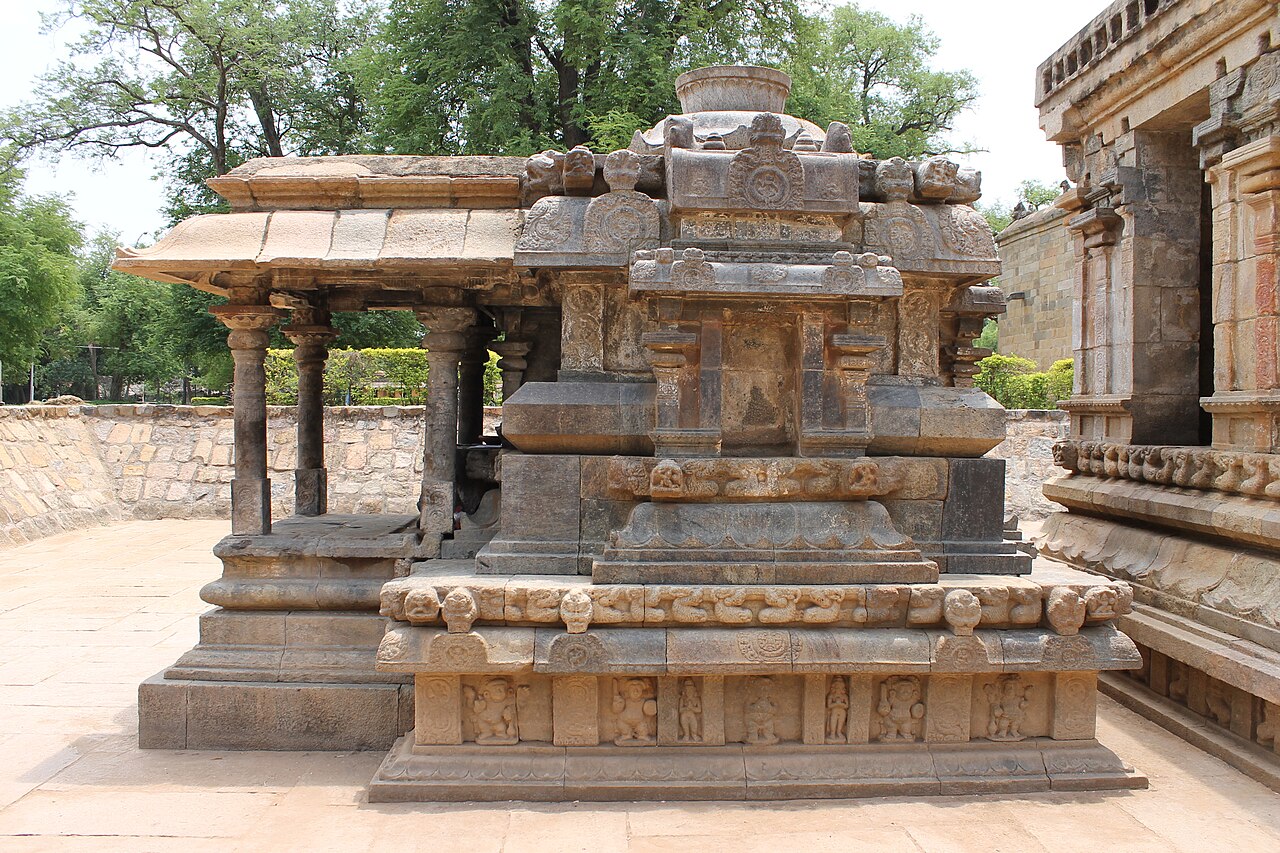
Airavatesvara Temple
· India · temple
A jewel of 12th-century Chola craftsmanship at Darasuram near Kumbakonam in Tamil Nadu, this Śaiva shrine dedicated to Lord Śiva stands among the UNESCO-listed Great Living Chola Temples for its extraordinary sculptural refinement.
Aisanyesvara Siva Temple
· India · temple
A living Śaiva temple from the thirteenth century, nestled near the western boundary of the great Lingarāja complex in Bhubaneswar, Odisha, where a Śivaliṅgam receives daily worship and the sacred rhythms of the liturgical year continue unbroken.
 Hinduism
Akhadachandi Temple
· India · temple
A 10th-century Hindu temple in the heart of Bhubaneswar's old town, Akhadachandi Temple stands on the southwestern shore of the sacred Bindusagar tank, honouring the goddess Mahiṣāsuramardinī in the ancient Kalinga style.
 Hinduism
Akshardham
· India · temple
Swaminarayan Akshardham in Delhi is a vast Hindu mandir complex dedicated to devotion, learning, and harmony, drawing millions of pilgrims each year to its intricately carved sandstone and marble monument on the Yamuna's western bank.
 Hinduism
Akshardham (Gandhinagar)
· India · temple
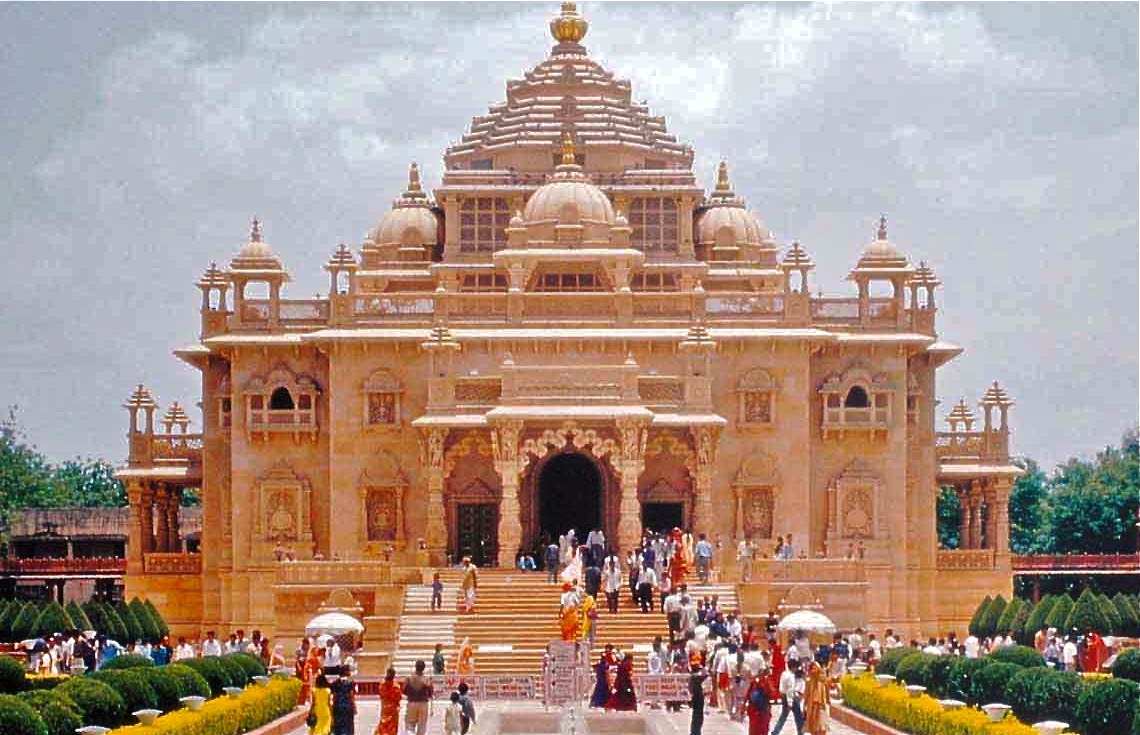
A vast spiritual and cultural complex in Gujarat's capital, Gandhinagar, Swaminarayan Akshardham was conceived through the vision of Yogiji Maharaj and realized by Pramukh Swami Maharaj — a living testimony to the BAPS tradition's commitment to devotion, learning, and harmony.
 Hinduism
Amarnath Temple
· India · temple
A high Himalayan cave shrine in Jammu and Kashmir where a naturally forming ice lingam is venerated as Lord Śiva, drawing one of India's great seasonal pilgrimages.