
Kamakshi Amman Temple
About
Rising across five acres within the sacred precincts of Kanchipuram, this celebrated shrine holds Goddess Kamakshi at its center — a form of Pārvatī regarded as the highest manifestation of Ādi Parāśakti, the primordial divine feminine. The inner sanctum houses her principal image seated in Padmāsana, the lotus posture, oriented toward the south-east and flanked by representations of the divine trinity: Śiva, Viṣṇu, and Brahmā. In her four hands she bears a noose, a goad, a sugarcane bow, and a flower-tipped arrow.
Kamakshi is venerated here in five distinct forms. The primary icon, Śrī Kamakshi Parā Bhaṭṭārikā, occupies the Gāyatrī Maṇḍapa — a hall whose four walls are said to embody the four Vedas and whose twenty-four pillars echo the syllables of the Gāyatrī Mantra. Before her image stands a Śrī Yantra, attributed by tradition to Ādi Śaṅkarācārya. Secondary shrines within the complex honour Tāpa Kamakshi, Añjana Kamakshi, Svarṇa Kamakshi, and the Utsava Kamakshi — the processional image that is accompanied by Sarasvatī and Lakṣmī during festivals.
A separate enclosure shelters a shrine to Viṣṇu in his Varāha form, constituting the Tirukkalvanur Divya Desam — one of the 108 sacred Divya Desams celebrated in the hymns of the Āḻvār poets. The complex also hosts a shrine to Hayagrīva and the sage Agastya, at the very spot where, according to tradition, Agastya received the Lalitā Sahasranāma. Four acts of worship are offered each day, preceded each dawn by ritual honour to the temple elephants.
History
Scholars and tradition offer overlapping accounts of this temple's origins. One line of evidence points to the Pallava rulers, whose capital stood at Kanchipuram, as possible founders between the fifth and eighth centuries CE. The site is also praised in the Nālāyira Divya Prabandham, the corpus of Vaiṣṇava devotional poetry compiled in the ninth century, suggesting a living religious community here well before the medieval period. Subsequent modifications took place in the fourteenth and seventeenth centuries, and certain accounts attribute a significant phase of construction to the Cōḷa dynasty in the fourteenth century.
A separate legendary strand concerns a golden image of Kamakshi. When the Vijayanagara Empire collapsed in 1565, custodians reportedly carried this image across South India in search of a permanent sanctuary. It rested at the Tiruvarur temple from 1739 to 1781 before, in 1783, a dedicated shrine was constructed to receive it. The current processional metal image is fashioned from pañcaloha, an alloy of five metals. The temple has been administered and maintained in continuity by the Kanchi Kāmakoti Pīṭham, whose Jagadguru Śaṅkarācārya serves as hereditary trustee.
Significance
The Kamakshi Amman Temple stands as one of the foremost seats of Śāktism in Tamil Nadu, counted alongside the shrines of Mīnākṣī at Madurai, Nīlāyadākṣī of Nagapattinam, and others. It is also reckoned among the eighteen principal Śakta pīṭhas — sites made sacred by the legend of Satī, whose navel is said to have descended here, giving the location the name Nābhi Pīṭham or Odhyāna Pīṭham. Kamakshi herself is acclaimed as 'Śrī Mātā' — revered mother — the opening invocation of the Lalitā Sahasranāma. The temple additionally serves as the institutional home of the Kanchi Kāmakoti Pīṭham, one of the most venerated Advaita Vedānta institutions in South Asia, ensuring that this ground remains not merely a place of ritual but a living centre of scholarship, initiation, and lineage transmission.
Visiting
Engage with Kamakshi Amman Temple
Through the four pathways
Seva सेवा — Service
Offer your time and skills here. The following opportunities are open at Kamakshi Amman Temple:
No Seva offerings listed yet.
Sādhana साधना — Practice
Learn the worship and practice associated with Kamakshi Amman Temple:
No Sādhana offerings listed yet.
Sandhāna सन्धान — Wisdom
Unite with the wisdom of this tradition:
No Sandhāna offerings listed yet.
Sādhya साध्य — Giving
Support this sacred place according to your means:
No Sādhya offerings listed yet.
All giving flows directly to Kamakshi Amman Temple. Adisthan does not take a commission.
Related sacred places
 Hinduism
Airavatesvara Temple
· India · temple
A jewel of 12th-century Chola craftsmanship at Darasuram near Kumbakonam in Tamil Nadu, this Śaiva shrine dedicated to Lord Śiva stands among the UNESCO-listed Great Living Chola Temples for its extraordinary sculptural refinement.
Aisanyesvara Siva Temple
· India · temple
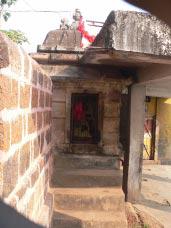
A living Śaiva temple from the thirteenth century, nestled near the western boundary of the great Lingarāja complex in Bhubaneswar, Odisha, where a Śivaliṅgam receives daily worship and the sacred rhythms of the liturgical year continue unbroken.
 Hinduism
Akhadachandi Temple
· India · temple
A 10th-century Hindu temple in the heart of Bhubaneswar's old town, Akhadachandi Temple stands on the southwestern shore of the sacred Bindusagar tank, honouring the goddess Mahiṣāsuramardinī in the ancient Kalinga style.
 Hinduism
Akshardham
· India · temple
Swaminarayan Akshardham in Delhi is a vast Hindu mandir complex dedicated to devotion, learning, and harmony, drawing millions of pilgrims each year to its intricately carved sandstone and marble monument on the Yamuna's western bank.
 Hinduism
Akshardham (Gandhinagar)
· India · temple
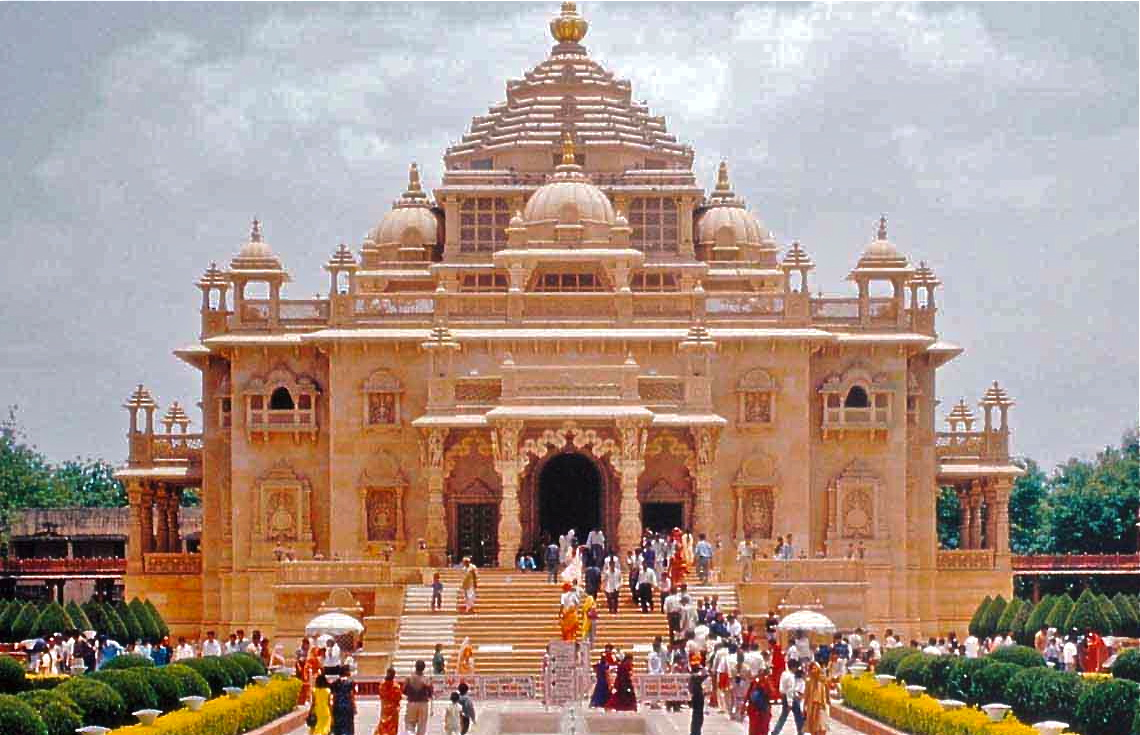
A vast spiritual and cultural complex in Gujarat's capital, Gandhinagar, Swaminarayan Akshardham was conceived through the vision of Yogiji Maharaj and realized by Pramukh Swami Maharaj — a living testimony to the BAPS tradition's commitment to devotion, learning, and harmony.
 Hinduism
Amarnath Temple
· India · temple
A high Himalayan cave shrine in Jammu and Kashmir where a naturally forming ice lingam is venerated as Lord Śiva, drawing one of India's great seasonal pilgrimages.