.jpg&w=3840&q=75)
Mumba Devi Temple
About
Standing at the heart of Mumbai's cloth and metal bazaars, the Mumba Devī shrine draws hundreds of devotees each day to pay reverence to the city's presiding goddess. Mumbā — whose very name echoes through the city's own — is understood as a local manifestation of Parvati, the Mother Goddess, honoured here as a black stone image dressed in a silver crown, her nose adorned with a stud, and her neck graced by gold. To her left rests a stone figure of Annapurna, seated upon a peacock, while a tiger stands guard at the threshold of the inner sanctum.
The people who first claimed this goddess as their own were the Koli fishing communities, the original inhabitants of the Seven Islands that would one day become Bombay. They worshipped her under a popular etymology linking her name to Mahā Ambā — Great Mother — one of the exalted epithets for the Hindu divine feminine. In the tradition she personifies Mother Earth, an aspect venerated across both the northern Indo-Gangetic plains and the southern reaches of the subcontinent alike.
The surrounding lane leading to the temple unfolds as a sensory corridor: stalls offer copper bracelets, rudraksha garlands, brass liṅgams, incense sticks, saffron, and framed images of deities, while ochre-robed sādhus move quietly through the crowd, their brows marked with ash and vermilion. Though modest in scale, the shrine carries the spiritual weight of a living city's gratitude toward the goddess who holds its name.
History
Tradition reckons the Mumba Devī shrine to be roughly six centuries old, its founding understood as an act of devotion toward Goddess Ambā. The earliest structure stood at Bori Bunder — later the site of Victoria Terminus station — built by Koli fishermen who regarded Mumbā as their guardian. Somewhere between 1737 and 1770 that first building was demolished by colonial construction, after which a new sanctuary was raised at Phansi Talao in the Bhuleshwar neighbourhood, where worship has continued without interruption ever since.
The city's own naming carries this history forward. Bombay — the colonial designation — derives from the Portuguese Bom Bahia, meaning 'good bay,' the form the British employed after taking control in the seventeenth century. After independence, Mumbai reclaimed its older identity, and the name is itself a devotional act: most likely a contraction of Mumba Āī, meaning 'Mother Mumba' in Marathi. The old creek and fort that once defined the original settlement have long since deteriorated into scattered remnants, while the temple stands as an unbroken thread of living worship through all of the city's many transformations.
Significance
Mumba Devī is the grāmadevatā — the presiding deity — of all Mumbai, making this shrine the spiritual axis around which the city's identity turns. The tradition preserving her legend tells how Goddess Parvati, at Lord Shiva's urging, was reborn as a fisherwoman here so she might cultivate perseverance and concentration through the discipline of her craft. She lived among the fishing people, known in youth as Matsya and later as Mumba; when the time came for her to depart, the fishermen entreated her to remain forever as their mother and protector. Through the name Mumba Āī — beloved mother — the great city has since taken her identity as its own. Devotees arrive daily from across Maharashtra and far beyond, and the temple is considered one of the defining sacred landmarks of the metropolis.
Visiting
Engage with Mumba Devi Temple
Through the four pathways
Seva सेवा — Service
Offer your time and skills here. The following opportunities are open at Mumba Devi Temple:
No Seva offerings listed yet.
Sādhana साधना — Practice
Learn the worship and practice associated with Mumba Devi Temple:
No Sādhana offerings listed yet.
Sandhāna सन्धान — Wisdom
Unite with the wisdom of this tradition:
No Sandhāna offerings listed yet.
Sādhya साध्य — Giving
Support this sacred place according to your means:
No Sādhya offerings listed yet.
All giving flows directly to Mumba Devi Temple. Adisthan does not take a commission.
Related sacred places
 Hinduism
Airavatesvara Temple
· India · temple
A jewel of 12th-century Chola craftsmanship at Darasuram near Kumbakonam in Tamil Nadu, this Śaiva shrine dedicated to Lord Śiva stands among the UNESCO-listed Great Living Chola Temples for its extraordinary sculptural refinement.
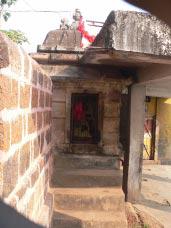
Aisanyesvara Siva Temple
· India · temple
A living Śaiva temple from the thirteenth century, nestled near the western boundary of the great Lingarāja complex in Bhubaneswar, Odisha, where a Śivaliṅgam receives daily worship and the sacred rhythms of the liturgical year continue unbroken.
 Hinduism
Akhadachandi Temple
· India · temple
A 10th-century Hindu temple in the heart of Bhubaneswar's old town, Akhadachandi Temple stands on the southwestern shore of the sacred Bindusagar tank, honouring the goddess Mahiṣāsuramardinī in the ancient Kalinga style.
 Hinduism
Akshardham
· India · temple
Swaminarayan Akshardham in Delhi is a vast Hindu mandir complex dedicated to devotion, learning, and harmony, drawing millions of pilgrims each year to its intricately carved sandstone and marble monument on the Yamuna's western bank.
 Hinduism
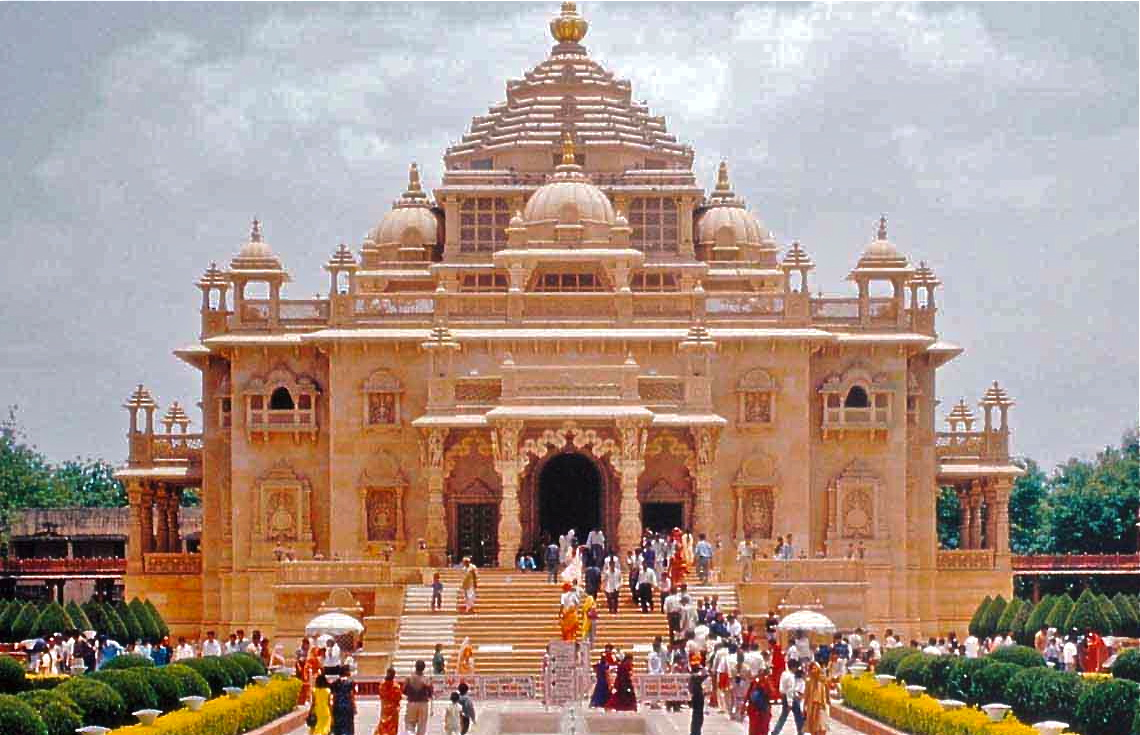
Akshardham (Gandhinagar)
· India · temple
A vast spiritual and cultural complex in Gujarat's capital, Gandhinagar, Swaminarayan Akshardham was conceived through the vision of Yogiji Maharaj and realized by Pramukh Swami Maharaj — a living testimony to the BAPS tradition's commitment to devotion, learning, and harmony.
 Hinduism
Amarnath Temple
· India · temple
A high Himalayan cave shrine in Jammu and Kashmir where a naturally forming ice lingam is venerated as Lord Śiva, drawing one of India's great seasonal pilgrimages.