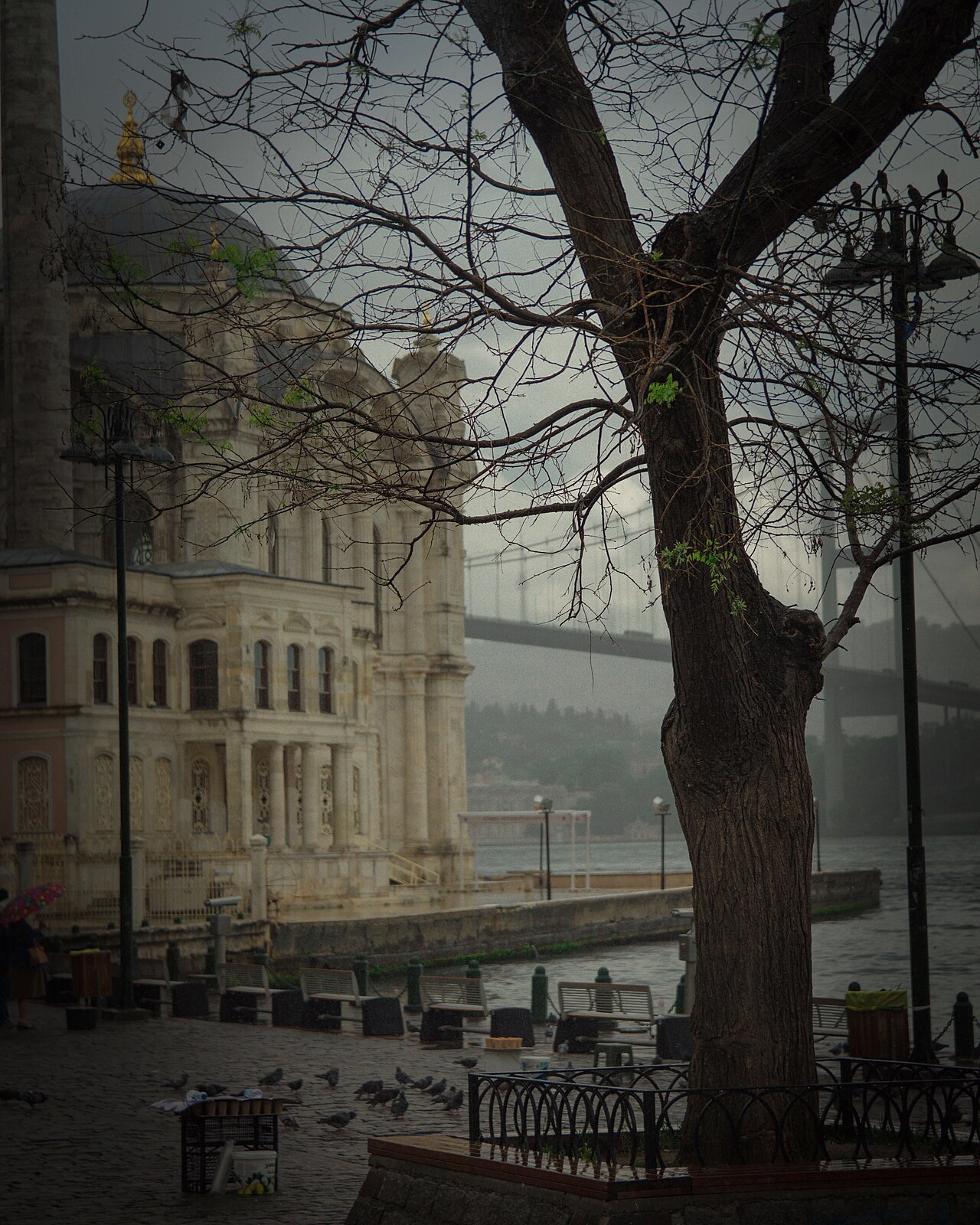
Ortaköy Mosque
Büyük Mecidiye Camii · Ortaköy Camii · Grand Mecidiye Mosque
About
Ortakoy Mosque, in Turkish the Ortakoy Camii and formally the Buyuk Mecidiye Camii, the Great Mosque of Sultan Abdulmejid, stands at the edge of the Bosphorus in the Besiktas district of Istanbul. Set beside the Ortakoy pier and beneath the silhouette of the Bosphorus Bridge, it is among the most photographed buildings on the strait.
The present mosque, completed in 1854 or 1856, was commissioned by Sultan Abdulmecid I to replace an earlier mosque of 1720 that had been ruined during the Patrona Halil Uprising of 1731. Its architects were the Armenian father and son Garabet Balyan and Nikogos Balyan, who at the same time were designing the nearby Dolmabahce Palace and Mosque.
The building combines a two-storey imperial apartment for the sultan on a U-shaped plan with a square prayer hall covered by a single dome. The eclectic facades carry stone-carved reliefs and engaged columns drawn from Ottoman Baroque, Neoclassical, and other European Revivalist traditions, while the slender twin minarets rise with Corinthian-style balconies. The dome's interior is painted with trompe-l'oeil frescoes, a feature introduced to Ottoman architecture under Abdulmecid I, and calligraphy by the sultan himself adorns the walls.
Damaged by the 1894 Istanbul earthquake, the mosque was repaired in 1909, when the original fluted minarets were replaced with simpler masonry. The brick dome cracked over time and was rebuilt in concrete after foundation work in the 1960s, and the mosque reopened in 1969. A further restoration by the General Directorate of Foundations was completed in 2014.
History
An earlier mosque on this shore, raised in 1720, was destroyed in the Patrona Halil uprising of 1731. Sultan Abdülmecid I commissioned the present building from the Armenian court architects Garabet and Nikoğos Balyan, who completed it around 1854 to 1856 while also designing the nearby Dolmabahçe Palace and Mosque. Earthquake damage in 1894 and later structural cracking brought repeated repairs, including a full concrete reconstruction of the dome in the 1960s, and a three-year restoration by the General Directorate of Foundations concluded with the mosque's reopening on 6 June 2014.
Significance
The mosque introduced trompe-l'oeil fresco painting to Ottoman religious architecture, and its walls carry calligraphy executed by Sultan Abdülmecid I himself, who was a trained calligrapher. Its eclectic marble facade, blending Ottoman Baroque with Neoclassical Revivalist detailing, remains one of the most photographed points on the Bosphorus, framed today by the bridge that spans the strait behind it.
Architecture
Ottoman Baroque and Neoclassical Revivalist eclectic style, designed by the Balyan family of court architects
Visiting
Hours
Hours not listed.
Contact
No contact details listed yet.
Engage with Ortaköy Mosque
Through the four pathways
Seva सेवा — Service
Offer your time and skills here. The following opportunities are open at Ortaköy Mosque:
No Seva offerings listed yet.
Sādhana साधना — Practice
Learn the worship and practice associated with Ortaköy Mosque:
No Sādhana offerings listed yet.
Sandhāna सन्धान — Wisdom
Unite with the wisdom of this tradition:
No Sandhāna offerings listed yet.
Sādhya साध्य — Giving
Support this sacred place according to your means:
No Sādhya offerings listed yet.
All giving flows directly to Ortaköy Mosque. Adisthan does not take a commission.
Festivals & Events
- Mar
Ramazan Bayramı (Eid al-Fitr)
9 March 2027 · annual
The three-day festival breaking the fasting month of Ramadan, marked at Ortaköy Mosque with the Eid prayer and a congregation that fills the waterfront square outside.
- May
Kurban Bayramı (Eid al-Adha)
16 May 2027 · annual
The Festival of Sacrifice, observed with the Eid prayer and the distribution of meat to those in need, among the most widely attended congregational prayers of the year at the mosque.
Gallery
Related sacred places
 Islam
IslamAbu'l-Fida Mosque
Hama · Syria · mosque
A fourteenth-century Ayyubid mausoleum and Mamluk-era congregational mosque on the banks of the Orontes in Hama, Syria, known locally as the Mosque of the Serpents for the carved pillars at its windows.
 Islam
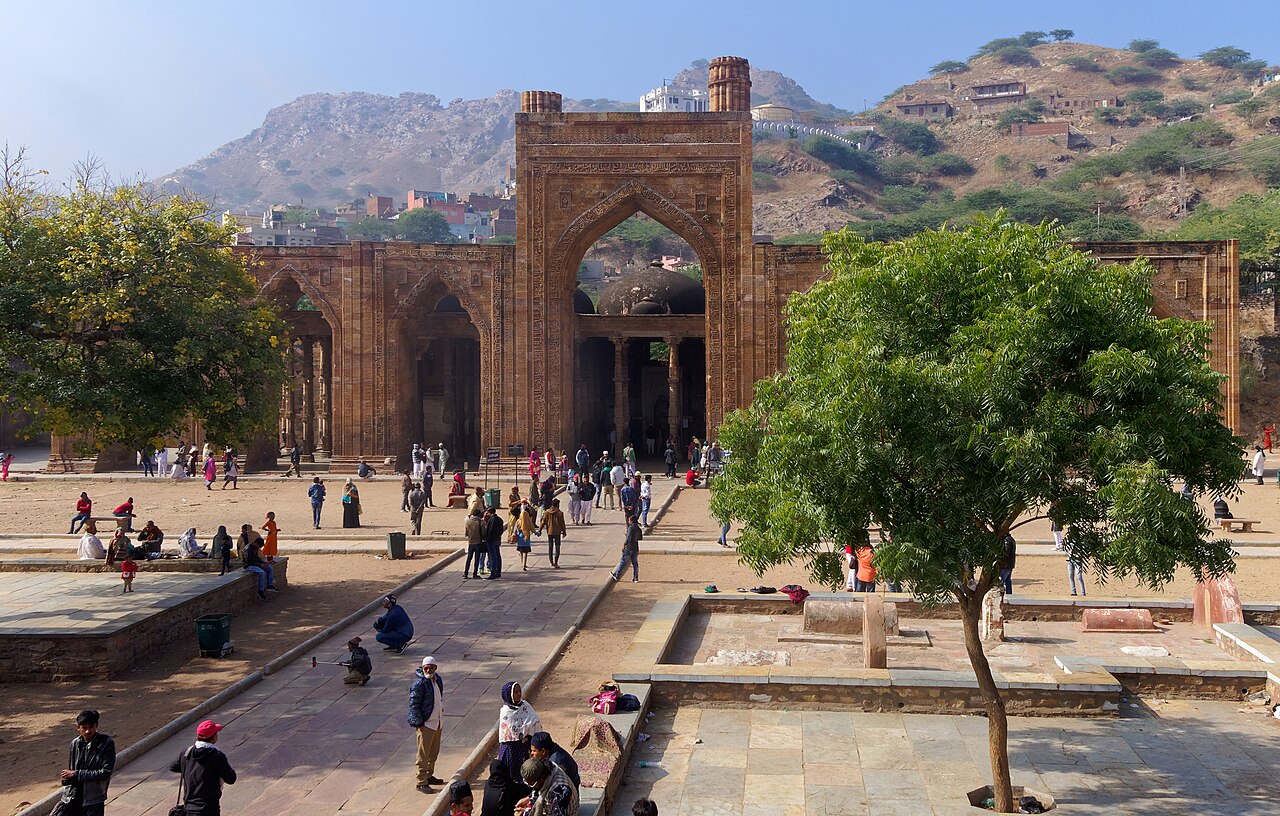
IslamAdhai Din Ka Jhonpra
Ajmer · India · mosque
The oldest surviving monument in Ajmer and among the earliest Indo-Islamic mosques in India, its 1199 CE prayer hall and Iltutmish's 1213 CE arched screen rise on 344 pillars carved by Hindu and Jain craftsmen from earlier Temples.
 Islam
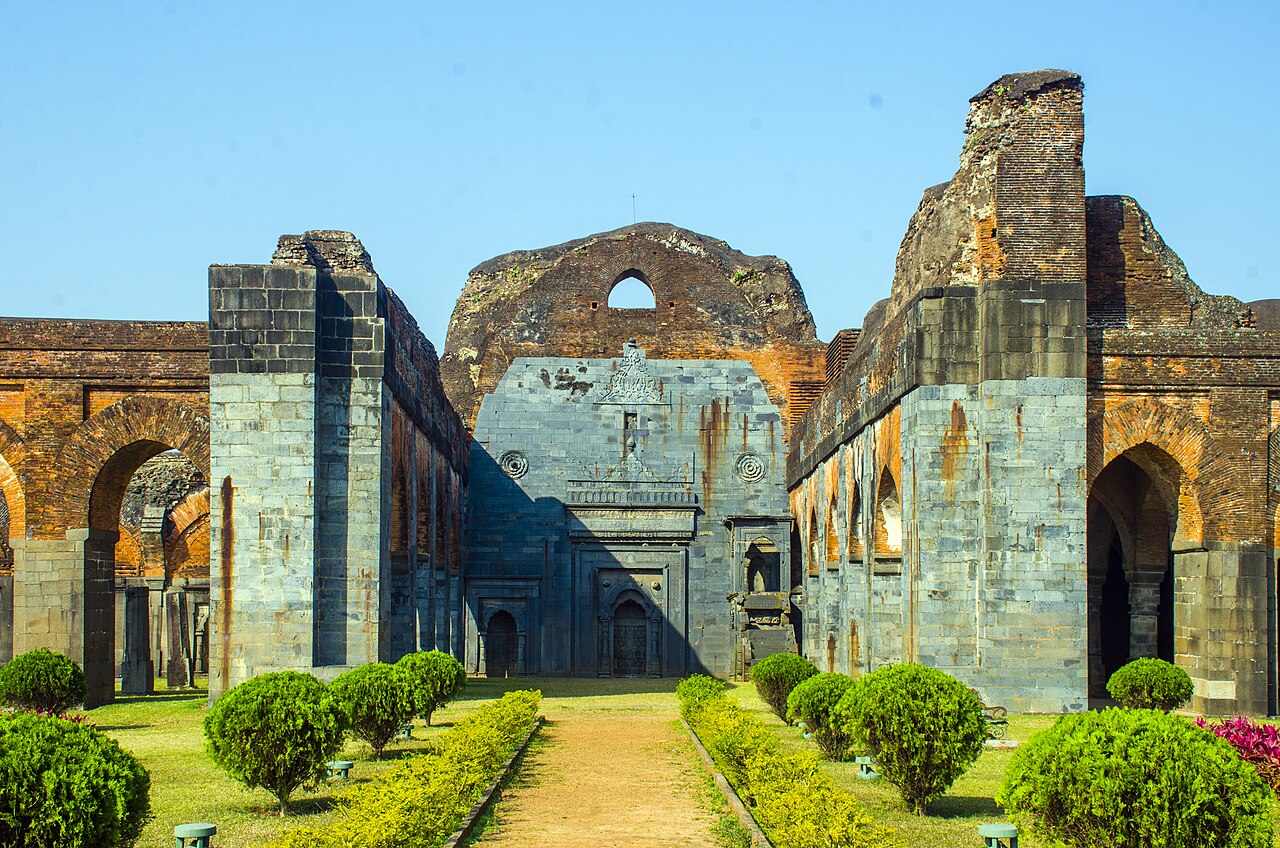
IslamAdina Mosque
Pandua · India · mosque
Once the largest mosque on the Indian subcontinent, the Adina Mosque at Pandua in West Bengal was raised by Sultan Sikandar Shah between 1373 and 1375 as the congregational mosque of the Bengal Sultanate, and holds his tomb within its western wall.
 Islam
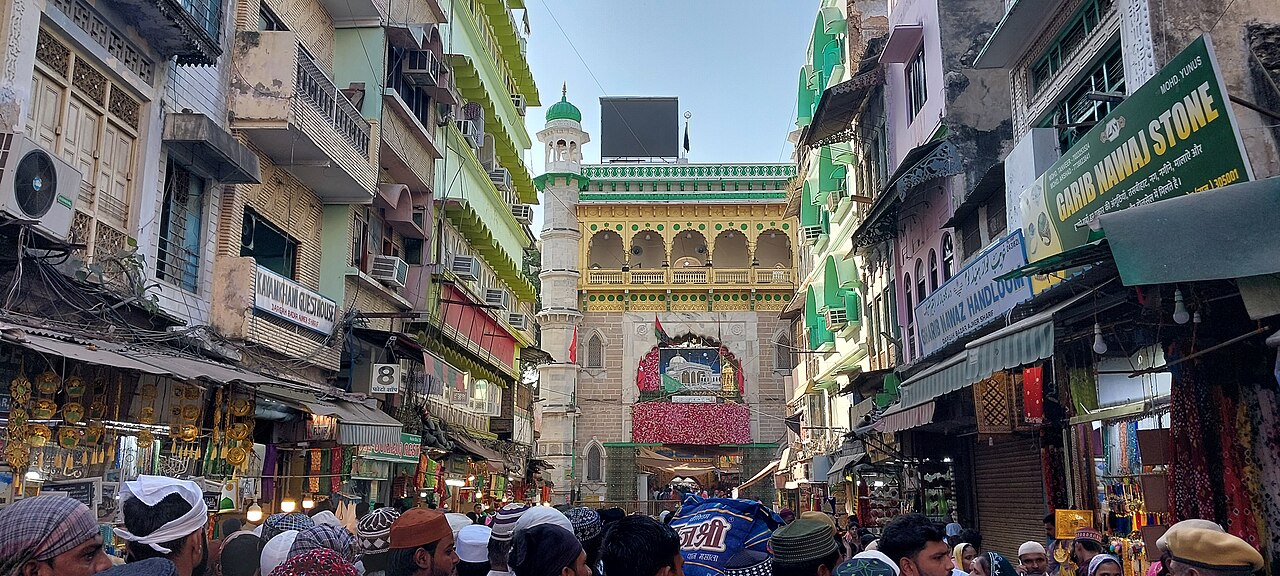
IslamAjmer Sharif Dargah
Ajmer · India · dargah
The tomb of Hazrat Khwaja Moinuddin Chishti, Gharib Nawaz, the benefactor of the poor, and the principal Sufi dargah of South Asia, where pilgrims of every community have offered chadars and shared the sweet rice of the great deghs for eight centuries.
Akbarabadi Mosque
Delhi · India · mosque
A mosque raised in 1650 by Akbarabadi Begum, a wife of the Mughal emperor Shah Jahan, in the walled city of Shahjahanabad, demolished by British forces in the aftermath of the 1857 Uprising and today marked only by disputed, unexcavated remains beneath Netaji Subhash Park in Old Delhi.
 Islam
IslamAlamgir Mosque
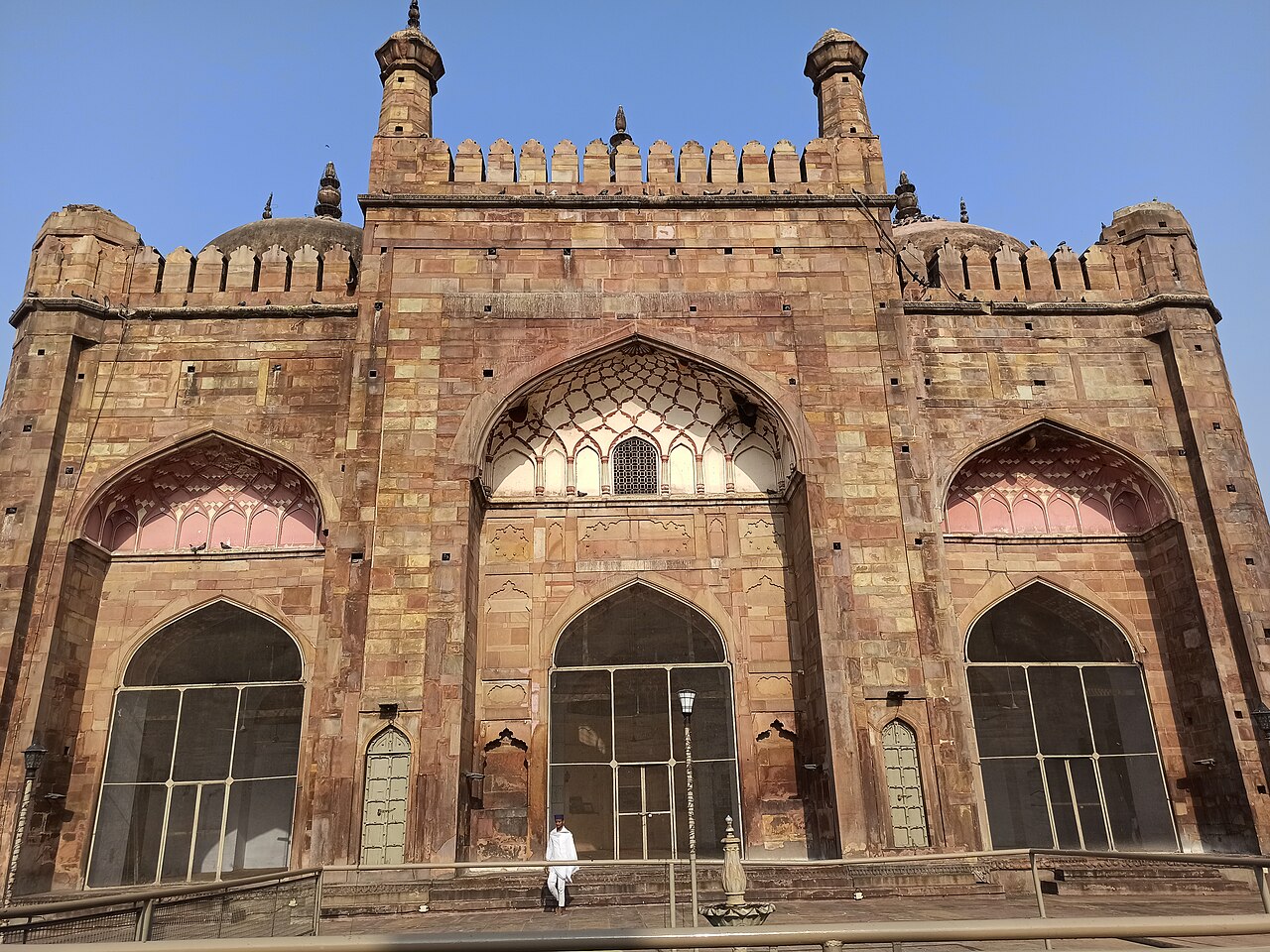
Varanasi · India · mosque
Raised in 1669 by the Mughal emperor Aurangzeb on the high bank above Panchganga Ghat in Varanasi, the Alamgir Mosque stands where wide stone steps meet the Ganges, its domes and surviving corner turret rising over a site earlier accounts describe as the Hindu Temple of Bindu Madhava.