
Berlin Mosque
Wilmersdorfer Moschee · Ahmadiyya Mosque, Berlin · Berliner Moschee
About
Standing at Brienner Straße 7–8 in the Wilmersdorf borough of the German capital, the Berlin Mosque, officially the Wilmersdorfer Moschee, was designed by the architect K. A. Hermann and built between 1923 and 1925. The Lahore Ahmadiyya Movement (Ahmadiyya Anjuman Ishāʿat-i-Islām Lahore) owns and manages the mosque.
On 6 August 1923 the foundation stone was set in place, and on 26 April 1925 the completed mosque was officially inaugurated. Hermann shaped the mosque in a Neo-Mughal idiom, onion dome, pastel surfaces, and a symmetrical front recalling the tombs of the Mughal Empire and most famously the Taj Mahal. Two slim minarets, each 27 metres (90 feet) high, rise on either side of the prayer hall, and a two-storey imam's residence stands beside the mosque.
The minarets and dome were heavily damaged by Soviet shelling during the Second World War. The mosque was reopened in 1952 after a grant from the Berlin Monuments Department made initial repairs possible, and the two minarets themselves were finally rebuilt between 1999 and 2001.
History
The mosque grew out of an early-1920s effort by the Indian Muslim activists Abdul Jabbar Kheri and Abdus Sattar Kheri, known together as the Kheri Brothers, to establish an Islamic centre in Berlin. Their contact with the Woking Muslim Mission in England brought the project to the Lahore Ahmadiyya Movement, Ahmadiyya Anjuman Isha'at-i-Islam Lahore, which took it on and financed the building entirely through donations. The foundation stone was laid in 1924 on a corner plot at Brienner and Berliner Straße in Wilmersdorf, and the completed mosque, designed by the German architect K. A. Hermann in a Neo-Mughal style modelled on the Taj Mahal, was formally inaugurated on 23 March 1928. Its original manager, Hugo Marcus, was a Jewish convert to Islam who later helped fellow Jews escape Nazi persecution. During the Second World War the twin minarets, used as machine-gun positions, were struck by Soviet artillery and reduced to stumps, and the dome itself took a direct hit. The mosque reopened in 1952 after initial repairs, and a sustained restoration beginning in 1996 with support from the Deutsche Stiftung Denkmalschutz rebuilt the northern minaret in 1999 and the southern minaret in 2001, with a further conservation phase completed between 2017 and 2021.
Significance
As the oldest mosque still standing in Germany, the Wilmersdorf Mosque is a foundational landmark in the history of Islam in the country and in early twentieth-century European Islam more broadly. Its Neo-Mughal architecture, built in modest plaster, wood and concrete to fit a limited budget, carried South Asian Muslim sacred design into the heart of Weimar-era Berlin. It has been protected as a historical monument since 1993, and each October it takes part in Germany's nationwide Tag der offenen Moschee, opening its doors to visitors of every background.
Architecture
Neo-Mughal architecture modelled on the Taj Mahal and other Mughal-era tomb buildings, with a central ribbed dome flanked by twin onion-domed minarets and a two-storey imam's residence adjoining the prayer hall
Visiting
Hours
Hours not listed.
Contact
Engage with Berlin Mosque
Through the four pathways
Seva सेवा — Service
Offer your time and skills here. The following opportunities are open at Berlin Mosque:
No Seva offerings listed yet.
Sādhana साधना — Practice
Learn the worship and practice associated with Berlin Mosque:
No Sādhana offerings listed yet.
Sandhāna सन्धान — Wisdom
Unite with the wisdom of this tradition:
No Sandhāna offerings listed yet.
Sādhya साध्य — Giving
Support this sacred place according to your means:
No Sādhya offerings listed yet.
All giving flows directly to Berlin Mosque. Adisthan does not take a commission.
Festivals & Events
- Oct
Tag der offenen Moschee (Open Mosque Day)
3 October 2026 · annual
A nationwide open house held every 3 October since 1997, when mosques across Germany welcome visitors of every background for tours and conversation about Islam; the Wilmersdorf mosque's own community lists Mosque Open Days among its yearly calendar.
Gallery
Related sacred places
 Islam
IslamAbu'l-Fida Mosque
Hama · Syria · mosque
A fourteenth-century Ayyubid mausoleum and Mamluk-era congregational mosque on the banks of the Orontes in Hama, Syria, known locally as the Mosque of the Serpents for the carved pillars at its windows.
 Islam
IslamAdhai Din Ka Jhonpra
Ajmer · India · mosque
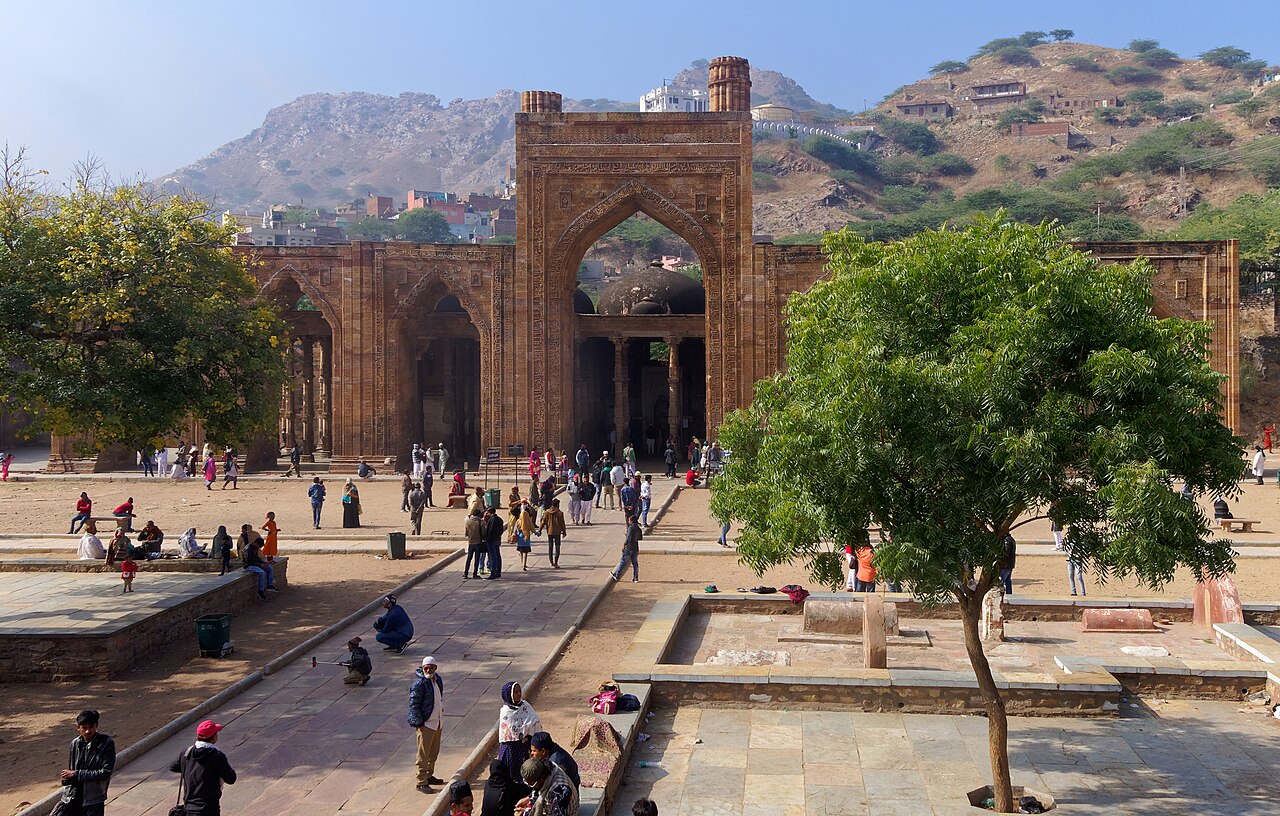
The oldest surviving monument in Ajmer and among the earliest Indo-Islamic mosques in India, its 1199 CE prayer hall and Iltutmish's 1213 CE arched screen rise on 344 pillars carved by Hindu and Jain craftsmen from earlier Temples.
 Islam
IslamAdina Mosque
Pandua · India · mosque
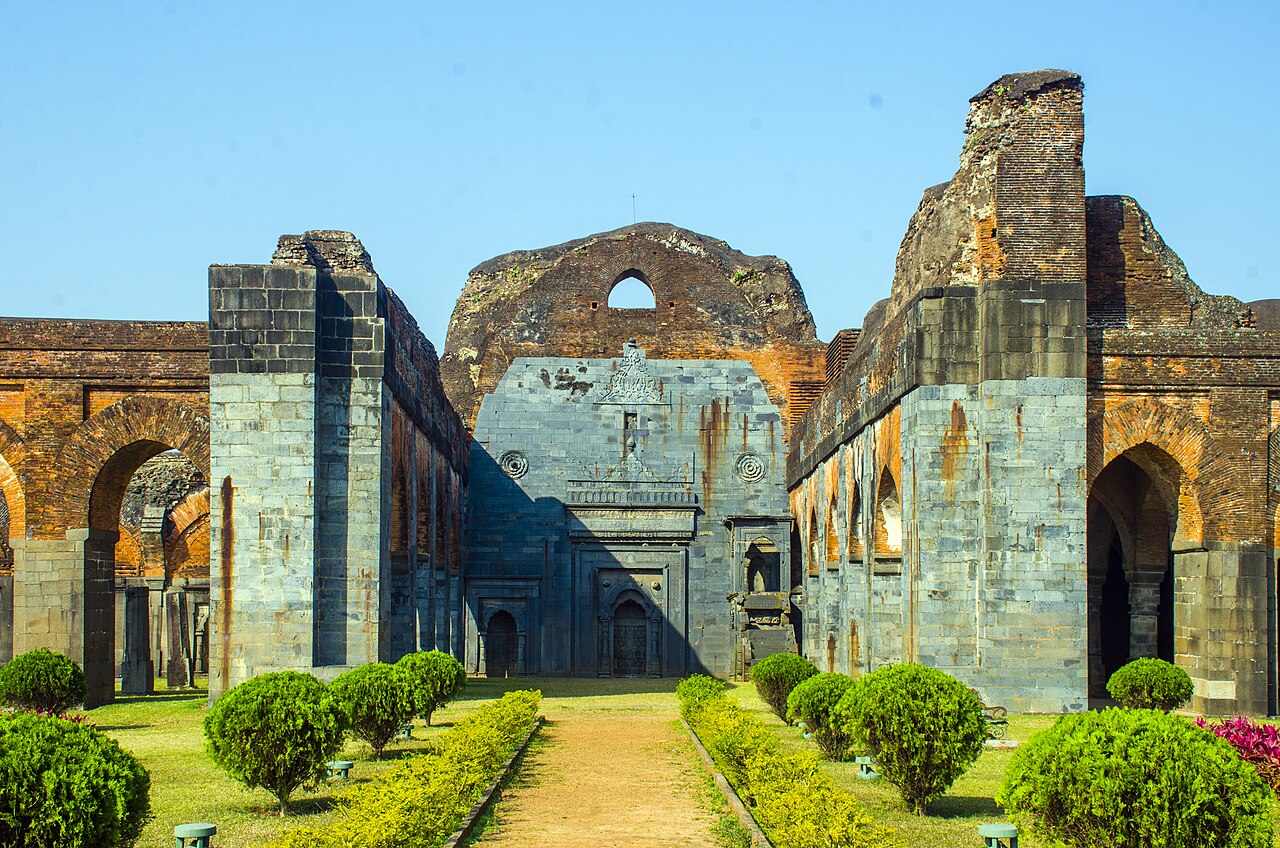
Once the largest mosque on the Indian subcontinent, the Adina Mosque at Pandua in West Bengal was raised by Sultan Sikandar Shah between 1373 and 1375 as the congregational mosque of the Bengal Sultanate, and holds his tomb within its western wall.
 Islam
IslamAjmer Sharif Dargah
Ajmer · India · dargah
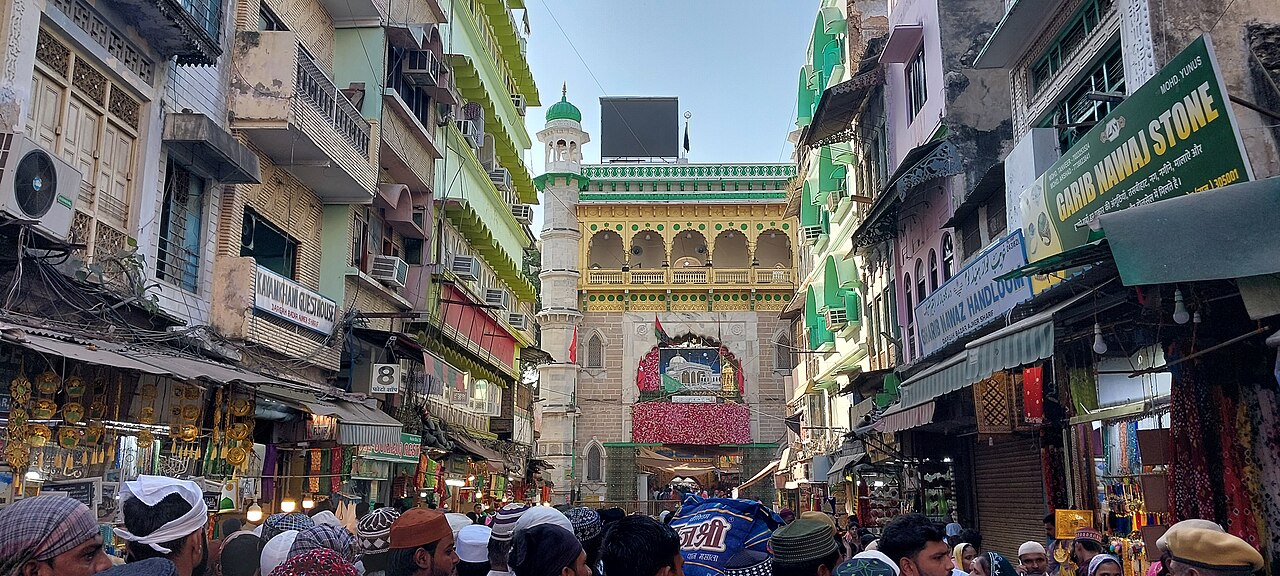
The tomb of Hazrat Khwaja Moinuddin Chishti, Gharib Nawaz, the benefactor of the poor, and the principal Sufi dargah of South Asia, where pilgrims of every community have offered chadars and shared the sweet rice of the great deghs for eight centuries.
Akbarabadi Mosque
Delhi · India · mosque
A mosque raised in 1650 by Akbarabadi Begum, a wife of the Mughal emperor Shah Jahan, in the walled city of Shahjahanabad, demolished by British forces in the aftermath of the 1857 Uprising and today marked only by disputed, unexcavated remains beneath Netaji Subhash Park in Old Delhi.
 Islam
IslamAlamgir Mosque
Varanasi · India · mosque
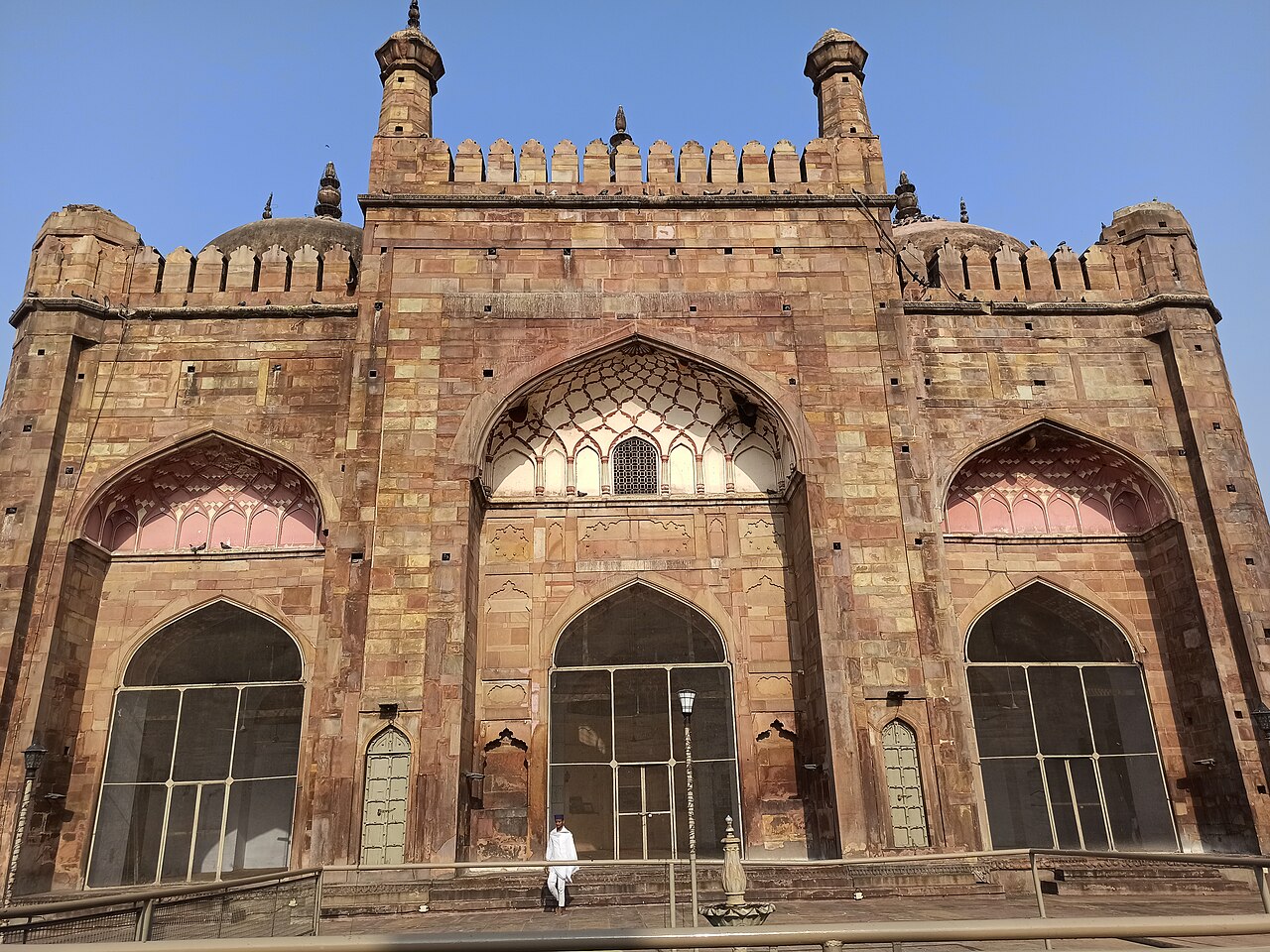
Raised in 1669 by the Mughal emperor Aurangzeb on the high bank above Panchganga Ghat in Varanasi, the Alamgir Mosque stands where wide stone steps meet the Ganges, its domes and surviving corner turret rising over a site earlier accounts describe as the Hindu Temple of Bindu Madhava.