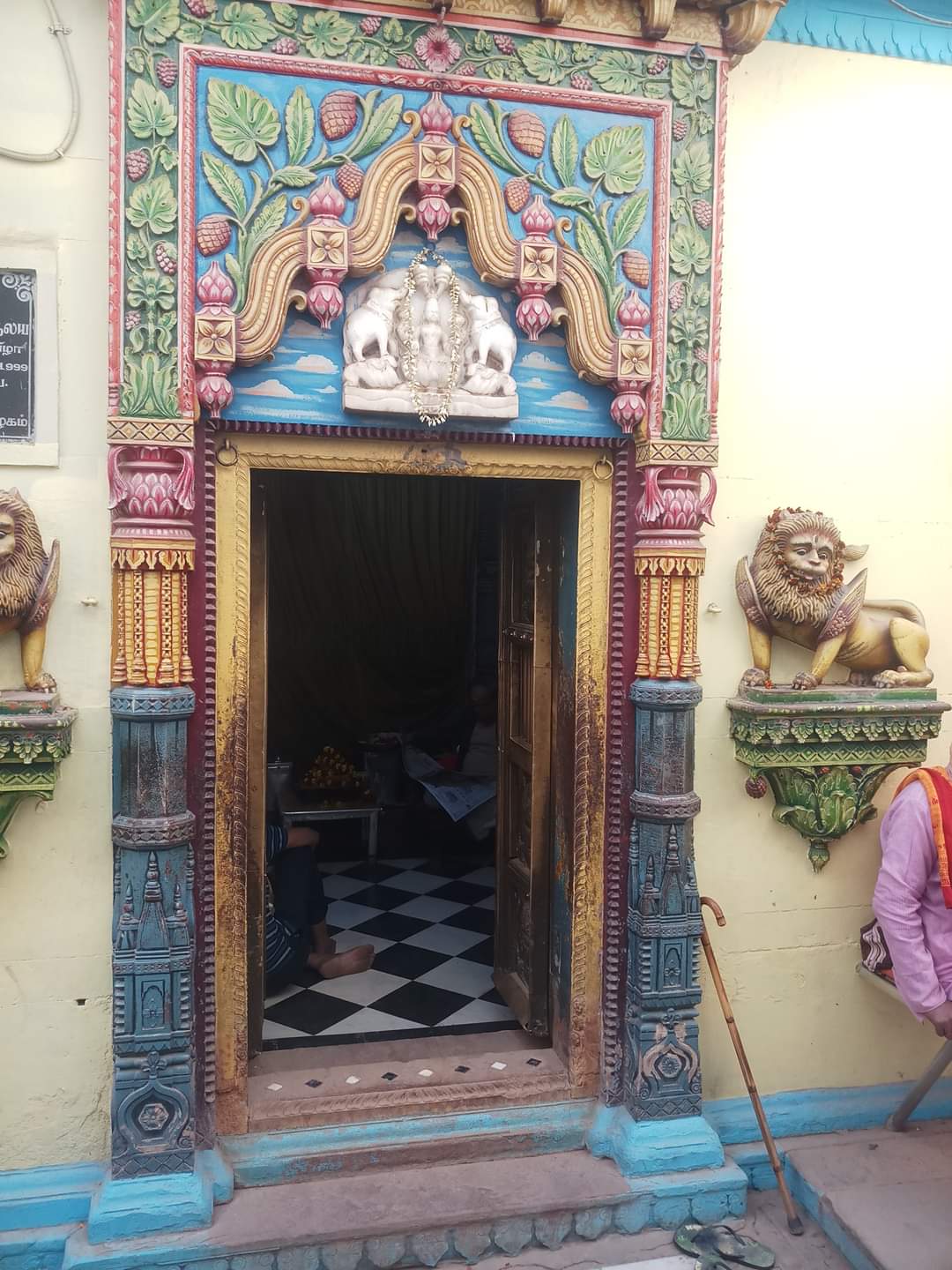
Vishalakshi Temple
About
Nestled near Mir Ghāṭ in Vārāṇasī, roughly a quarter of a kilometre from the Kāśī Viśvanātha Temple, the Viśālākṣī Devī Mandir — also called Viśālākṣī Gaurī Mandir — is a living centre of Śākta devotion. The presiding deity is Viśālākṣī (विशालाक्षी), an epithet of Pārvatī drawn from the Sanskrit words viśāla, meaning wide or expansive, and akṣi, meaning eye. In the Śiva Purāṇa, this name is spoken when Śiva first beholds the Goddess; her companion in the pīṭha tradition is Bhairava, worshipped here as Kāla Bhairava.
The sanctum houses two black-stone images side by side: a smaller, older figure known as Ādi Viśālākṣī, and a taller image installed at a later period. Pilgrims customarily bathe in the sacred Gaṅgā before entering the temple, and the pūjā, hymn recitation, and charitable giving performed here are considered especially meritorious by devotees. Unmarried women seeking a spouse, childless couples hoping for children, and those in difficult circumstances all find in Viśālākṣī a compassionate listener. The temple forms part of a nine-shrine circuit observed during both Navarātrī seasons, when the goddess Viśālākṣī represents one of the Navadurgā or nine Gaurīs whose worship completes the Kāśī pilgrimage round.
Architecturally the structure blends traditions: its overall form follows the haveli-influenced North Indian idiom of Vārāṇasī, while a modest Dravidian-style gopura (gateway tower) reveals its South Indian patronage and marks its place within the wider Tamil sacred geography. The building's proportions are intimate rather than monumental, lending the compound an atmosphere of gathered stillness amid the busy river-ghāṭ neighbourhood.
History
The association of Viśālākṣī with Vārāṇasī reaches deep into Sanskrit textual history. The Tantric work Rudrayāmala, composed before 1052 CE, already lists Vārāṇasī among the ten foremost Śakti Pīṭhas. Subsequent texts — the Kulārṇava Tantra, the Kubjikā Tantra, the Jñānārṇava, the Devi Bhāgavata Purāṇa, and a 12th-century enumeration by Lakṣmīdhara — all include the goddess of Kāśī in their Pīṭha lists, placing her variously as the second, third, fifth, or sixth Pīṭha depending on the list's scope. The Mahāpīṭhānirupana section of the Tantrachūḍāmaṇi, which eventually reached 51 names, assigns Manikarṇikā at Vārāṇasī the 23rd position, with a kuṇḍala (earring) as the fallen limb of Satī and Kāla-Bhairava as her male counterpart.
The current temple structure was erected in 1893 under the patronage of the Nattukottai Nagarathars, a prosperous mercantile community from the Chettinad region of Tamil Nadu, whose deep veneration of Viśālākṣī reflects centuries of Tamil pilgrimage to Kāśī. Tamil devotees have long regarded Viśālākṣī alongside Kāmākṣī of Kāñcīpuram and Mīnākṣī of Madurai as the three most significant goddess temples in the tradition. Since the 19th century the Nattukottai Nagarathars have been the principal custodians responsible for the temple's upkeep and ritual continuity.
Significance
The Viśālākṣī Temple carries a layered significance that spans Śākta theology, the sacred geography of Kāśī, and the devotional life of communities across South Asia. As one of the 51 Śakti Pīṭhas — sites where portions of the body of Satī are said to have descended to earth after Viṣṇu dismembered her grief-borne corpse to release the mourning Śiva — the temple participates in one of Hinduism's most expansive sacred networks. Tradition holds that the jewel from Satī's right earring (manikarṇa) fell here, and the goddess is therefore also known as Mānikarṇī Devī. Within the Kāśī Khaṇḍa of the Skanda Purāṇa, Viśālākṣī accompanies Viśvanātha to bestow a boon on Kubera and occupies a place in the Shaṣṭāṅga yoga circuit — a six-site pilgrimage within the city encompassing the Viśvanātha Temple, this shrine, the Gaṅgā herself, the Kāla Bhairava temple, the Dhunḍirāja Gaṇeśa temple, and the Daṇḍapāṇi shrine. Her annual festival, Kajali Tīj, falls on the third lunar day of the waning fortnight of Bhādrapada and is especially observed by women for the welfare of their brothers, accompanied by the singing of kajali songs that celebrate the rain-drenched season.
Visiting
Engage with Vishalakshi Temple
Through the four pathways
Seva सेवा — Service
Offer your time and skills here. The following opportunities are open at Vishalakshi Temple:
No Seva offerings listed yet.
Sādhana साधना — Practice
Learn the worship and practice associated with Vishalakshi Temple:
No Sādhana offerings listed yet.
Sandhāna सन्धान — Wisdom
Unite with the wisdom of this tradition:
No Sandhāna offerings listed yet.
Sādhya साध्य — Giving
Support this sacred place according to your means:
No Sādhya offerings listed yet.
All giving flows directly to Vishalakshi Temple. Adisthan does not take a commission.
Gallery
Related sacred places
 Hinduism
Airavatesvara Temple
· India · temple
A jewel of 12th-century Chola craftsmanship at Darasuram near Kumbakonam in Tamil Nadu, this Śaiva shrine dedicated to Lord Śiva stands among the UNESCO-listed Great Living Chola Temples for its extraordinary sculptural refinement.
Aisanyesvara Siva Temple
· India · temple
A living Śaiva temple from the thirteenth century, nestled near the western boundary of the great Lingarāja complex in Bhubaneswar, Odisha, where a Śivaliṅgam receives daily worship and the sacred rhythms of the liturgical year continue unbroken.
 Hinduism
Akhadachandi Temple
· India · temple
A 10th-century Hindu temple in the heart of Bhubaneswar's old town, Akhadachandi Temple stands on the southwestern shore of the sacred Bindusagar tank, honouring the goddess Mahiṣāsuramardinī in the ancient Kalinga style.
 Hinduism
Akshardham
· India · temple
Swaminarayan Akshardham in Delhi is a vast Hindu mandir complex dedicated to devotion, learning, and harmony, drawing millions of pilgrims each year to its intricately carved sandstone and marble monument on the Yamuna's western bank.
 Hinduism
Akshardham (Gandhinagar)
· India · temple
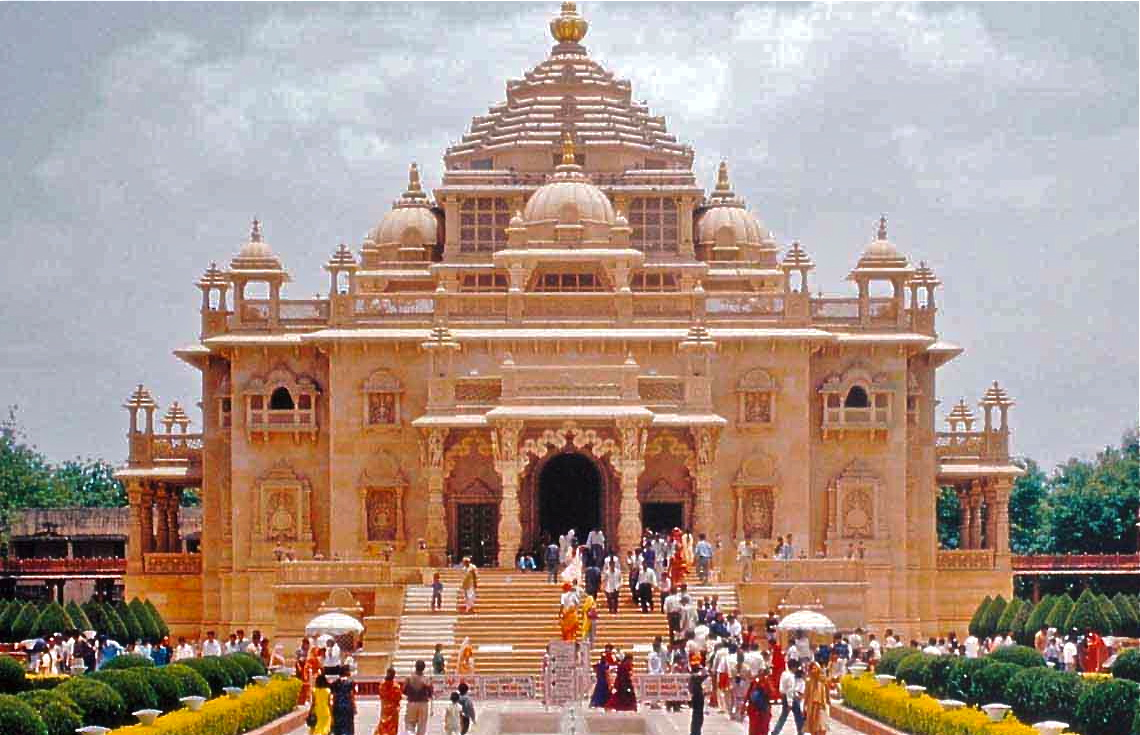
A vast spiritual and cultural complex in Gujarat's capital, Gandhinagar, Swaminarayan Akshardham was conceived through the vision of Yogiji Maharaj and realized by Pramukh Swami Maharaj — a living testimony to the BAPS tradition's commitment to devotion, learning, and harmony.
 Hinduism
Amarnath Temple
· India · temple
A high Himalayan cave shrine in Jammu and Kashmir where a naturally forming ice lingam is venerated as Lord Śiva, drawing one of India's great seasonal pilgrimages.