Adina Mosque
Adina Masjid
About
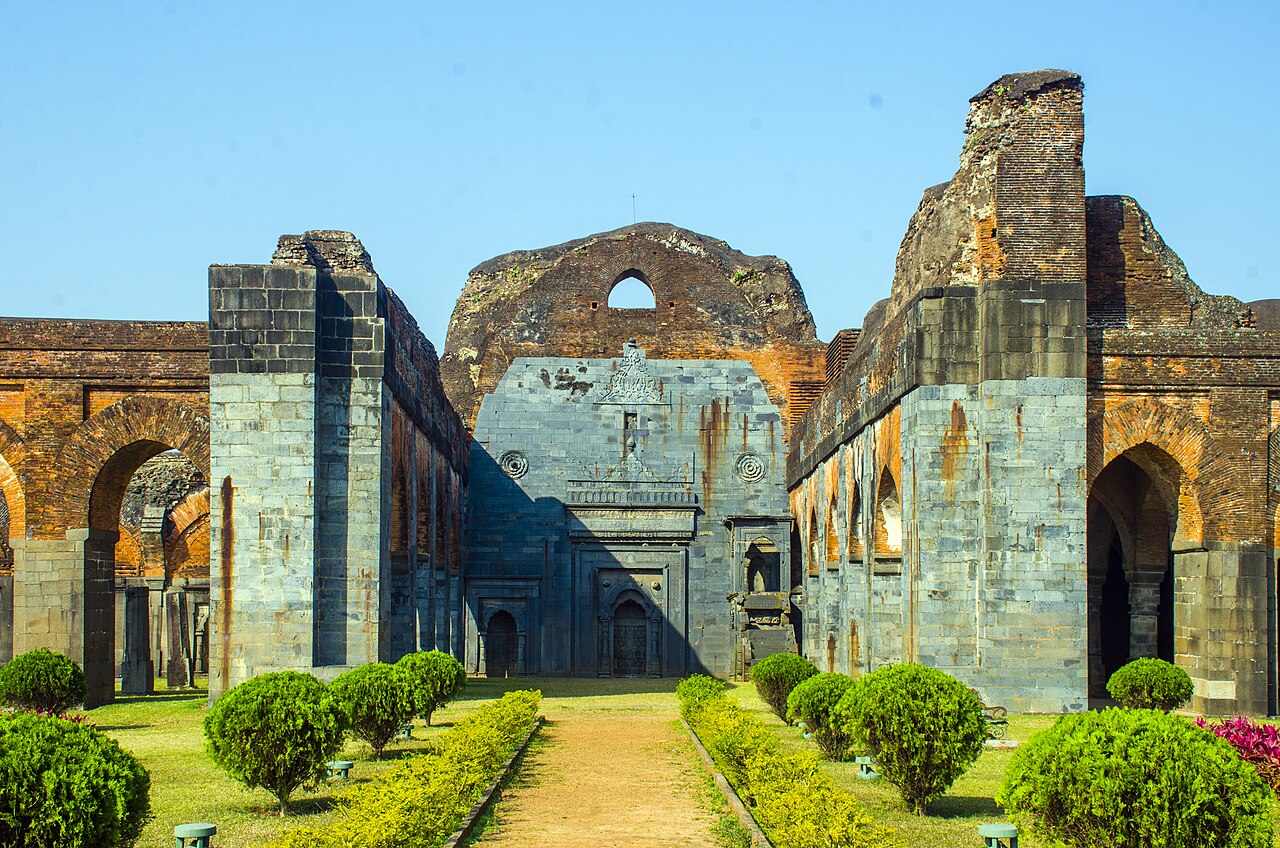
Rising from the landscape of Pandua in the Malda district of West Bengal, the Adina Mosque stands as one of the most ambitious architectural undertakings ever attempted in the subcontinent. Commissioned in 1373 and brought to completion in 1375 under Sultan Sikandar Shah of the Ilyas Shahi dynasty, it served as the congregational mosque of an empire that had twice repelled the armies of the Delhi Sultanate. Its name, Adina, is understood to derive from the word for Friday, evoking the central congregational prayer of the Islamic week.
The structure measures 172 by 97 metres and once sheltered hundreds of domes over its vast prayer halls and surrounding cloisters. Its defining architectural gesture is a great ribbed barrel vault spanning the central nave, the first of its scale on the subcontinent, deliberately recalling the palatial idiom of pre-Islamic Sassanian Persia. The prayer hall extends five aisles deep, while the three colonnaded galleries encircling the open courtyard contain a further triple row of aisles. In total, 260 pillars support 387 domed bays, and a continuous arcade of 92 arches lines the inner face of the courtyard, above which domes rise in quiet procession. The gallery reserved for the Sultan and his court can still be found at its elevated position, and his tomb chamber remains attached to the qibla wall.
The mosque was built partly from stone salvaged from dismantled Temples of earlier faiths, and its walls carry carved ornament that weaves Bengali, Arab, Persian, and Byzantine sensibilities into a coherent whole. Elephant carvings and dancing figures appear on certain outer sections, silent witnesses to the layered religious landscape from which the building emerged. Today the site is designated a Monument of National Importance.
History
Sultan Sikandar Shah commissioned the mosque after his kingdom twice defeated the Delhi Sultanate, in 1353 and 1359, building it to rival the grandest religious architecture of the Islamic world. Its central nave carries the first ribbed barrel vault of its scale raised on the subcontinent, consciously recalling pre-Islamic Sassanian Persia. Earthquakes in the nineteenth century damaged the structure, and as Pandua declined the mosque was left standing largely in ruin.
Significance
Built partly from stone taken from earlier Temples, the Adina Mosque was the first mosque in Bengal to use terracotta decoration, translating motifs such as the lotus and the caitya window from Pala-Sena era Buddhist and Hindu sculpture into a new Indo-Islamic ornamental language. It stands as the founding monument of Bengal's own Islamic architectural tradition and is protected today as a Monument of National Importance.
Architecture
Bengal Sultanate imperial mosque architecture; hypostyle plan with a Sassanian-influenced ribbed barrel vault and Bengal's earliest mosque terracotta ornament
Visiting
Hours
Hours not listed.
Contact
No contact details listed yet.
Engage with Adina Mosque
Through the four pathways
Seva सेवा — Service
Offer your time and skills here. The following opportunities are open at Adina Mosque:
No Seva offerings listed yet.
Sādhana साधना — Practice
Learn the worship and practice associated with Adina Mosque:
No Sādhana offerings listed yet.
Sandhāna सन्धान — Wisdom
Unite with the wisdom of this tradition:
No Sandhāna offerings listed yet.
Sādhya साध्य — Giving
Support this sacred place according to your means:
No Sādhya offerings listed yet.
All giving flows directly to Adina Mosque. Adisthan does not take a commission.
Gallery
Related sacred places
 Islam
IslamAbu'l-Fida Mosque
Hama · Syria · mosque
A fourteenth-century Ayyubid mausoleum and Mamluk-era congregational mosque on the banks of the Orontes in Hama, Syria, known locally as the Mosque of the Serpents for the carved pillars at its windows.
 Islam
IslamAdhai Din Ka Jhonpra
Ajmer · India · mosque
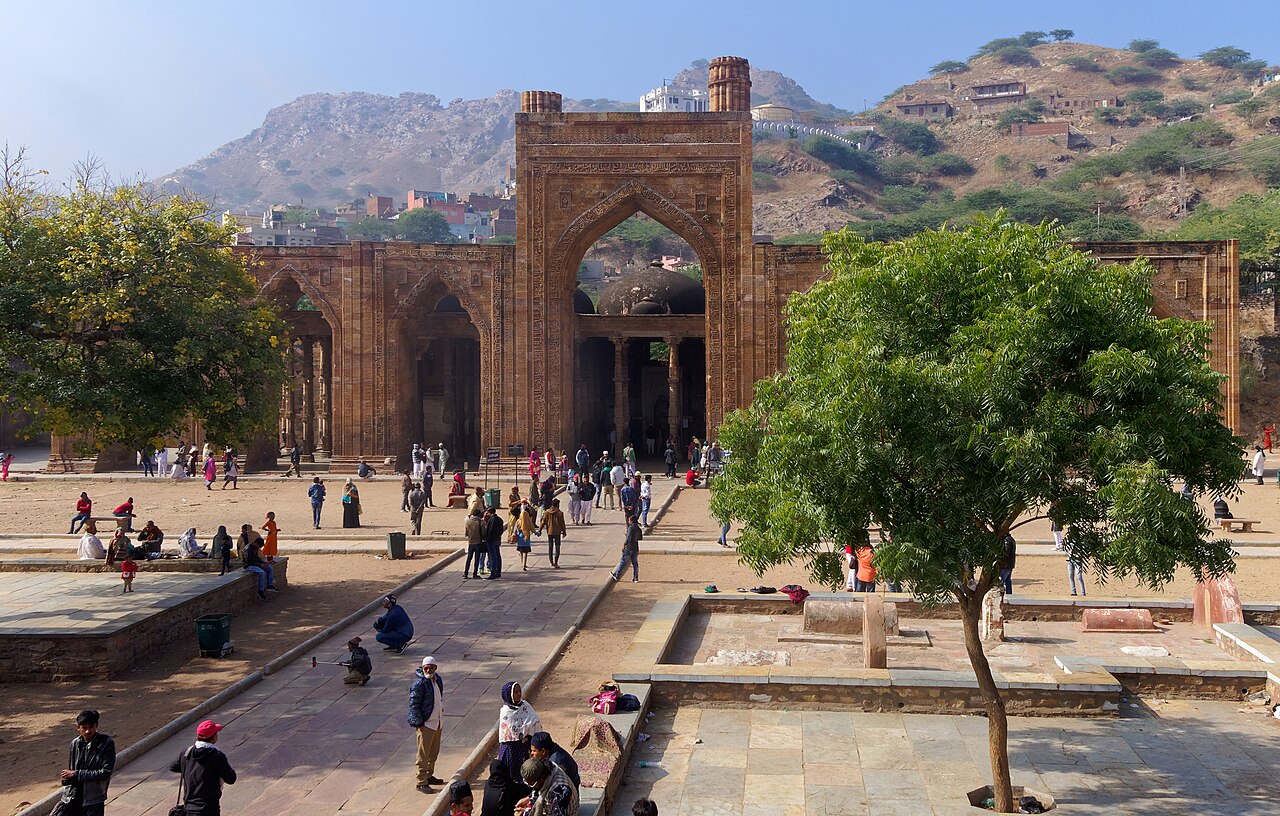
The oldest surviving monument in Ajmer and among the earliest Indo-Islamic mosques in India, its 1199 CE prayer hall and Iltutmish's 1213 CE arched screen rise on 344 pillars carved by Hindu and Jain craftsmen from earlier Temples.
 Islam
IslamAjmer Sharif Dargah
Ajmer · India · dargah
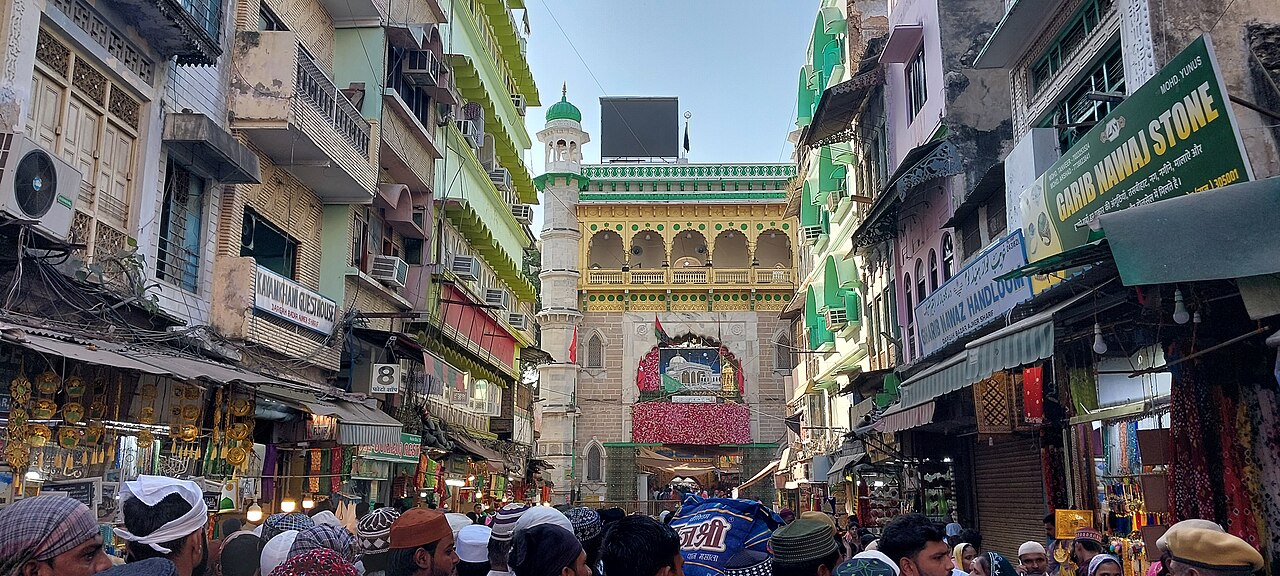
The tomb of Hazrat Khwaja Moinuddin Chishti, Gharib Nawaz, the benefactor of the poor, and the principal Sufi dargah of South Asia, where pilgrims of every community have offered chadars and shared the sweet rice of the great deghs for eight centuries.
Akbarabadi Mosque
Delhi · India · mosque
A mosque raised in 1650 by Akbarabadi Begum, a wife of the Mughal emperor Shah Jahan, in the walled city of Shahjahanabad, demolished by British forces in the aftermath of the 1857 Uprising and today marked only by disputed, unexcavated remains beneath Netaji Subhash Park in Old Delhi.
 Islam
IslamAlamgir Mosque
Varanasi · India · mosque
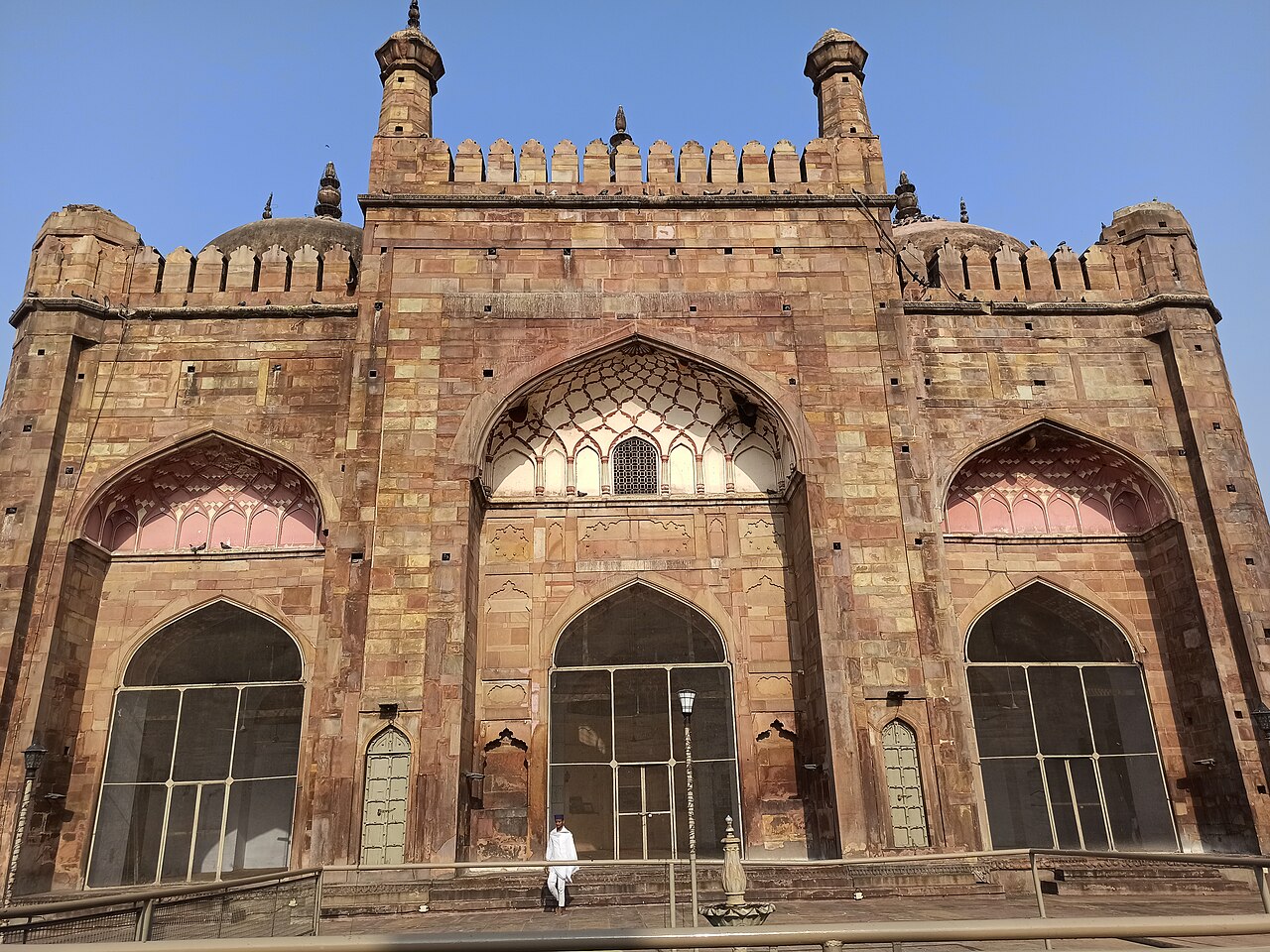
Raised in 1669 by the Mughal emperor Aurangzeb on the high bank above Panchganga Ghat in Varanasi, the Alamgir Mosque stands where wide stone steps meet the Ganges, its domes and surviving corner turret rising over a site earlier accounts describe as the Hindu Temple of Bindu Madhava.
 Islam
IslamAl-Kadhimiya Mosque
Baghdad · Iraq · mosque
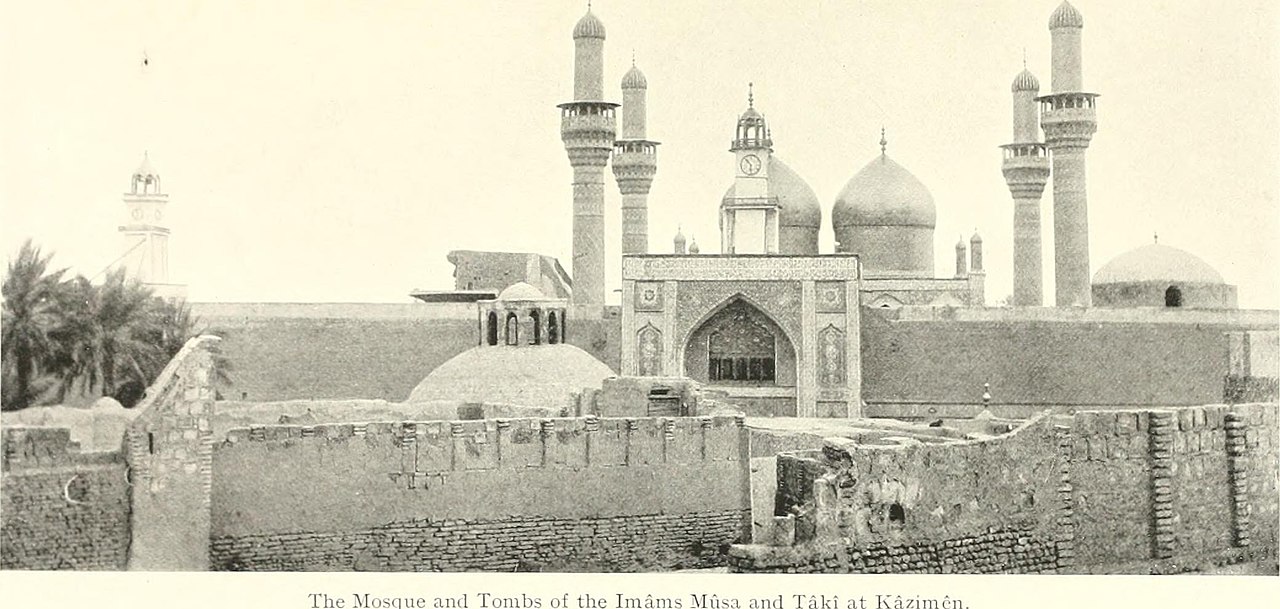
The Twelver Shia shrine in Baghdad's Kadhimiya district holding the tombs of the 7th Imam, Musa al-Kadhim, and the 9th Imam, Muhammad al-Jawad, beneath twin gold domes.