
Bajreshwari Mata Temple, Kangra
About
Set in the town of Kangra in Himachal Pradesh, this temple, also known as the Vajreshwari Devi Temple, Brajeshwari Devi Temple, or Kangra Devi Temple, stands among the most revered Hindu shrines of northern India. The goddess enshrined here is worshipped as Durga in her wrathful aspect, called Vajreshwari, meaning she who wields the thunderbolt. Tradition counts this shrine among the 51 sacred Shakta pithas, places said to mark where a part of the goddess Sati's body came to rest on earth, here specifically her left breast.
According to Shakta lore, after Sati gave up her life at her father's sacrificial rite out of devotion to Shiva, a grieving Shiva bore her body upon his shoulder and began the cosmic dance of Tandava. To halt the destruction this threatened to unleash upon the world, Vishnu cut her form into fifty-one pieces with his discus, and each piece falling to earth became a pitha. The Jnanarnava Tantra names this particular site Bhrigupuri Shakta pitha, while the Brihad Nila Tantra calls its resident goddess Brajeshwari. Older texts also refer to the location as Guptapura, and within the wider tradition of Jalandhara Pitha, the goddess is honored as Vajratara.
The temple grounds hold several smaller shrines dedicated to other deities, including one to Bhairava, and the site draws especially large gatherings during its twice-yearly Navratri celebrations. Himachal Pradesh is home to five Shakta pithas in total, alongside this one standing Chintpurni, Jwalamukhi, Chamunda Devi, and Naina Devi.
History
Devotees regard this as a pilgrimage destination of great antiquity, its standing enhanced by its place among the Shakta pithas. Legend attributes the founding of the original temple to the Pandavas during their period of exile: it is said Goddess Durga appeared to them in a dream, declaring her presence in the village of Nagarkot and warning that they must build her a temple there or face ruin, and that they raised a magnificent shrine to her that very night. That early structure endured until 1905, when a severe earthquake leveled it; the government subsequently oversaw its rebuilding.
The temple's entrance gate features a Nagarkhana, or drum house, styled after the gateway of Bassein Fort, and a stone wall encircles the complex in the manner of a fortress. Within the sanctum, the goddess is present in the form of a Pindi, and an image of Dhayanu Bhagat stands before the main shrine, commemorating a devotee said to have offered his own head to the goddess during the reign of Akbar. Uniquely, the present structure also contains three tombs.
Significance
The name Bajreshwari derives from the Sanskrit vajra, meaning thunderbolt, joined with ishwari, meaning goddess, reflecting the belief that this form of Durga once wielded a divine thunderbolt to destroy the demon Kalikala. Beyond its role as a Shakta pitha marking the fall of Sati's left breast, the temple is celebrated for its Navratri observances, when rituals invoke Vajreshwari as vanquisher of evil, and for Makar Sankranti in mid-January, when the Pindi of the goddess is anointed with butter for a week, recalling the legend that she applied butter to soothe wounds suffered while slaying the demon Mahishasura. During these festival periods, ascetic orders occasionally perform tantric rites tied to the site's Shakta heritage.
Visiting
Engage with Bajreshwari Mata Temple, Kangra
Through the four pathways
Seva सेवा — Service
Offer your time and skills here. The following opportunities are open at Bajreshwari Mata Temple, Kangra:
No Seva offerings listed yet.
Sādhana साधना — Practice
Learn the worship and practice associated with Bajreshwari Mata Temple, Kangra:
No Sādhana offerings listed yet.
Sandhāna सन्धान — Wisdom
Unite with the wisdom of this tradition:
No Sandhāna offerings listed yet.
Sādhya साध्य — Giving
Support this sacred place according to your means:
No Sādhya offerings listed yet.
All giving flows directly to Bajreshwari Mata Temple, Kangra. Adisthan does not take a commission.
Gallery
Related sacred places
 Hinduism
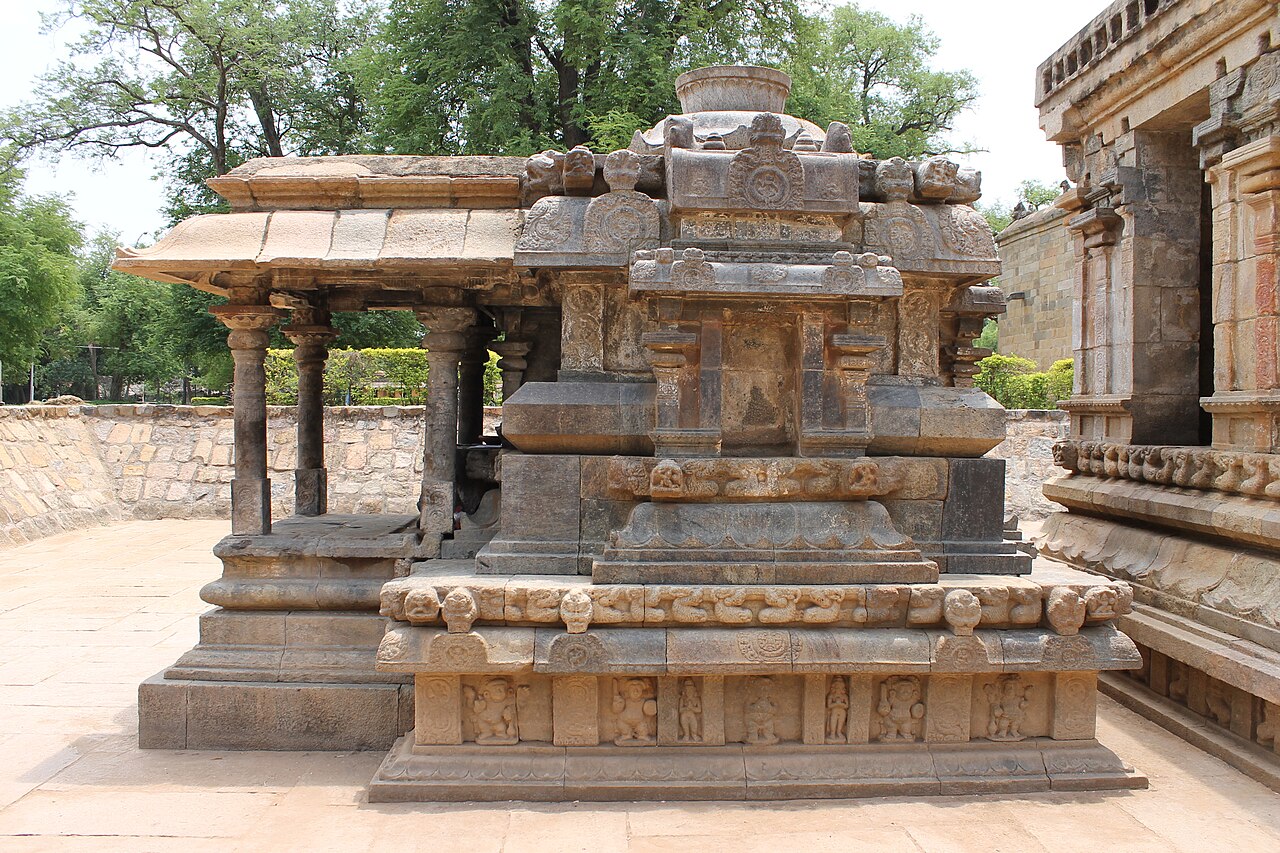
Airavatesvara Temple
· India · temple
A jewel of 12th-century Chola craftsmanship at Darasuram near Kumbakonam in Tamil Nadu, this Śaiva shrine dedicated to Lord Śiva stands among the UNESCO-listed Great Living Chola Temples for its extraordinary sculptural refinement.
Aisanyesvara Siva Temple
· India · temple
A living Śaiva temple from the thirteenth century, nestled near the western boundary of the great Lingarāja complex in Bhubaneswar, Odisha, where a Śivaliṅgam receives daily worship and the sacred rhythms of the liturgical year continue unbroken.
 Hinduism
Akhadachandi Temple
· India · temple
A 10th-century Hindu temple in the heart of Bhubaneswar's old town, Akhadachandi Temple stands on the southwestern shore of the sacred Bindusagar tank, honouring the goddess Mahiṣāsuramardinī in the ancient Kalinga style.
 Hinduism
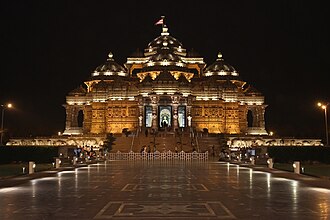
Akshardham
· India · temple
Swaminarayan Akshardham in Delhi is a vast Hindu mandir complex dedicated to devotion, learning, and harmony, drawing millions of pilgrims each year to its intricately carved sandstone and marble monument on the Yamuna's western bank.
 Hinduism
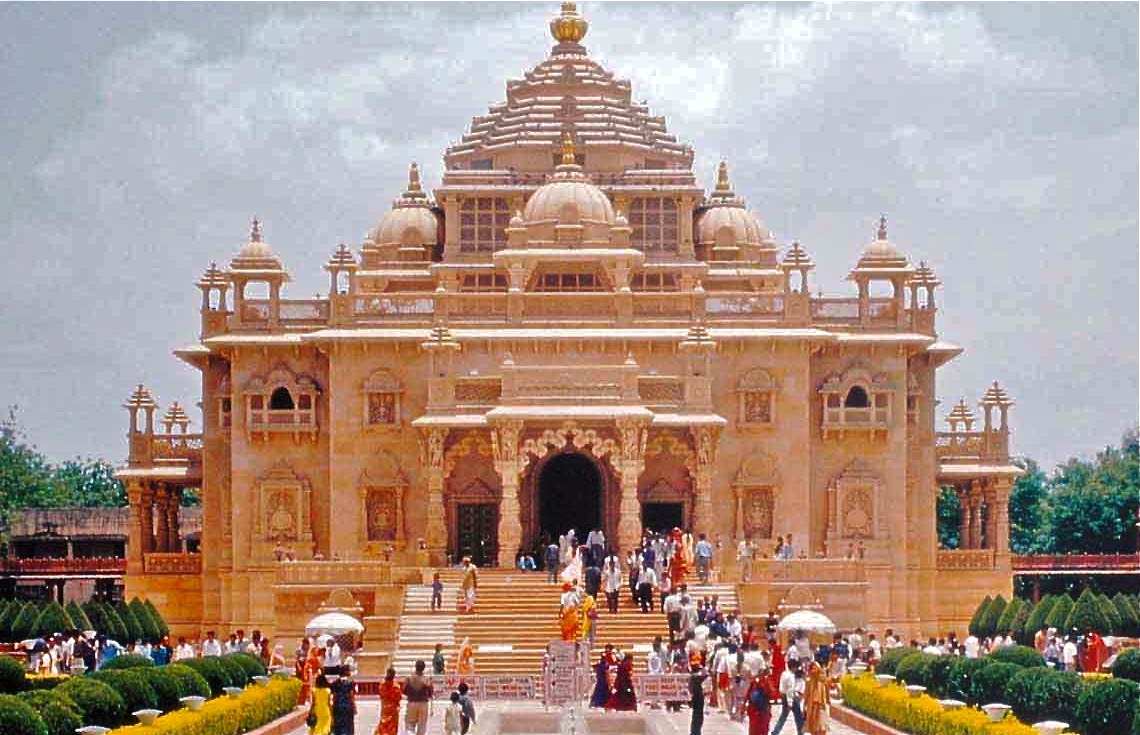
Akshardham (Gandhinagar)
· India · temple
A vast spiritual and cultural complex in Gujarat's capital, Gandhinagar, Swaminarayan Akshardham was conceived through the vision of Yogiji Maharaj and realized by Pramukh Swami Maharaj — a living testimony to the BAPS tradition's commitment to devotion, learning, and harmony.
 Hinduism
Alopi Devi Mandir
· India · temple
Alopi Devi Mandir is a Hindu temple in the Alopibagh neighborhood of Prayagraj, Uttar Pradesh, close to the sacred Sangam where the Ganges, the Yamuna, and the legendary Sarasvati are believed to converge.