
Charminar
Char Minar · چار مینار (Chār Mīnār) · చార్మినార్
About
At the heart of Hyderabad's old city stands the Charminar, a square monument whose four towering minarets have defined the skyline since the late sixteenth century. Each side of the structure measures twenty metres, and from every face a grand arch opens directly onto the street below, so that the building flows outward into the life of the city rather than enclosing itself from it. At each corner, a 56-metre minaret, fluted and built into the main body of the structure, unlike the detached minarets of the Taj Mahal, rises to a bulbous dome adorned with delicate petal-like relief work and a double balcony.
The monument is built from granite, limestone, mortar, and pulverised marble. Inside, 149 winding steps climb to the upper storey, where an active mosque has welcomed worshippers for well over four centuries. The main gallery provides 45 covered prayer spaces, with a broad open expanse beyond them to accommodate the congregation for Friday prayers. A small fountain and water cistern at the centre of the structure allow for ritual ablution before prayer. Clocks placed on each of the four cardinal faces were added in 1889.
Surrounding the Charminar, the Laad Bazaar to the west has long been celebrated for its jewellery and bangles, while the nearby Pathargatti boulevard is renowned for pearls. The adjacent Makkah Masjid, whose central arch incorporates bricks made from soil brought from Mecca, stands as one of the great congregational mosques of the Deccan. Together with the four gateways of the Char Kaman and the fountain of Gulzar Houz, the Charminar forms an ensemble that remains as much a living neighbourhood as a place of devotion.
History
Muhammad Quli Qutb Shah, fifth ruler of the Qutb Shahi dynasty, commissioned the Charminar in 1591 on relocating his capital from Golconda to the newly founded city of Hyderabad, with construction completed at a reported cost of nine lakh rupees. The Archaeological Survey of India records that the monument is widely understood to commemorate the eradication of a plague that had afflicted the region, while the seventeenth century French traveller Jean de Thévenot recorded a further tradition that it also marked the turn of the second Islamic millennium, 1000 AH. Qutb Shah, himself an early poet of Dakhani Urdu, is remembered to have offered prayers in Dakhini couplets at the laying of its foundation. A minaret struck by lightning in 1670 was repaired, and further renovation followed in 1820 under Sikandar Jah, after which the monument passed under Mughal custodianship before coming into the care of the Archaeological Survey of India.
Significance
The mosque on the Charminar's upper floor has served Hyderabad's Muslim community without interruption since 1591, its main gallery holding forty five covered prayer spaces that open onto a wide court for the crowds of Jumu'ah and the Eid festivals, held in the shadow of the neighbouring Makkah Masjid. Recognised by the Archaeological Survey of India as an archaeological and architectural treasure and placed on UNESCO's tentative World Heritage list alongside Golconda Fort and the Qutb Shahi Tombs, the Charminar is enshrined in the official emblem of Telangana: a monument that carries religious, civic, and cultural authority all at once.
Architecture
Indo-Islamic monument architecture: a square granite, limestone, and marble structure with four 56-metre fluted minarets rising from its corners and a grand arch opening onto the street on each face
Visiting
Hours
Hours not listed.
Engage with Charminar
Through the four pathways
Seva सेवा — Service
Offer your time and skills here. The following opportunities are open at Charminar:
No Seva offerings listed yet.
Sādhana साधना — Practice
Learn the worship and practice associated with Charminar:
No Sādhana offerings listed yet.
Sandhāna सन्धान — Wisdom
Unite with the wisdom of this tradition:
No Sandhāna offerings listed yet.
Sādhya साध्य — Giving
Support this sacred place according to your means:
No Sādhya offerings listed yet.
All giving flows directly to Charminar. Adisthan does not take a commission.
Festivals & Events
- Mar
Eid al-Fitr
9 March 2027 · annual
The festival marking the end of the Ramadan fast, observed with special prayer in the Charminar precinct alongside the adjoining Makkah Masjid.
- May
Eid al-Adha
17 May 2027 · annual
The festival of sacrifice, marked by congregational prayer that draws crowds to the Charminar and Makkah Masjid together.
Gallery
Related sacred places
 Islam
IslamAbu'l-Fida Mosque
Hama · Syria · mosque
A fourteenth-century Ayyubid mausoleum and Mamluk-era congregational mosque on the banks of the Orontes in Hama, Syria, known locally as the Mosque of the Serpents for the carved pillars at its windows.
 Islam
IslamAdhai Din Ka Jhonpra
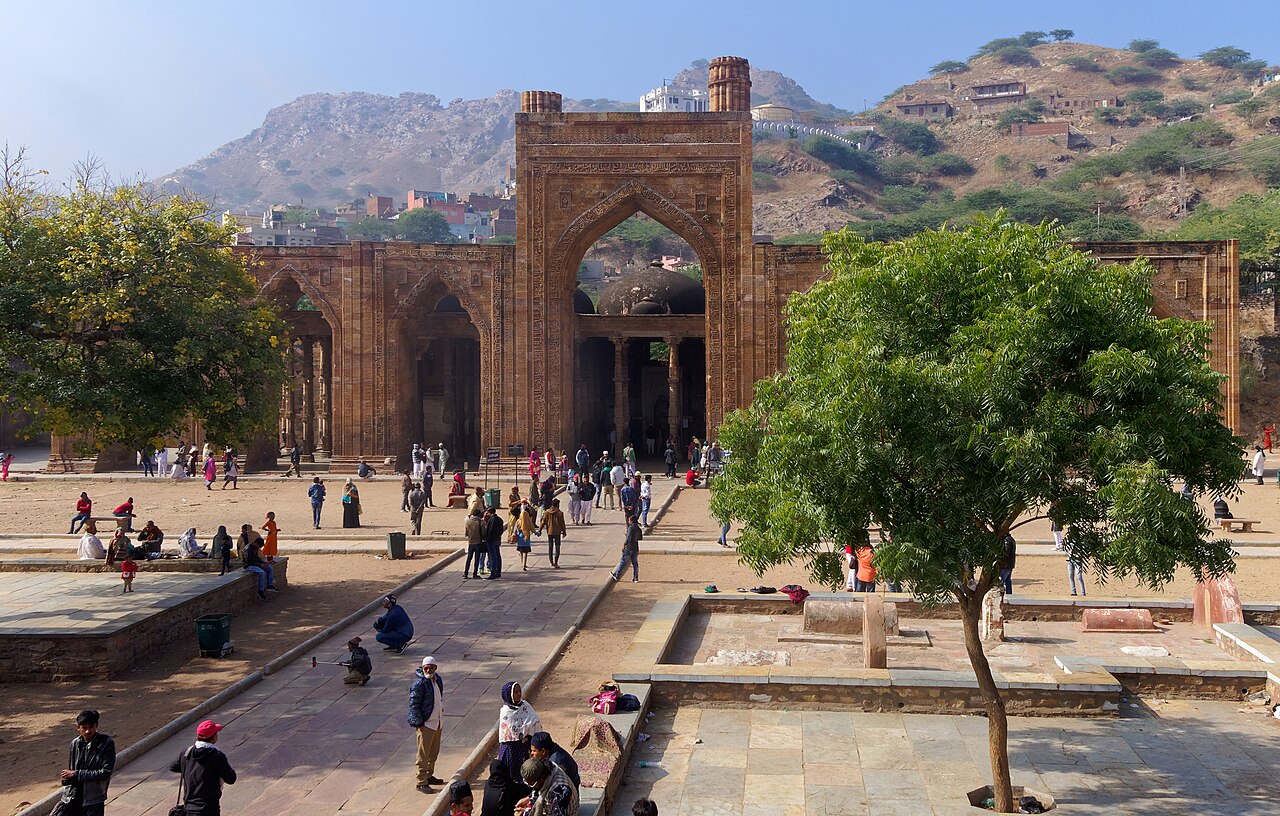
Ajmer · India · mosque
The oldest surviving monument in Ajmer and among the earliest Indo-Islamic mosques in India, its 1199 CE prayer hall and Iltutmish's 1213 CE arched screen rise on 344 pillars carved by Hindu and Jain craftsmen from earlier Temples.
 Islam
IslamAdina Mosque
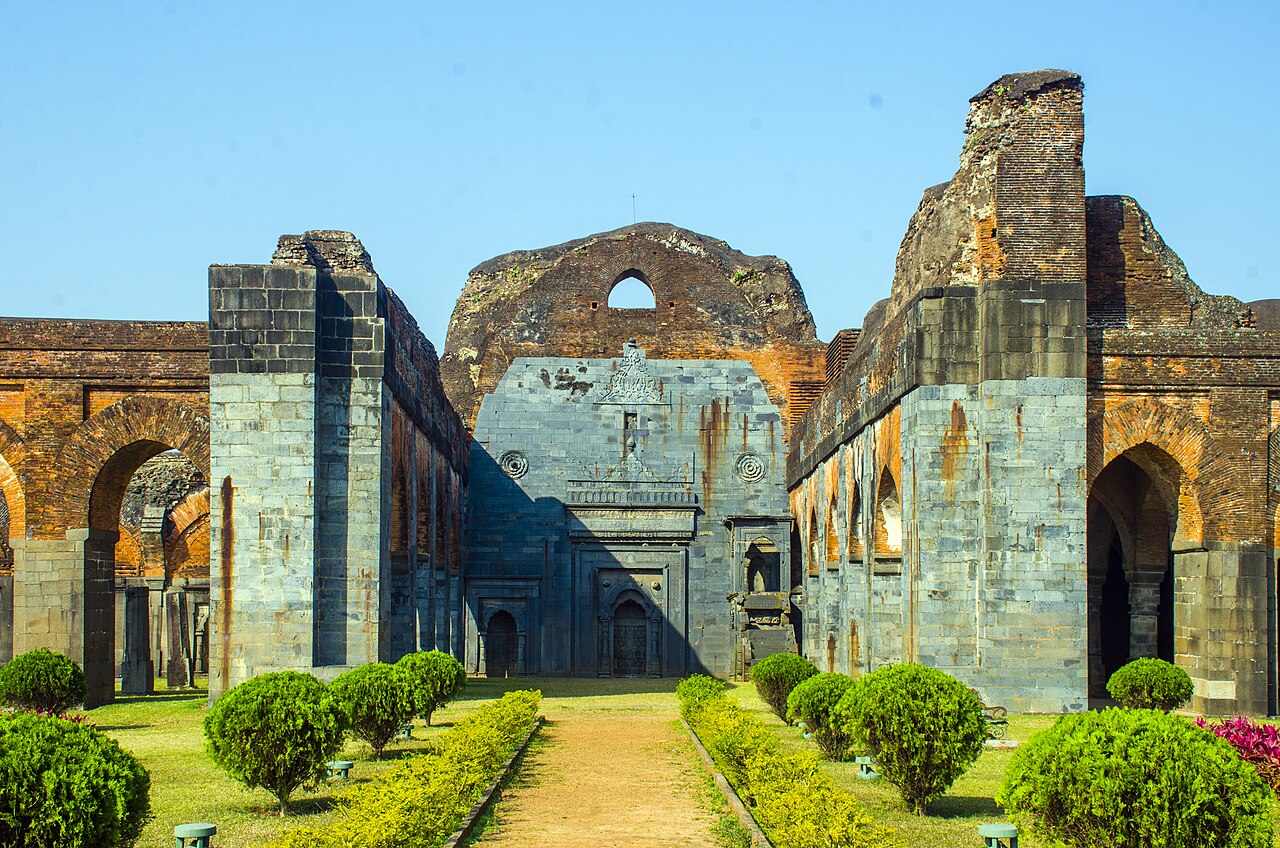
Pandua · India · mosque
Once the largest mosque on the Indian subcontinent, the Adina Mosque at Pandua in West Bengal was raised by Sultan Sikandar Shah between 1373 and 1375 as the congregational mosque of the Bengal Sultanate, and holds his tomb within its western wall.
 Islam
IslamAjmer Sharif Dargah
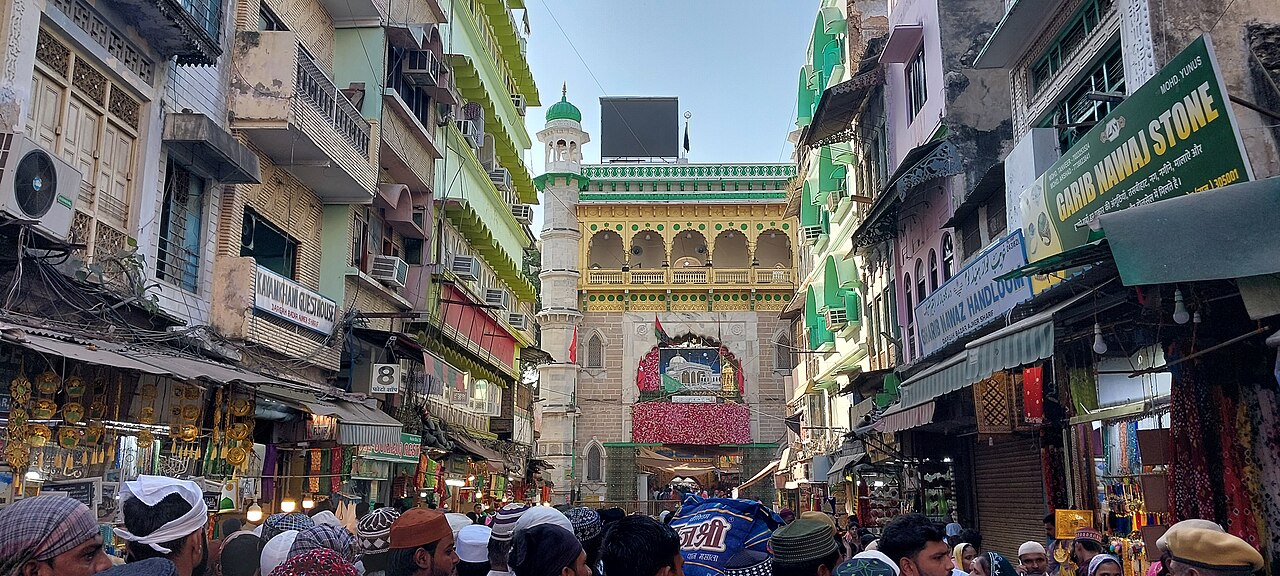
Ajmer · India · dargah
The tomb of Hazrat Khwaja Moinuddin Chishti, Gharib Nawaz, the benefactor of the poor, and the principal Sufi dargah of South Asia, where pilgrims of every community have offered chadars and shared the sweet rice of the great deghs for eight centuries.
Akbarabadi Mosque
Delhi · India · mosque
A mosque raised in 1650 by Akbarabadi Begum, a wife of the Mughal emperor Shah Jahan, in the walled city of Shahjahanabad, demolished by British forces in the aftermath of the 1857 Uprising and today marked only by disputed, unexcavated remains beneath Netaji Subhash Park in Old Delhi.
 Islam
IslamAlamgir Mosque
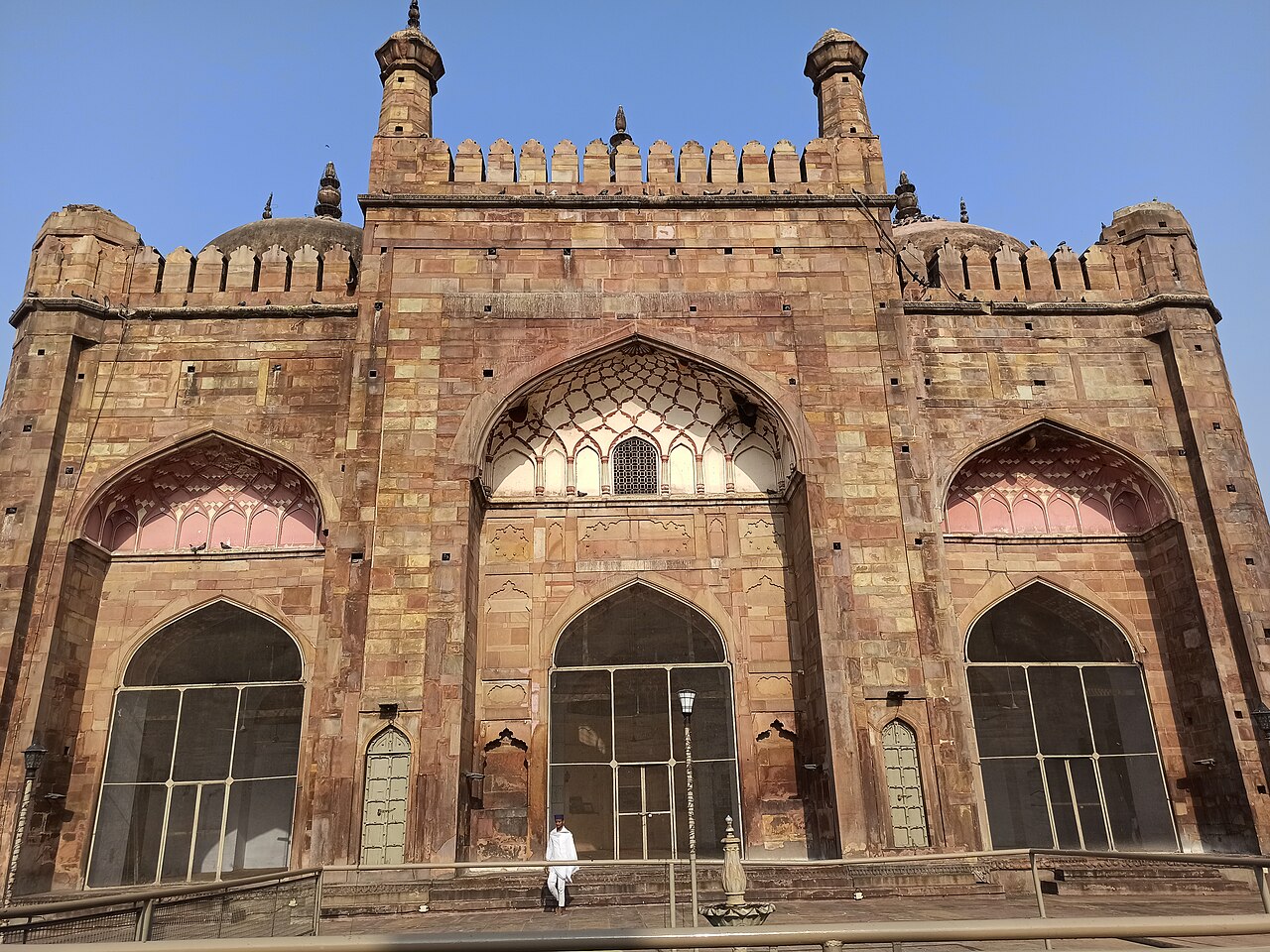
Varanasi · India · mosque
Raised in 1669 by the Mughal emperor Aurangzeb on the high bank above Panchganga Ghat in Varanasi, the Alamgir Mosque stands where wide stone steps meet the Ganges, its domes and surviving corner turret rising over a site earlier accounts describe as the Hindu Temple of Bindu Madhava.