Chin Swee Caves Temple
清水岩庙 (Qīngshuǐ Yán Miào) · Chin Swee Temple
About
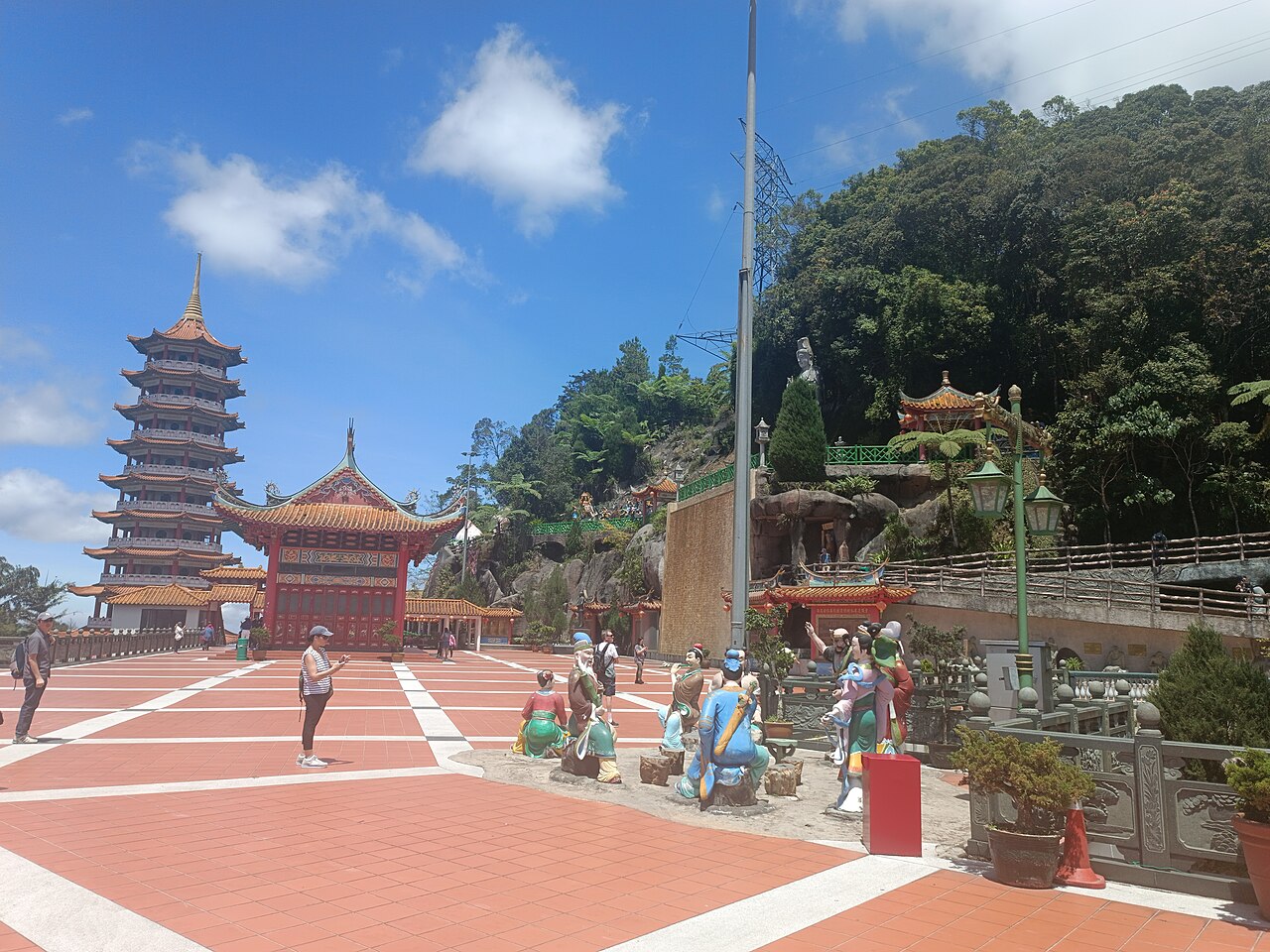
The Chin Swee Caves Temple (清水岩庙, Qīngshuǐ Yán Miào) stands on a steep, forested 28-acre site in the Genting Highlands of Pahang, Malaysia. At about 1,400 metres above sea level, it lies only a few minutes' drive below the resort city at the peak, its tiered red roofs framed by virgin highland forest and views over the winding road that climbs the mountain.
The Temple is consecrated to Master Qingshui (Reverend Chin Swee), a Buddhist monk of Fujian Province in China who has long been honoured among the people of Anxi as a deity. He is remembered for his compassionate works and for the miraculous abilities tradition attributes to him, among them the power to summon rain and to subdue malevolent spirits. The Temple draws devotees from across Southeast Asia and beyond, from Singapore, Taiwan, Vietnam, China, Thailand, and Indonesia.
The site combines a traditional Chinese sanctuary with Buddhist elements: a vast Buddha statue rises behind the Temple, and the main hall holds the seated image of Master Qingshui, placed in the northern part of the hall facing south in accordance with feng shui. Behind the statue, a natural rock and an artificial flowing stream supply year-round mineral water known locally as 'Dragon Mineral Water'. Some 10,000 blessing lamps were originally installed; around 2,000 remain today.
History
After completing the first stage of Genting Highlands Resort in 1975, Lim Goh Tong turned to a long-held wish: a Temple in honour of Patriarch Qingshui, the guardian deity of his ancestral village of Penglai in Anxi, Fujian province. He gathered fellow clansmen into the Chin Swee Temple Society, donated the twenty-eight-acre hillside site himself, and served as the project's planner, architect, and supervisor. Because the slope was too steep and rocky for machinery, foundation holes eighty to one hundred feet deep were dug entirely by hand, and the Temple took eighteen years to complete without a single reported casualty. It opened on 29 March 1994, its tiered halls, nine-storey pagoda, and towering Buddha figure rising against the forested mountainside.
Significance
The Temple carries the name of Patriarch Qingshui down from Anxi to the Genting hills, giving pilgrims from Malaysia, Singapore, Taiwan, and beyond a mountaintop place to seek his protection and to draw from the spring behind his image, water long known among devotees as Dragon Mineral Water. Its blending of a Buddhist monk's memory with Taoist deification and folk devotion reflects the layered religious life of the Hokkien diaspora, and its handmade construction on near-vertical rock stands as a devotional feat in its own right.
Architecture
Traditional southern Chinese Temple architecture built into a granite hillside, with a nine-tier pagoda and a monumental Buddha figure
Visiting
Hours
Hours not listed.
Contact
Engage with Chin Swee Caves Temple
Through the four pathways
Seva सेवा — Service
Offer your time and skills here. The following opportunities are open at Chin Swee Caves Temple:
No Seva offerings listed yet.
Sādhana साधना — Practice
Learn the worship and practice associated with Chin Swee Caves Temple:
No Sādhana offerings listed yet.
Sandhāna सन्धान — Wisdom
Unite with the wisdom of this tradition:
No Sandhāna offerings listed yet.
Sādhya साध्य — Giving
Support this sacred place according to your means:
No Sādhya offerings listed yet.
All giving flows directly to Chin Swee Caves Temple. Adisthan does not take a commission.
Festivals & Events
- Feb
Patriarch Qingshui's Birthday
11 February 2027 · annual
The Temple's founding festival, marking the birth of Patriarch Qingshui on the sixth day of the Lunar New Year. Devotees offer vegetarian food and incense, and celebrations continue for ten days from New Year's Day.
Gallery
Related sacred places
 Buddhism
Angkor Wat
Siem Reap · Cambodia · temple
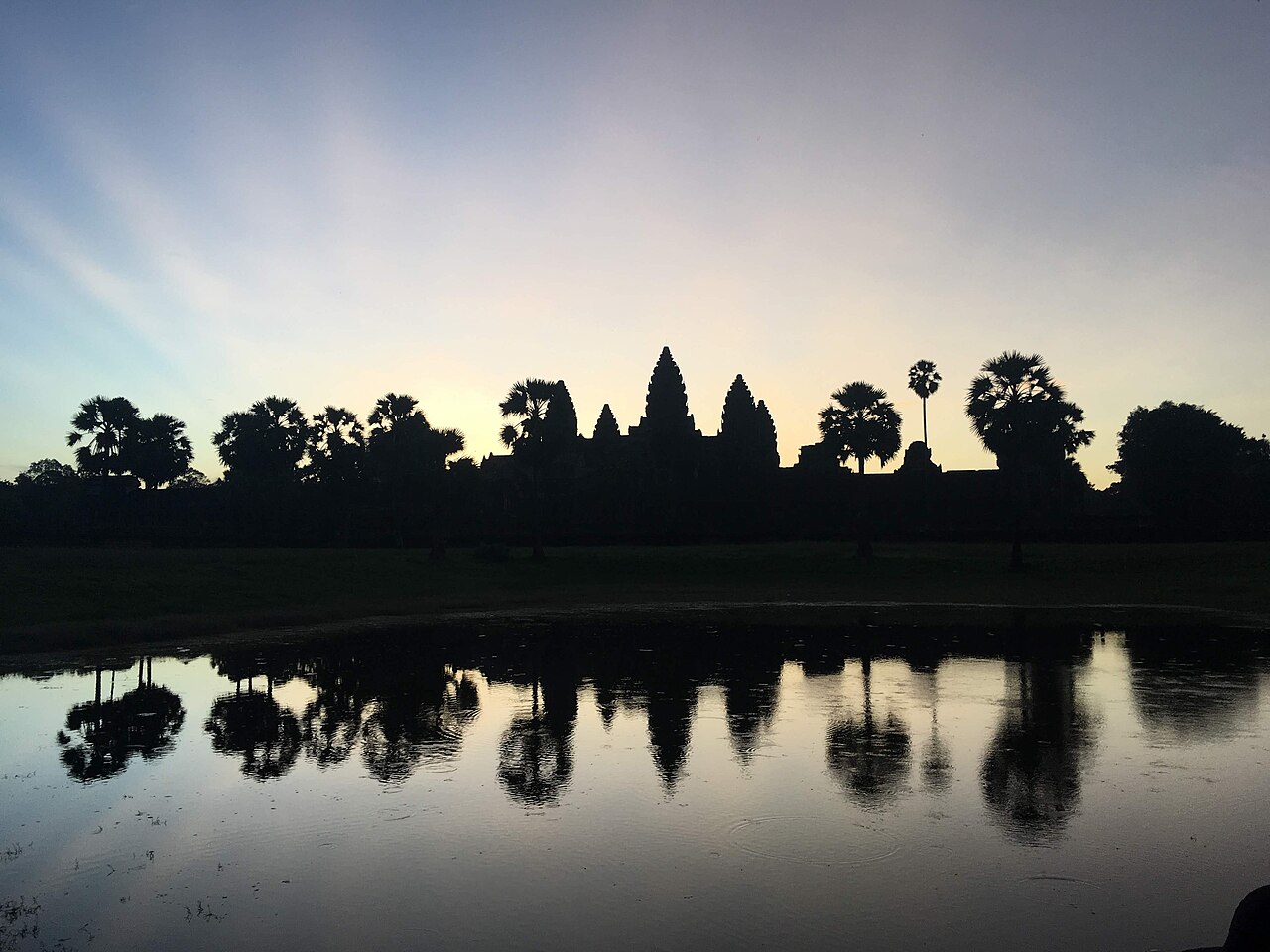
The largest religious monument on earth, built for Lord Vishnu by Suryavarman II in the 12th century and in continuous worship ever since: a living Theravada Buddhist Temple whose five towers stand on the Cambodian flag.
 Buddhism
Bangka Lungshan Temple
Taipei (Wanhua) · Taiwan · temple
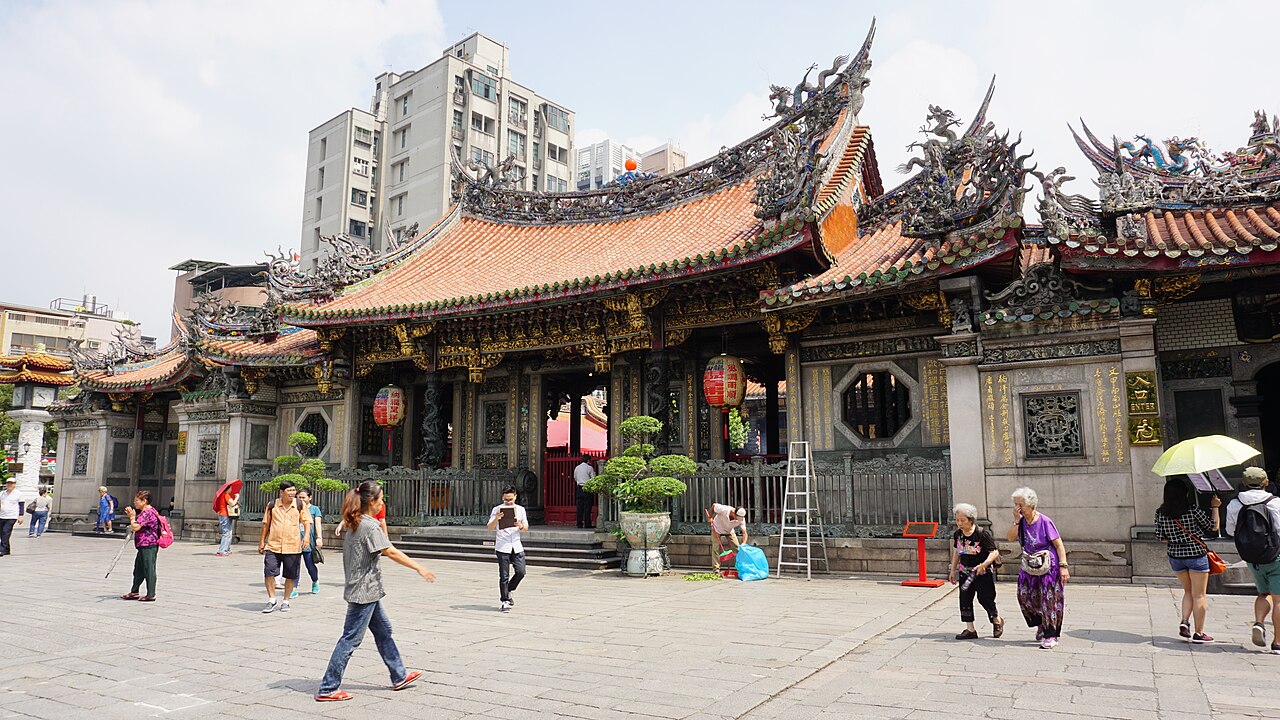
Taipei's mother Temple to Guanshiyin, founded by Fujian settlers in 1738 in the old Bangka quarter: a front hall to the bodhisattva of compassion and a rear hall of more than a hundred Taoist and folk gods, whose Guanyin statue survived the 1945 bombing intact.
 Buddhism
Bengal Buddhist Association
Kolkata · India · monastery
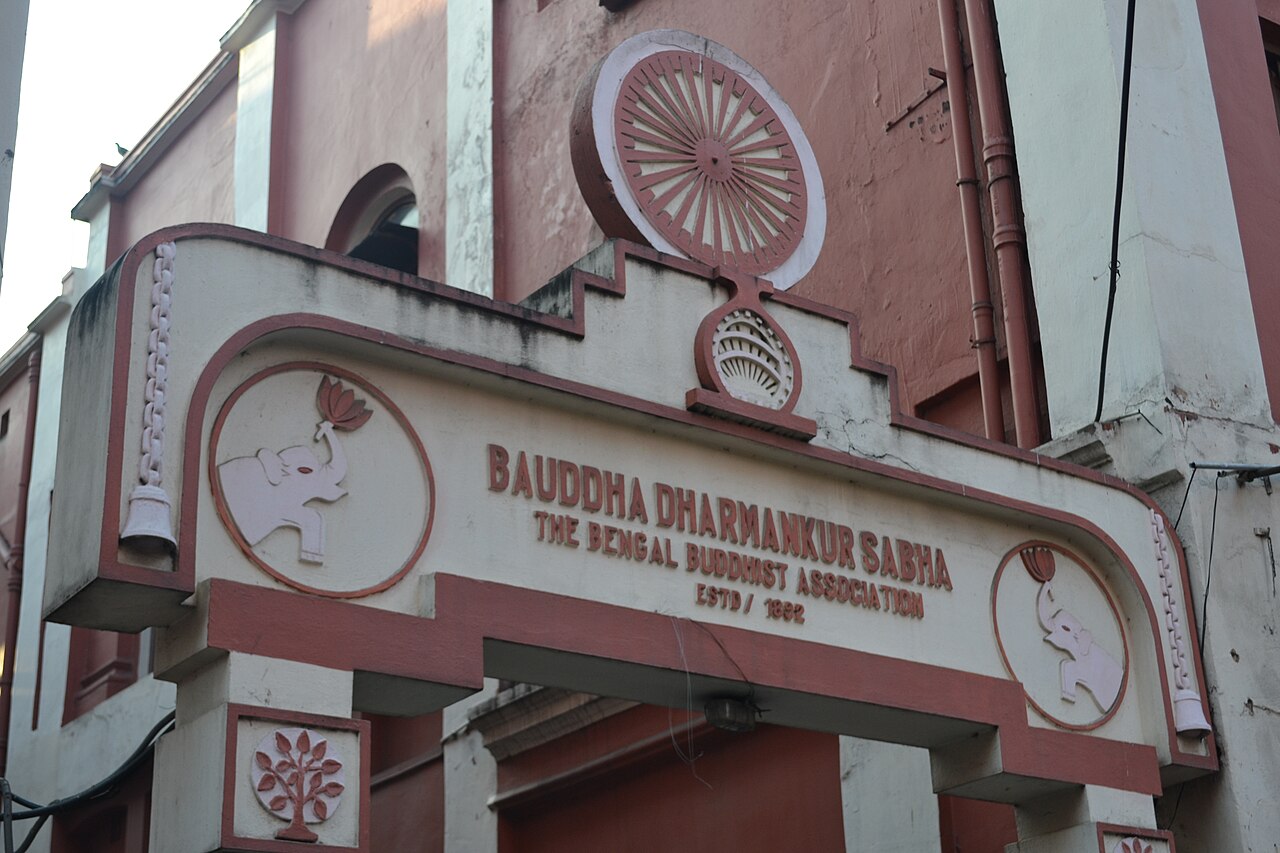
Founded in Kolkata in 1892 by Kripasaran Mahasthavir, the Bengal Buddhist Association, known in Bengali as Bauddha Dharmankur Sabha, raised the Dharmankur Vihara at Bow Barracks in 1903 and has worked for over a century to revive the Dharma in eastern India.
 Buddhism
Bhot Bagan Math
Ghusuri · India · monastery
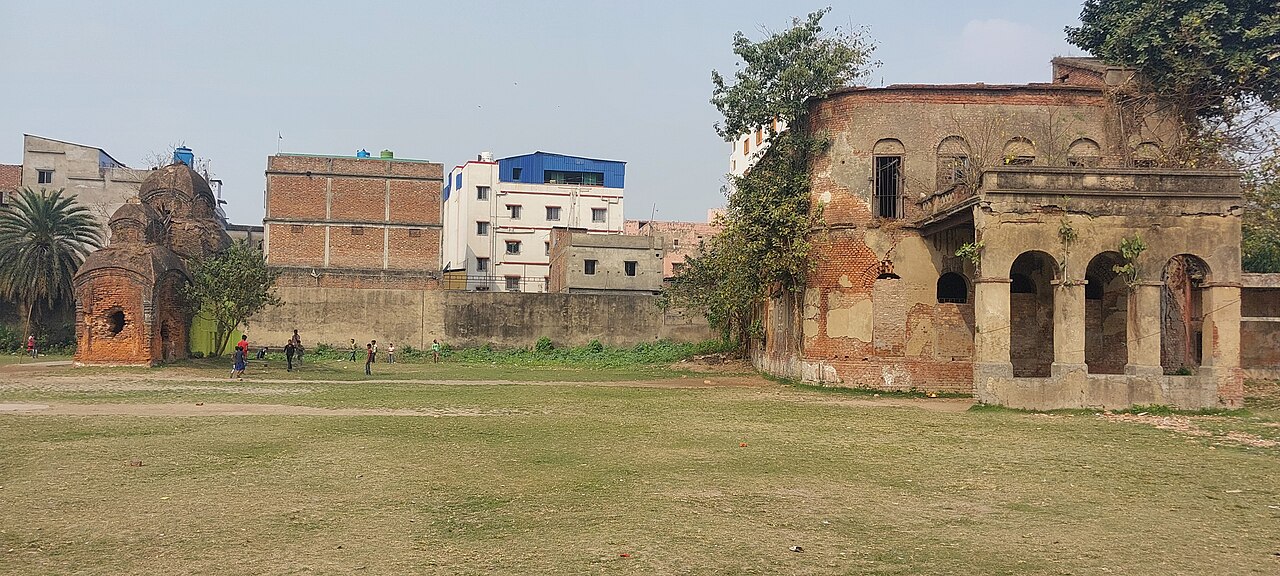
A brick monastery on the Hooghly riverside at Ghusuri, Howrah, founded in 1776 as the first Tibetan Buddhist religious foundation on the plains of India and still known popularly as Mahakal Math for the Tibetan deity images once installed in its sanctum.
 Buddhism
Borobudur
Magelang · Indonesia · temple
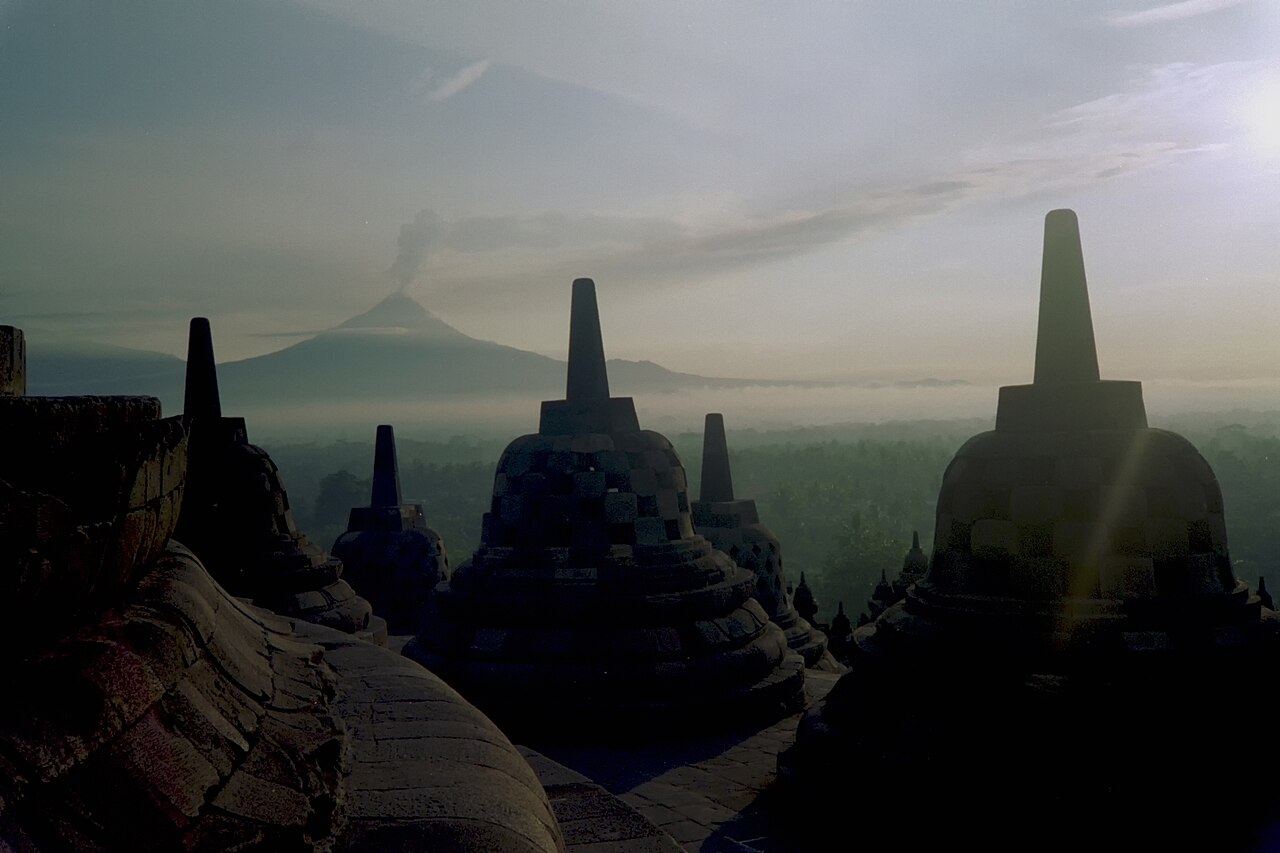
The world's largest Buddhist Temple: a ninth-century mandala in stone on Java's Kedu Plain, nine terraces rising through the three realms to 72 latticed stupas, each sheltering a seated Buddha.
 Buddhism
Boudhanath Stupa
Kathmandu · Nepal · stupa
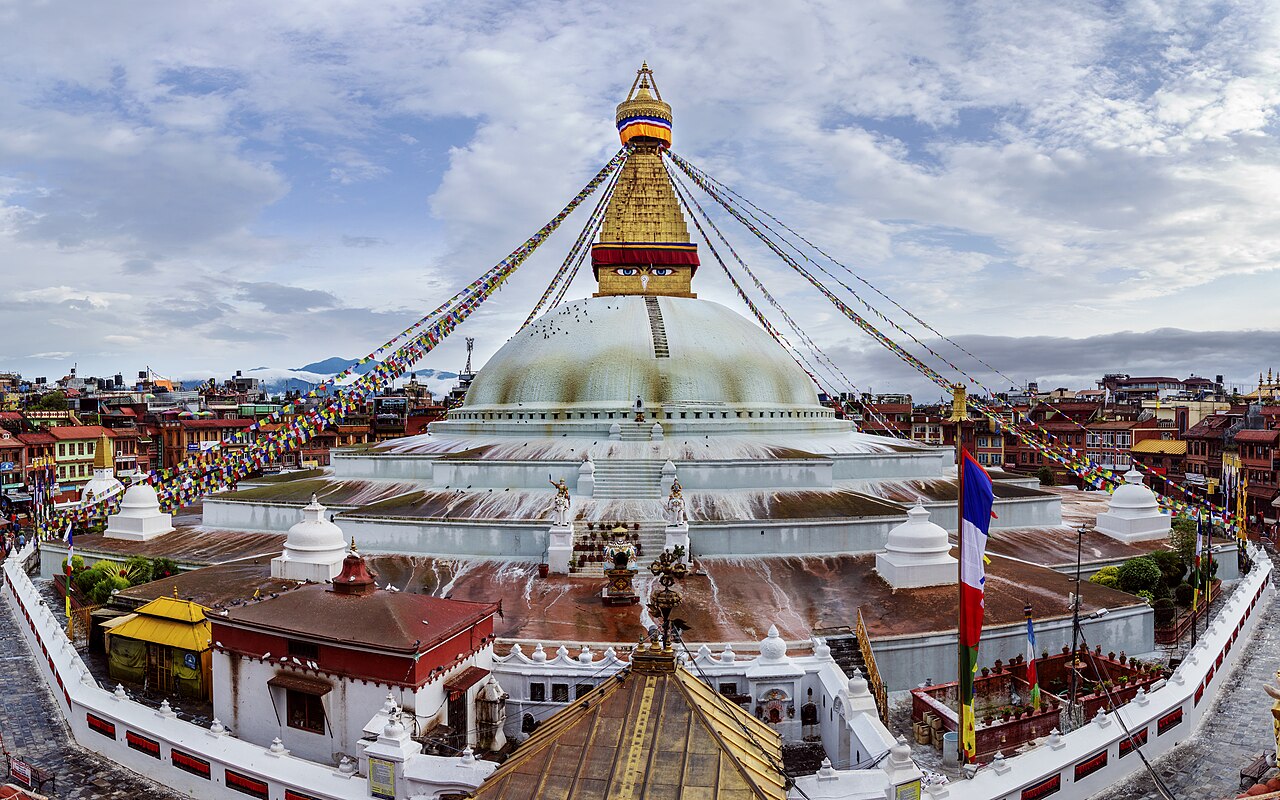
The largest spherical stupa in Nepal, its all-seeing Buddha eyes watching over the kora walked daily by the Tibetan Buddhist community of Boudha, the heart of Vajrayana practice in the Kathmandu Valley.