
Chintpurni
About
Chintpurni is a modest hill town in Himachal Pradesh's Una district, set at an elevation of about 977 metres within the Shiwalik range, some 40 kilometres north of Una and close to the border with Punjab. The town takes its name from the goddess enshrined at its heart, and it draws pilgrims chiefly for the Maa Chintpurni Temple, counted among the Shakta pithas of India, sites where, in the Shakta telling, fragments of the goddess Sati's body came to rest after Vishnu divided her burning form to ease Shiva's grief.
At Chintpurni the goddess is venerated as Chhinnamastika, understood both as the one who offered her own severed head and as a presence enthroned at the brow. Puranic accounts describe how Chandi, having overcome fearsome demons in battle, cut off her own head so that her fierce attendants Jaya and Vijaya could still their thirst for blood; she is pictured holding that head while three streams of blood flow, one to her own mouth and one to each attendant. For devotees, the image speaks of a mind surrendering its habits and attachments so consciousness might rest, unguarded, in the divine.
Within the temple's garbha griha, the goddess is present not as a sculpted figure but as a pindi, a rounded natural stone, before which pilgrims queue for darshan and leave offerings of sweets, coconut, flowers, red cloth and flags. Four Shiva shrines, Kaleshwar Mahadev, Narayana Mahadev, Muchkund Mahadev and Shiva Bari, stand at roughly equal distance around the town in the cardinal directions, understood by devotees as Shiva's protective watch over the abode of Chhinnamastika.
Alongside its sanctity as a pitha, Chintpurni has long served as a place where pilgrim genealogies were recorded. Resident panditas kept registers noting each visitor's name, home village and family line, a practice mirrored at other major Hindu pilgrimage centres and now preserved on microfilm by archival institutions abroad.
History
Tradition credits Pandit Mai Das, a Brahmin of the Kalia Nai lineage from the Patiala region, with founding the shrine in the village then called Chhaproh some twelve generations past, after which the settlement itself took on the goddess's name. His descendants remain the temple's hereditary priests, continuing the daily worship first established under his care.
Significance
Chintpurni holds its place among the fifty one Shakta pithas said to correspond to the fifty one letters of the Sanskrit alphabet, each marking where a part of Sati's form, or in this instance her consciousness, is believed to have fallen to earth. The temple draws its largest gatherings during the Navaratra fairs of Shrawan, Ashwin and Chaitra, along with the days of Sankranti, Purnima and Ashtami, when belief holds that the sacred flames of other Shakta pithas visit Chintpurni in spirit on the Ashtami of Shravan Navratri.
Visiting
Engage with Chintpurni
Through the four pathways
Seva सेवा — Service
Offer your time and skills here. The following opportunities are open at Chintpurni:
No Seva offerings listed yet.
Sādhana साधना — Practice
Learn the worship and practice associated with Chintpurni:
No Sādhana offerings listed yet.
Sandhāna सन्धान — Wisdom
Unite with the wisdom of this tradition:
No Sandhāna offerings listed yet.
Sādhya साध्य — Giving
Support this sacred place according to your means:
No Sādhya offerings listed yet.
All giving flows directly to Chintpurni. Adisthan does not take a commission.
Gallery
Related sacred places
 Hinduism
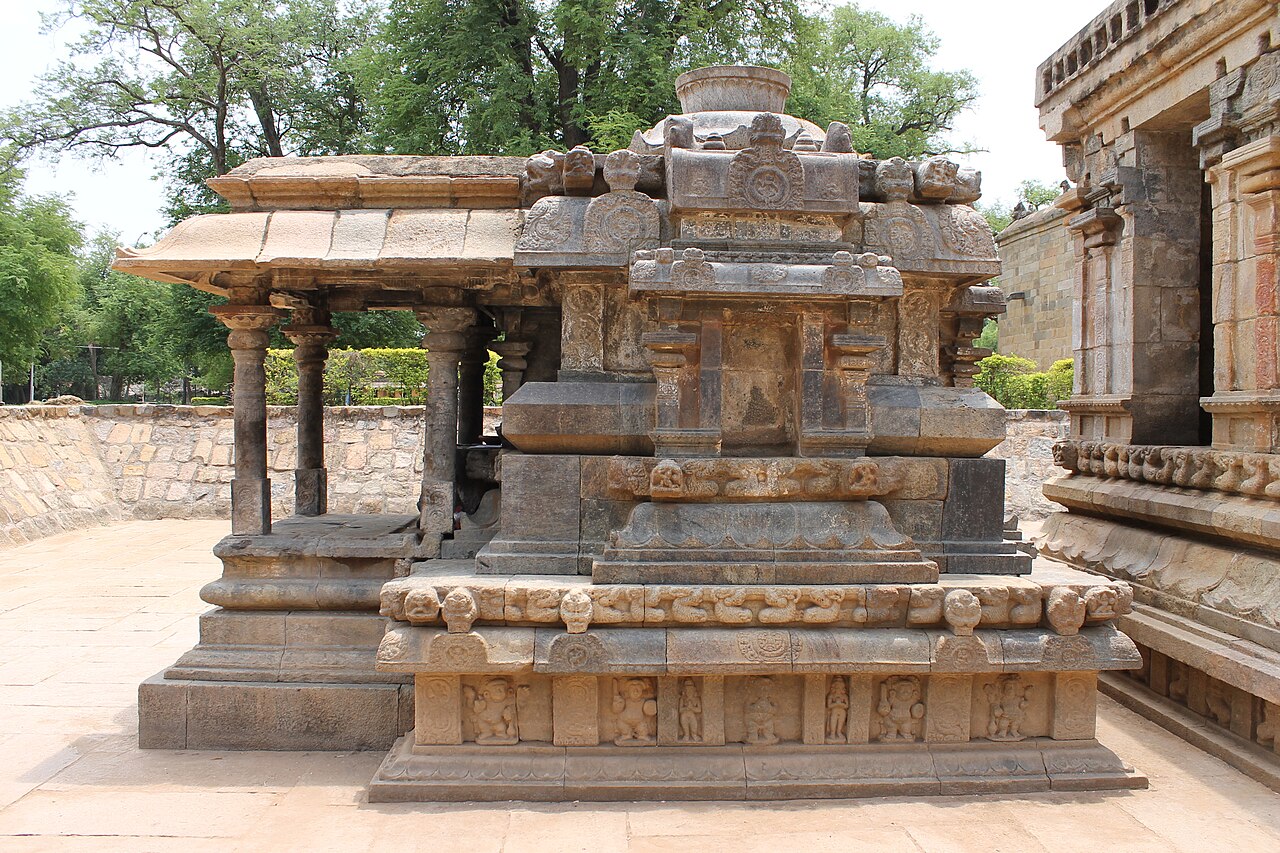
Airavatesvara Temple
· India · temple
A jewel of 12th-century Chola craftsmanship at Darasuram near Kumbakonam in Tamil Nadu, this Śaiva shrine dedicated to Lord Śiva stands among the UNESCO-listed Great Living Chola Temples for its extraordinary sculptural refinement.
Aisanyesvara Siva Temple
· India · temple
A living Śaiva temple from the thirteenth century, nestled near the western boundary of the great Lingarāja complex in Bhubaneswar, Odisha, where a Śivaliṅgam receives daily worship and the sacred rhythms of the liturgical year continue unbroken.
 Hinduism
Akhadachandi Temple
· India · temple
A 10th-century Hindu temple in the heart of Bhubaneswar's old town, Akhadachandi Temple stands on the southwestern shore of the sacred Bindusagar tank, honouring the goddess Mahiṣāsuramardinī in the ancient Kalinga style.
 Hinduism
Akshardham
· India · temple
Swaminarayan Akshardham in Delhi is a vast Hindu mandir complex dedicated to devotion, learning, and harmony, drawing millions of pilgrims each year to its intricately carved sandstone and marble monument on the Yamuna's western bank.
 Hinduism
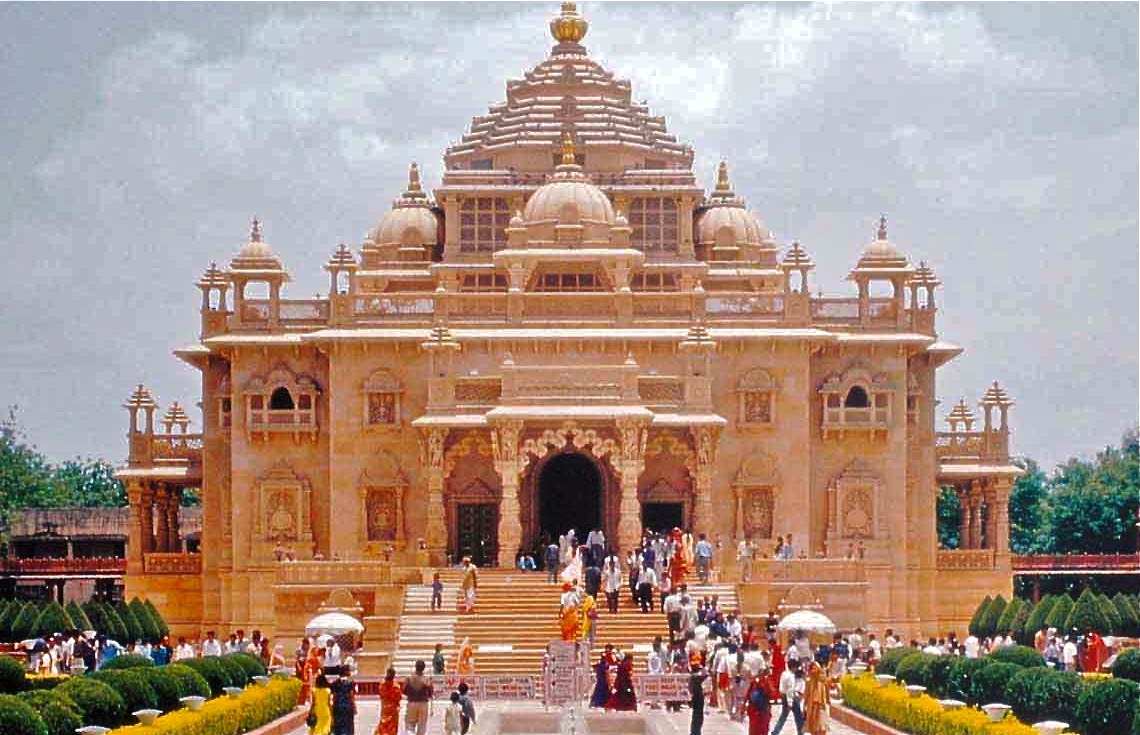
Akshardham (Gandhinagar)
· India · temple
A vast spiritual and cultural complex in Gujarat's capital, Gandhinagar, Swaminarayan Akshardham was conceived through the vision of Yogiji Maharaj and realized by Pramukh Swami Maharaj — a living testimony to the BAPS tradition's commitment to devotion, learning, and harmony.
 Hinduism
Alopi Devi Mandir
· India · temple
Alopi Devi Mandir is a Hindu temple in the Alopibagh neighborhood of Prayagraj, Uttar Pradesh, close to the sacred Sangam where the Ganges, the Yamuna, and the legendary Sarasvati are believed to converge.