
Danteshwari Temple
About
Rising in the town of Dantewada, roughly eighty kilometres from Jagdalpur Tehsil in Chhattisgarh, this shrine to Goddess Danteshwari stands among the fifty-two Shakta pithas that mark the presence of Shakti across the Indian landscape. The town itself takes its name from the Goddess, who was long revered as the presiding deity of the Kakatiya rulers who once governed this region, and she remains honoured to this day as the Kuldevi, or ancestral family goddess, of the wider Bastar state.
The sanctum holds an image of Danteshwari Mai carved from black stone, and worship unfolds across four connected halls: the Garbh Griha, the Maha Mandap, the Mukhya Mandap, and the Sabha Mandap. The Garbha Griha and Maha Mandap were raised in stone, and a Garuda Pillar stands before the temple entrance. The whole complex sits within a broad courtyard enclosed by substantial walls, its shikhara carved with fine ornamental work.
Each year during Dusshera, tribal communities travel from villages and forests throughout the surrounding region to honour the Goddess, whose image is carried from the ancient temple in a grand procession through the town. This observance now forms a central part of the celebrated Bastar Dussehra festival and draws visitors well beyond the immediate community. During Navaratri, devotees also keep the custom of lighting Jyoti Kalashas, sacred vessels of flame, within the temple precincts.
A related shrine in Jagdalpur, also dedicated to Danteshwari, serves as the ceremonial focus of the Bastar Dussehra celebrations. The devotion of both tribal residents and townspeople centres on this presiding deity of Bastar, whose image at Jagdalpur is rendered in white, in contrast to the black stone form worshipped at Dantewada.
History
The temple's origin is held within sacred legend rather than dated record. Goddess Sati is said to have entered the fire of her father Daksha's yagna after he insulted her husband, Lord Shiva. Grief-stricken and enraged, Shiva shattered Daksha's sacrifice and bore Sati's lifeless form through the heavens in the fierce dance known as Taandav, until Lord Vishnu released him from his sorrow by cutting the body apart with the Sudarshan Chakra. Her remains fell to earth in fifty-two places, and each became a Shakta pitha, with tradition holding that a tooth of Sati landed at this very site in Dantewada.
The present temple structure was raised in the fourteenth century. The Goddess herself was already revered by then as the presiding deity of the Kakatiya rulers who governed this part of Bastar.
Significance
Danteshwari Temple stands as one of the fifty-two Shakti Pithas of India, the sites sanctified by the scattered form of Sati, and it holds particular importance as the Kuldevi shrine of the Bastar region. Its Dusshera procession, part of the wider Bastar Dussehra festival, draws deep devotion from tribal and local communities alike, marking the temple as a living centre of Shakta worship rather than a monument of the past.
Visiting
Engage with Danteshwari Temple
Through the four pathways
Seva सेवा — Service
Offer your time and skills here. The following opportunities are open at Danteshwari Temple:
No Seva offerings listed yet.
Sādhana साधना — Practice
Learn the worship and practice associated with Danteshwari Temple:
No Sādhana offerings listed yet.
Sandhāna सन्धान — Wisdom
Unite with the wisdom of this tradition:
No Sandhāna offerings listed yet.
Sādhya साध्य — Giving
Support this sacred place according to your means:
No Sādhya offerings listed yet.
All giving flows directly to Danteshwari Temple. Adisthan does not take a commission.
Gallery
Related sacred places
 Hinduism
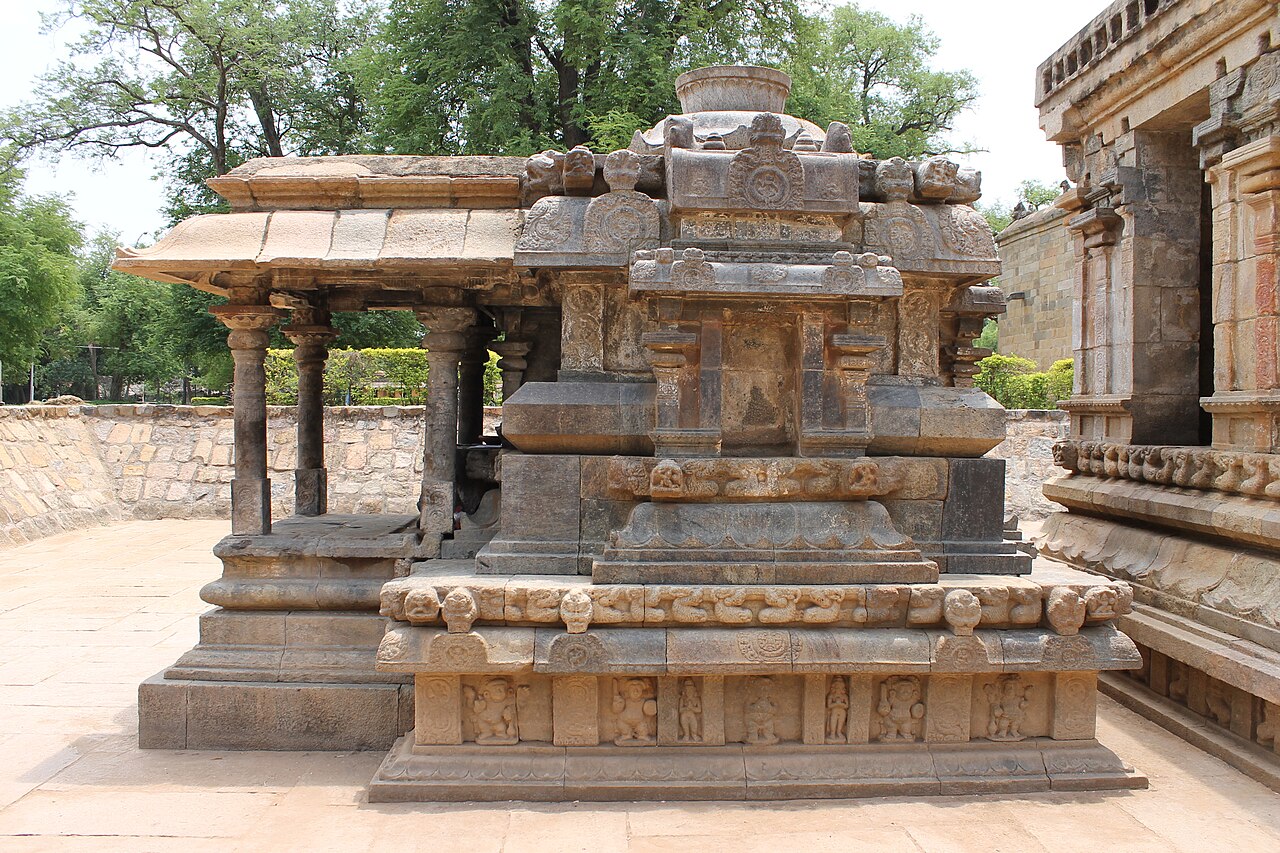
Airavatesvara Temple
· India · temple
A jewel of 12th-century Chola craftsmanship at Darasuram near Kumbakonam in Tamil Nadu, this Śaiva shrine dedicated to Lord Śiva stands among the UNESCO-listed Great Living Chola Temples for its extraordinary sculptural refinement.
Aisanyesvara Siva Temple
· India · temple
A living Śaiva temple from the thirteenth century, nestled near the western boundary of the great Lingarāja complex in Bhubaneswar, Odisha, where a Śivaliṅgam receives daily worship and the sacred rhythms of the liturgical year continue unbroken.
 Hinduism
Akhadachandi Temple
· India · temple
A 10th-century Hindu temple in the heart of Bhubaneswar's old town, Akhadachandi Temple stands on the southwestern shore of the sacred Bindusagar tank, honouring the goddess Mahiṣāsuramardinī in the ancient Kalinga style.
 Hinduism
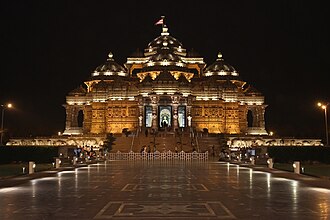
Akshardham
· India · temple
Swaminarayan Akshardham in Delhi is a vast Hindu mandir complex dedicated to devotion, learning, and harmony, drawing millions of pilgrims each year to its intricately carved sandstone and marble monument on the Yamuna's western bank.
 Hinduism
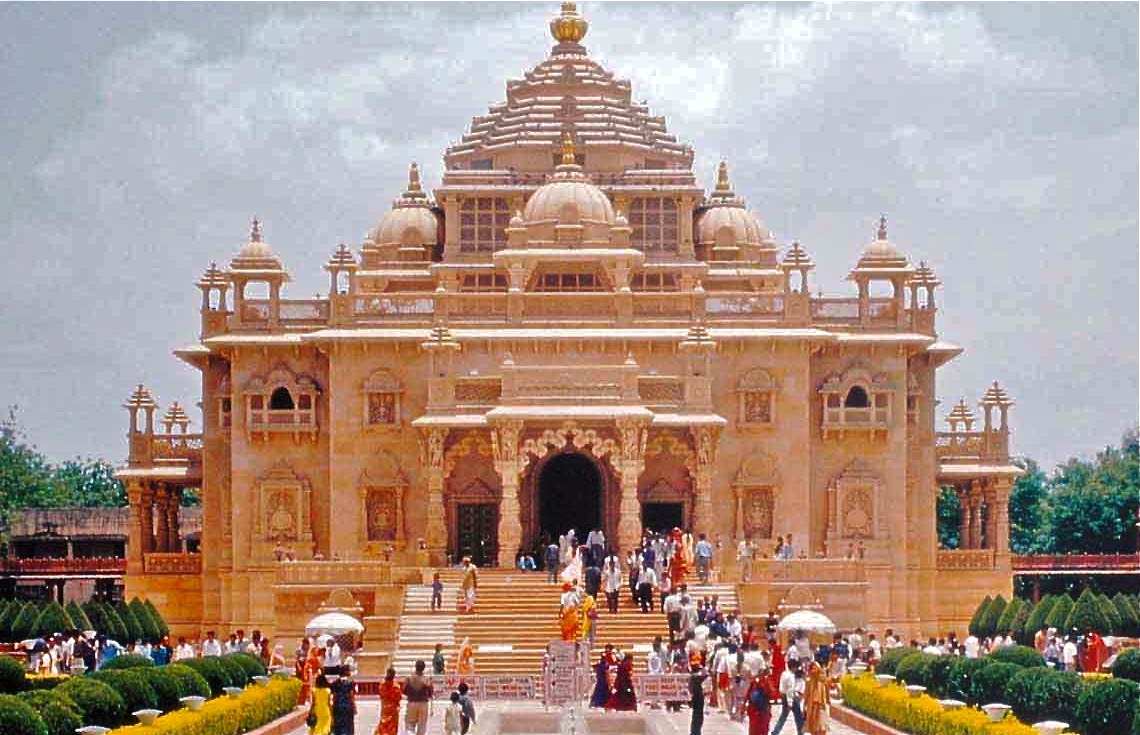
Akshardham (Gandhinagar)
· India · temple
A vast spiritual and cultural complex in Gujarat's capital, Gandhinagar, Swaminarayan Akshardham was conceived through the vision of Yogiji Maharaj and realized by Pramukh Swami Maharaj — a living testimony to the BAPS tradition's commitment to devotion, learning, and harmony.
 Hinduism
Alopi Devi Mandir
· India · temple
Alopi Devi Mandir is a Hindu temple in the Alopibagh neighborhood of Prayagraj, Uttar Pradesh, close to the sacred Sangam where the Ganges, the Yamuna, and the legendary Sarasvati are believed to converge.