
Devi Kanya Kumari
About
Devi Kanya Kumari takes her name from the town of Kanyakumari, set where three great waters meet: the Bay of Bengal to the east, the Arabian Sea to the west, and beyond them the wide reach of the Indian Ocean. Hindu communities across traditions speak of her differently: some hold her to be a youthful manifestation of Pārvatī, others regard her as Lakṣmī descended to earth, and among Śāktas she is venerated as an incarnation of Bhadrakālī. Across these readings she carries several further names, among them Śrī Bāla Bhadra, Śrī Bāla, Kanya Devi, and Devi Kumari.
Her worship is bound up with the memory of Banasura, a demon who won from Brahmā the assurance that only an adolescent girl could end his life. Emboldened by this boon, he overran the world and drove Indra from his throne, throwing the natural order into disarray. Local tradition holds that the Goddess appeared at the subcontinent's southern edge as Kumari to restore balance and put an end to Banasura's tyranny. A parallel account, recorded by the Vaiṣṇava teacher Vadirāja Tīrtha in his Tīrtha Prabandha, identifies her instead as Lakṣmī, come down to earth for the same purpose.
Devotion to this goddess reaches far back in time: she is named in the Rāmāyaṇa and the Mahābhārata, in the Saṅgam-era works Maṇimēkalai and Puṟanāṉūṟu, and in the Mahānārāyaṇa Upaniṣad of the Nārāyaṇa tradition, a Vaiṣṇava text preserved within the Kṛṣṇa Yajurveda's Taittirīya Saṃhitā. Writing between 60 and 80 CE, the author of the Periplus of the Erythraean Sea described a place called Comori where those seeking spiritual consecration would bathe and live in celibacy, connecting the practice to a goddess said to have bathed there. Rule over the region passed from the Chera dynasty to the kings of Travancore, who governed under British paramountcy until Indian independence in 1947; when Travancore joined the union and the states were later reorganised, Kanyakumari became part of Tamil Nadu.
History
According to the temple's founding legend, Banasura's reign of terror could only be ended by a girl who had never married, so the Goddess took form as the maiden Kumari and devoted herself in longing to Śiva. A wedding was arranged, and Śiva set out from Shuchindram to meet her at the auspicious hour before dawn. The sage Nārada, aware that only an unwed goddess could defeat the demon, made a rooster crow so that the moment for the marriage seemed to have passed, and Śiva's approach was thereby interrupted. Believing herself forsaken, Kumari gave way to grief and anger, scattering the food prepared for the wedding feast and breaking her bangles; the scattered grains are said to explain the coloured sands still found at Kanyakumari today. Having composed herself, she withdrew into prolonged penance. Years afterward, Banasura approached her without recognising who she was, and in her fury she slew him at once; in his final moments he perceived that he faced Ādi Parāśakti herself and begged forgiveness for his sins. Once he was gone, Kumari returned to her form as Pārvatī and was reunited with Śiva, while her divine presence remained rooted at the site now known as the Bhagavatī Kumari Amman Temple.
According to the temple's own account, the sage Paraśurāma performed its original consecration. Today the shrine falls under the care of Tamil Nadu's Hindu Religious and Charitable Endowments Department, and darshan is offered each day from six in the morning to eleven, and again from four in the afternoon until eight at night.
Significance
The Bhagavatī Kumari Amman Temple is counted among the fifty-two Śākta pīṭhas, sacred sites said to mark where a part of Satī's body fell to earth; here tradition places the fall of her back and spine, giving the ground its charge of Kuṇḍalinī Śakti. Within the temple, ritual worship addresses the Goddess as Bālāmbikā, the child goddess, and she is also honoured as Kātyāyanī, one of the Navadurgās. Her sanctum faces west, with the eastern door opened only on select days such as the new moons of Thai and Āḍi, during Navarātri, and in the month of Kārttikai. The temple grounds also hold the Pātāla Gaṅgā Tīrtha, a shrine to Kālabhairava (known here as Nimish, paired with the Śakti Sarvāṇi, in contrast to Shuchindram's Kālabhairava Saṃhāra paired with Nārāyaṇī), and shrines to Vijayasundari and Bālasundari, companions of the Goddess in her girlhood. Nearby stands the rock known as Śrī Pāda Pāra, now called Vivekananda Paara, where Swami Vivekananda is said to have found the resolve to give his life fully to active service as a sannyāsī. Devotees regard the Goddess as one who dissolves rigidity of heart and mind, and many describe being moved to tears in her presence. Her temple's four annual festivals, the Citra Pournami in May, the nine-day Navarātri in September and October, the ten-day Vaiśākha festival culminating in the Thoni Ezhunellathu procession, and the Kalabham rite of the final Friday in Āḍi, draw devotees from across the region.
Visiting
Engage with Devi Kanya Kumari
Through the four pathways
Seva सेवा — Service
Offer your time and skills here. The following opportunities are open at Devi Kanya Kumari:
No Seva offerings listed yet.
Sādhana साधना — Practice
Learn the worship and practice associated with Devi Kanya Kumari:
No Sādhana offerings listed yet.
Sandhāna सन्धान — Wisdom
Unite with the wisdom of this tradition:
No Sandhāna offerings listed yet.
Sādhya साध्य — Giving
Support this sacred place according to your means:
No Sādhya offerings listed yet.
All giving flows directly to Devi Kanya Kumari. Adisthan does not take a commission.
Related sacred places
 Hinduism
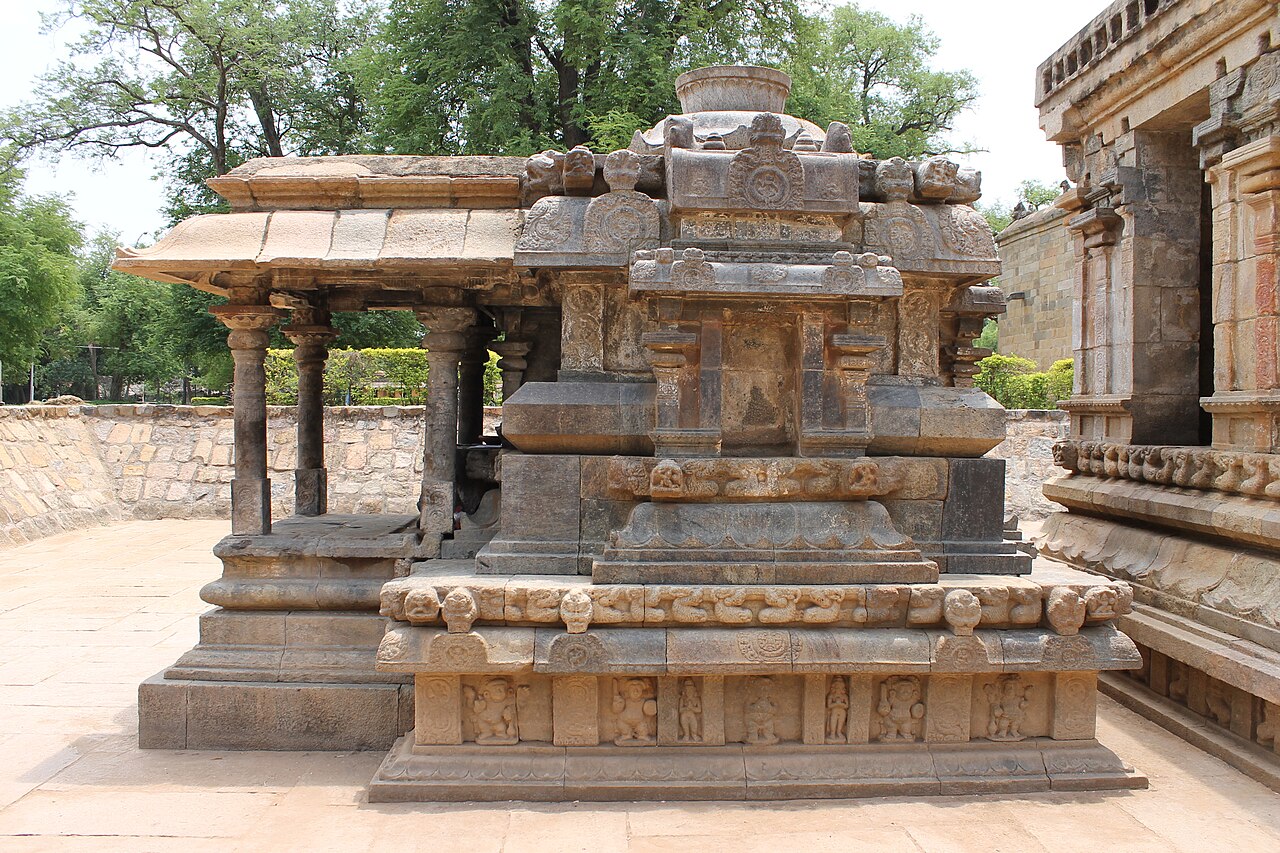
Airavatesvara Temple
· India · temple
A jewel of 12th-century Chola craftsmanship at Darasuram near Kumbakonam in Tamil Nadu, this Śaiva shrine dedicated to Lord Śiva stands among the UNESCO-listed Great Living Chola Temples for its extraordinary sculptural refinement.
Aisanyesvara Siva Temple
· India · temple
A living Śaiva temple from the thirteenth century, nestled near the western boundary of the great Lingarāja complex in Bhubaneswar, Odisha, where a Śivaliṅgam receives daily worship and the sacred rhythms of the liturgical year continue unbroken.
 Hinduism
Akhadachandi Temple
· India · temple
A 10th-century Hindu temple in the heart of Bhubaneswar's old town, Akhadachandi Temple stands on the southwestern shore of the sacred Bindusagar tank, honouring the goddess Mahiṣāsuramardinī in the ancient Kalinga style.
 Hinduism
Akshardham
· India · temple
Swaminarayan Akshardham in Delhi is a vast Hindu mandir complex dedicated to devotion, learning, and harmony, drawing millions of pilgrims each year to its intricately carved sandstone and marble monument on the Yamuna's western bank.
 Hinduism
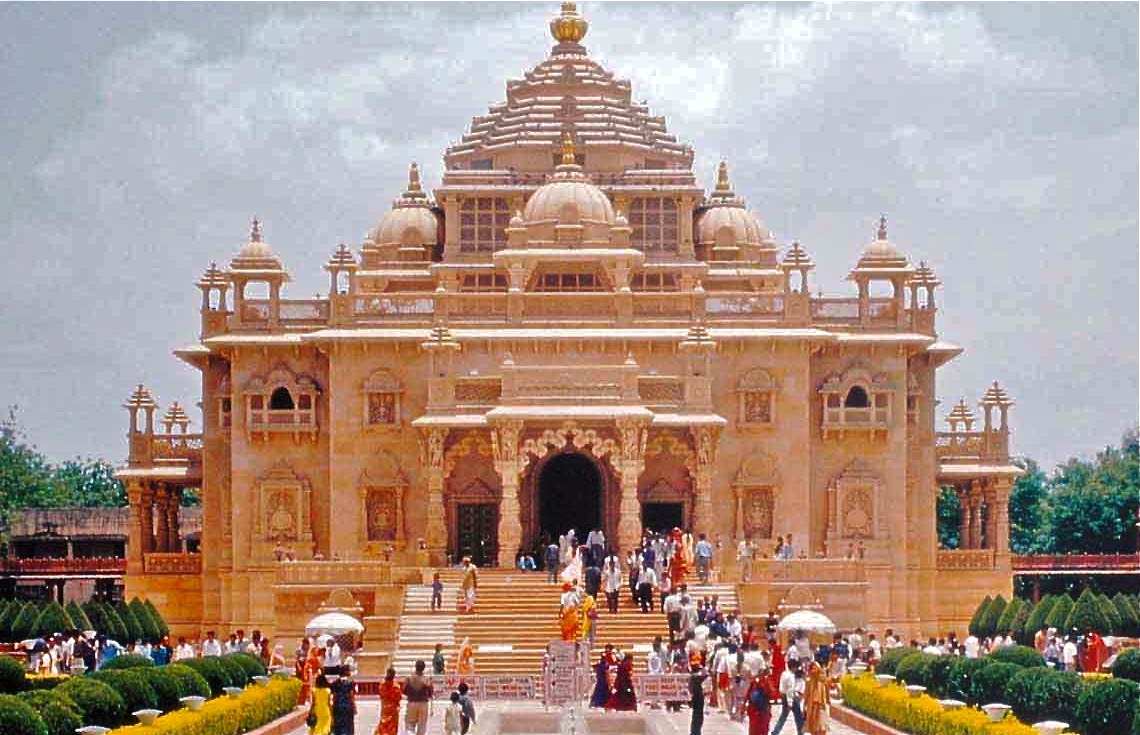
Akshardham (Gandhinagar)
· India · temple
A vast spiritual and cultural complex in Gujarat's capital, Gandhinagar, Swaminarayan Akshardham was conceived through the vision of Yogiji Maharaj and realized by Pramukh Swami Maharaj — a living testimony to the BAPS tradition's commitment to devotion, learning, and harmony.
 Hinduism
Alopi Devi Mandir
· India · temple
Alopi Devi Mandir is a Hindu temple in the Alopibagh neighborhood of Prayagraj, Uttar Pradesh, close to the sacred Sangam where the Ganges, the Yamuna, and the legendary Sarasvati are believed to converge.