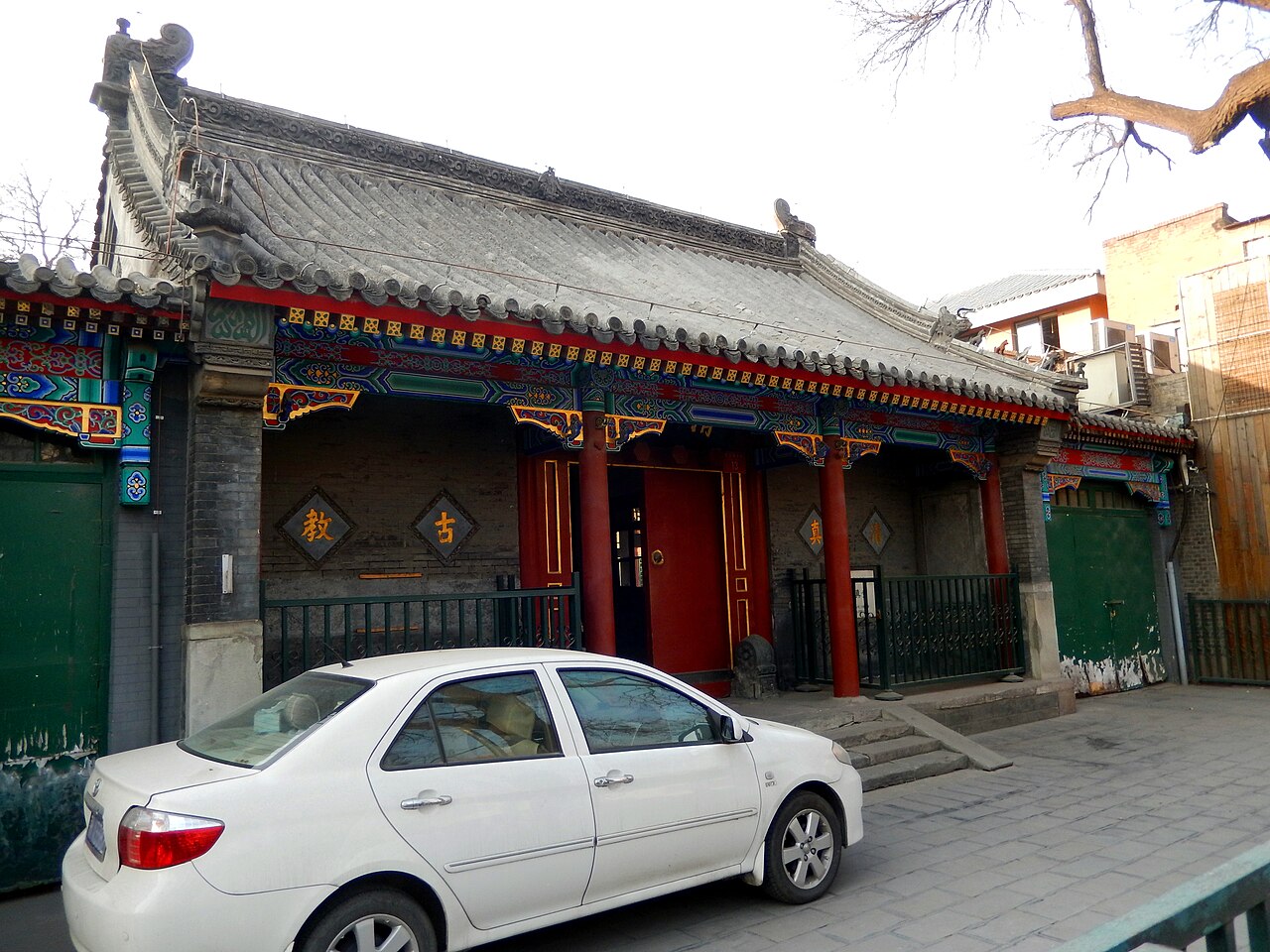
Dongsi Mosque
东四清真寺 (Dongsi Qingzhensi) · Dongsi Qingzhen Si
About
The Dongsi Mosque (东四清真寺, Dōngsì Qīngzhēnsì) stands in the Dongsi subdistrict of Beijing's Dongcheng District, in the heart of the old city. Local tradition holds that an earlier mosque was raised on the site as far back as the Liao dynasty, when Beijing served as a secondary capital of the Liao state; more reliable historical records place its founding in 1346, during the Yuan dynasty.
The mosque was expanded and renovated under the Ming, first in 1447 and again in 1486, with the earlier of those works financed by the Ming dynasty officer Chen Yuyuan. It survived a fire in the late nineteenth century, though not without damage, and has been carefully repaired across the twentieth century.
In its present form the mosque carries the marks of Ming-era architecture. The mosque complex comprises two īwāns, a minaret, the main prayer hall, and a library; Qur'ānic calligraphy is carved along the arches of the prayer hall, which accommodates around 500 worshippers. Five wing halls line the southern side of the sahn (courtyard), with three more on the northern side, and the southern part of the courtyard houses a library containing various editions of the Qur'ān.
History
Wikipedia and several tourism sources date the mosque's founding to 1346 CE, in the Yuan dynasty, though Beijing's own tourism authority gives 1356 CE and the Beijing municipal government's religious affairs office instead describes it as first built under the Ming dynasty, between 1368 and 1644. What is agreed is that the mosque was expanded and renovated in 1447 and again in 1486, the earlier phase financed by the Ming official Chen Yuyuan. The mosque survived a fire in the late nineteenth century, though not without damage, and was comprehensively repaired across the twentieth century, including government-funded restoration in 1952 and 1974. It now serves as the headquarters of the Islamic Association of Beijing, welcoming both Chinese and international Muslims to daily and Friday prayer.
Significance
The surviving prayer hall is the mosque's oldest fabric and its Ming dynasty heart, its gilded pillars carved with lotus and arabesque motifs beneath painted beams, and Qur'anic calligraphy carved along its arches. The hall holds roughly five hundred worshippers at Eid al-Fitr and Eid al-Adha, and its library preserves Qur'an manuscripts and Hadith texts, some close to seven hundred years old. Three brick chambers with vaulted ceilings reflect an Arabic architectural idiom rarely found elsewhere in Beijing's mosque tradition, marking Dongsi as one of the city's most historically layered places of worship.
Architecture
Ming dynasty Chinese mosque architecture; three courtyards around a prayer hall with gilded, painted pillars and a wooden Chinese-style vestibule, with brick chambers under vaulted ceilings in an Arabic idiom
Visiting
Hours
Hours not listed.
Contact
No contact details listed yet.
Address
Engage with Dongsi Mosque
Through the four pathways
Seva सेवा — Service
Offer your time and skills here. The following opportunities are open at Dongsi Mosque:
No Seva offerings listed yet.
Sādhana साधना — Practice
Learn the worship and practice associated with Dongsi Mosque:
No Sādhana offerings listed yet.
Sandhāna सन्धान — Wisdom
Unite with the wisdom of this tradition:
No Sandhāna offerings listed yet.
Sādhya साध्य — Giving
Support this sacred place according to your means:
No Sādhya offerings listed yet.
All giving flows directly to Dongsi Mosque. Adisthan does not take a commission.
Festivals & Events
- Mar
Eid al-Fitr
9 March 2027 · annual
The breaking of the Ramadan fast draws the prayer hall to its roughly five-hundred-person capacity, one of the two great congregational occasions of the year at this mosque.
Gallery
Related sacred places
 Islam
IslamAbu'l-Fida Mosque
Hama · Syria · mosque
A fourteenth-century Ayyubid mausoleum and Mamluk-era congregational mosque on the banks of the Orontes in Hama, Syria, known locally as the Mosque of the Serpents for the carved pillars at its windows.
 Islam
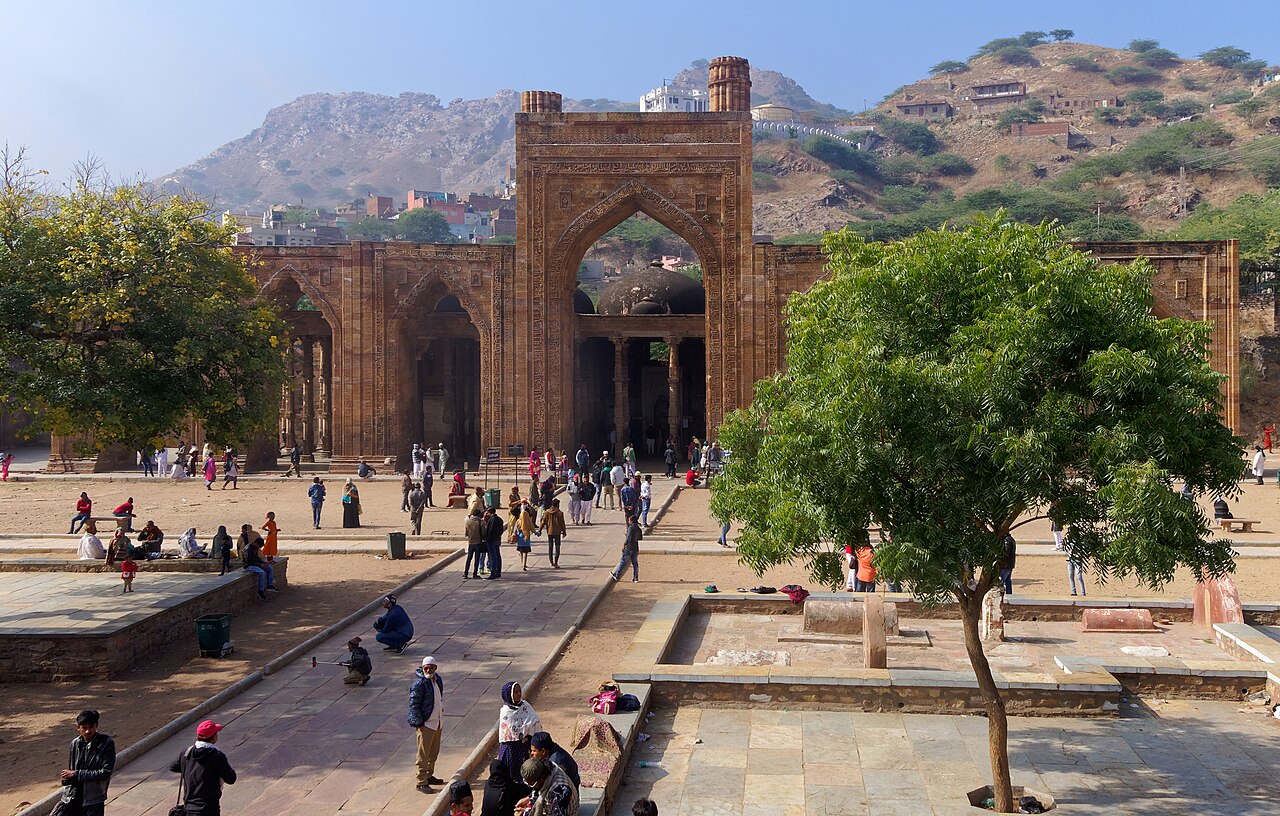
IslamAdhai Din Ka Jhonpra
Ajmer · India · mosque
The oldest surviving monument in Ajmer and among the earliest Indo-Islamic mosques in India, its 1199 CE prayer hall and Iltutmish's 1213 CE arched screen rise on 344 pillars carved by Hindu and Jain craftsmen from earlier Temples.
 Islam
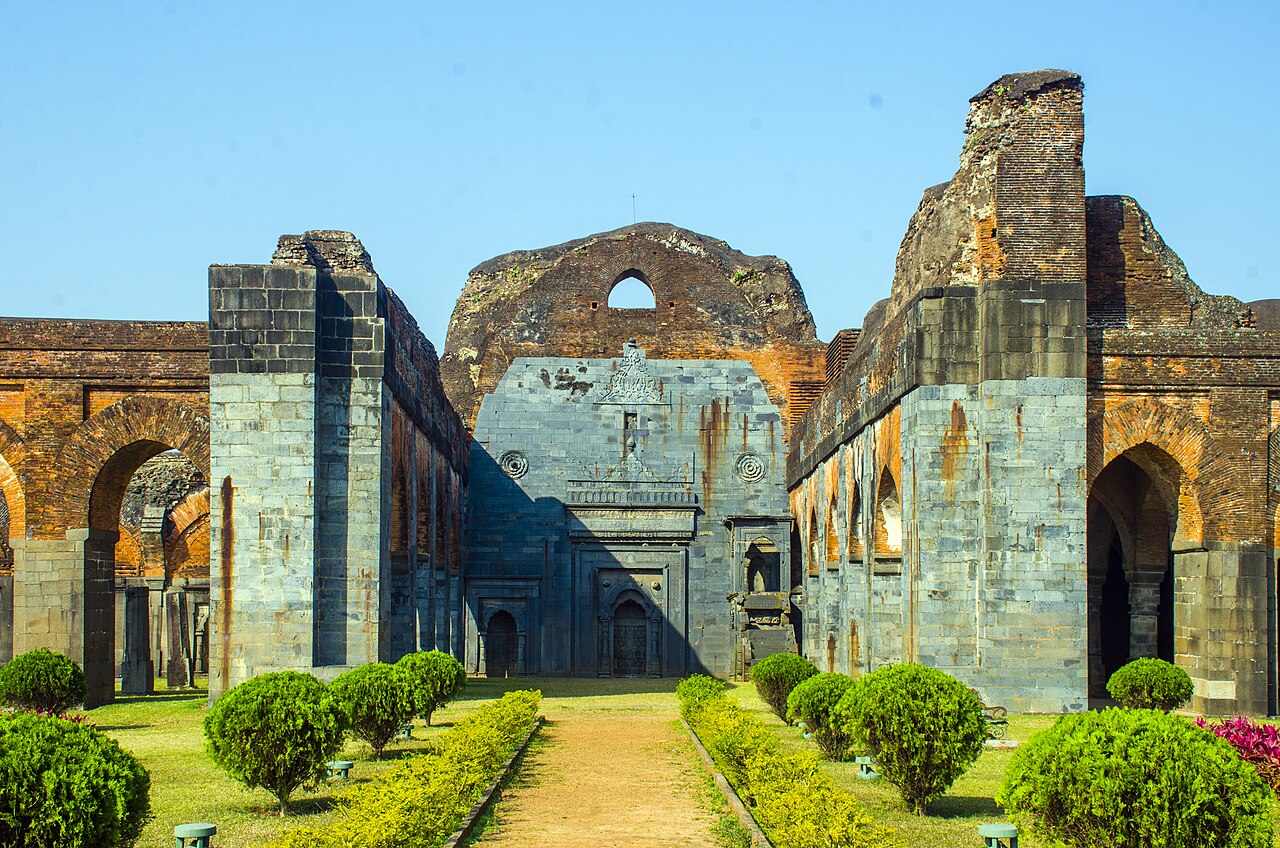
IslamAdina Mosque
Pandua · India · mosque
Once the largest mosque on the Indian subcontinent, the Adina Mosque at Pandua in West Bengal was raised by Sultan Sikandar Shah between 1373 and 1375 as the congregational mosque of the Bengal Sultanate, and holds his tomb within its western wall.
 Islam
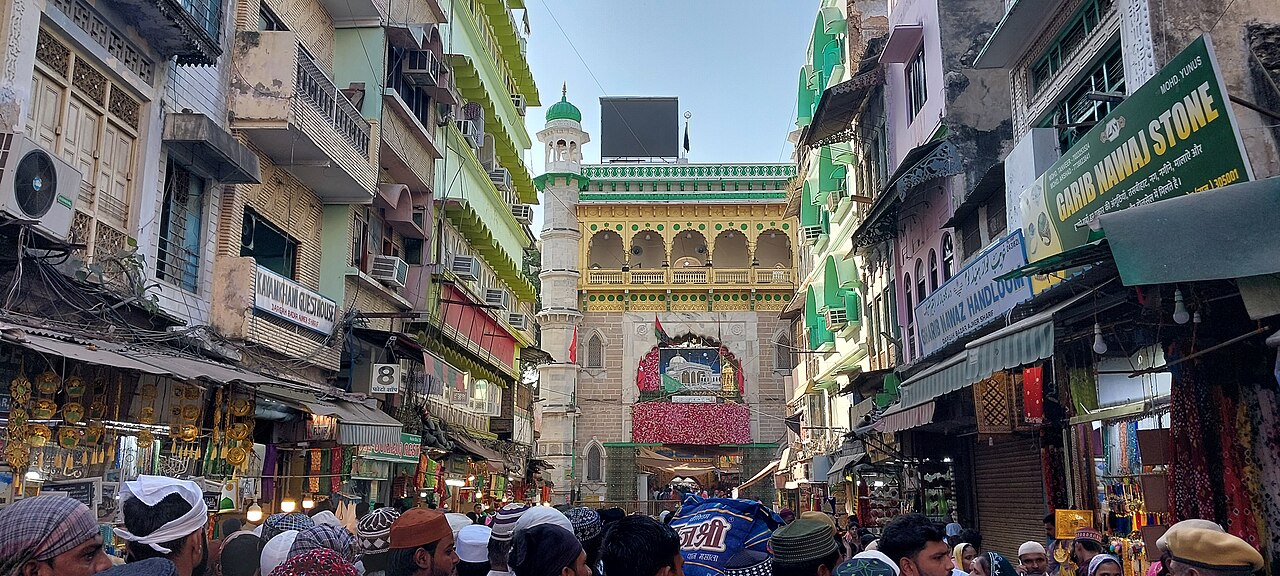
IslamAjmer Sharif Dargah
Ajmer · India · dargah
The tomb of Hazrat Khwaja Moinuddin Chishti, Gharib Nawaz, the benefactor of the poor, and the principal Sufi dargah of South Asia, where pilgrims of every community have offered chadars and shared the sweet rice of the great deghs for eight centuries.
Akbarabadi Mosque
Delhi · India · mosque
A mosque raised in 1650 by Akbarabadi Begum, a wife of the Mughal emperor Shah Jahan, in the walled city of Shahjahanabad, demolished by British forces in the aftermath of the 1857 Uprising and today marked only by disputed, unexcavated remains beneath Netaji Subhash Park in Old Delhi.
 Islam
IslamAlamgir Mosque
Varanasi · India · mosque
Raised in 1669 by the Mughal emperor Aurangzeb on the high bank above Panchganga Ghat in Varanasi, the Alamgir Mosque stands where wide stone steps meet the Ganges, its domes and surviving corner turret rising over a site earlier accounts describe as the Hindu Temple of Bindu Madhava.