.JPG%2F1280px-2015_Earthquake_in_Nepal-Guhyeshwari_Temple_Area_(1).JPG&w=3840&q=75)
Guhyeshwari Temple
About
The temple's name weaves together two Sanskrit words: Guhya, the secret or hidden, and Ishwari, the Goddess. Guhyeshwari marks the place where the anus and rectum of Sati are said to have fallen when Her body was carried across the world. The Devi Bhagavata Purana counts this shrine among the sacred seats of Adishakti and calls the deity of Nepal Guhyakali, declaring in its seventh canto, chapter thirty eight, verse eleven, that the great abode of Śrī Guhya Kālī stands established in Nepal.
The scriptures speak of this place under many names. The Himavatkhanda of the Skanda Purana and the Meru Tantra, along with the Devamala Vamshavali, the Bhasa Vamshavali and the Svasthani Vratakatha, tell of Sati's guhya or guda falling here, and address the Goddess as Guhyakālī, Guhyeśī, Guhyeśvarī, Guhyakeśvarī and Guhyakālikā. The Manthanbhairava Tantra names Pashupati as Her consort. The Varahi Tantra, without specifying which part of Sati's body fell, exalts the Guhya Mandala of Nepal, Nepāla Guhyamaṇḍalaṃ, as granting one crore times the merit of other places, and holds that no Shakti pitha surpasses Guhyeshwari. This shrine should not be confused with the pitha of the Peethanirnaya in the Tantra Chudamani, where both knees of Sati are said to have fallen in Nepal under the presiding deity Mahamaya; the Nepal Mahatmya places the knees near where the Vishnumati meets the Bagmati, while the anus fell by the Bagmati close to the Mrigasthali of the Pashupati temple, where Guhyeshwari or Guhyakali reigns.
The daily nitya pūjā is offered by a priestly clan of the Newar community according to the Sarvamnaya Tantra. The regular Tantric rites belong to the Karmacharya, the traditional Kaula priests, while on great occasions the Rajopadhyaya Brahmins, who are at once Vedic and Kaula priests, perform the Vedic rituals as the Karmacharya continue the Tantric ones. Among the Fifty One Shakta pithas, each answering to one of the fifty one letters of the Sanskrit alphabet, Guhyeshwari stands for the letter I. The Tripura Rahasya names twelve dwelling places where Goddess Lalita ever abides, calling Her form in Nepal Guhyakeshvari, and the Lalita Sahasranama gives Guhyarupini as Her seven hundred and seventh name. The temple fills with worshippers during Navaratri and the Jatras.
Vajrayana Buddhists too hold this ground sacred, honoring it as a place of Vajrayogini in Her form as Vajravarahi. Here, they say, lies the root of the mythical lotus upon which the Swayambhunath stupa rests, the umbilical cord that nourishes Kathmandu. In the Tibetan tongue the place is called Pag-mo Ngal-chu, the womb fluid of Varahi, and the water rising from the spring in the temple's well is believed to be the waters of Vajravarahi.
History
King Pratap Malla renovated the temple in the seventeenth century, giving the shrine the form in which devotees have known it since.
Significance
Guhyeshwari is among the most exalted of the Shakta pithas, the place where the hidden part of Sati's body came to rest, and the Varahi Tantra declares that no Shakti pitha stands greater. It is a living centre of Tantric worship, served jointly by Kaula and Vedic priests of the Newar and Rajopadhyaya lineages, and it is equally beloved of Vajrayana Buddhists, for whom it cradles the root of the lotus bearing Swayambhunath. Hindu and Buddhist devotion thus flow together at this one quiet bank of the Bagmati.
Visiting
Engage with Guhyeshwari Temple
Through the four pathways
Seva सेवा — Service
Offer your time and skills here. The following opportunities are open at Guhyeshwari Temple:
No Seva offerings listed yet.
Sādhana साधना — Practice
Learn the worship and practice associated with Guhyeshwari Temple:
No Sādhana offerings listed yet.
Sandhāna सन्धान — Wisdom
Unite with the wisdom of this tradition:
No Sandhāna offerings listed yet.
Sādhya साध्य — Giving
Support this sacred place according to your means:
No Sādhya offerings listed yet.
All giving flows directly to Guhyeshwari Temple. Adisthan does not take a commission.
Related sacred places
 Hinduism
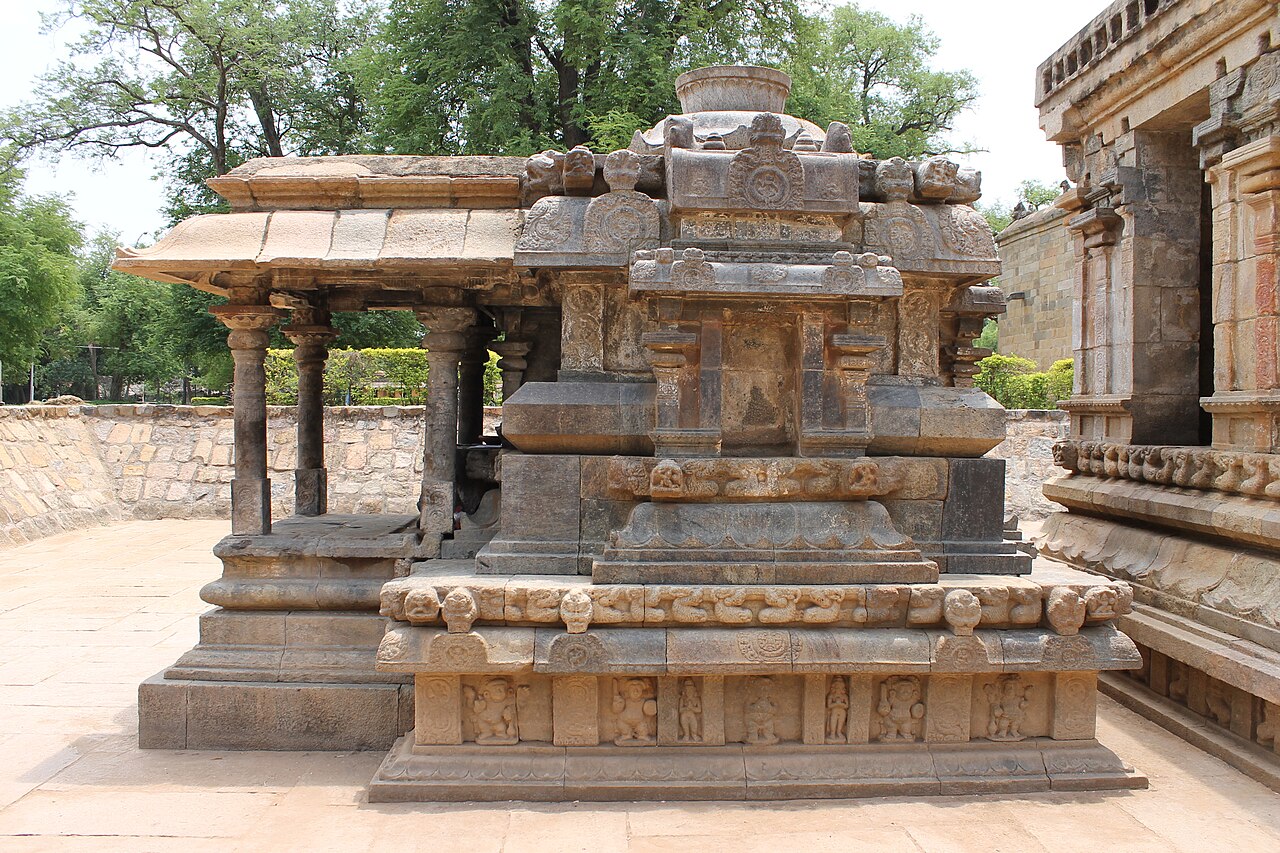
Airavatesvara Temple
· India · temple
A jewel of 12th-century Chola craftsmanship at Darasuram near Kumbakonam in Tamil Nadu, this Śaiva shrine dedicated to Lord Śiva stands among the UNESCO-listed Great Living Chola Temples for its extraordinary sculptural refinement.
Aisanyesvara Siva Temple
· India · temple
A living Śaiva temple from the thirteenth century, nestled near the western boundary of the great Lingarāja complex in Bhubaneswar, Odisha, where a Śivaliṅgam receives daily worship and the sacred rhythms of the liturgical year continue unbroken.
 Hinduism
Akhadachandi Temple
· India · temple
A 10th-century Hindu temple in the heart of Bhubaneswar's old town, Akhadachandi Temple stands on the southwestern shore of the sacred Bindusagar tank, honouring the goddess Mahiṣāsuramardinī in the ancient Kalinga style.
 Hinduism
Akshardham
· India · temple
Swaminarayan Akshardham in Delhi is a vast Hindu mandir complex dedicated to devotion, learning, and harmony, drawing millions of pilgrims each year to its intricately carved sandstone and marble monument on the Yamuna's western bank.
 Hinduism
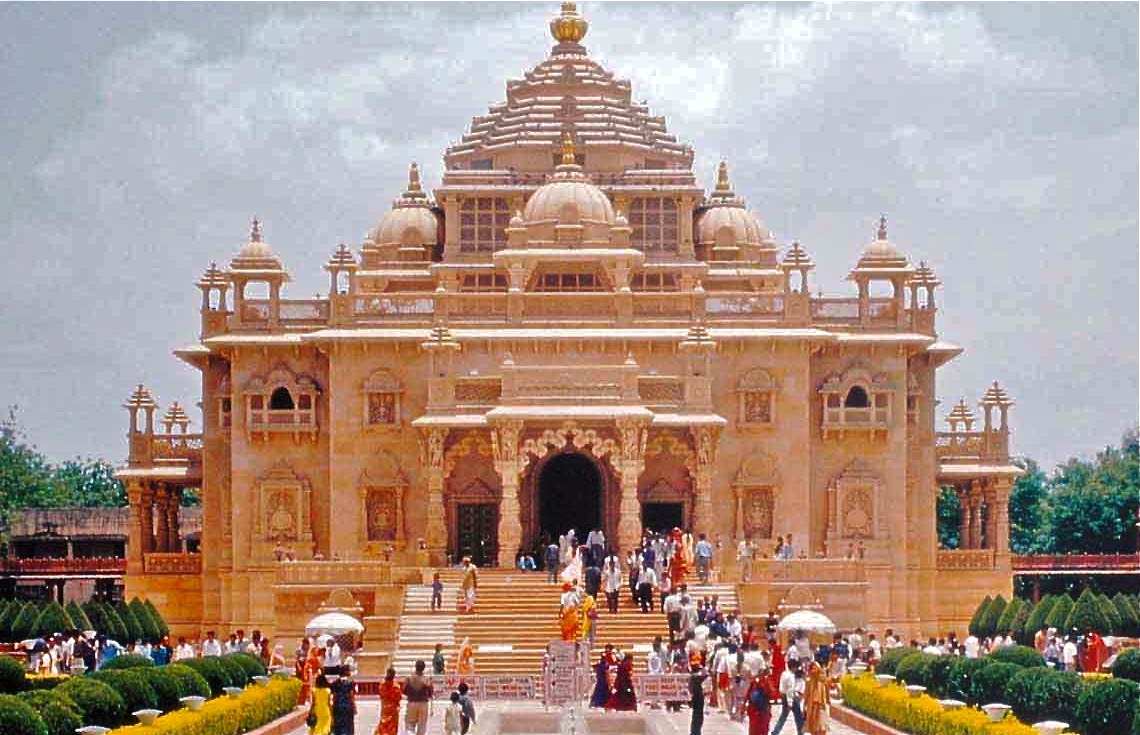
Akshardham (Gandhinagar)
· India · temple
A vast spiritual and cultural complex in Gujarat's capital, Gandhinagar, Swaminarayan Akshardham was conceived through the vision of Yogiji Maharaj and realized by Pramukh Swami Maharaj — a living testimony to the BAPS tradition's commitment to devotion, learning, and harmony.
 Hinduism
Alopi Devi Mandir
· India · temple
Alopi Devi Mandir is a Hindu temple in the Alopibagh neighborhood of Prayagraj, Uttar Pradesh, close to the sacred Sangam where the Ganges, the Yamuna, and the legendary Sarasvati are believed to converge.