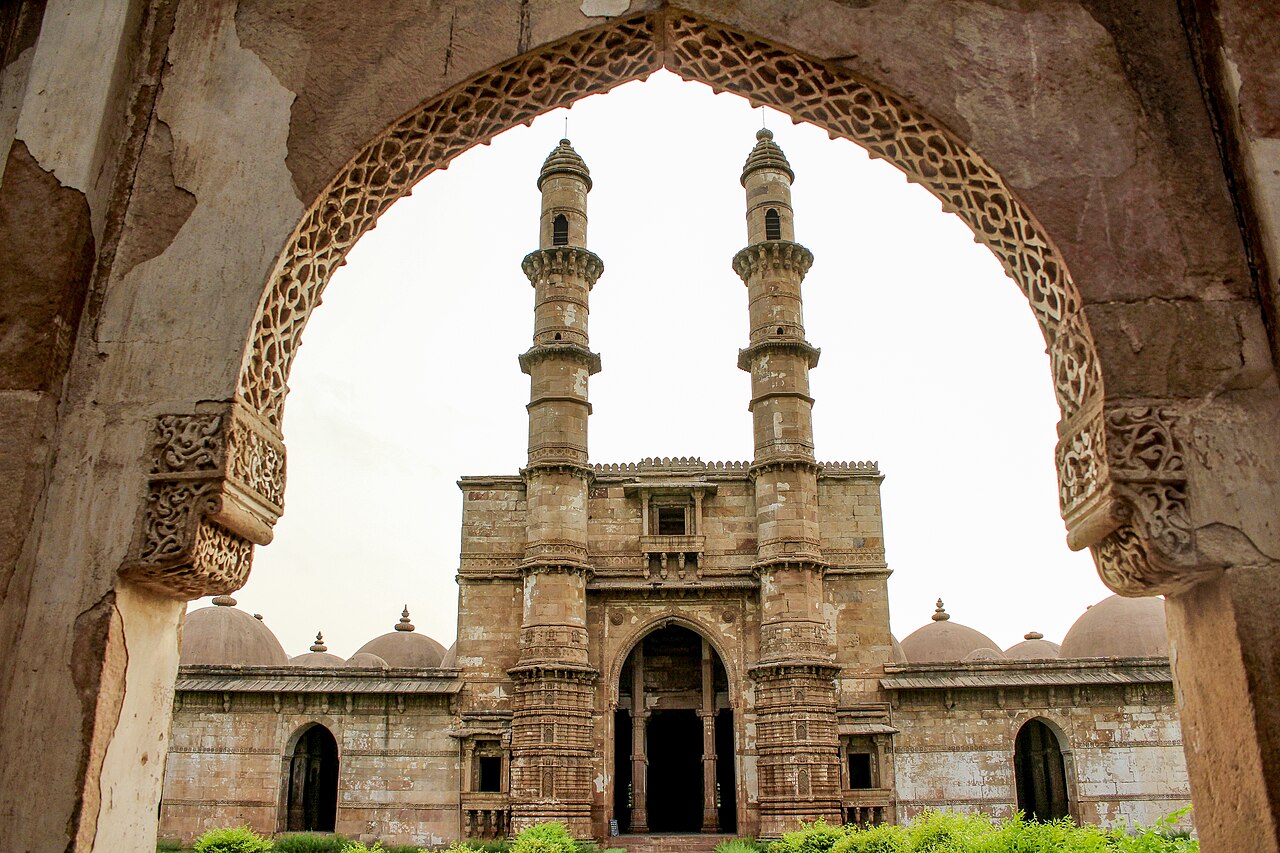
Jama Masjid, Champaner
Jami Masjid, Champaner
About
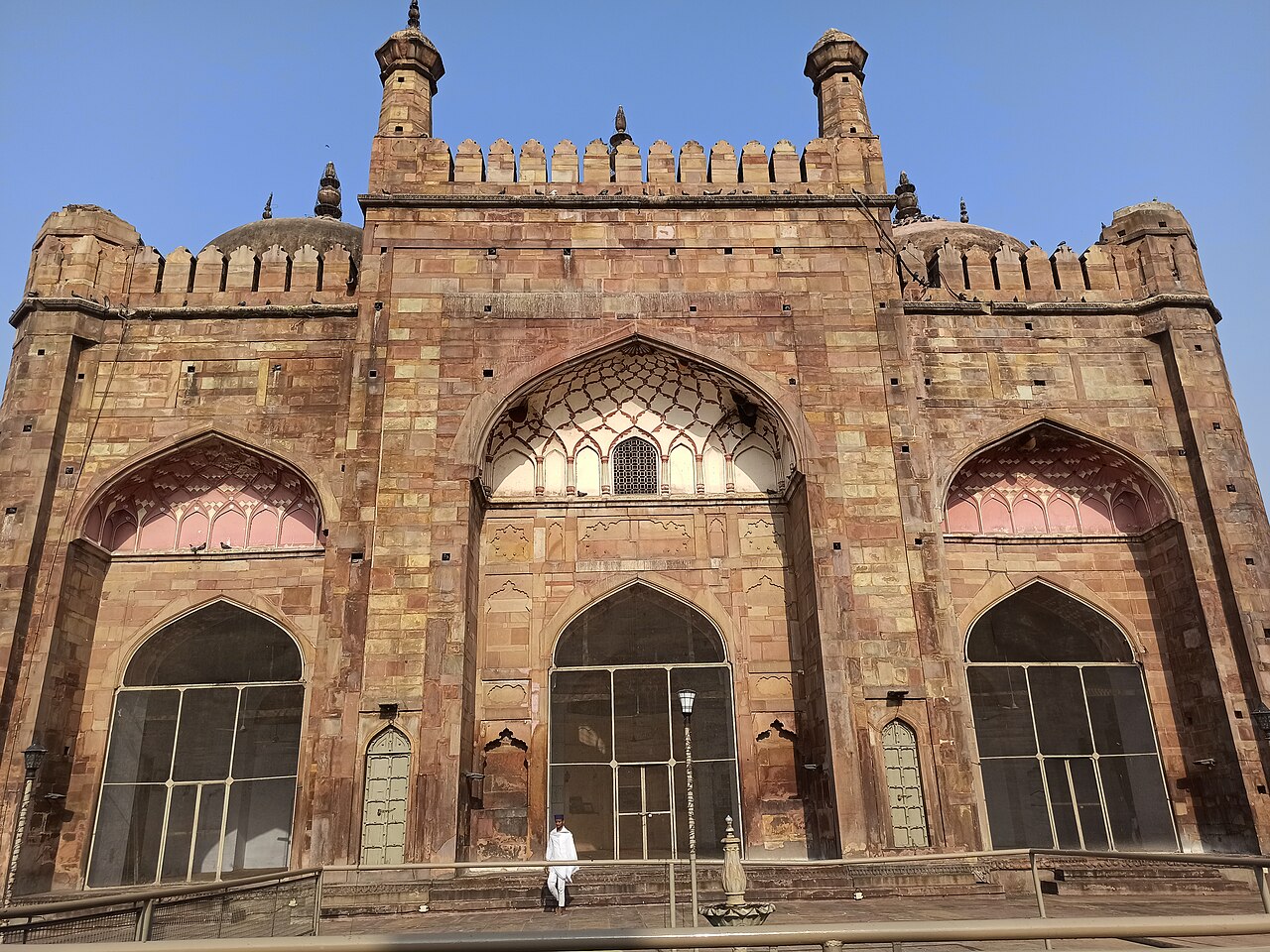
Rising from the plains of eastern Gujarat, the Jami Masjid of Champaner, whose name carries the meaning of a mosque open to all, served for centuries as the principal Friday gathering place for the city's Muslim community. Today it endures as a remarkably intact heritage monument, recognised among the Monuments of National Importance under India's Archaeological Survey.
The mosque occupies a site roughly forty-six metres to the east of the historic city fortification known as Jahdnpandh, positioned near the old east gate and thus at a threshold between the walled settlement and the wider landscape. This careful situating within the urban fabric of Champaner reflects the central civic role the mosque was intended to fulfil.
Along with over a hundred other structures catalogued by the Baroda Heritage Trust, the Jami Masjid forms part of the broader Champaner-Pavagadh Archaeological Park, a UNESCO World Heritage Site that preserves one of the most complete ensembles of pre-Mughal Islamic urban planning in the subcontinent. Within that ensemble, the mosque is among the most distinguished and carefully conserved examples.
History
Sultan Mahmud Begada of the Gujarat Sultanate commissioned the mosque to serve as the principal congregational place of prayer for his new capital, and craftsmen raised it over some twenty five years before its completion in 1513. Champaner's rise as a fortified Sultanate seat did not last: within decades the city passed from prominence, and its mosque, along with the palaces, gates and stepwells around it, was gradually left to the plains and to the Archaeological Survey of India's care. Today it stands roughly forty six metres east of the old city wall, near what was once the settlement's eastern gate, still commanding the ground it was built to serve.
Significance
Twin octagonal minarets rise thirty metres above a prayer hall covered by twelve domes and carried on some two hundred carved pillars, work that art historians describe as a meeting of Muslim liturgical form with the workmanship and ornament of Jain and Hindu Temple builders, sun discs, vines, lotus roundels and diamond lattices worked into the same stone as the mihrabs. It anchors the Champaner-Pavagadh Archaeological Park, inscribed by UNESCO as a World Heritage Site in 2004 for preserving, more completely than anywhere else in India, an entire pre-Mughal Islamic city.
Architecture
Gujarat Sultanate Indo-Islamic architecture blending Muslim liturgical planning with Jain and Hindu stone-carving traditions; twin octagonal minarets, twelve domes on carved pillared arcades
Visiting
Hours
Hours not listed.
Contact
No contact details listed yet.
Address
Engage with Jama Masjid, Champaner
Through the four pathways
Seva सेवा — Service
Offer your time and skills here. The following opportunities are open at Jama Masjid, Champaner:
No Seva offerings listed yet.
Sādhana साधना — Practice
Learn the worship and practice associated with Jama Masjid, Champaner:
No Sādhana offerings listed yet.
Sandhāna सन्धान — Wisdom
Unite with the wisdom of this tradition:
No Sandhāna offerings listed yet.
Sādhya साध्य — Giving
Support this sacred place according to your means:
No Sādhya offerings listed yet.
All giving flows directly to Jama Masjid, Champaner. Adisthan does not take a commission.
Gallery
Related sacred places
 Islam
IslamAbu'l-Fida Mosque
Hama · Syria · mosque
A fourteenth-century Ayyubid mausoleum and Mamluk-era congregational mosque on the banks of the Orontes in Hama, Syria, known locally as the Mosque of the Serpents for the carved pillars at its windows.
 Islam
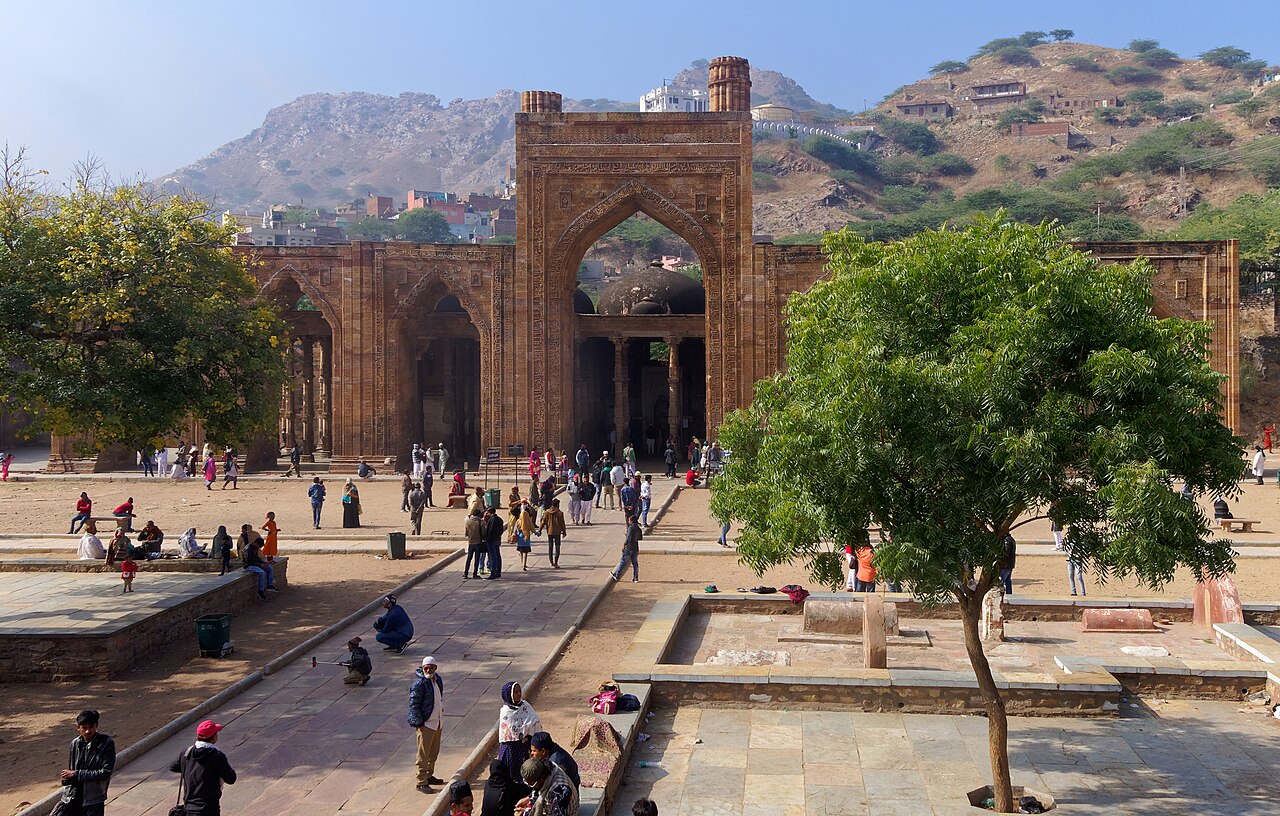
IslamAdhai Din Ka Jhonpra
Ajmer · India · mosque
The oldest surviving monument in Ajmer and among the earliest Indo-Islamic mosques in India, its 1199 CE prayer hall and Iltutmish's 1213 CE arched screen rise on 344 pillars carved by Hindu and Jain craftsmen from earlier Temples.
 Islam
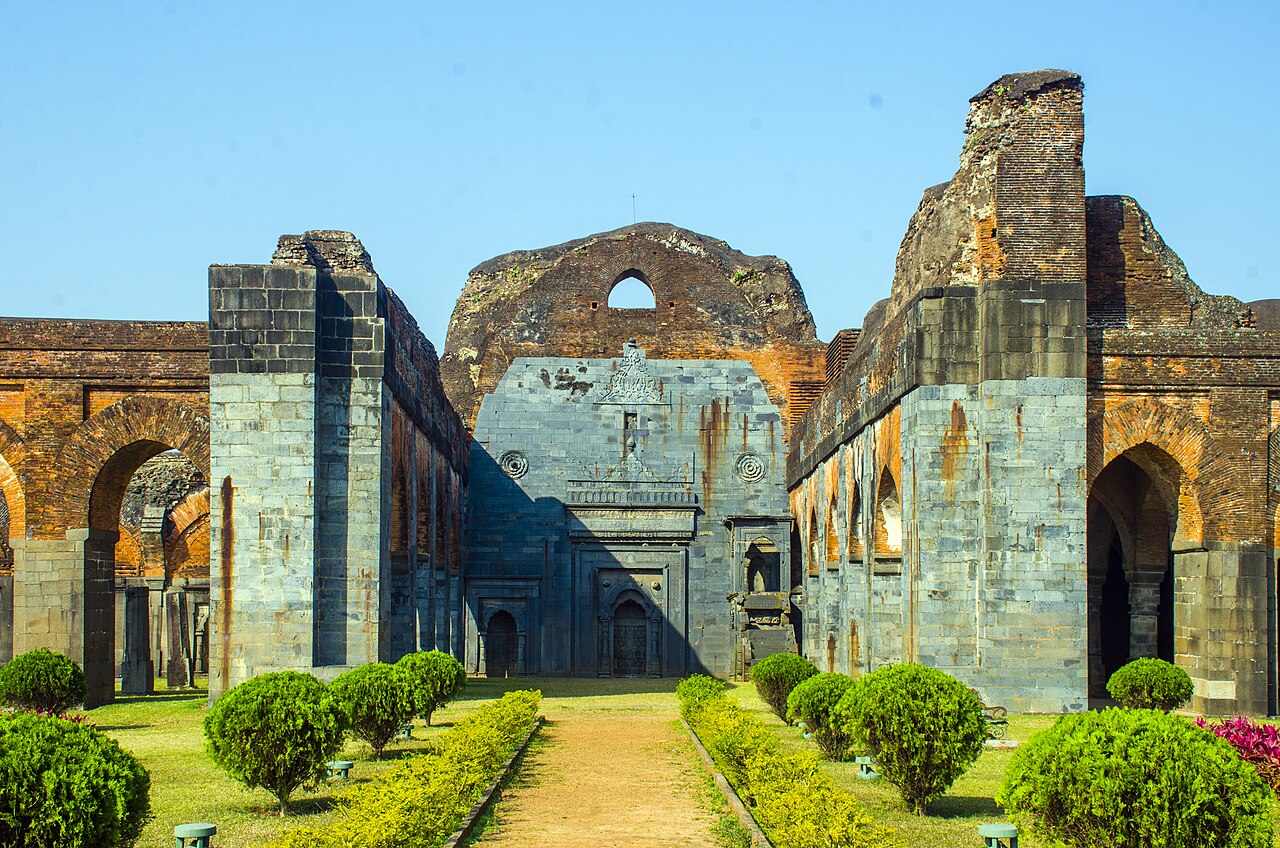
IslamAdina Mosque
Pandua · India · mosque
Once the largest mosque on the Indian subcontinent, the Adina Mosque at Pandua in West Bengal was raised by Sultan Sikandar Shah between 1373 and 1375 as the congregational mosque of the Bengal Sultanate, and holds his tomb within its western wall.
 Islam
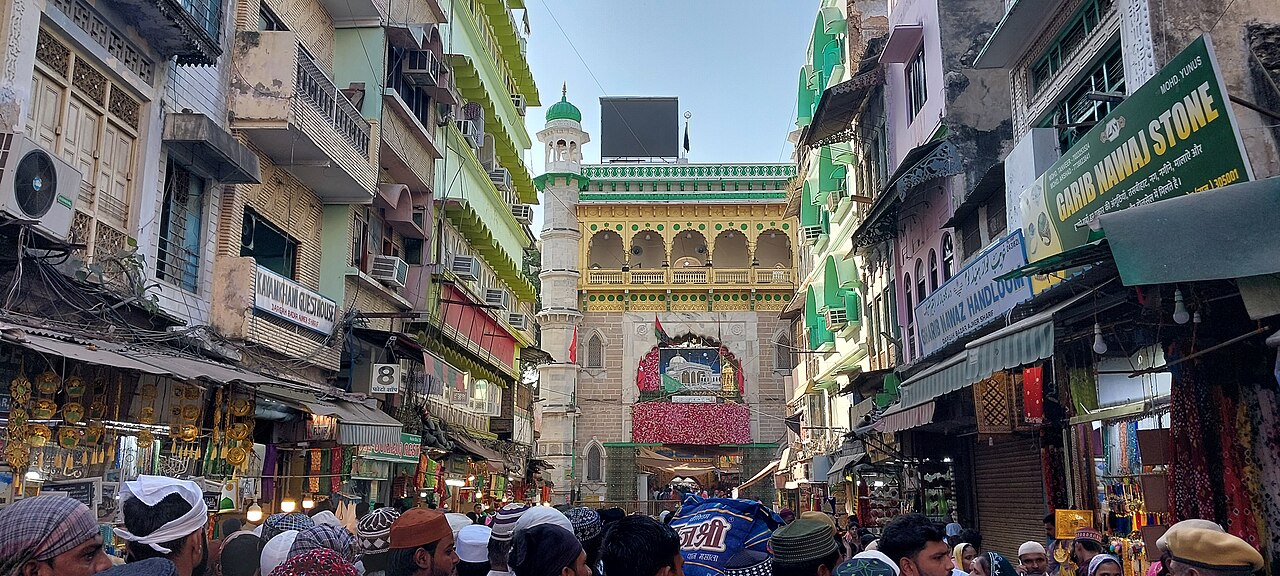
IslamAjmer Sharif Dargah
Ajmer · India · dargah
The tomb of Hazrat Khwaja Moinuddin Chishti, Gharib Nawaz, the benefactor of the poor, and the principal Sufi dargah of South Asia, where pilgrims of every community have offered chadars and shared the sweet rice of the great deghs for eight centuries.
Akbarabadi Mosque
Delhi · India · mosque
A mosque raised in 1650 by Akbarabadi Begum, a wife of the Mughal emperor Shah Jahan, in the walled city of Shahjahanabad, demolished by British forces in the aftermath of the 1857 Uprising and today marked only by disputed, unexcavated remains beneath Netaji Subhash Park in Old Delhi.
 Islam
IslamAlamgir Mosque
Varanasi · India · mosque
Raised in 1669 by the Mughal emperor Aurangzeb on the high bank above Panchganga Ghat in Varanasi, the Alamgir Mosque stands where wide stone steps meet the Ganges, its domes and surviving corner turret rising over a site earlier accounts describe as the Hindu Temple of Bindu Madhava.