
Jnanakshi Rajarajeshwari Temple
About
In the Bengaluru neighbourhood that now bears her name, Rajarajeshwari Nagar, stands the Jnanakshi Rajarajeshwari Temple, a Hindu shrine established in 1978 to honour the goddess Rajarajeshwari. The presiding image is understood as a manifestation of Tripura Sundari, and devotees hold this ground to be sacred among the network of Shaktipeethas described in the Tantra Chudamani, specifically as the site corresponding to the ear, or karnabhaga, of the divine form scattered across the subcontinent.
Before it took its present name, the locality was known as Kanchanagiri, lying between the Cauvery and Vrishabhavati rivers. Tradition names the ruling Bhairava of the site as Abiru Bhairava, honoured under the title Jaya Peetha. Local memory further holds that this ground was once home to Anusuya, celebrated for her devotion as a wife, and to her husband the sage Atri, who is said to have won siddhi through his worship of Rajarajeshwari. The temple precincts are also regarded as a gathering place sanctified by the presence of devas, rishis, munis, and siddhas across the ages.
The temple's association with the wider Kenchenahalli area deepened when Sivaratnapuri Swamiji founded the Sri Kailash Ashrama Mahasamsthana there, in the locality that would come to be called Rajarajeshwarinagar. In more recent years the temple has also become a point of artistic devotion: in 2024 the composer Mahesh Mahadev wrote a raga titled Sri Jnanakshija in honour of the presiding deity, later recorded on the album Jnanakshi Rajarajeshwari with vocals by Priyadarshini, Mahesh Mahadev, and other performers.
History
The temple was built in 1978 to enshrine the goddess Rajarajeshwari in what was then known as Kenchenahalli. Sivaratnapuri Swamiji subsequently established the Sri Kailash Ashrama Mahasamsthana in the same area, and over time the surrounding locality took the name Rajarajeshwarinagar after the temple itself.
Significance
Devotees regard the temple as one of the sites tied to India's Shaktipeethas, understood in the Tantra Chudamani tradition as the karnabhaga, or ear, of the goddess. The ground is further held sacred through its association with the sage Atri and his wife Anusuya, said to have attained siddhi here through devotion to Rajarajeshwari, and through the presence of the ruling Bhairava known as Jaya Peetha. This layered inheritance, of sacred geography, ascetic legend, and continuing devotional and artistic life, gives the temple its standing as a living centre of Shakta worship in Bengaluru.
Visiting
Engage with Jnanakshi Rajarajeshwari Temple
Through the four pathways
Seva सेवा — Service
Offer your time and skills here. The following opportunities are open at Jnanakshi Rajarajeshwari Temple:
No Seva offerings listed yet.
Sādhana साधना — Practice
Learn the worship and practice associated with Jnanakshi Rajarajeshwari Temple:
No Sādhana offerings listed yet.
Sandhāna सन्धान — Wisdom
Unite with the wisdom of this tradition:
No Sandhāna offerings listed yet.
Sādhya साध्य — Giving
Support this sacred place according to your means:
No Sādhya offerings listed yet.
All giving flows directly to Jnanakshi Rajarajeshwari Temple. Adisthan does not take a commission.
Related sacred places
 Hinduism
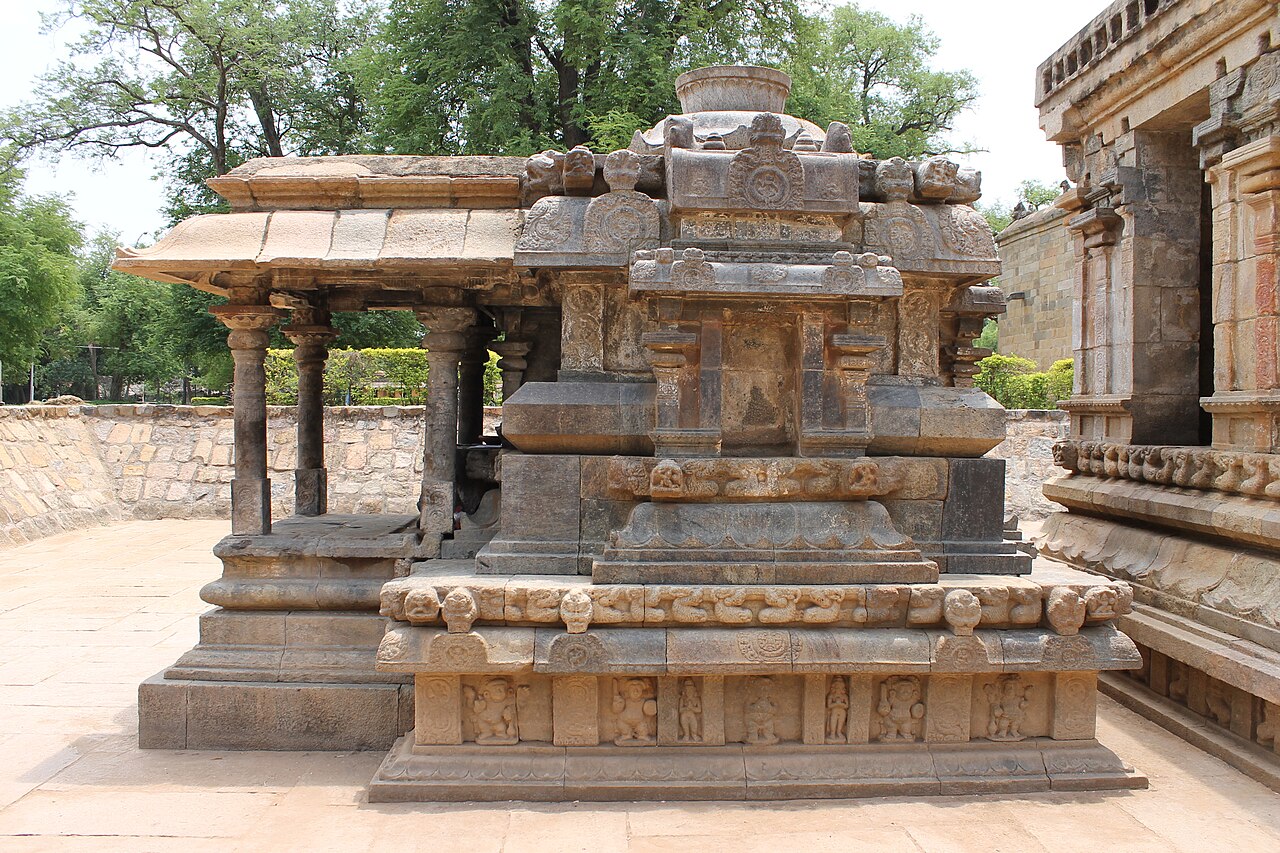
Airavatesvara Temple
· India · temple
A jewel of 12th-century Chola craftsmanship at Darasuram near Kumbakonam in Tamil Nadu, this Śaiva shrine dedicated to Lord Śiva stands among the UNESCO-listed Great Living Chola Temples for its extraordinary sculptural refinement.
Aisanyesvara Siva Temple
· India · temple
A living Śaiva temple from the thirteenth century, nestled near the western boundary of the great Lingarāja complex in Bhubaneswar, Odisha, where a Śivaliṅgam receives daily worship and the sacred rhythms of the liturgical year continue unbroken.
 Hinduism
Akhadachandi Temple
· India · temple
A 10th-century Hindu temple in the heart of Bhubaneswar's old town, Akhadachandi Temple stands on the southwestern shore of the sacred Bindusagar tank, honouring the goddess Mahiṣāsuramardinī in the ancient Kalinga style.
 Hinduism
Akshardham
· India · temple
Swaminarayan Akshardham in Delhi is a vast Hindu mandir complex dedicated to devotion, learning, and harmony, drawing millions of pilgrims each year to its intricately carved sandstone and marble monument on the Yamuna's western bank.
 Hinduism
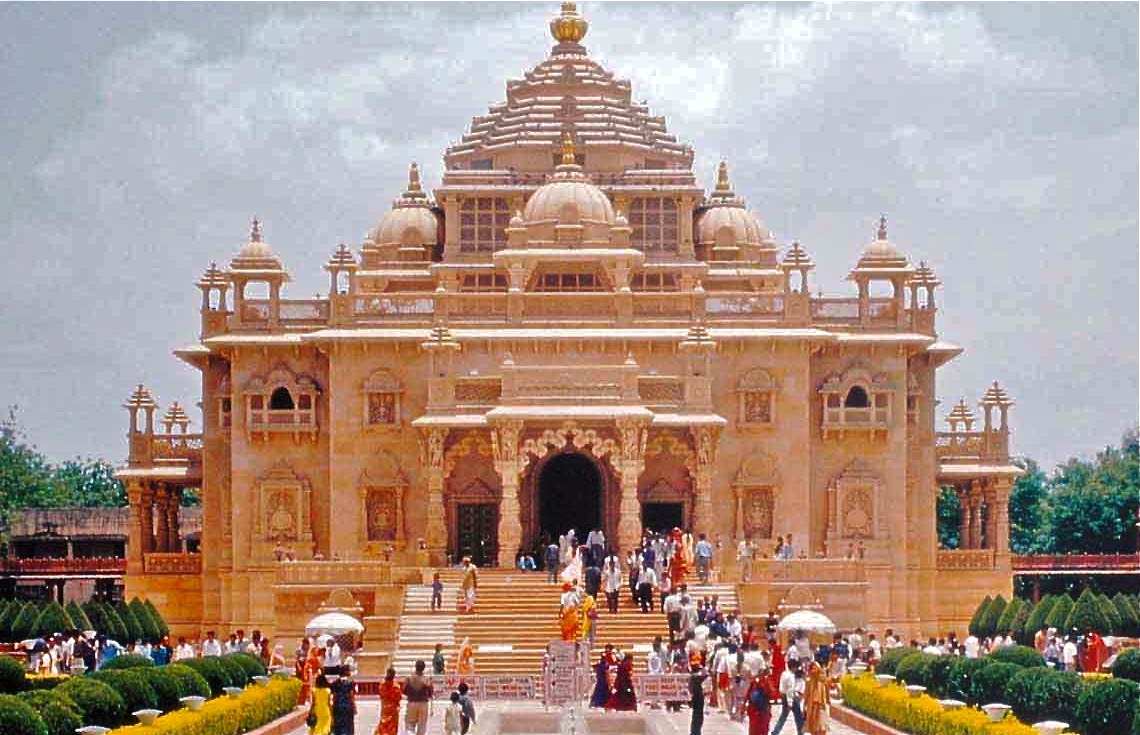
Akshardham (Gandhinagar)
· India · temple
A vast spiritual and cultural complex in Gujarat's capital, Gandhinagar, Swaminarayan Akshardham was conceived through the vision of Yogiji Maharaj and realized by Pramukh Swami Maharaj — a living testimony to the BAPS tradition's commitment to devotion, learning, and harmony.
 Hinduism
Alopi Devi Mandir
· India · temple
Alopi Devi Mandir is a Hindu temple in the Alopibagh neighborhood of Prayagraj, Uttar Pradesh, close to the sacred Sangam where the Ganges, the Yamuna, and the legendary Sarasvati are believed to converge.