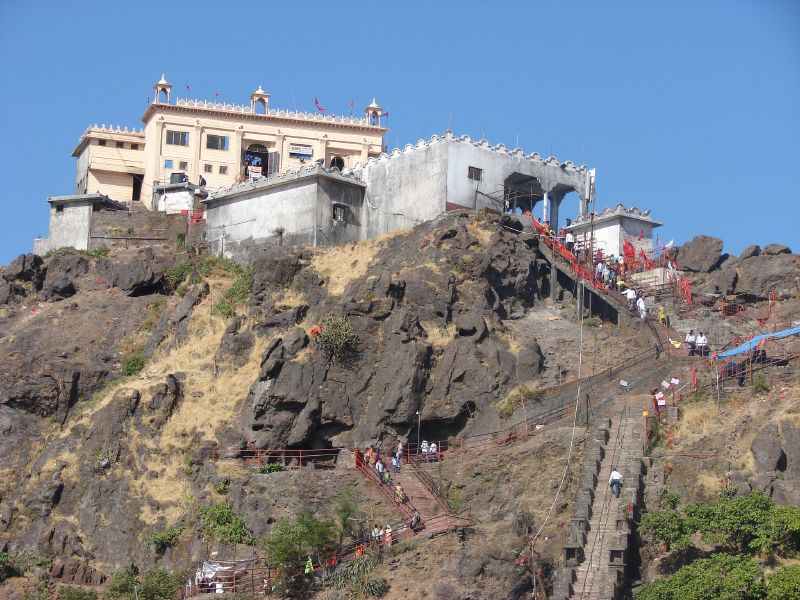
Kalika Mata Temple, Pavagadh
About
At the very top of Pavagadh Hill, some 762 metres above sea level near Halol in Gujarat, stands the Mahakali Mata Temple, often called Mahakalimata, meaning roughly 'the great dark Mother.' Pilgrims arrive here to honour the goddess in her forms as Durga and Chandi, and within the sanctum the Kali Yantra, a diagram said to date to the tenth or eleventh century, is offered daily worship. Three sacred images share the shrine: Mahakali Mata at the centre, with Kali to her right and Bahucharamata to her left.
The temple's story reaches back to a much older Jain heritage. Its principal idol once belonged to the Achalgacch, a branch of the Śvetāmbara Jain community founded on this hill in the twelfth century, where Mahakali was consecrated as the order's protecting deity, or Adishthayika. Long before that, Pavagadh had already served for centuries as a site of Jain pilgrimage.
Every year on Chitra sud 8, a great fair draws thousands of devotees up the hill, and the temple is counted among the fifty-one Shakti Peethas, holy sites said to mark where a part of the goddess Sati's body fell to earth, in this case her right toe. Visitors can reach the shrine along a five-kilometre forest path that winds past the ruins of Patai Raval's palace, or ascend more easily by the Pavagadh ropeway, in operation since 1986. The whole hilltop, wrapped in dense forest along the cliffs, lies within the Champaner-Pavagadh Archaeological Park, recognised by UNESCO as a World Heritage Site.
History
Scholars place the origins of Kalika Mata among the tenth or eleventh century, making it the oldest shrine on the hill. Early worship is linked to the local Bhil and Koli peoples, and later generations of Adivasi devotees continued to honour the goddess here; a fifteenth-century drama, the Gangadas Pratap Vilasa Natakam, records the temple's presence in that era. Its Jain roots run deeper still, traceable to as far back as the third century BC. In 1055 CE the Śvetāmbara monk Acharya Gunsagarsuri consecrated a temple to Jirawala Parshvanath nearby and rebuilt an older fifty-two-shrine temple honouring Abhinandanswami, consecrating at that time the image of the goddess Mahakali herself. Roughly six decades later, in 1113 CE, Acharya Aryarakshitsuri established the Achalgacch order on the hill and installed Mahakali as its guardian deity, a role tradition holds she accepted after appearing before him and urging him toward founding a new, truth-centred lineage rather than ending his life through ritual fasting. In the sixteenth century, under the guidance of Acharya Kalyansagarsuri, the lay followers Sheth Vardhaman and Sheth Padamshin rebuilt the shrine once more. Over time, Hindu devotion came to encompass the same sacred image.
Significance
Kalika Mata's standing as one of the fifty-one Shakti Peethas gives it a central place among Devi's most sacred sites across the subcontinent, drawing pilgrims who trace these locations as living markers of the goddess's presence on earth. The temple's dual heritage, rooted in Jain consecration yet embraced for generations by Hindu worshippers as a seat of Mahakali, Kali, and Bahucharamata together, reflects the layered devotional history so often found across Gujarat's sacred landscape. Its modest, fortified structure, kept open long hours to receive the steady flow of pilgrims, and its position within a protected archaeological park, tie together strands of geology, faith, and heritage conservation in a single hilltop sanctuary.
Visiting
Engage with Kalika Mata Temple, Pavagadh
Through the four pathways
Seva सेवा — Service
Offer your time and skills here. The following opportunities are open at Kalika Mata Temple, Pavagadh:
No Seva offerings listed yet.
Sādhana साधना — Practice
Learn the worship and practice associated with Kalika Mata Temple, Pavagadh:
No Sādhana offerings listed yet.
Sandhāna सन्धान — Wisdom
Unite with the wisdom of this tradition:
No Sandhāna offerings listed yet.
Sādhya साध्य — Giving
Support this sacred place according to your means:
No Sādhya offerings listed yet.
All giving flows directly to Kalika Mata Temple, Pavagadh. Adisthan does not take a commission.
Related sacred places
 Hinduism
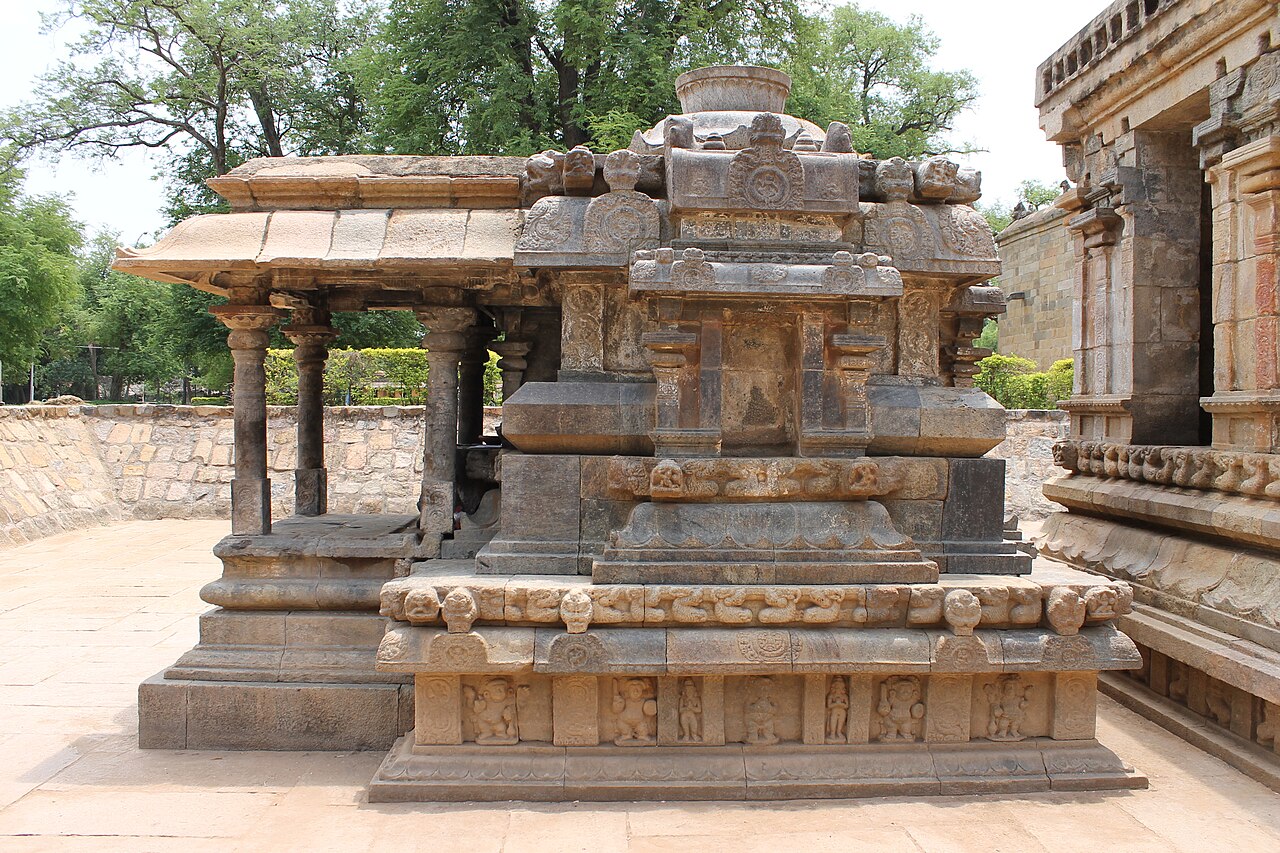
Airavatesvara Temple
· India · temple
A jewel of 12th-century Chola craftsmanship at Darasuram near Kumbakonam in Tamil Nadu, this Śaiva shrine dedicated to Lord Śiva stands among the UNESCO-listed Great Living Chola Temples for its extraordinary sculptural refinement.
Aisanyesvara Siva Temple
· India · temple
A living Śaiva temple from the thirteenth century, nestled near the western boundary of the great Lingarāja complex in Bhubaneswar, Odisha, where a Śivaliṅgam receives daily worship and the sacred rhythms of the liturgical year continue unbroken.
 Hinduism
Akhadachandi Temple
· India · temple
A 10th-century Hindu temple in the heart of Bhubaneswar's old town, Akhadachandi Temple stands on the southwestern shore of the sacred Bindusagar tank, honouring the goddess Mahiṣāsuramardinī in the ancient Kalinga style.
 Hinduism
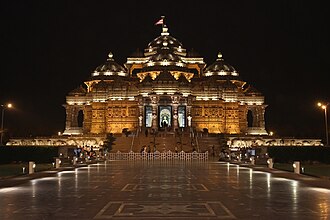
Akshardham
· India · temple
Swaminarayan Akshardham in Delhi is a vast Hindu mandir complex dedicated to devotion, learning, and harmony, drawing millions of pilgrims each year to its intricately carved sandstone and marble monument on the Yamuna's western bank.
 Hinduism
Akshardham (Gandhinagar)
· India · temple
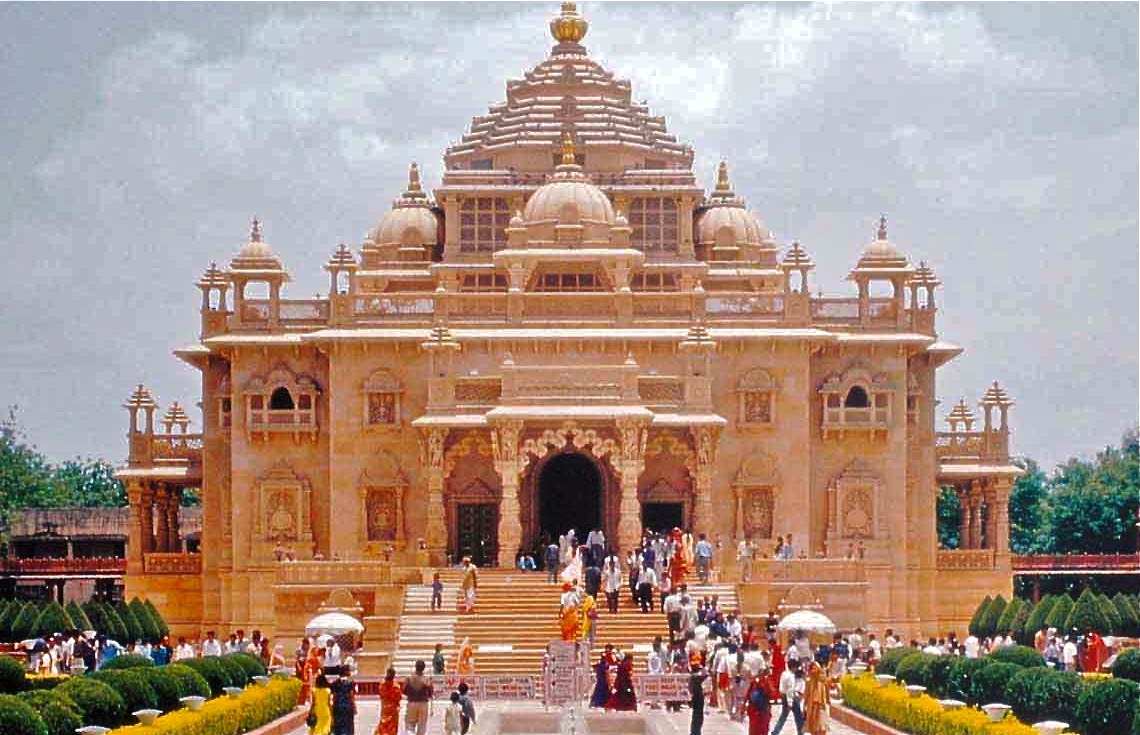
A vast spiritual and cultural complex in Gujarat's capital, Gandhinagar, Swaminarayan Akshardham was conceived through the vision of Yogiji Maharaj and realized by Pramukh Swami Maharaj — a living testimony to the BAPS tradition's commitment to devotion, learning, and harmony.
 Hinduism
Alopi Devi Mandir
· India · temple
Alopi Devi Mandir is a Hindu temple in the Alopibagh neighborhood of Prayagraj, Uttar Pradesh, close to the sacred Sangam where the Ganges, the Yamuna, and the legendary Sarasvati are believed to converge.