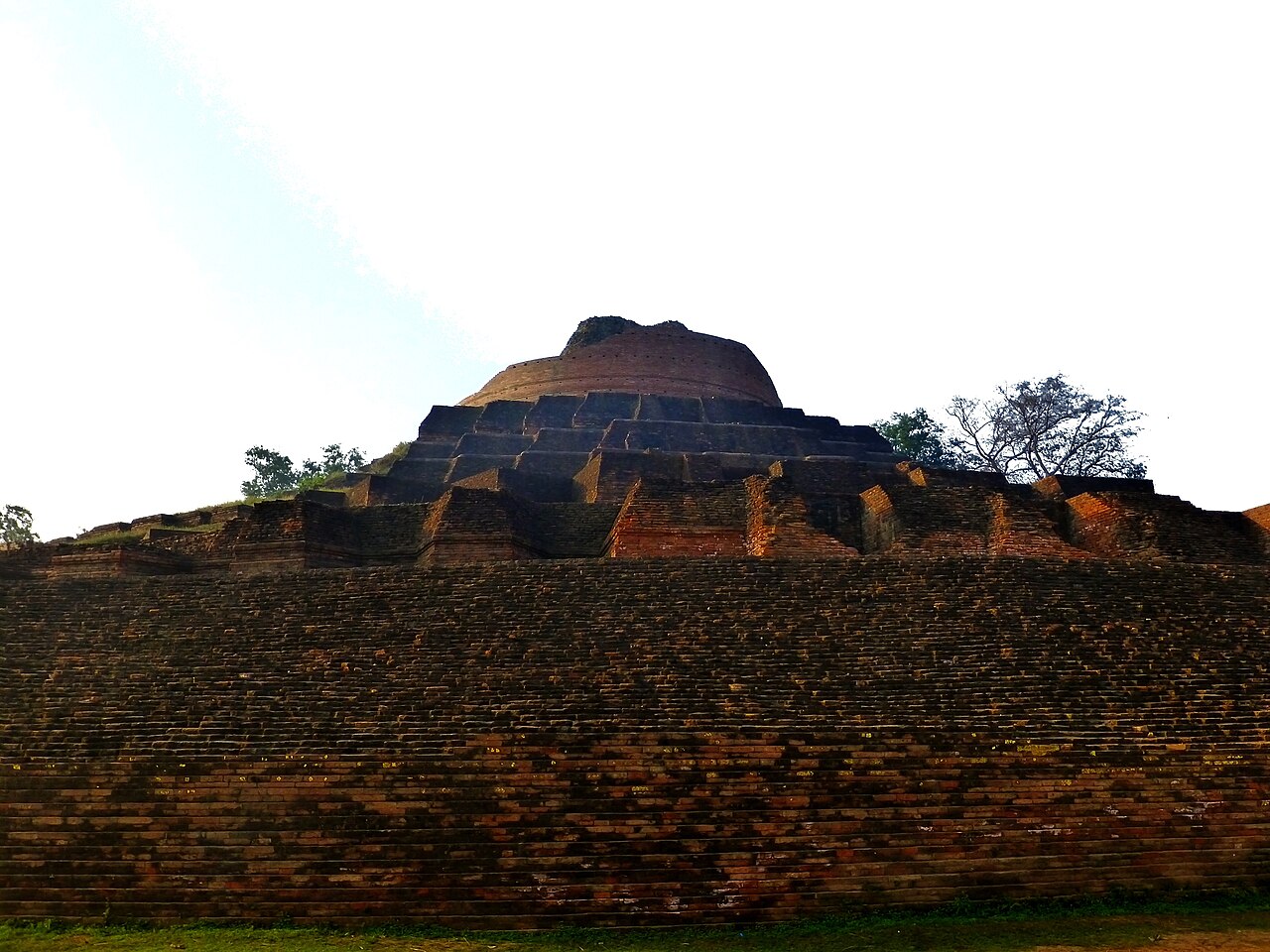
Kesaria Stupa
Kesariya Stupa · Kesariya Buddha Stupa
About
The Kesariya Stūpa stands in the village of Kesariya, roughly 110 kilometres north-west of Patna near the town of Mehsi in East Champaran district, Bihar. At approximately 104 feet tall and with a circumference approaching 400 feet, it commands the surrounding landscape with quiet authority, its layered terraces ascending in a form that evokes the sacred maṇḍala, the circle of awakening.
The stūpa's architectural character places it within the great tradition of Pāla-period Buddhist construction. Its circular terraces are punctuated by niches that once held, and in places still shelter, figures of the Buddha rendered in bhumisparśa-mudrā (the earth-touching gesture of Akṣobhya) and dhyāna-mudrā (the meditation posture of Amitābha). This pairing of two Jina Buddhas on the same face is a distinctive feature that sets the monument apart from many of its contemporaries.
Scholars have long remarked on the striking resemblance between Kesariya and Borobudur in Java, Indonesia. Both monuments adopt a maṇḍala-like plan combining square and circular terraces, rise atop elevated ground, and follow intricate numerological ordering. A stone slab bearing Siddhamātṛkā script, a writing system in use in Java during the 10th to 12th centuries, was recovered at the site, lending material weight to theories of shared ritual texts and artistic ideas flowing between the Pāla kingdom and the Śrīvijaya realm.
Much of the stūpa remains partially buried beneath vegetation, giving the place a quality of quiet emergence, as though the earth itself is slowly releasing what it has held in keeping. The Archaeological Survey of India has designated it a protected monument of national importance.
History
Construction is believed to have begun in the third century BCE, in the time of Emperor Ashoka, whose influence on Buddhist monument-building reached across the subcontinent; fragments of an Ashokan pillar capital were uncovered here. Some scholars trace the site further back still, to a stupa the Licchavis of Vaishali are said to have raised after the Buddha, on his final journey, gave them his alms bowl. The structure visible today took shape under the Pala kings, and archaeological attention began with Colin Mackenzie's survey of 1814, followed by Alexander Cunningham's excavation of 1861 to 1862 and a further dig by the Archaeological Survey of India in 1998. A 1934 earthquake reduced the stupa from an estimated 123 feet to its present 104, and much of the mound still lies beneath vegetation, only partly released from the earth that has kept it.
Significance
For Buddhist pilgrims, Kesaria carries the poignancy of the Buddha's last journey, a place to contemplate the end of a great earthly life through the legend of the alms bowl. Scholars have long noted its architectural kinship with Borobudur in Java, both raised on a mandala plan of square and circular terraces with niches for Buddha images, a resemblance that points to ideas travelling between the Pala kingdom and the Srivijaya realm across the sea. Protected today by the Archaeological Survey of India, the stupa stands as testimony to the long reach of the Dharma across the Gangetic plains and beyond.
Architecture
Pala-period Buddhist stupa architecture: a tiered brick mandala form with niches sheltering Buddha images
Visiting
Hours
Hours not listed.
Contact
No contact details listed yet.
Engage with Kesaria Stupa
Through the four pathways
Seva सेवा — Service
Offer your time and skills here. The following opportunities are open at Kesaria Stupa:
No Seva offerings listed yet.
Sādhana साधना — Practice
Learn the worship and practice associated with Kesaria Stupa:
No Sādhana offerings listed yet.
Sandhāna सन्धान — Wisdom
Unite with the wisdom of this tradition:
No Sandhāna offerings listed yet.
Sādhya साध्य — Giving
Support this sacred place according to your means:
No Sādhya offerings listed yet.
All giving flows directly to Kesaria Stupa. Adisthan does not take a commission.
Festivals & Events
- May
Buddha Purnima
20 May 2027 · annual
The full-moon day marking the Buddha's birth, enlightenment, and parinirvana, observed at Kesaria with particular resonance given the stupa's own legendary connection to the Buddha's final journey.
Gallery
Related sacred places
 Buddhism
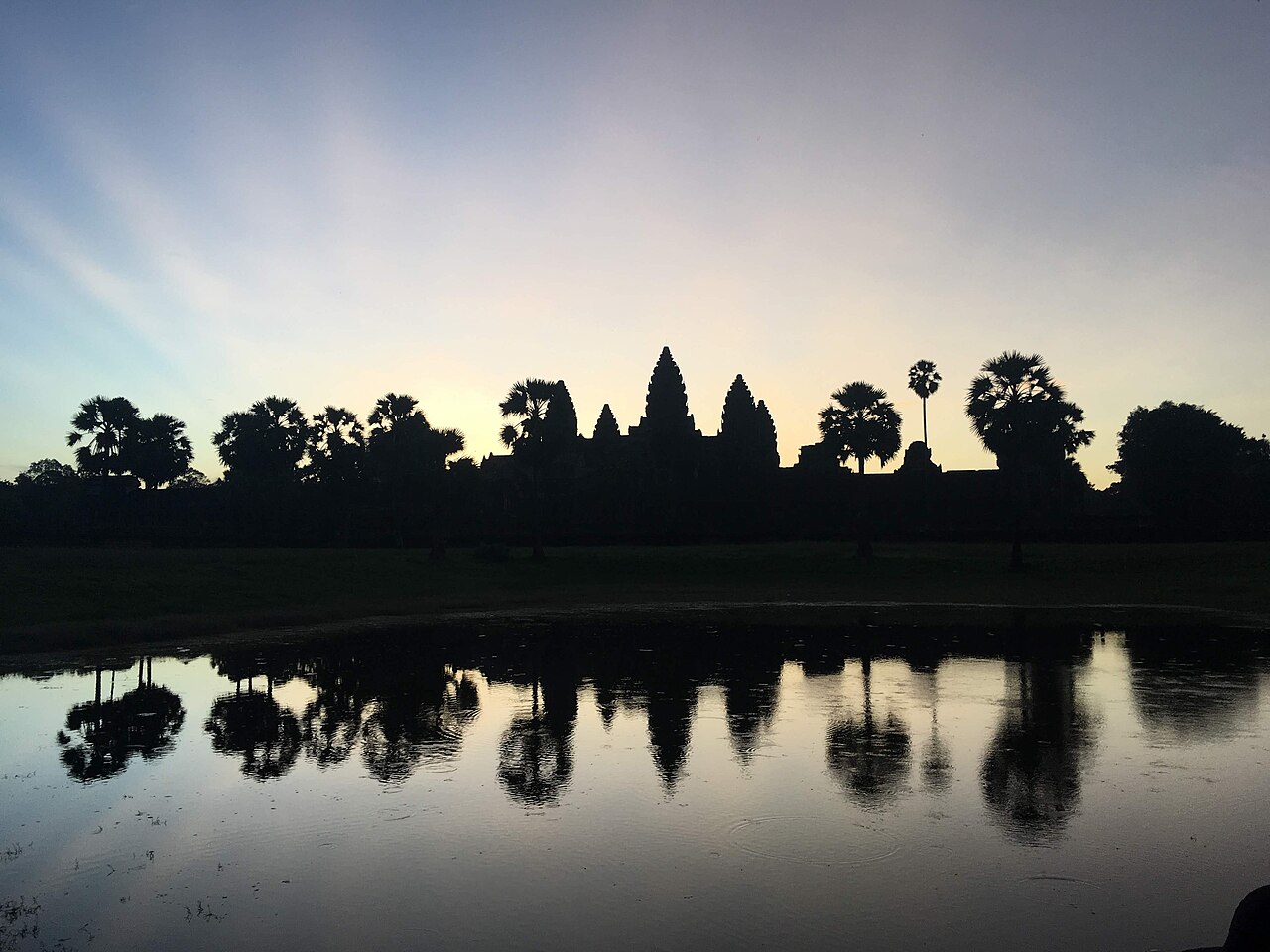
Angkor Wat
Siem Reap · Cambodia · temple
The largest religious monument on earth, built for Lord Vishnu by Suryavarman II in the 12th century and in continuous worship ever since: a living Theravada Buddhist Temple whose five towers stand on the Cambodian flag.
 Buddhism
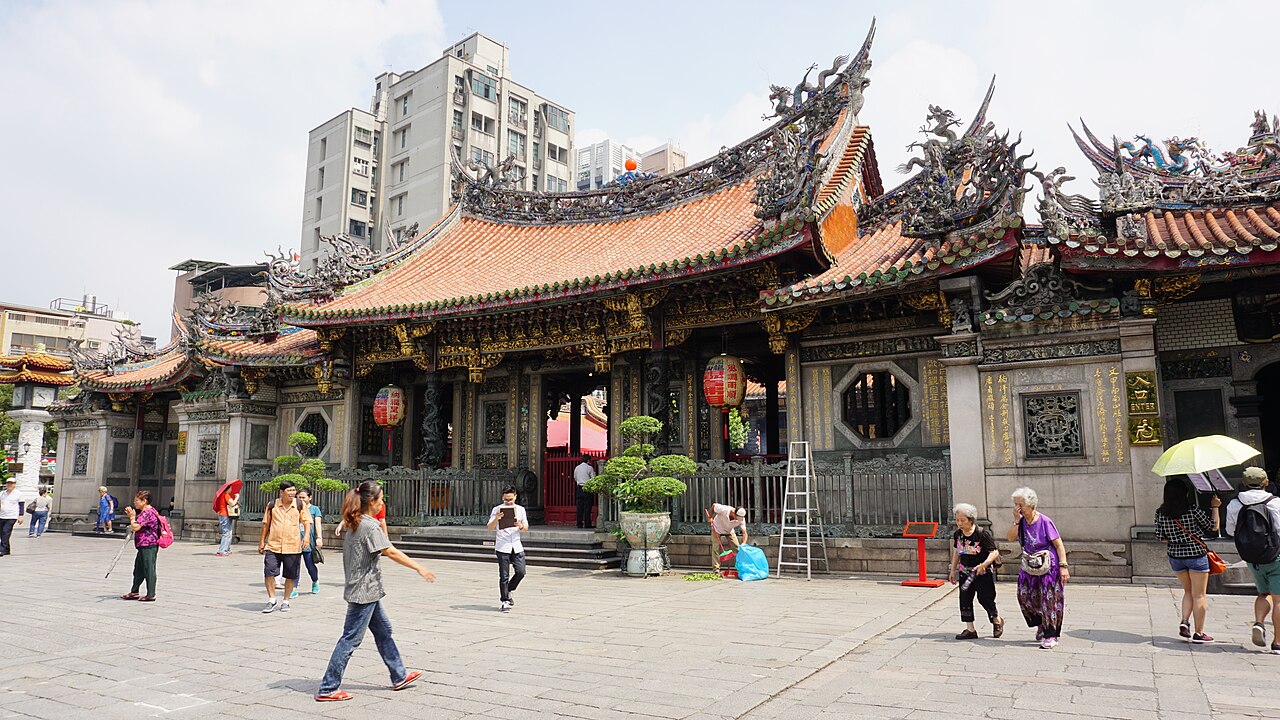
Bangka Lungshan Temple
Taipei (Wanhua) · Taiwan · temple
Taipei's mother Temple to Guanshiyin, founded by Fujian settlers in 1738 in the old Bangka quarter: a front hall to the bodhisattva of compassion and a rear hall of more than a hundred Taoist and folk gods, whose Guanyin statue survived the 1945 bombing intact.
 Buddhism
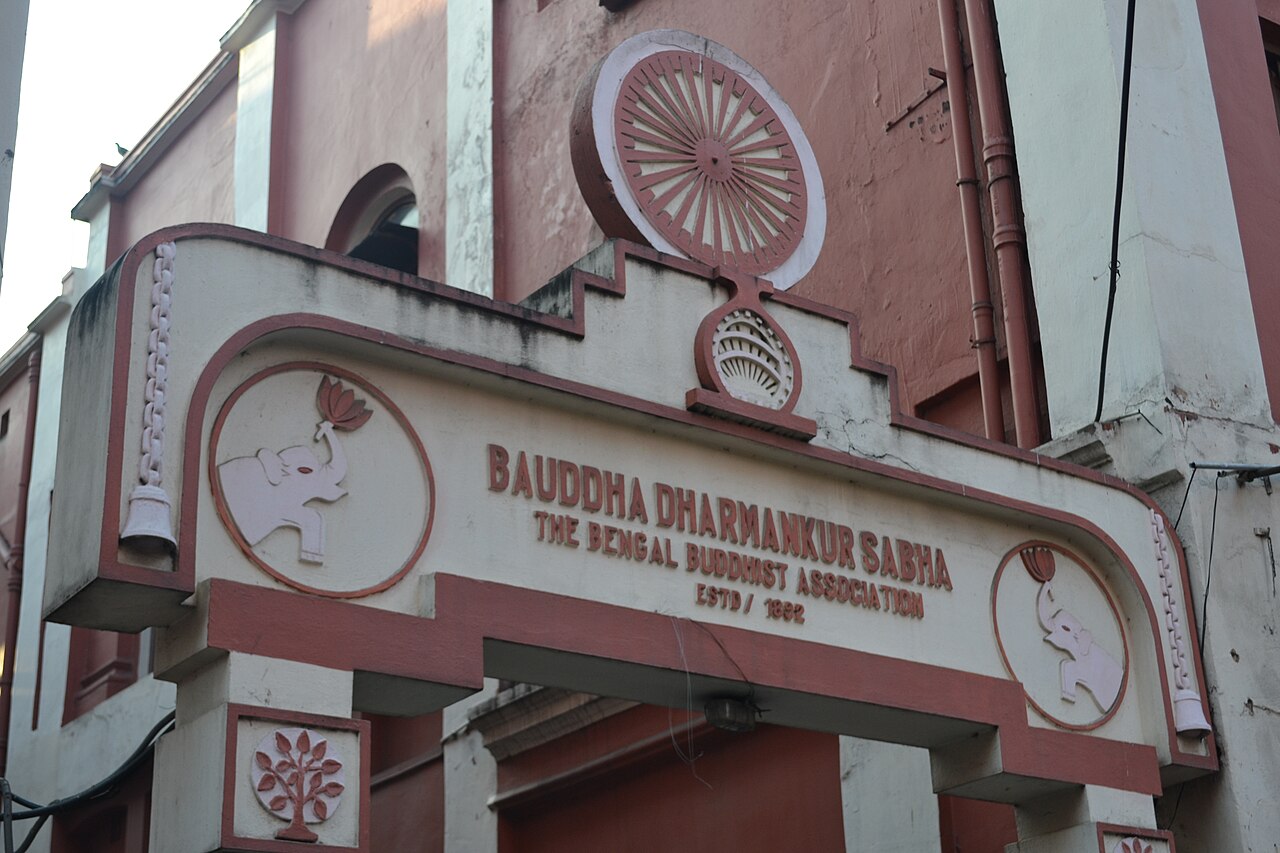
Bengal Buddhist Association
Kolkata · India · monastery
Founded in Kolkata in 1892 by Kripasaran Mahasthavir, the Bengal Buddhist Association, known in Bengali as Bauddha Dharmankur Sabha, raised the Dharmankur Vihara at Bow Barracks in 1903 and has worked for over a century to revive the Dharma in eastern India.
 Buddhism
Bhot Bagan Math
Ghusuri · India · monastery
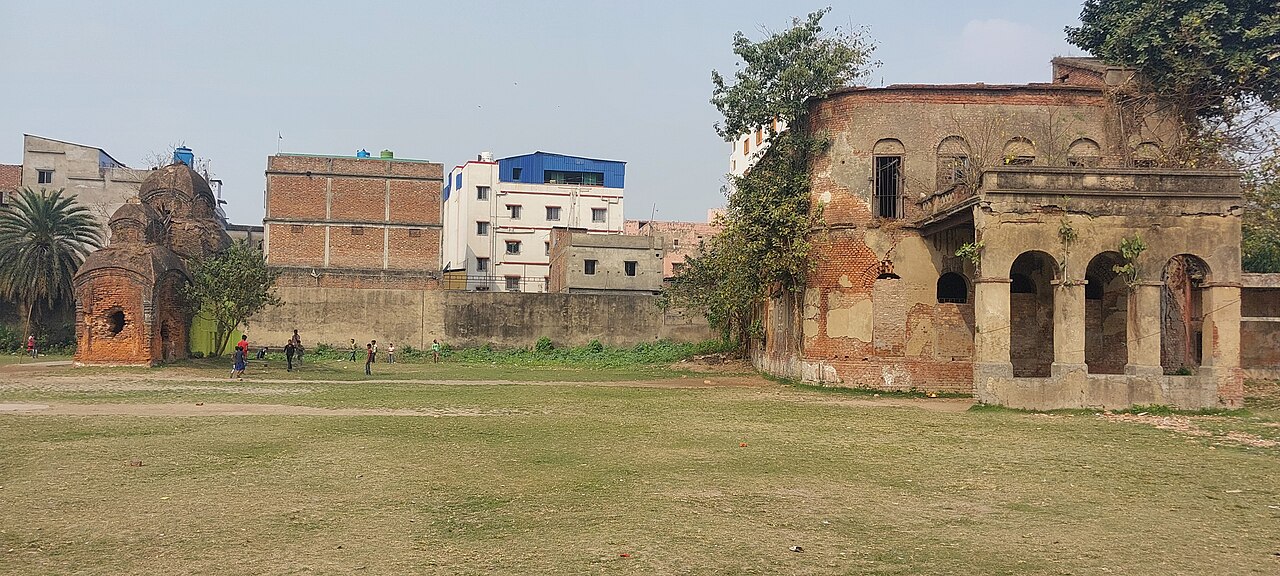
A brick monastery on the Hooghly riverside at Ghusuri, Howrah, founded in 1776 as the first Tibetan Buddhist religious foundation on the plains of India and still known popularly as Mahakal Math for the Tibetan deity images once installed in its sanctum.
 Buddhism
Borobudur
Magelang · Indonesia · temple
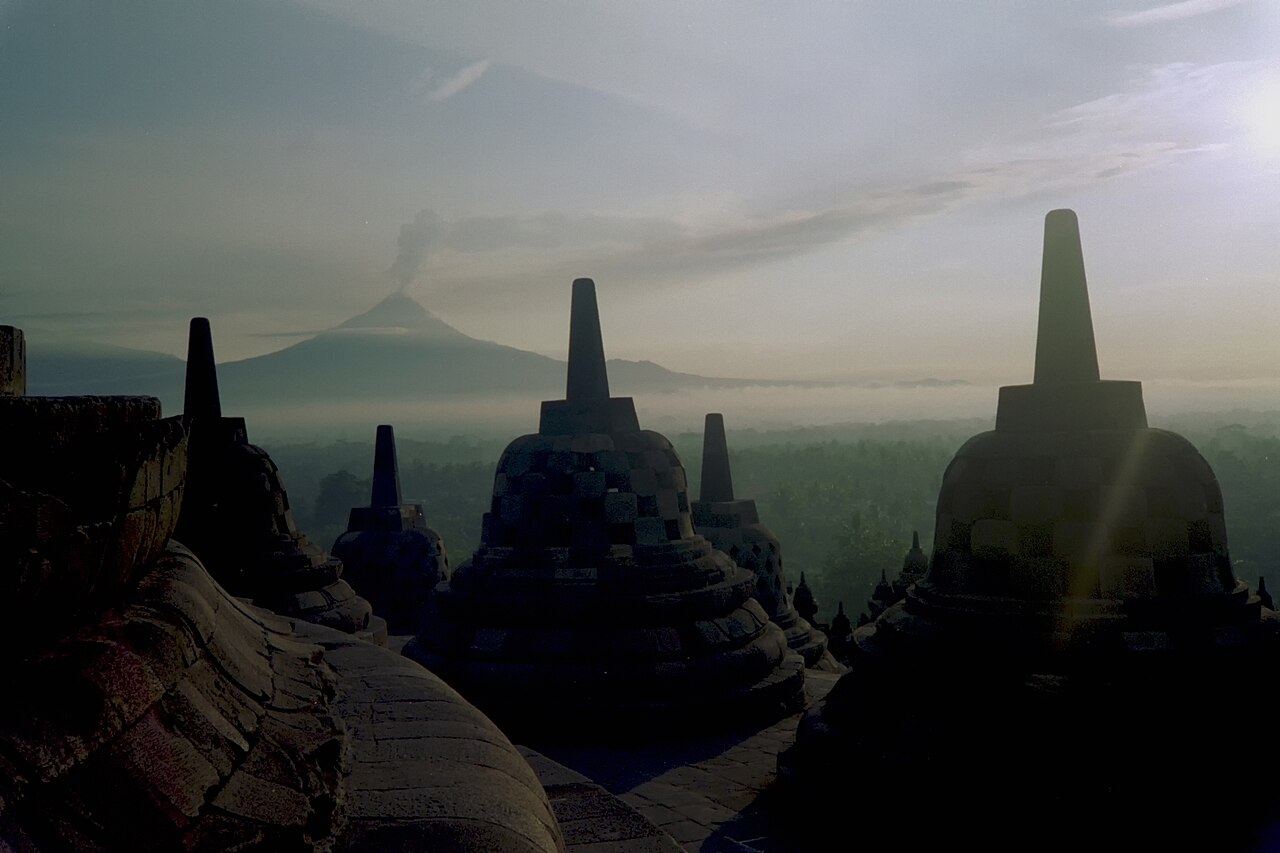
The world's largest Buddhist Temple: a ninth-century mandala in stone on Java's Kedu Plain, nine terraces rising through the three realms to 72 latticed stupas, each sheltering a seated Buddha.
 Buddhism
Boudhanath Stupa
Kathmandu · Nepal · stupa
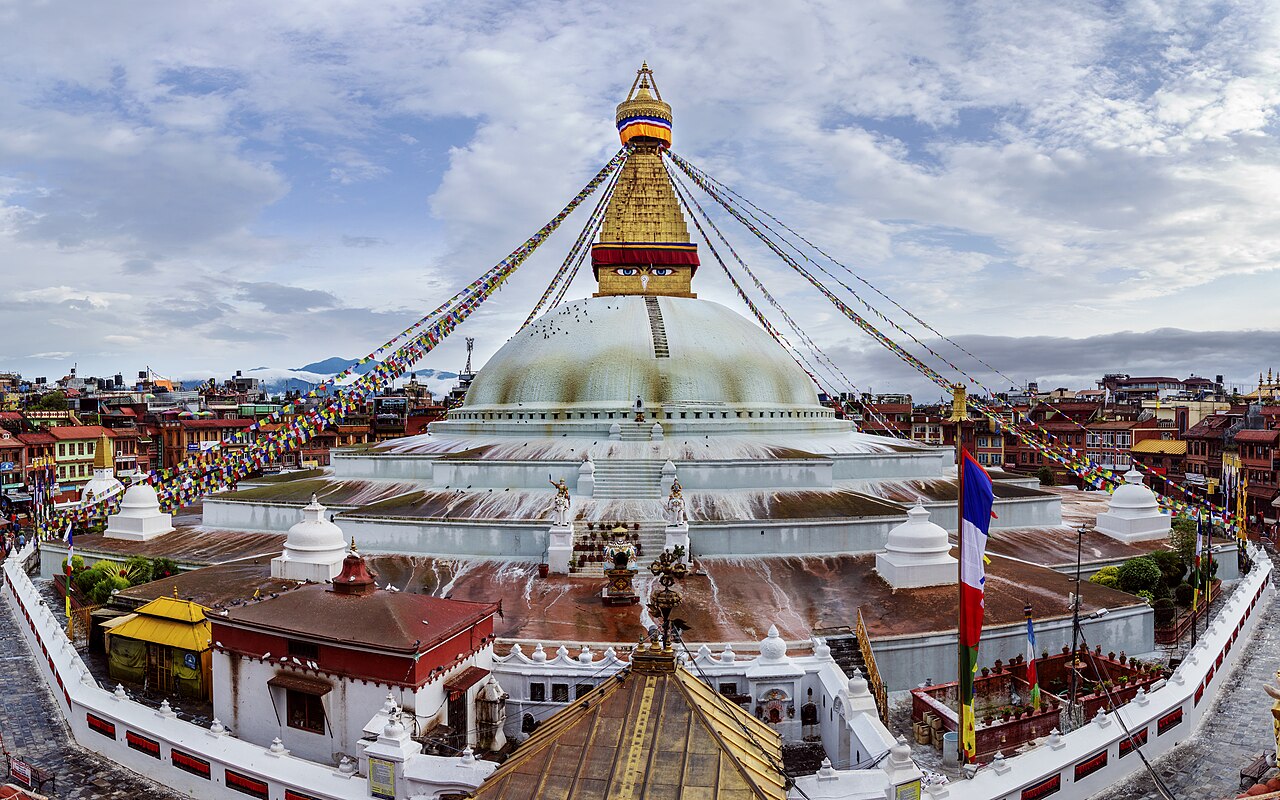
The largest spherical stupa in Nepal, its all-seeing Buddha eyes watching over the kora walked daily by the Tibetan Buddhist community of Boudha, the heart of Vajrayana practice in the Kathmandu Valley.