
Kiriteswari Temple
About
In the village of Kiritkona, part of the Nabagram administrative block within the Lalbag subdivision of Murshidabad district in West Bengal, stands the Kiriteswari Temple, counted among the fifty-one Shakta pithas of the subcontinent. The shrine sits close to the bank of the Bhagirathi River and is reached along the Nabagram to Lalbag road.
Hindu tradition, drawn from the Puranas, holds that this place takes its name from the word Kirit, meaning crown, marking the site where the crown of Goddess Sati fell to earth as Lord Shiva carried her body in grief following her self-immolation. The presiding goddess is worshipped here as Devi Kiriteshwari, known also as Maa Kiriteshwari or Maa Kiriteshwari Kali, and locally as Mahishamardini. Because it was her mukut, or crown, that fell here, she is likewise addressed as Mukuteshwari.
Scholars of Bengal's temple architecture, among them David J. McCutchion, describe the shrine as a modest char-chala structure distinguished by a cornice curve repeated in a pattern across eight segments of the roof, together with an ek-bangla style porch. Devotees reach the temple most easily via Dahapara Dham railway station, some five kilometres away, or Lalbag Court Road station, roughly three kilometres distant.
In September 2023, the Union Ministry of Tourism recognised Kiriteswari as the Best Tourism Village of India, a title awarded after nearly eight hundred villages across thirty-one states and union territories entered the competition to promote rural heritage and cultural tourism.
History
Temple tradition places the original construction here at over a thousand years old, with the site long regarded as a resting place of Mahamaya. That earlier structure was destroyed in 1405. The temple seen today was rebuilt in the nineteenth century under Darpanarayan, the king of Lalgola, and it is counted as the oldest surviving architectural example among the fifty-one Peethas as well as the oldest temple in Murshidabad district. A local legend recounts that Nawab Mir Jafar, on his deathbed and afflicted with leprosy, asked to be given the sacred Charanamrito, the holy water of Maa Kiriteswari.
Significance
Kiriteswari holds a distinguished place among the Shakta pithas, the network of sites across the subcontinent said to mark where parts of Sati's body or ornaments fell. As the location associated with her crown, it draws devotees who honour the Goddess in her form as Kiriteshwari, Mukuteshwari, and Mahishamardini, while its standing as the oldest temple in Murshidabad and its recent recognition as a leading tourism village affirm its continuing importance to both pilgrims and the wider region.
Visiting
Engage with Kiriteswari Temple
Through the four pathways
Seva सेवा — Service
Offer your time and skills here. The following opportunities are open at Kiriteswari Temple:
No Seva offerings listed yet.
Sādhana साधना — Practice
Learn the worship and practice associated with Kiriteswari Temple:
No Sādhana offerings listed yet.
Sandhāna सन्धान — Wisdom
Unite with the wisdom of this tradition:
No Sandhāna offerings listed yet.
Sādhya साध्य — Giving
Support this sacred place according to your means:
No Sādhya offerings listed yet.
All giving flows directly to Kiriteswari Temple. Adisthan does not take a commission.
Related sacred places
 Hinduism
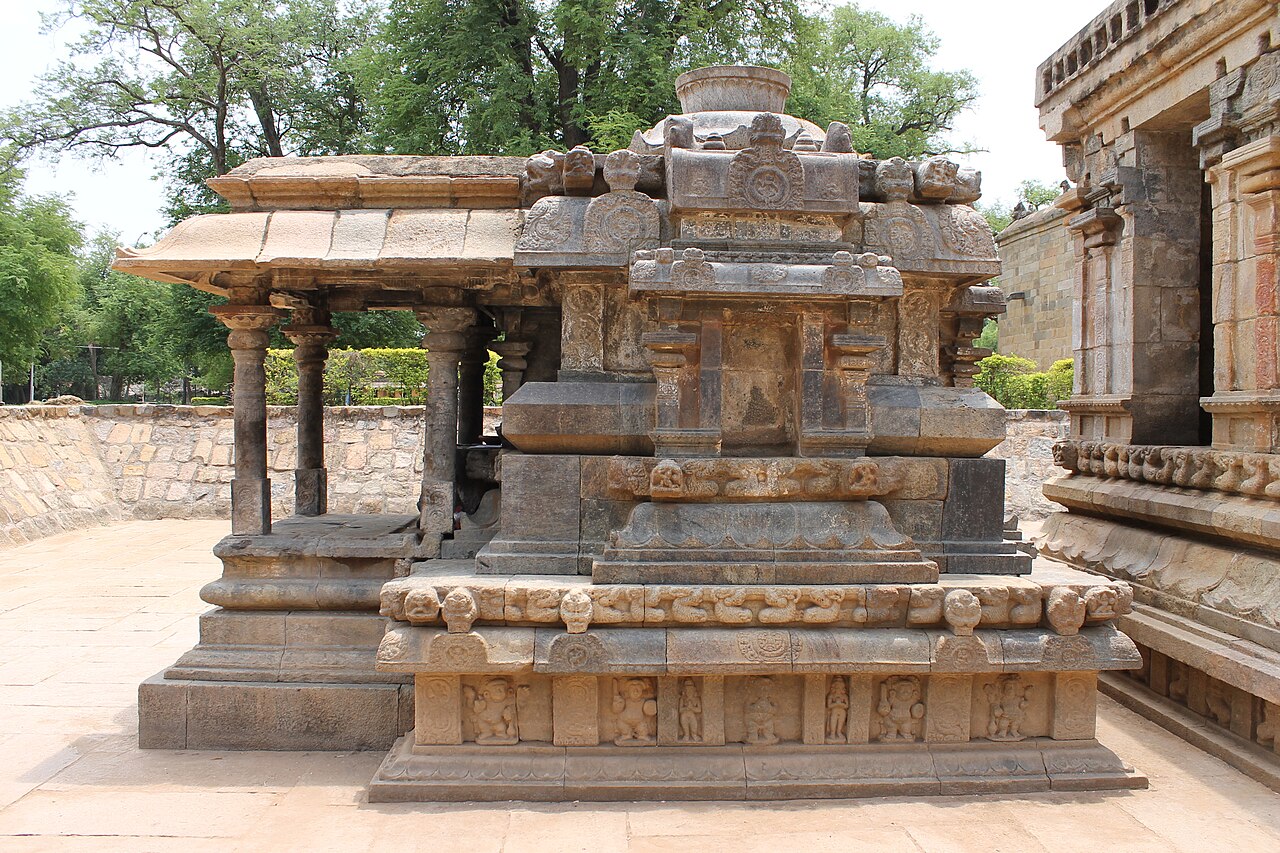
Airavatesvara Temple
· India · temple
A jewel of 12th-century Chola craftsmanship at Darasuram near Kumbakonam in Tamil Nadu, this Śaiva shrine dedicated to Lord Śiva stands among the UNESCO-listed Great Living Chola Temples for its extraordinary sculptural refinement.
Aisanyesvara Siva Temple
· India · temple
A living Śaiva temple from the thirteenth century, nestled near the western boundary of the great Lingarāja complex in Bhubaneswar, Odisha, where a Śivaliṅgam receives daily worship and the sacred rhythms of the liturgical year continue unbroken.
 Hinduism
Akhadachandi Temple
· India · temple
A 10th-century Hindu temple in the heart of Bhubaneswar's old town, Akhadachandi Temple stands on the southwestern shore of the sacred Bindusagar tank, honouring the goddess Mahiṣāsuramardinī in the ancient Kalinga style.
 Hinduism
Akshardham
· India · temple
Swaminarayan Akshardham in Delhi is a vast Hindu mandir complex dedicated to devotion, learning, and harmony, drawing millions of pilgrims each year to its intricately carved sandstone and marble monument on the Yamuna's western bank.
 Hinduism
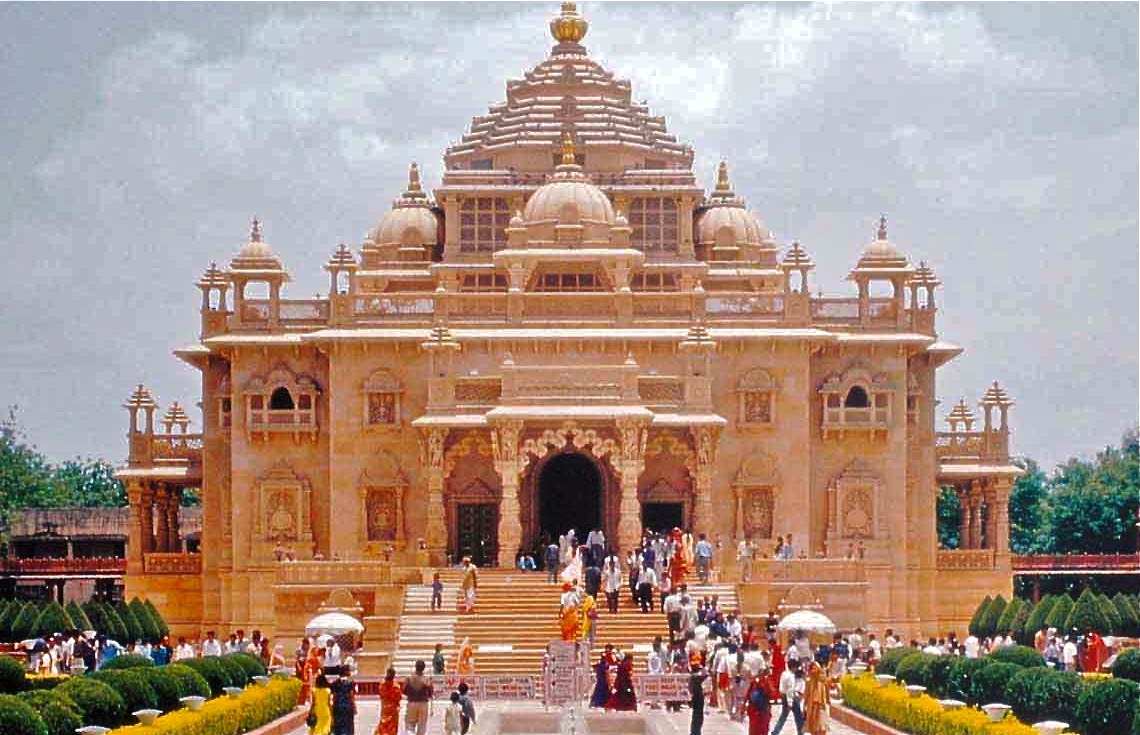
Akshardham (Gandhinagar)
· India · temple
A vast spiritual and cultural complex in Gujarat's capital, Gandhinagar, Swaminarayan Akshardham was conceived through the vision of Yogiji Maharaj and realized by Pramukh Swami Maharaj — a living testimony to the BAPS tradition's commitment to devotion, learning, and harmony.
 Hinduism
Alopi Devi Mandir
· India · temple
Alopi Devi Mandir is a Hindu temple in the Alopibagh neighborhood of Prayagraj, Uttar Pradesh, close to the sacred Sangam where the Ganges, the Yamuna, and the legendary Sarasvati are believed to converge.