Manibandh Shaktipeeth
About
Manibandh Shaktipeeth, also called Manivedika Shaktipeeth or Rajarajeshwari Puruhuta Manivedic Shaktipeeth, takes its place among the 51 Shakta pithas revered across Hinduism. It rests near Pushkar in Rajasthan, not far from Ajmer, at the foot of Gayatri Mountain, also known as Puruhuta Hill. Local devotees know the shrine as the Chamunda Mata Mandir, and hold it in deep religious regard.
The pithas trace their origin to the sorrow of Lord Shiva after his consort Sati gave up her life in the fire of a yagna arranged by her father, King Daksha. Carrying her body across the universe in grief, Shiva threatened to unleash a destructive Tandava, so Lord Vishnu released his Sudarshan Chakra to divide Sati's form, and wherever a part of her fell, a sacred site arose. At this shrine tradition holds that her wrists, or manibandh, touched the earth, and from that event the place takes its name. Worship here centers on Goddess Gayatri alongside Lord Shiva in his form as Sarvanand Bhairava, weaving together threads of devoted action and inner practice.
Because the hill on which it stands remained remote for generations, the shrine stayed largely unknown beyond its immediate community. Local memory holds that the temple came to light after the prayers of devotees called the goddess down from the mountain. Only in recent decades, as roads improved and word of the site spread, has the flow of pilgrims steadily grown, aided by the continuing efforts of local priests and devoted caretakers.
The temple draws its largest crowds during Navaratri and Durga Puja, when daily rites give way to fuller festival observance. Its calendar also connects it to the nearby Pushkar Mela, the well-known fair held each year on the shores of Pushkar Lake during the month of Kartik, which brings visitors from across India and beyond into the wider sacred landscape the temple shares.
History
Set apart by the seclusion of Puruhuta Hill, the shrine remained a quiet, little-known place of worship for long stretches of its history. Tradition recounts that it was rediscovered when the devotion of local worshippers drew the goddess forth from the mountain, and from that point the site slowly gathered a following among pilgrims from the surrounding region. Its wider recognition is fairly recent: since the early twenty-first century, improved roads and growing awareness have brought a steady rise in visitors, a change local priests and devotees have actively encouraged through their care of the temple.
Significance
As the site where Sati's wrists are believed to have fallen, Manibandh Shaktipeeth holds a distinct position among the 51 Shakta pithas, and its worship joins together devotion to Goddess Gayatri and to Shiva as Sarvanand Bhairava. Beyond daily ritual, the temple gathers large numbers of the faithful during Sharadiya and Chaitra Navratri, and its proximity to the Pushkar Mela links it to one of Rajasthan's most significant annual gatherings, giving the shrine a role that extends beyond its own precincts into the broader devotional life of the region.
Visiting
Engage with Manibandh Shaktipeeth
Through the four pathways
Seva सेवा — Service
Offer your time and skills here. The following opportunities are open at Manibandh Shaktipeeth:
No Seva offerings listed yet.
Sādhana साधना — Practice
Learn the worship and practice associated with Manibandh Shaktipeeth:
No Sādhana offerings listed yet.
Sandhāna सन्धान — Wisdom
Unite with the wisdom of this tradition:
No Sandhāna offerings listed yet.
Sādhya साध्य — Giving
Support this sacred place according to your means:
No Sādhya offerings listed yet.
All giving flows directly to Manibandh Shaktipeeth. Adisthan does not take a commission.
Related sacred places
 Hinduism
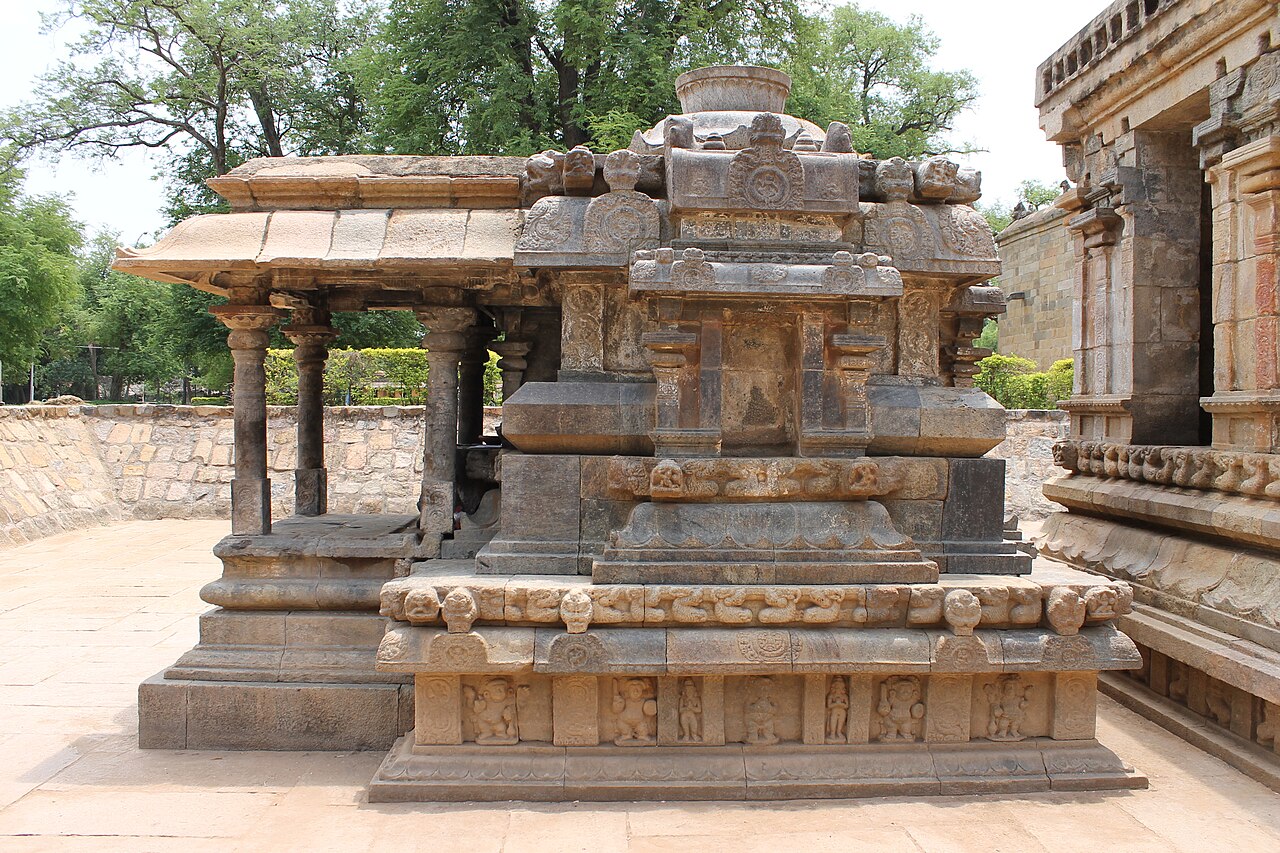
Airavatesvara Temple
· India · temple
A jewel of 12th-century Chola craftsmanship at Darasuram near Kumbakonam in Tamil Nadu, this Śaiva shrine dedicated to Lord Śiva stands among the UNESCO-listed Great Living Chola Temples for its extraordinary sculptural refinement.
Aisanyesvara Siva Temple
· India · temple
A living Śaiva temple from the thirteenth century, nestled near the western boundary of the great Lingarāja complex in Bhubaneswar, Odisha, where a Śivaliṅgam receives daily worship and the sacred rhythms of the liturgical year continue unbroken.
 Hinduism
Akhadachandi Temple
· India · temple
A 10th-century Hindu temple in the heart of Bhubaneswar's old town, Akhadachandi Temple stands on the southwestern shore of the sacred Bindusagar tank, honouring the goddess Mahiṣāsuramardinī in the ancient Kalinga style.
 Hinduism
Akshardham
· India · temple
Swaminarayan Akshardham in Delhi is a vast Hindu mandir complex dedicated to devotion, learning, and harmony, drawing millions of pilgrims each year to its intricately carved sandstone and marble monument on the Yamuna's western bank.
 Hinduism
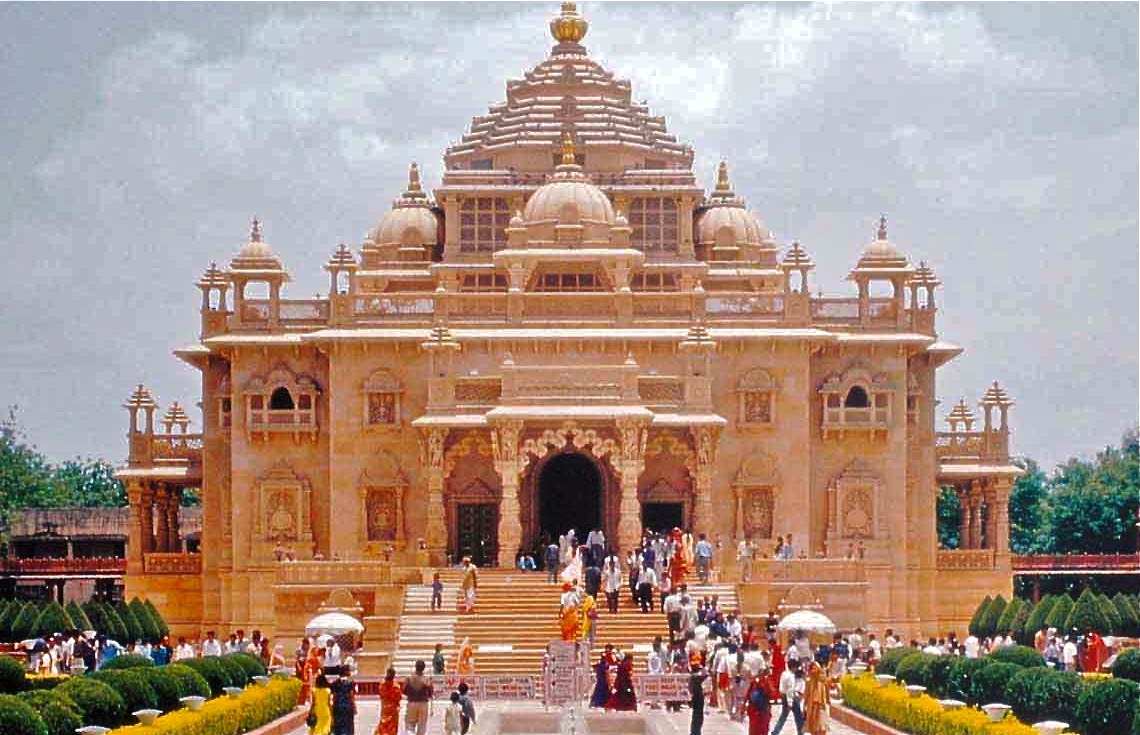
Akshardham (Gandhinagar)
· India · temple
A vast spiritual and cultural complex in Gujarat's capital, Gandhinagar, Swaminarayan Akshardham was conceived through the vision of Yogiji Maharaj and realized by Pramukh Swami Maharaj — a living testimony to the BAPS tradition's commitment to devotion, learning, and harmony.
 Hinduism
Alopi Devi Mandir
· India · temple
Alopi Devi Mandir is a Hindu temple in the Alopibagh neighborhood of Prayagraj, Uttar Pradesh, close to the sacred Sangam where the Ganges, the Yamuna, and the legendary Sarasvati are believed to converge.