
Nainativu Nagapooshani Amman Temple
About
On the small island of Nainativu, set within the waters of the Palk Bay, stands a temple counted among the 51 Shakta pithas sacred to the Goddess. Here Parvati is worshipped under the names Nagapooshani and Bhuvaneswari, alongside her consort Shiva, who in this place bears the name Nayinaar. Four gopurams rise over the temple grounds, the smaller towers reaching between 20 and 25 feet, while the great eastern Raja Raja Gopuram climbs to 108 feet. Roughly 10,000 sculpted figures adorn the recently renewed complex.
For the Tamil people of Sri Lanka, and above all for the Tamils of Jaffna, this temple carries deep symbolic weight. Tradition holds that it has been named since ancient times in Tamil works of literature, among them the Manimekalai and the Kundalakesi.
The shrine draws close to a thousand visitors on an ordinary day, a figure that swells to around five thousand during festival seasons. Its grandest observance, the sixteen day Mahostavam, also called Thiruvizha, unfolds each year in the Tamil month of Aani, corresponding to June and July, and gathers more than 100,000 pilgrims to the island.
History
Records connect the wider Jaffna Peninsula to an older name, Naka Nadu, and Buddhist legend recalls encounters between the Buddha and the people of this region in antiquity. Within the temple grounds a Tamil inscription dating to the 12th century has survived: an edict of the Sinhala monarch Parakramabahu I, who reigned from 1153 to 1186 CE, instructing his Tamil officials in Jaffna on the treatment of foreign traders shipwrecked along the coast. The present structure was raised between 1720 and 1790, replacing an earlier temple that Portuguese forces had destroyed in 1620.
Early chroniclers described the inhabitants of Nainativu as devotees of the serpent, a people whose Tamil speech and self-designation as Naka or Naga, meaning cobra, reached back to classical times. Some scholars trace the name to a corruption of Nayanar, others to the serpent-hood shape of the community's traditional headwear, worn in devotion to the deities Sri Naayinar Swami and Sri Nagapooshani Amman. Archaeological finds across the Jaffna and Kerala regions, including Naga idols from the Paleolithic and megalithic periods, point to a long history of serpent worship there, and the Vallipuram gold plate inscriptions describe Nainativu's early rulers and society as highly developed. Near the South Gopuram entrance rests a large stone shaped like a ship's anchor, of the kind once carried aboard Arab vessels.
Significance
As one of the 51 Shakta pithas, the temple stands among the most revered centers of Goddess worship in the subcontinent, named in the same devotional company as the Meenakshi Amman Temple of Madurai and the Kamakshi Amman Temple of Kanchipuram. For Sri Lanka's Tamil community it functions as both a place of pilgrimage and an enduring emblem of cultural continuity, its towers and inscriptions bearing witness to centuries of devotion on this small island in the Palk Bay.
Visiting
Engage with Nainativu Nagapooshani Amman Temple
Through the four pathways
Seva सेवा — Service
Offer your time and skills here. The following opportunities are open at Nainativu Nagapooshani Amman Temple:
No Seva offerings listed yet.
Sādhana साधना — Practice
Learn the worship and practice associated with Nainativu Nagapooshani Amman Temple:
No Sādhana offerings listed yet.
Sandhāna सन्धान — Wisdom
Unite with the wisdom of this tradition:
No Sandhāna offerings listed yet.
Sādhya साध्य — Giving
Support this sacred place according to your means:
No Sādhya offerings listed yet.
All giving flows directly to Nainativu Nagapooshani Amman Temple. Adisthan does not take a commission.
Related sacred places
 Hinduism
Airavatesvara Temple
· India · temple
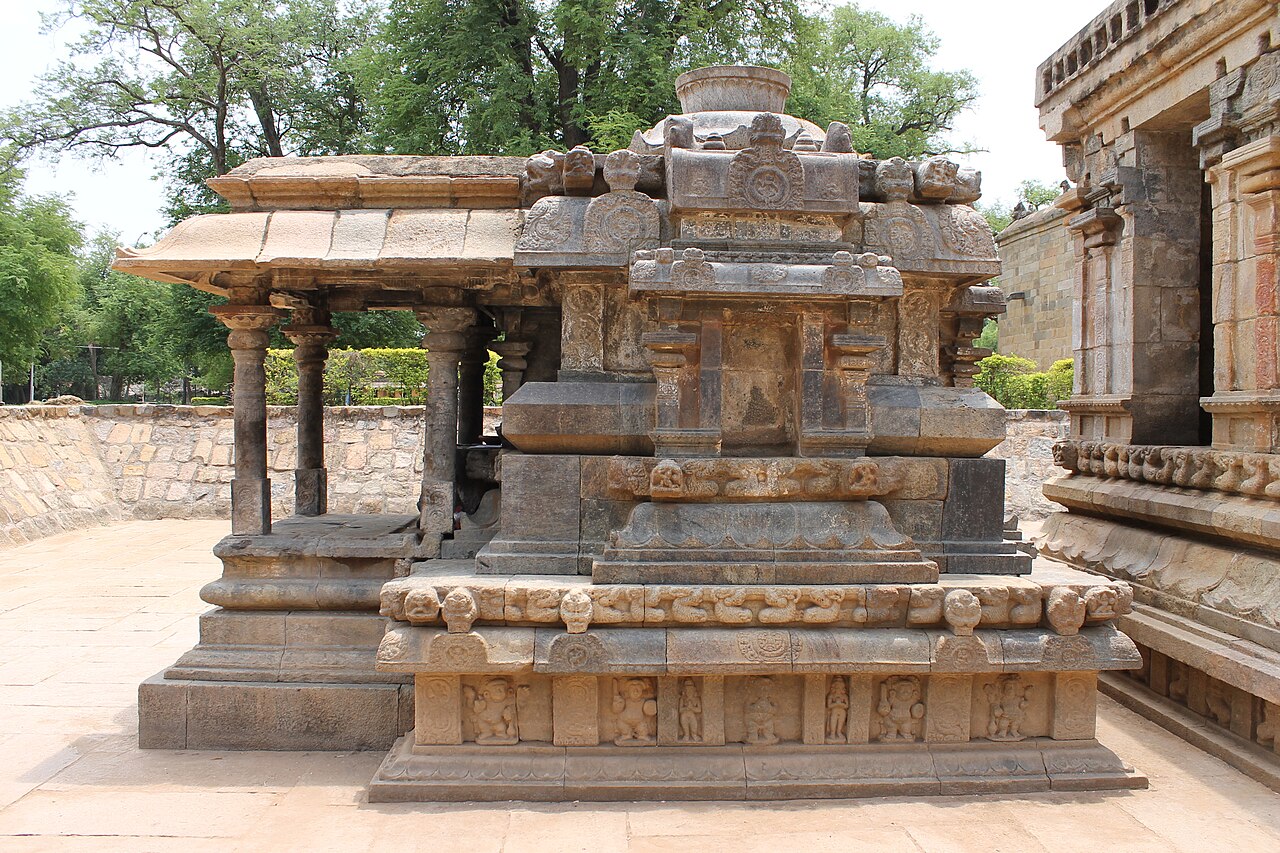
A jewel of 12th-century Chola craftsmanship at Darasuram near Kumbakonam in Tamil Nadu, this Śaiva shrine dedicated to Lord Śiva stands among the UNESCO-listed Great Living Chola Temples for its extraordinary sculptural refinement.
Aisanyesvara Siva Temple
· India · temple
A living Śaiva temple from the thirteenth century, nestled near the western boundary of the great Lingarāja complex in Bhubaneswar, Odisha, where a Śivaliṅgam receives daily worship and the sacred rhythms of the liturgical year continue unbroken.
 Hinduism
Akhadachandi Temple
· India · temple
A 10th-century Hindu temple in the heart of Bhubaneswar's old town, Akhadachandi Temple stands on the southwestern shore of the sacred Bindusagar tank, honouring the goddess Mahiṣāsuramardinī in the ancient Kalinga style.
 Hinduism
Akshardham
· India · temple
Swaminarayan Akshardham in Delhi is a vast Hindu mandir complex dedicated to devotion, learning, and harmony, drawing millions of pilgrims each year to its intricately carved sandstone and marble monument on the Yamuna's western bank.
 Hinduism
Akshardham (Gandhinagar)
· India · temple
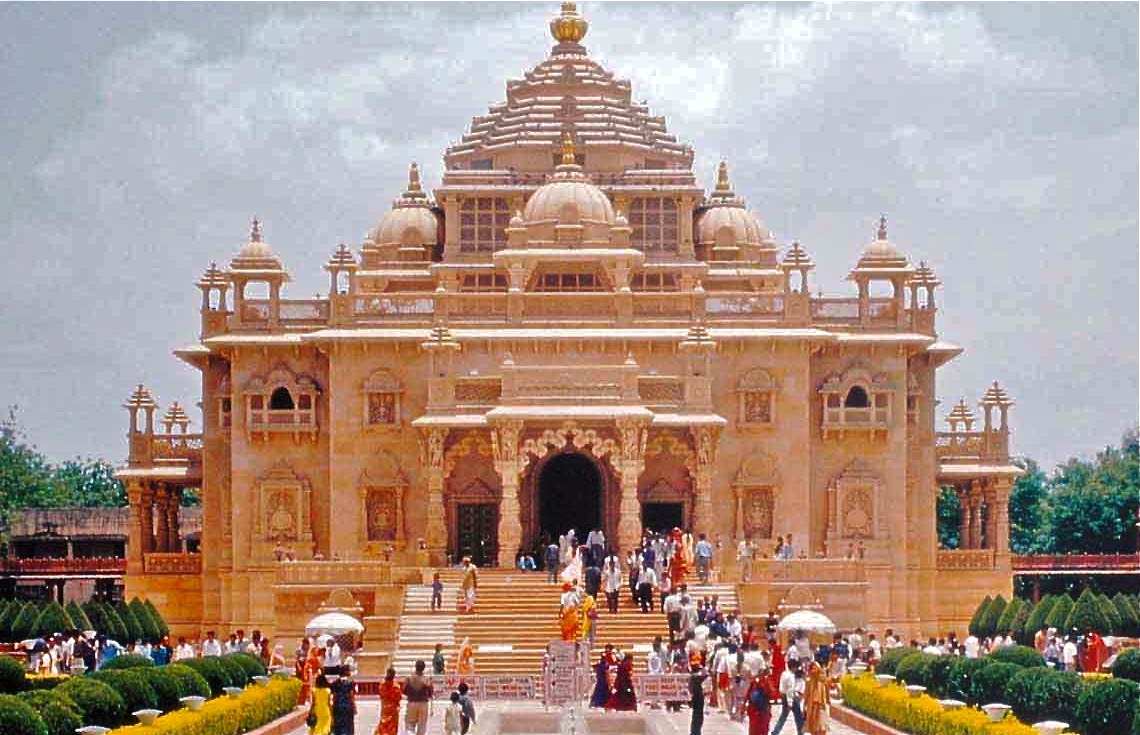
A vast spiritual and cultural complex in Gujarat's capital, Gandhinagar, Swaminarayan Akshardham was conceived through the vision of Yogiji Maharaj and realized by Pramukh Swami Maharaj — a living testimony to the BAPS tradition's commitment to devotion, learning, and harmony.
 Hinduism
Alopi Devi Mandir
· India · temple
Alopi Devi Mandir is a Hindu temple in the Alopibagh neighborhood of Prayagraj, Uttar Pradesh, close to the sacred Sangam where the Ganges, the Yamuna, and the legendary Sarasvati are believed to converge.