
Nartiang Durga Temple
About
In the West Jaintia Hills district of Meghalaya, in the far northeast of India, stands the Nartiang Durga Temple, counted among the fifty one Shakta pithas and honoured as one of the most sacred destinations for followers of Shaktism. The shrine has stood for roughly six hundred years, and the Hindus of the Jaintia Hills hold that Goddess Durga makes Her lasting home within its walls. Each year the temple welcomes throngs of pilgrims travelling from across the country for the festival of Durga Puja, and within the shrine the Devi is worshipped under the name Jayanti, with the Bhairava beside Her known as Kamadishwar.
A short walk from the main shrine brings one to a Shiva temple, where old cannons from earlier centuries can still be found resting within the temple grounds. Worship continues there today, carried on by priests descended directly from those who first came from Jaintiapur to serve the site.
Worship here departs from the customary rites of the plains, blending Hindu practice with age old Khasi custom. In keeping with the Khasi reluctance to fashion figurine images of deities, the form of Durga is represented instead by a plantain trunk adorned with marigold garlands, and the local Syiem, or chieftain, serves as the temple's chief patron. During Durga Puja the dressed banana plant is worshipped as the Goddess across four days of festivity, after which it is carried in procession and immersed in the Myntdu River amid a gun salute, and the Syiem continues the custom of offering goat sacrifice.
History
Tradition holds that the Jaintia king Dhan Manik, who reigned from 1596 to 1612, established Nartiang as the summer capital of the Jaintia Kingdom some six hundred years ago. A later ruler, Jaso Manik, who reigned from 1606 to 1641, took as his queen Lakshmi Narayana, daughter of the Koch king Nara Narayana, and it is said that her devotion to Goddess Durga led the Jaintia court and its people toward the Shakta path of Hinduism. Legend recounts that the Goddess once appeared to Jaso Manik in a dream, revealing the sanctity of the site and calling on him to raise a temple in Her name, and from this vision the Jainteshwari temple at Nartiang came to be built. The presence of old cannons and the temple's commanding position suggest it once formed part of a fortification belonging to the Jaintia kings. Today the Central Puja Committee, acting as the recognised voice of Meghalaya's Hindu community, oversees the shrine, meeting much of its daily upkeep and guiding the wider celebration of Durga Puja, which each autumn blends Bengali custom with that of the Khasi Jaintia Hills. In 2017, union minister Kiren Rijiju indicated that the temple would be granted heritage site status.
Significance
As one of the fifty one Shakta pithas, Nartiang Durga Temple ranks among the holiest abodes of Parashakti in the Shaktism tradition. These pithas trace their origin to the tale of Daksha's yagna and Sati's self immolation, when Shiva, carrying her body in sorrow, wandered across the earth as fragments of her form fell to the ground at fifty one places. At Nartiang, devotees believe, it was Sati's left thigh that fell, and so the Goddess worshipped here bears the name Jainteshwari. Each shrine among the pithas honours both the Shakti and her corresponding masculine counterpart, Kalabhairava, and at Nartiang these are addressed as Jayanti and Kamadishwar respectively.
Visiting
Engage with Nartiang Durga Temple
Through the four pathways
Seva सेवा — Service
Offer your time and skills here. The following opportunities are open at Nartiang Durga Temple:
No Seva offerings listed yet.
Sādhana साधना — Practice
Learn the worship and practice associated with Nartiang Durga Temple:
No Sādhana offerings listed yet.
Sandhāna सन्धान — Wisdom
Unite with the wisdom of this tradition:
No Sandhāna offerings listed yet.
Sādhya साध्य — Giving
Support this sacred place according to your means:
No Sādhya offerings listed yet.
All giving flows directly to Nartiang Durga Temple. Adisthan does not take a commission.
Related sacred places
 Hinduism
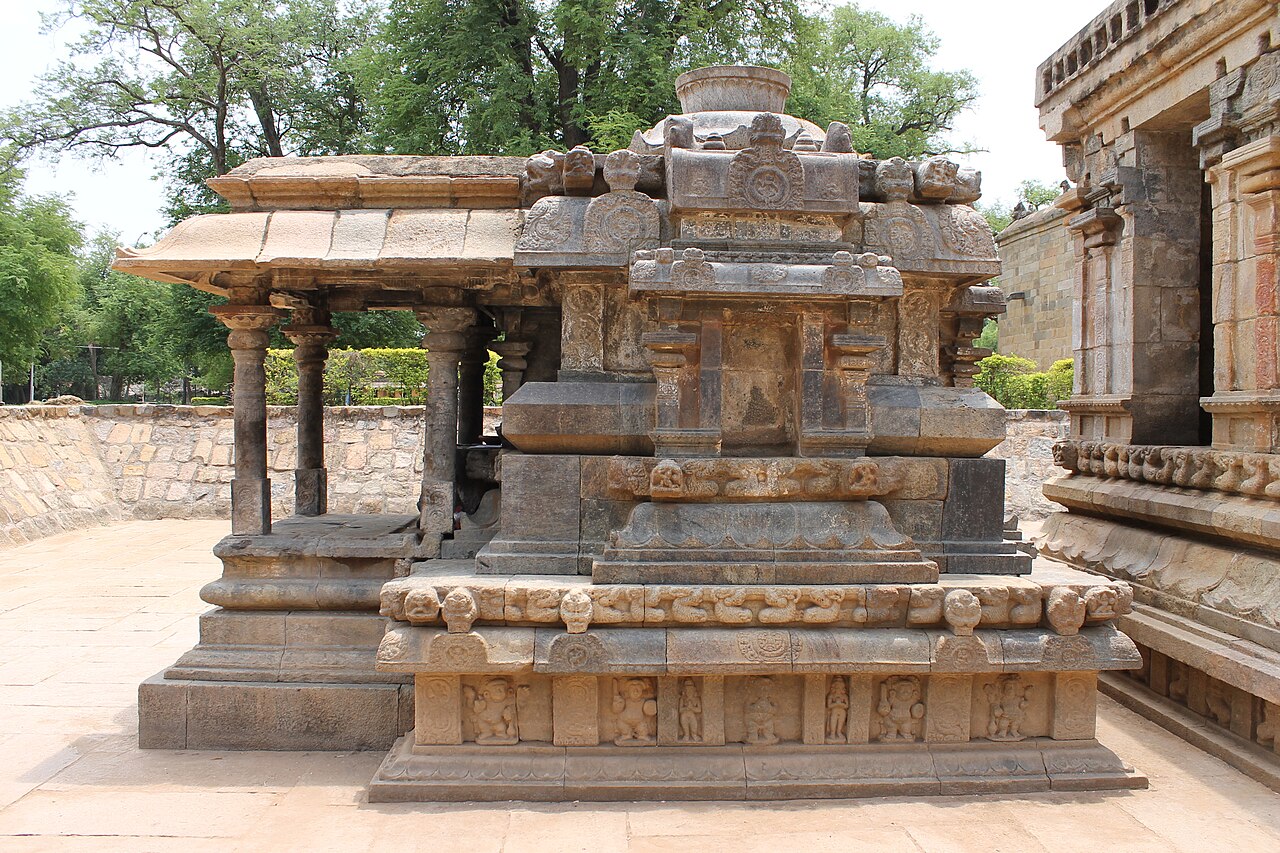
Airavatesvara Temple
· India · temple
A jewel of 12th-century Chola craftsmanship at Darasuram near Kumbakonam in Tamil Nadu, this Śaiva shrine dedicated to Lord Śiva stands among the UNESCO-listed Great Living Chola Temples for its extraordinary sculptural refinement.
Aisanyesvara Siva Temple
· India · temple
A living Śaiva temple from the thirteenth century, nestled near the western boundary of the great Lingarāja complex in Bhubaneswar, Odisha, where a Śivaliṅgam receives daily worship and the sacred rhythms of the liturgical year continue unbroken.
 Hinduism
Akhadachandi Temple
· India · temple
A 10th-century Hindu temple in the heart of Bhubaneswar's old town, Akhadachandi Temple stands on the southwestern shore of the sacred Bindusagar tank, honouring the goddess Mahiṣāsuramardinī in the ancient Kalinga style.
 Hinduism
Akshardham
· India · temple
Swaminarayan Akshardham in Delhi is a vast Hindu mandir complex dedicated to devotion, learning, and harmony, drawing millions of pilgrims each year to its intricately carved sandstone and marble monument on the Yamuna's western bank.
 Hinduism
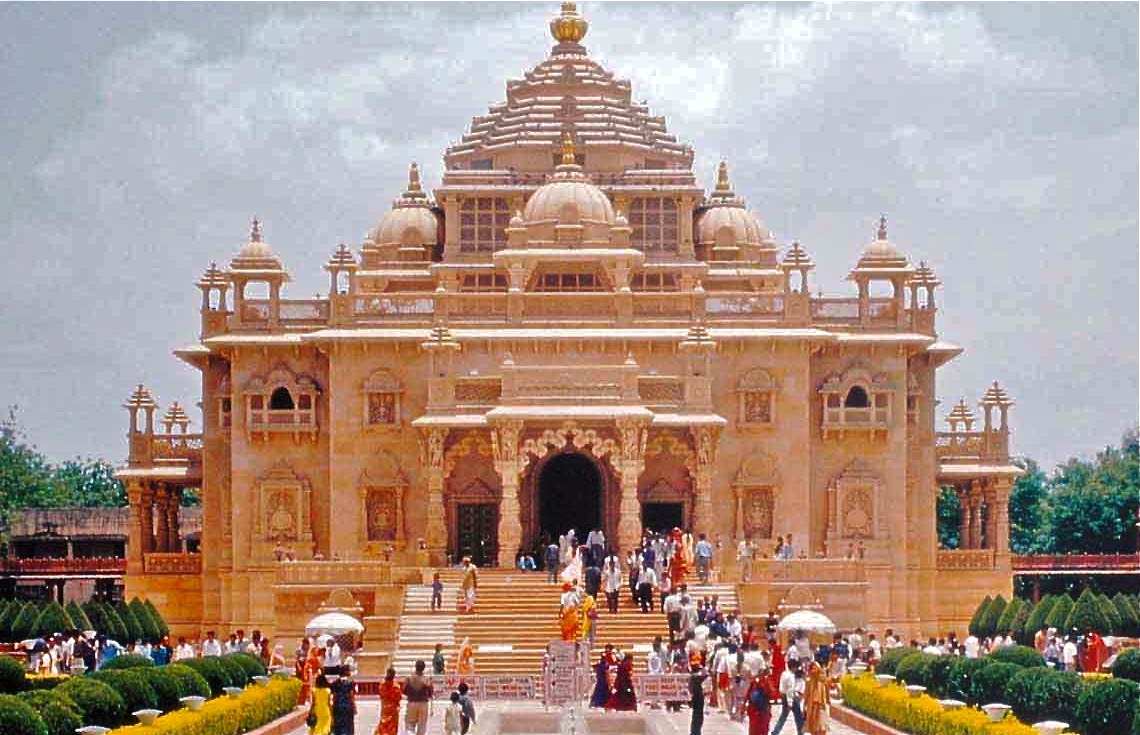
Akshardham (Gandhinagar)
· India · temple
A vast spiritual and cultural complex in Gujarat's capital, Gandhinagar, Swaminarayan Akshardham was conceived through the vision of Yogiji Maharaj and realized by Pramukh Swami Maharaj — a living testimony to the BAPS tradition's commitment to devotion, learning, and harmony.
 Hinduism
Alopi Devi Mandir
· India · temple
Alopi Devi Mandir is a Hindu temple in the Alopibagh neighborhood of Prayagraj, Uttar Pradesh, close to the sacred Sangam where the Ganges, the Yamuna, and the legendary Sarasvati are believed to converge.