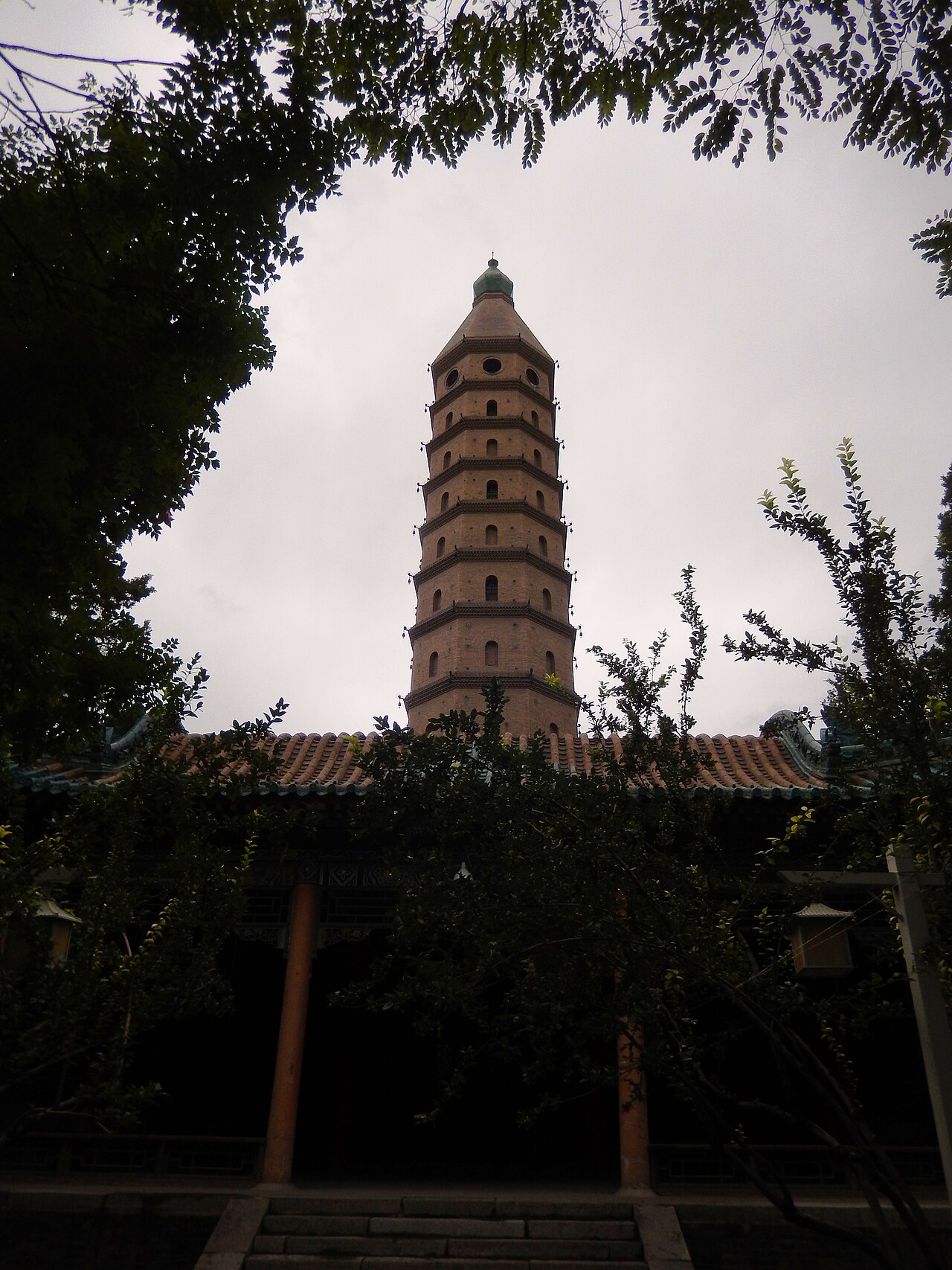
Pagoda of Chengtian Temple
Chengtian Temple Pagoda · Xi Ta (West Pagoda) · Bearing Heaven Pagoda
About
The Pagoda of Chengtian Temple, whose name in Chinese means the Bearing Heaven Pagoda, rises in Yinchuan in the Ningxia Hui Autonomous Region of northwestern China. It is the surviving monument of a Buddhist Temple complex first founded under the Tangut Western Xia dynasty, and at 64.5 metres it remains the tallest pagoda in Ningxia. The people of Yinchuan know it as the Western Pagoda, a counterpart to the Haibao or Northern Pagoda.
The first pagoda on this spot was raised in the early years of Emperor Yizong of Western Xia, when the Empress Dowager commissioned the work to protect the reign of her infant son and to house pieces of bone from the head of the Buddha. A commemorative stele preserved its consecration date in the first year of the Tianyou Chuisheng era, corresponding to 1050. Five years later, Emperor Renzong of Song sent a complete set of the Tripitaka to be deposited at the Temple.
By the early Ming era the surrounding Temple had fallen to ruin and only the pagoda still stood. The early Ming poet Wang Xun lamented the silence of its bell and the loneliness of its tiers, awaiting a patron to restore the place. That patron came in Zhu Zhan, the sixteenth son of the Hongwu Emperor, whose grandson Zhu Suikan completed the renovation in 1469.
A great earthquake struck Yinchuan on 3 January 1739 and destroyed the pagoda. The present eleven-storeyed octagonal brick pagoda was raised on the original site in 1820, thought to follow the form of the lost Western Xia tower. It is hollow within, with an eastern entrance and wooden stairs climbing to the top storey. In 2006 it was listed as a Major Historical and Cultural Site Protected at the National Level.
History
The Empress Dowager of Western Xia ordered the first pagoda built in 1050 CE, in the infancy of her son Emperor Yizong, to protect his reign and to house fragments of the Buddha's skull bone; five years later Emperor Renzong of Song sent a complete Tripitaka to be deposited at the Temple. The Temple had fallen to ruin by the early Ming dynasty, and restoration begun by the prince Zhu Zhan was completed by his grandson Zhu Suikan in 1469. An earthquake destroyed the pagoda on 3 January 1739, and the present brick pagoda was raised on the same site in 1820, believed to follow the form of the lost Western Xia original. A further earthquake in January 2025 damaged glazed tiles and the ornamental finial at the pagoda's summit, and repair work was still being assessed by Ningxia's cultural heritage authorities as of this record.
Significance
At 64.5 metres the pagoda is the tallest in Ningxia, taller than Xi'an's Big Wild Goose Pagoda, and Yinchuan residents call it the Western Pagoda, a counterpart to the city's Northern or Haibao Pagoda. It was placed on China's Major Historical and Cultural Sites Protected at the National Level in 2006, and the hollow tower, climbed by wooden interior stairs to windows at its summit, remains the enduring landmark of the wider Chengtian Temple complex around it.
Architecture
Western Xia-form octagonal brick pagoda (Qing-era reconstruction), eleven storeys, hollow interior with wooden stairs
Visiting
Hours
Hours not listed.
Contact
No contact details listed yet.
Address
Engage with Pagoda of Chengtian Temple
Through the four pathways
Seva सेवा — Service
Offer your time and skills here. The following opportunities are open at Pagoda of Chengtian Temple:
No Seva offerings listed yet.
Sādhana साधना — Practice
Learn the worship and practice associated with Pagoda of Chengtian Temple:
No Sādhana offerings listed yet.
Sandhāna सन्धान — Wisdom
Unite with the wisdom of this tradition:
No Sandhāna offerings listed yet.
Sādhya साध्य — Giving
Support this sacred place according to your means:
No Sādhya offerings listed yet.
All giving flows directly to Pagoda of Chengtian Temple. Adisthan does not take a commission.
Gallery
Related sacred places
 Buddhism
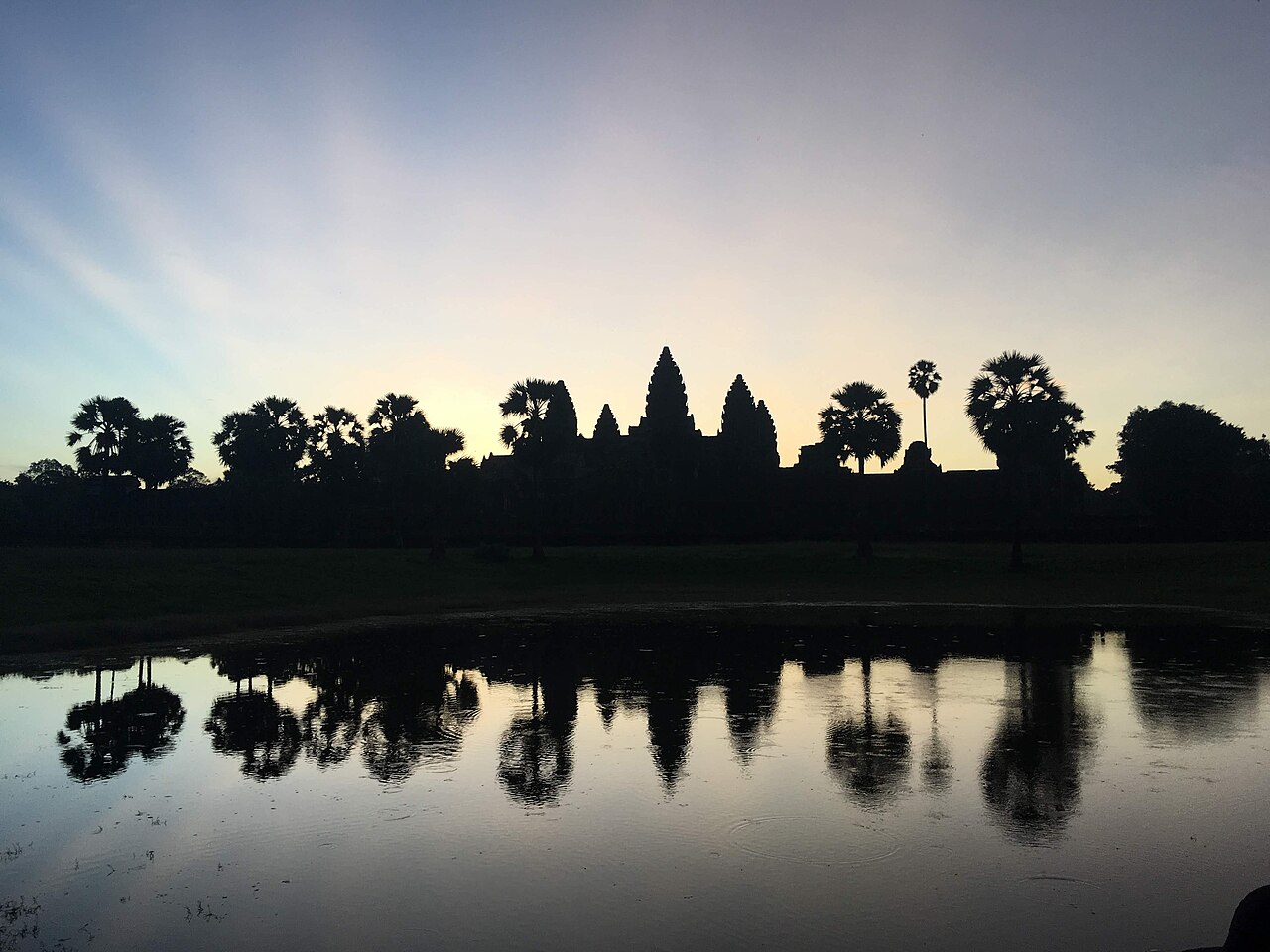
Angkor Wat
Siem Reap · Cambodia · temple
The largest religious monument on earth, built for Lord Vishnu by Suryavarman II in the 12th century and in continuous worship ever since: a living Theravada Buddhist Temple whose five towers stand on the Cambodian flag.
 Buddhism
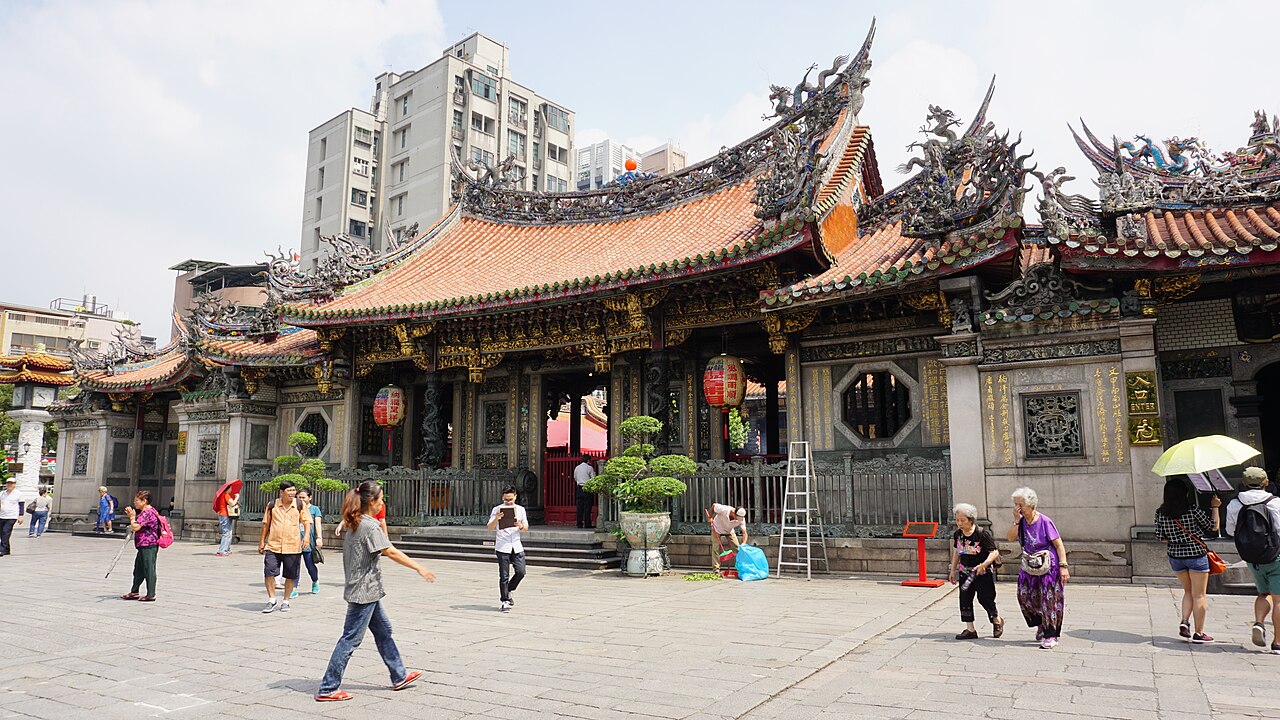
Bangka Lungshan Temple
Taipei (Wanhua) · Taiwan · temple
Taipei's mother Temple to Guanshiyin, founded by Fujian settlers in 1738 in the old Bangka quarter: a front hall to the bodhisattva of compassion and a rear hall of more than a hundred Taoist and folk gods, whose Guanyin statue survived the 1945 bombing intact.
 Buddhism
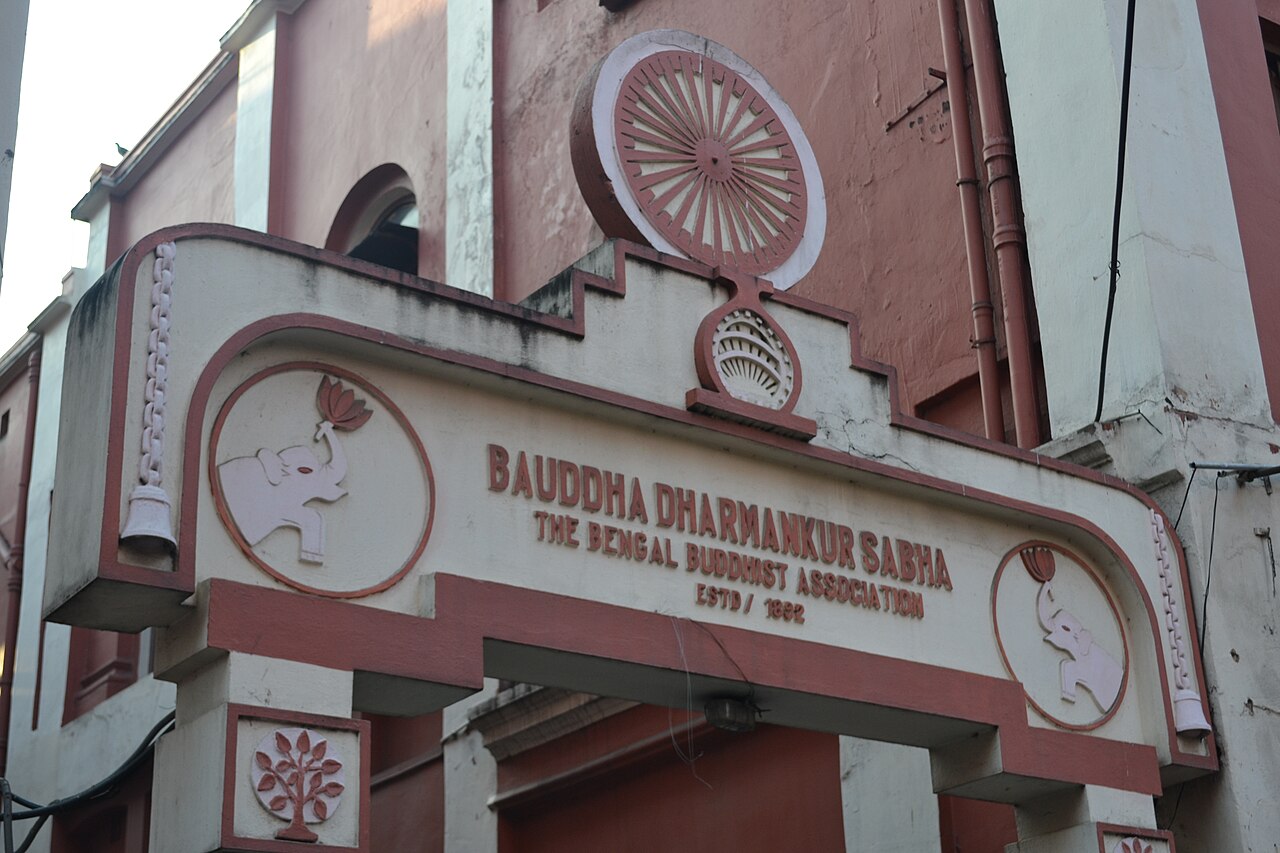
Bengal Buddhist Association
Kolkata · India · monastery
Founded in Kolkata in 1892 by Kripasaran Mahasthavir, the Bengal Buddhist Association, known in Bengali as Bauddha Dharmankur Sabha, raised the Dharmankur Vihara at Bow Barracks in 1903 and has worked for over a century to revive the Dharma in eastern India.
 Buddhism
Bhot Bagan Math
Ghusuri · India · monastery
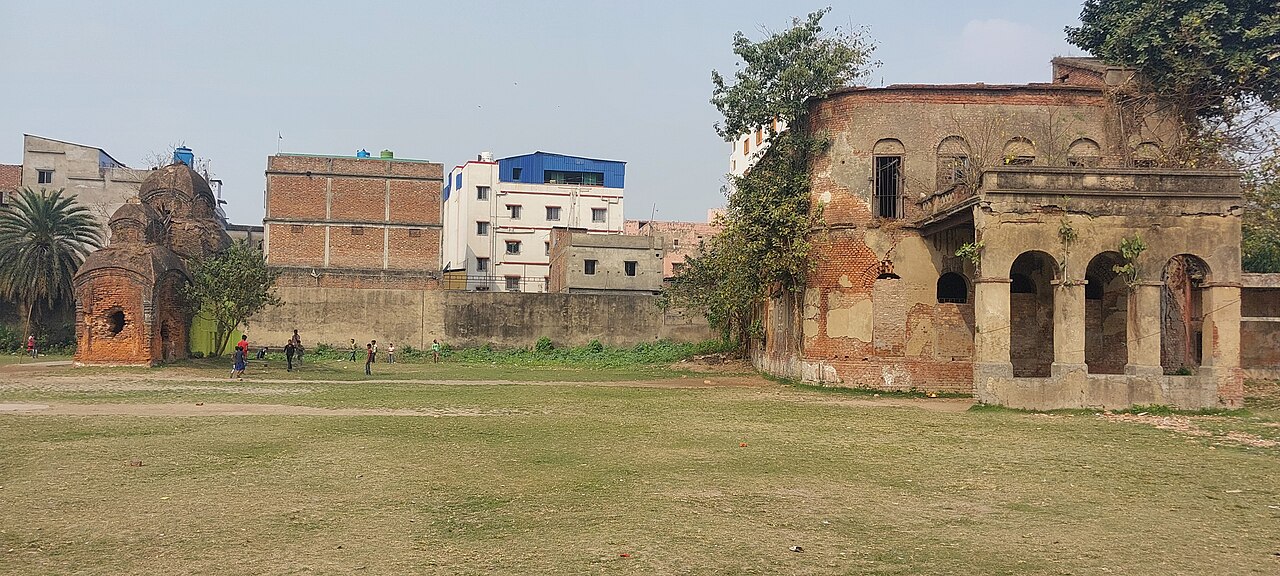
A brick monastery on the Hooghly riverside at Ghusuri, Howrah, founded in 1776 as the first Tibetan Buddhist religious foundation on the plains of India and still known popularly as Mahakal Math for the Tibetan deity images once installed in its sanctum.
 Buddhism
Borobudur
Magelang · Indonesia · temple
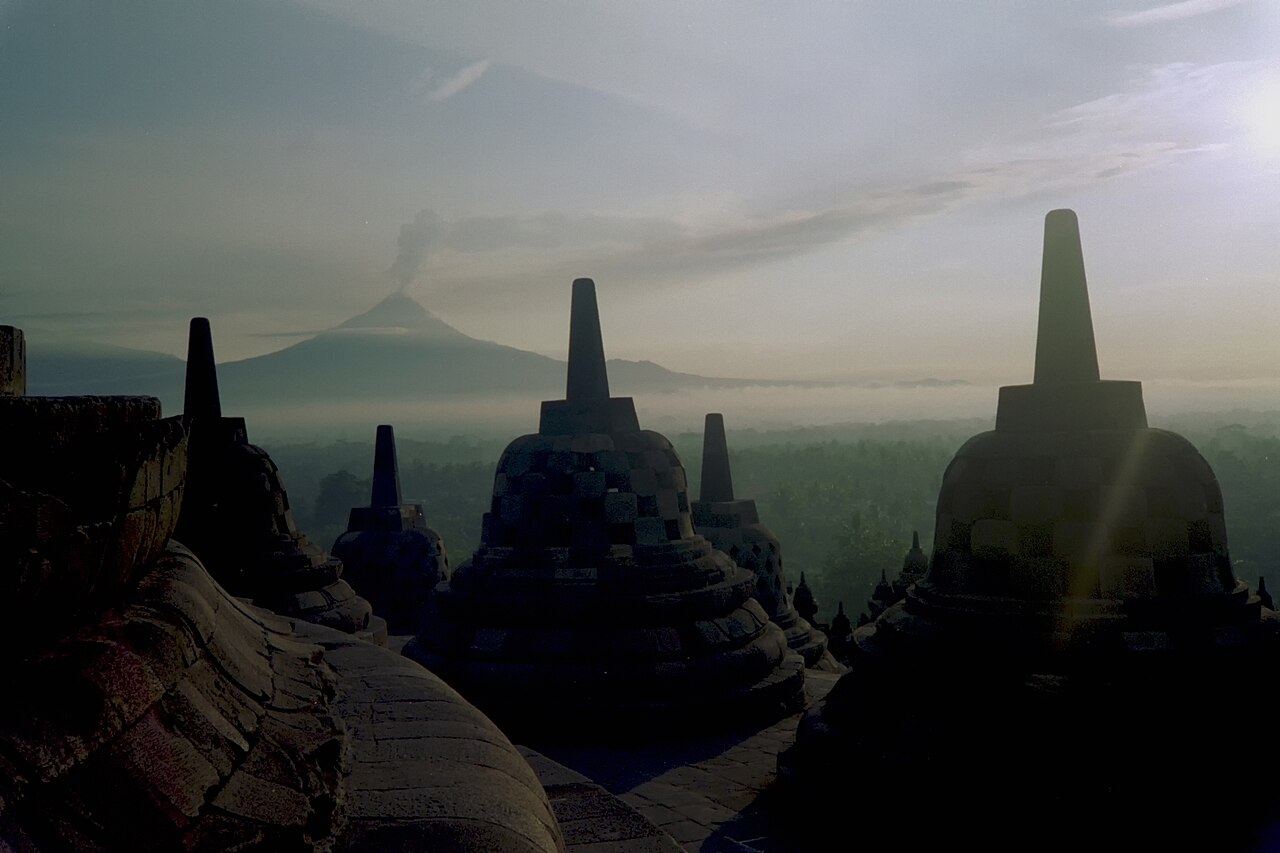
The world's largest Buddhist Temple: a ninth-century mandala in stone on Java's Kedu Plain, nine terraces rising through the three realms to 72 latticed stupas, each sheltering a seated Buddha.
 Buddhism
Boudhanath Stupa
Kathmandu · Nepal · stupa
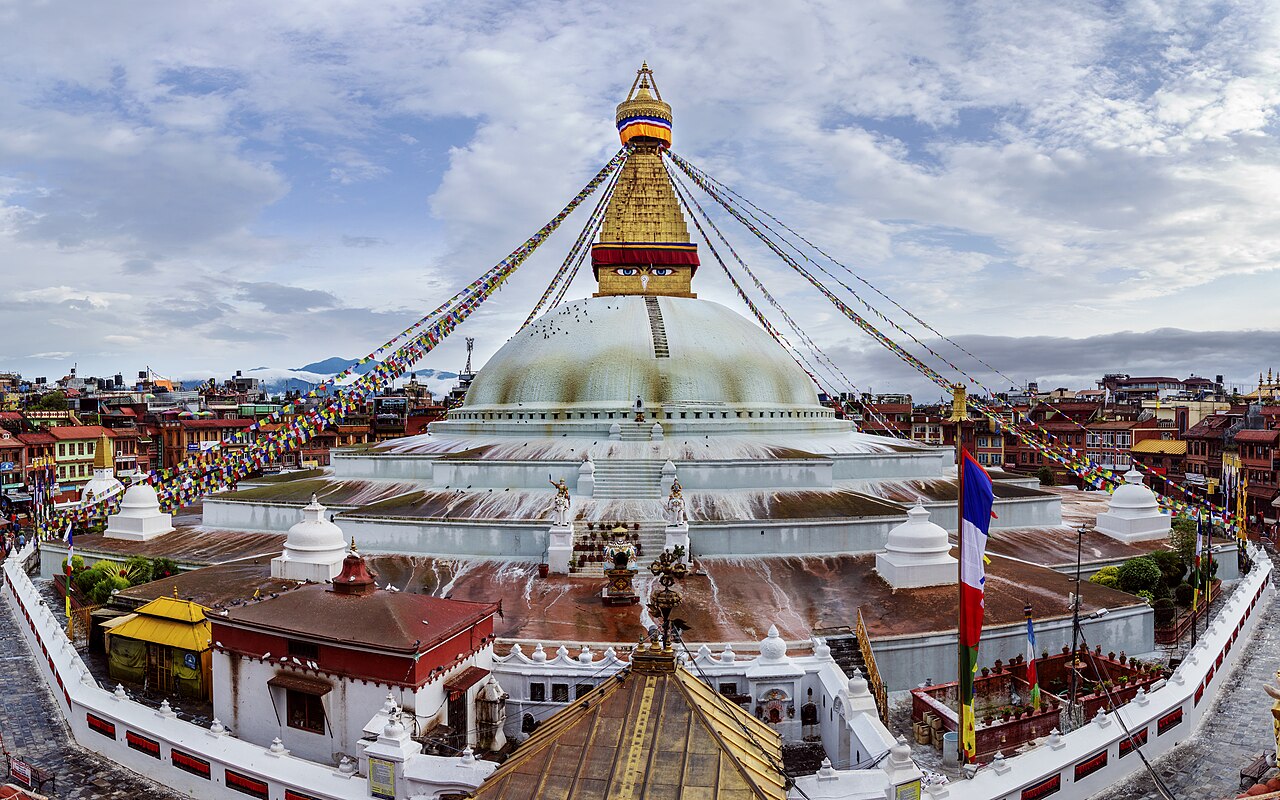
The largest spherical stupa in Nepal, its all-seeing Buddha eyes watching over the kora walked daily by the Tibetan Buddhist community of Boudha, the heart of Vajrayana practice in the Kathmandu Valley.