
Saptashrungi
About
Rising above the village of Vani in Maharashtra's Nashik district, Saptashrungi takes its name from the seven peaks, sapta shrunga, said to shelter the resident goddess, Saptashrungi Nivasini. For generations the Maratha people and various Hindu communities of the region have turned to her, many honoring her as their family deity. The temple sits partway up a rock face reached by a flight of roughly 510 steps carved into the hillside, and since a funicular trolley began operating in 2018, pilgrims unable to manage the climb can ride up in about three minutes before a short final stretch of stairs.
The deity herself is regarded as swayambhu, self manifest rather than carved by human hands, her eighteen armed form emerging from the bare stone of the cliff. She is covered daily in sindoor and dressed anew each day, her image said to stand roughly eight feet tall within the rock. Devotees hold Saptashrungi to be one of the fifty one Shakta pithas scattered across the subcontinent, and locally she is counted among the three and a half Shakta pithas of Maharashtra, a status the temple's own trust describes rather differently, holding hers to be a complete pitha in its own right.
Thousands arrive daily, and the numbers swell enormously during Chaitrotsav, the spring festival that draws pilgrims from Maharashtra, Gujarat, Madhya Pradesh, and Rajasthan, some walking the full distance from Nashik or even Dhule. Many circle the entire hill on foot as an act of devotion, since the goddess's form is set into the mountainside itself rather than housed in a freestanding sanctum.
The site's care today falls to the Shree Saptashrung Niwasini Devi Trust, established in 1975, which oversees the steps, the trolley, pilgrim lodging, and the safety measures needed on a hill prone to rockfall.
History
Tradition holds that when Sati, grieving the insult her father Daksha showed her husband Shiva at his sacrifice, gave up her life, a heartbroken Shiva carried her body across the world until Vishnu, to ease his sorrow, cut it into pieces with his discus. Wherever a piece fell, the ground became sacred; at Saptashrungi it is said her right arm came to rest, marking the hill as one of the fifty one Shakti pithas. A separate account tells how the eighteen armed goddess, taking the form of Durga, slew the buffalo demon Mahishasura here after he had terrorized the world, and a stone carving of a buffalo head at the base of the steps is pointed to as a memory of that battle. Local lore adds further layers: the sage Markandeya is said to have composed the Devi Mahatmya on a neighboring hill named for him, and Hanuman is remembered as having passed through these hills searching for healing herbs during the war described in the Ramayana. The stone steps leading up to the shrine were laid in 1710 by Umabai Dabhade, and further building work, including a porch added to the main shrine, followed under later regional rulers.
Significance
Saptashrungi is venerated as one of the Shakta pithas, sites across the Indian subcontinent believed to mark where parts of the goddess Sati's body fell, making it a place where the divine feminine is held to be permanently and physically present in the land itself rather than merely represented in an image. Alongside the temples at Kolhapur, Tuljapur, and Mahur, it is counted among the four principal Devi shrines of Maharashtra, together said to embody the syllables of the sacred sound Aum. For the Marathas and many local communities the goddess is honored as a kuldaivat, a guardian of family lineage, giving the site a devotional weight that extends well beyond pilgrimage into everyday household life.
Visiting
Engage with Saptashrungi
Through the four pathways
Seva सेवा — Service
Offer your time and skills here. The following opportunities are open at Saptashrungi:
No Seva offerings listed yet.
Sādhana साधना — Practice
Learn the worship and practice associated with Saptashrungi:
No Sādhana offerings listed yet.
Sandhāna सन्धान — Wisdom
Unite with the wisdom of this tradition:
No Sandhāna offerings listed yet.
Sādhya साध्य — Giving
Support this sacred place according to your means:
No Sādhya offerings listed yet.
All giving flows directly to Saptashrungi. Adisthan does not take a commission.
Related sacred places
 Hinduism
Airavatesvara Temple
· India · temple
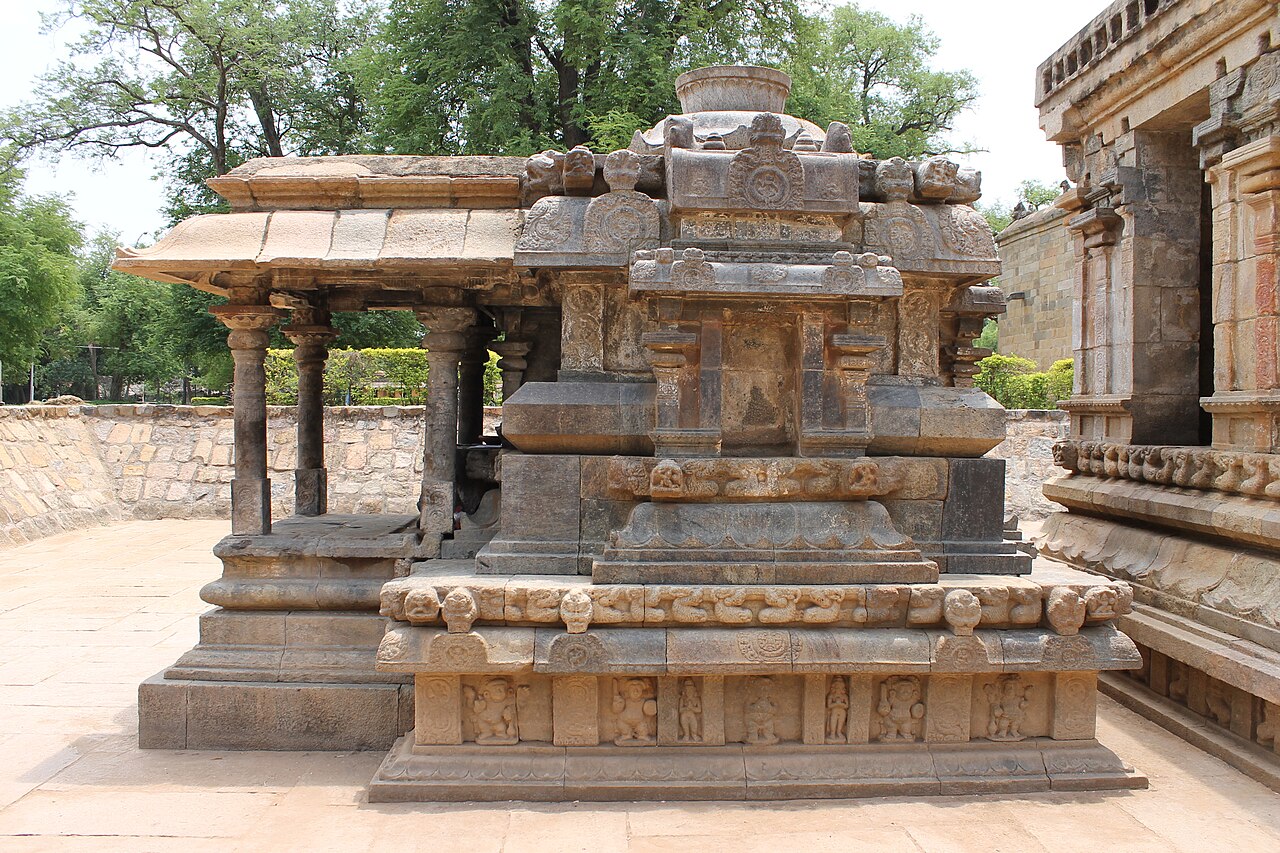
A jewel of 12th-century Chola craftsmanship at Darasuram near Kumbakonam in Tamil Nadu, this Śaiva shrine dedicated to Lord Śiva stands among the UNESCO-listed Great Living Chola Temples for its extraordinary sculptural refinement.
Aisanyesvara Siva Temple
· India · temple
A living Śaiva temple from the thirteenth century, nestled near the western boundary of the great Lingarāja complex in Bhubaneswar, Odisha, where a Śivaliṅgam receives daily worship and the sacred rhythms of the liturgical year continue unbroken.
 Hinduism
Akhadachandi Temple
· India · temple
A 10th-century Hindu temple in the heart of Bhubaneswar's old town, Akhadachandi Temple stands on the southwestern shore of the sacred Bindusagar tank, honouring the goddess Mahiṣāsuramardinī in the ancient Kalinga style.
 Hinduism
Akshardham
· India · temple
Swaminarayan Akshardham in Delhi is a vast Hindu mandir complex dedicated to devotion, learning, and harmony, drawing millions of pilgrims each year to its intricately carved sandstone and marble monument on the Yamuna's western bank.
 Hinduism
Akshardham (Gandhinagar)
· India · temple
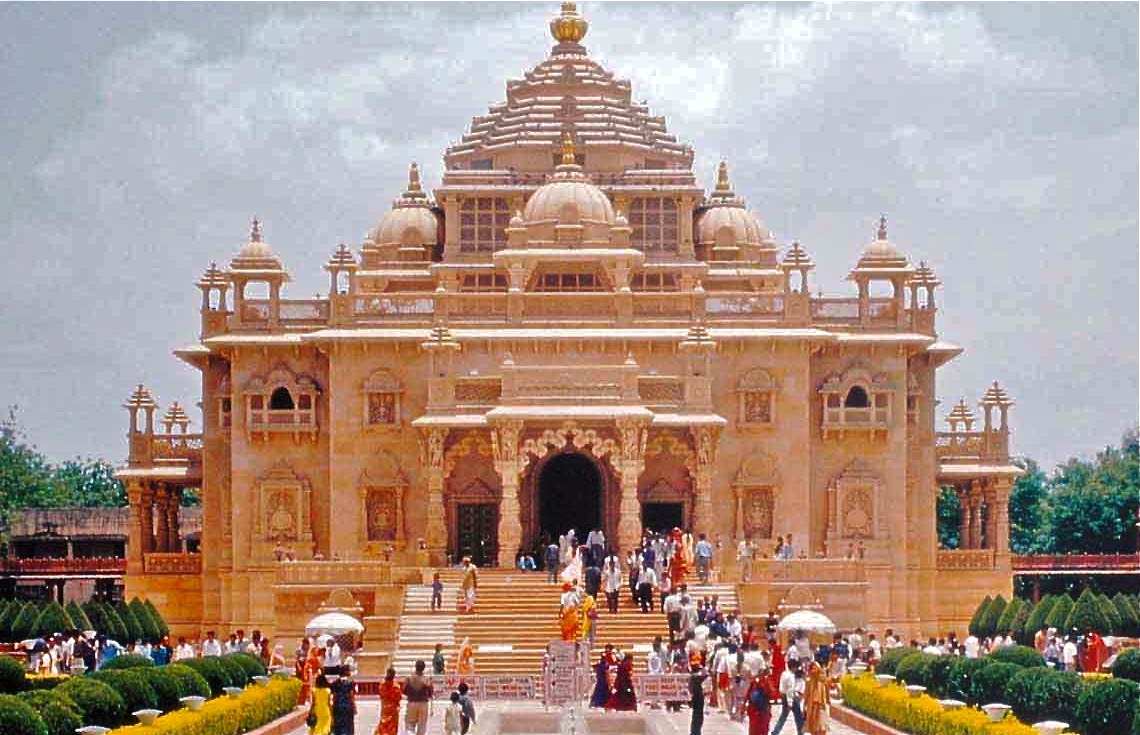
A vast spiritual and cultural complex in Gujarat's capital, Gandhinagar, Swaminarayan Akshardham was conceived through the vision of Yogiji Maharaj and realized by Pramukh Swami Maharaj — a living testimony to the BAPS tradition's commitment to devotion, learning, and harmony.
 Hinduism
Alopi Devi Mandir
· India · temple
Alopi Devi Mandir is a Hindu temple in the Alopibagh neighborhood of Prayagraj, Uttar Pradesh, close to the sacred Sangam where the Ganges, the Yamuna, and the legendary Sarasvati are believed to converge.