Twenty Tirthankaras attained moksha here 27 km barefoot yatra · 31 tonks Yatra begins 2 to 4 am Summit 1,365 m · Jharkhand's highest Moksha Saptami · 19 Aug 2026 Free · dolis at Madhuban
The yatra begins in darkness. Between two and four in the morning Madhuban stirs: torchlight on the paved track, the soft slap of bare feet, doli bearers calling their rhythm as the forest closes overhead. For nine kilometres the path climbs beside the Gandharva Nala stream, and at first light the ridge appears, whitewashed tonks strung along it like beads on a thread. This is not a mountain with a Temple on top. It is the hill where, twenty times over, the cycle of birth came to an end.
Twenty of the twenty-four Tirthankaras attained moksha on this hill, from Bhagwan Ajitanath, the second, to Bhagwan Parshvanath, the twenty-third. It is the holiest tirth of the Jain world, and both the Digambara and Svetambara traditions revere it and share the jurisdiction of its main Temples.
Bhagwan Parshvanath attained nirvana at the summit, the Suvarnabhadra Kuta, which tradition dates to 772 BCE. The whole mountain has carried His name ever since: Parasnath, at 1,365 metres the highest peak in Jharkhand.
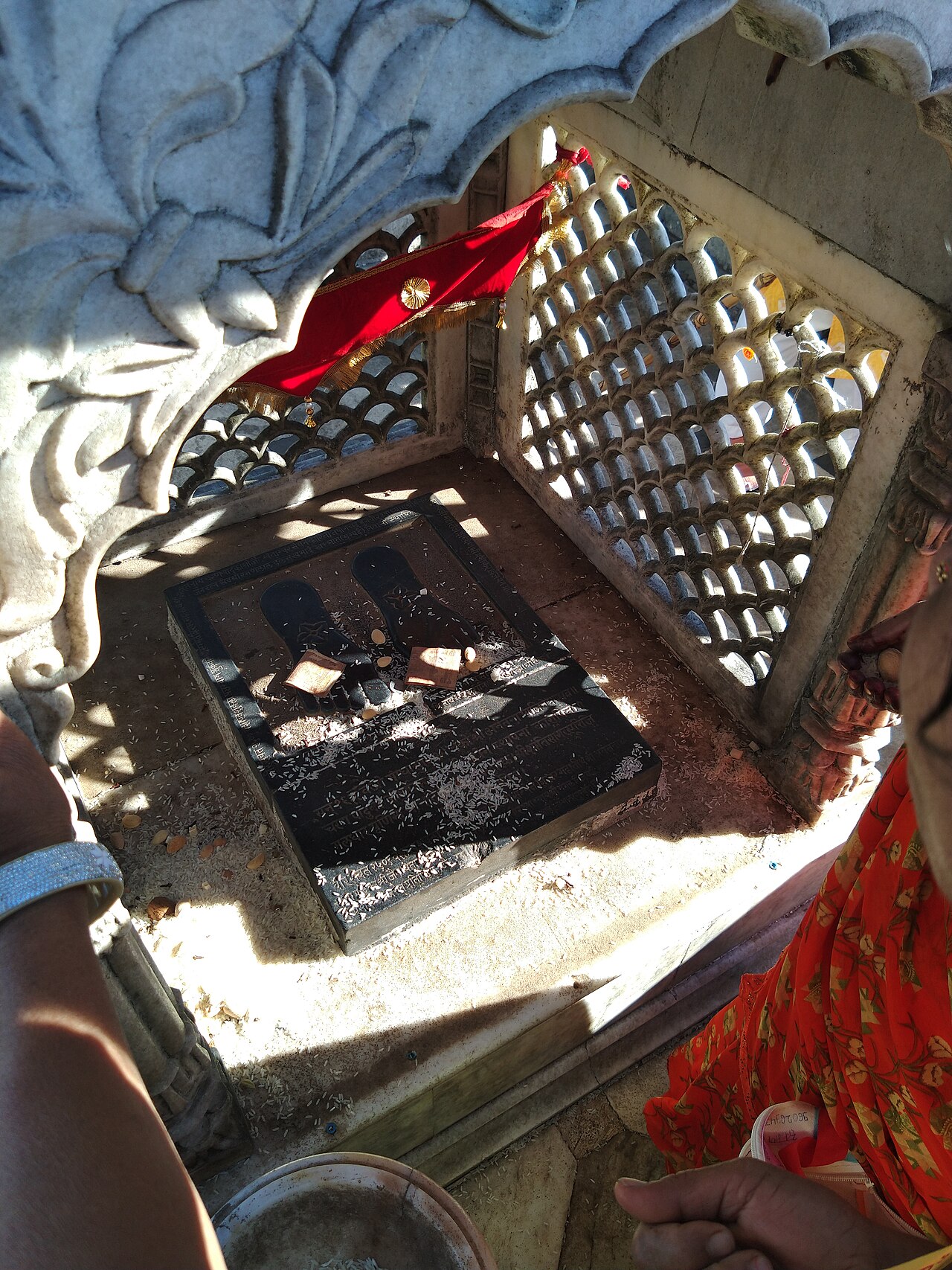
Here the worship is the walking. The full vandana is a 27 kilometre barefoot circuit of 31 tonks begun in the small hours of the night, and the tonks hold no images: each enshrines the carved footprints of a Tirthankara at the place tradition holds that soul left the world forever.
The hill of twenty liberations
Jain memory reaches back to this hill through its oldest scriptures: the earliest reference to Shikharji as a tirth is found in the Jnatadharmakatha. Tradition holds that twenty of the twenty-four Tirthankaras climbed Sammed Shikhar and attained moksha upon it. Only four found liberation elsewhere: Bhagwan Rishabhanath (Adinath) on Ashtapad, Bhagwan Vasupujya at Champapuri, Bhagwan Neminath on Girnar, and Bhagwan Mahavir at Pawapuri. Every other ending in the line of the Jinas happened here.
The last of them gave the mountain its name. Bhagwan Parshvanath, the twenty-third Tirthankara, came to the golden summit the texts call Suvarnabhadra Kuta and there, tradition says in 772 BCE at the age of one hundred, shed the last of His karmas and attained nirvana. The hill became Parasnath, and on His nirvana day pilgrims still climb to the summit tonk with Nirvana Laddu in their hands.
The keeping of the hill is its own long devotion. In 1583 the Emperor Akbar issued a firman entrusting the site to the Jains in the time of Acharya Harivijaya Suri. The Jagat Seth family took up its care from 1725; Jagat Seth Mahtabchand rebuilt the main Temple in 1768, and in 1825 Jagat Seth Kushalchand consecrated the liberation sites of all twenty Tirthankaras along the ridge. Today the tonks are worshipped by Digambara and Svetambara alike, and the dharamshalas of both traditions stand side by side in Madhuban below.
What you'll actually see
1
The climb through the night forest
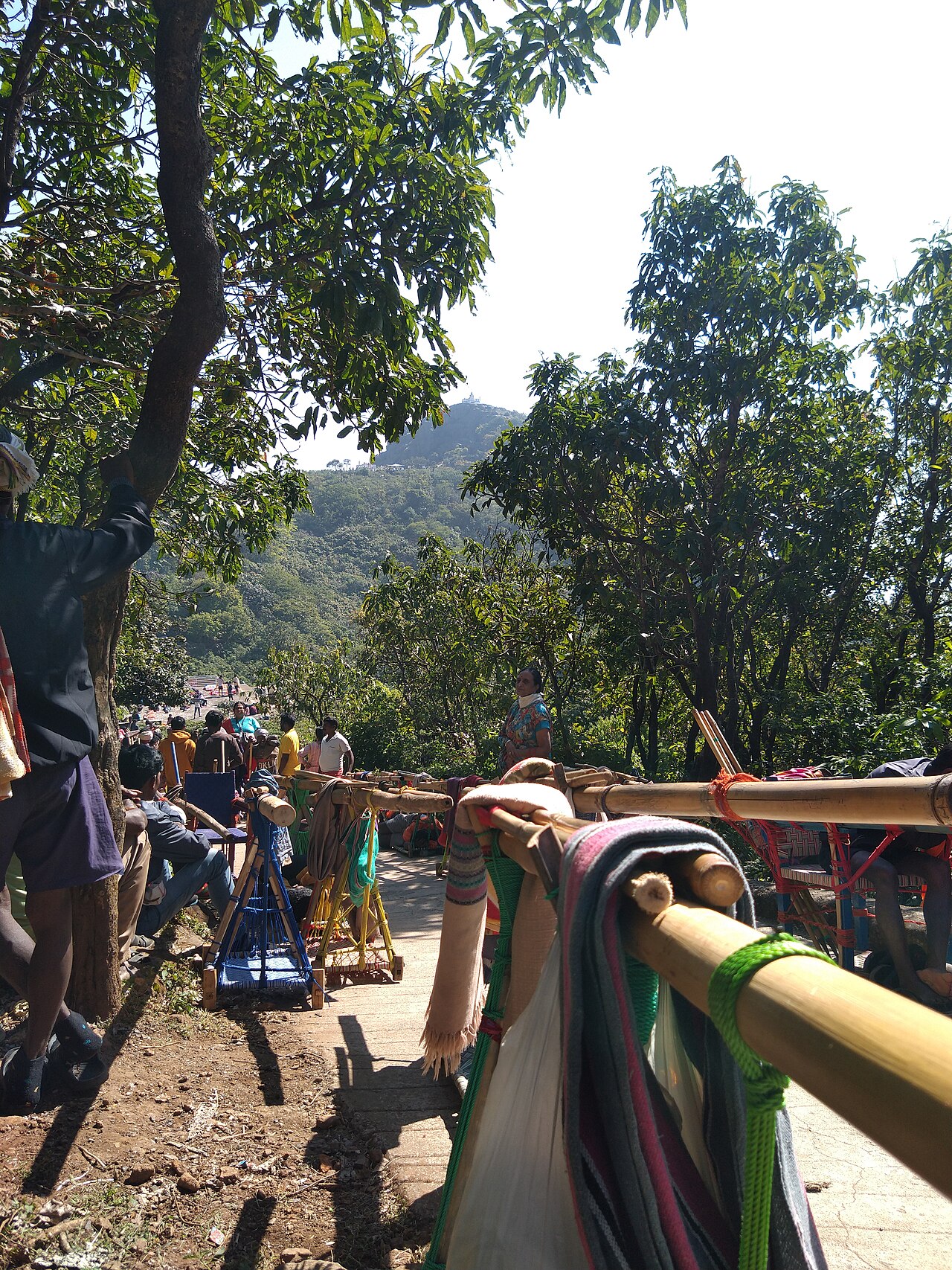
From Madhuban the paved track rises nine kilometres through dense forest along the Gandharva Nala stream. Yatris set out between 2 and 4 am so the ridge is reached by first light; doli bearers wait at the base for those who cannot walk, their bamboo chairs stacked beside the path.
2
The tonks and their footprints
Thirty-one tonks stand along the ridge, small white shrines with carved marble screens. Inside most there is no image at all, only charan, a pair of footprints cut in stone, strewn with rice and almonds by pilgrims doing vandana at the very place a Tirthankara is held to have attained moksha.
3
Jal Mandir and the Parasnath Tonk
Partway along the ridge the marble Jal Mandir gives yatris a place to bathe and change into puja clothes. The path then climbs to the highest point of the hill, the Parasnath tonk on the Suvarnabhadra Kuta, where the footprint of Bhagwan Parshvanath is sheltered beneath a chatra, the umbrella that marks it apart from every other tonk.
Carved footprints of a Tirthankara strewn with rice offerings inside a tonk on ShikharjiDoli bearers with their bamboo chairs on the forest path of Shikharji, the summit tonk visible above
Tirthankara footprints in a tonk, and doli bearers on the path · photos Nizil Shah, CC BY-SA 4.0, Wikimedia Commons
The nirvana day kept on the summit
Moksha Saptami · 19 August 2026
On Shravan Shukla Saptami the Jain world remembers the day Bhagwan Parshvanath attained moksha on the Suvarnabhadra Kuta. The observance is kept in strength at the Parasnath tonk itself: devotees climb through the night, offer Nirvana Laddu at the summit and recite the Nirvana Kanda where the liberation happened. In 2026 Moksha Saptami falls on 19 August.
Reach Madhuban a day early and start well before dawn; the dharamshalas fill fast around the kalyanak days.
Plan your visit
By rail
Parasnath station, about 25 km from Madhuban, on the Grand Chord of the Howrah to Delhi line; autos and shared jeeps run to Madhuban.
By air
Deoghar airport is about 107 km (around 3 hours); Ranchi about 180 km; Kolkata about 340 km by road.
By road
Dhanbad is about 65 km (roughly 1.5 hours). Madhuban village at the base of the hill is where every yatra begins.
The yatra
Departures between 2 and 4 am; the full 27 km circuit of the tonks takes most yatris 8 to 12 hours, and elders may take up to 16.
Best time
October to March, when the air is cool for the long walk. Avoid the monsoon months, when the path turns slippery.
Dress
Modest, simple clothing; nothing of leather. Most yatris walk barefoot, and puja at the Jal Mandir asks for proper puja dress.
Dolis
Chair dolis carried by bearers can be hired at Madhuban for those who cannot walk; arrange one the evening before.
Entry
Free for all. Donations support the Temples, dharamshalas and bhojanshalas.
Shikharji means the venerable peak, and Sammed Shikhar is read as the peak of concentration, for the twenty Tirthankaras who attained moksha here in meditation.
Non-vegetarian food and alcohol are not permitted in Madhuban, no one stays on the hill overnight, and many yatris take nothing but boiled water until they descend.
The Santal people know the hill as Marang Buru, the great mountain, and hold it sacred in their own tradition.
In January 2023, after appeals from Jains across the country, the central government stayed tourism development on Parasnath Hill and directed that its sanctity as a place of pilgrimage be protected.
Questions pilgrims ask
Are there idols in the tonks?
Mostly, no. Each tonk enshrines charan, carved footprints of a Tirthankara, at the spot where tradition holds that soul attained moksha. Digambara and Svetambara pilgrims do vandana at the same tonks, and this absence of images is part of what makes Shikharji unlike any other tirth.
How demanding is the yatra?
It is a full day: about 9 km up from Madhuban, 9 km along the ridge visiting the 31 tonks, and 9 km down, 27 km in all. Most yatris take 8 to 12 hours; elders and families may take up to 16. Dolis can be hired at Madhuban, best arranged the evening before.
Do both Jain traditions worship here?
Yes. Shikharji is held as the holiest pilgrimage of both the Digambara and Svetambara traditions, and the jurisdiction of the main Temples is shared between them. Madhuban has Temple complexes, dharamshalas and bhojanshalas of both.
Can visitors of other faiths climb the hill?
Yes, respectful visitors do. The rules bind everyone equally: nothing of leather, no alcohol, vegetarian food only in Madhuban, and no staying on the hill after the descent.
What is the Jal Mandir?
A marble Temple on the ridge with bathing facilities, where many yatris bathe and change into puja clothes before continuing to the summit tonk of Bhagwan Parshvanath.
Dharamshalas and guest houses near this Sthan, shared by devotees. Adisthan takes no bookings and no money; contact each stay directly.
No stays are listed here yet. Know one that serves pilgrims well?
Are you a trustee, pujari, or sevak of the Shikharji tirth committees or the Madhuban dharamshalas, Digambara or Svetambara? Claim this page to add true timings, yatra notices, and a way for yatris to actually reach you.