Sidi Saiyyed Mosque
Sidi Saiyyed ni Jali · Sidi Sayyed Mosque
About
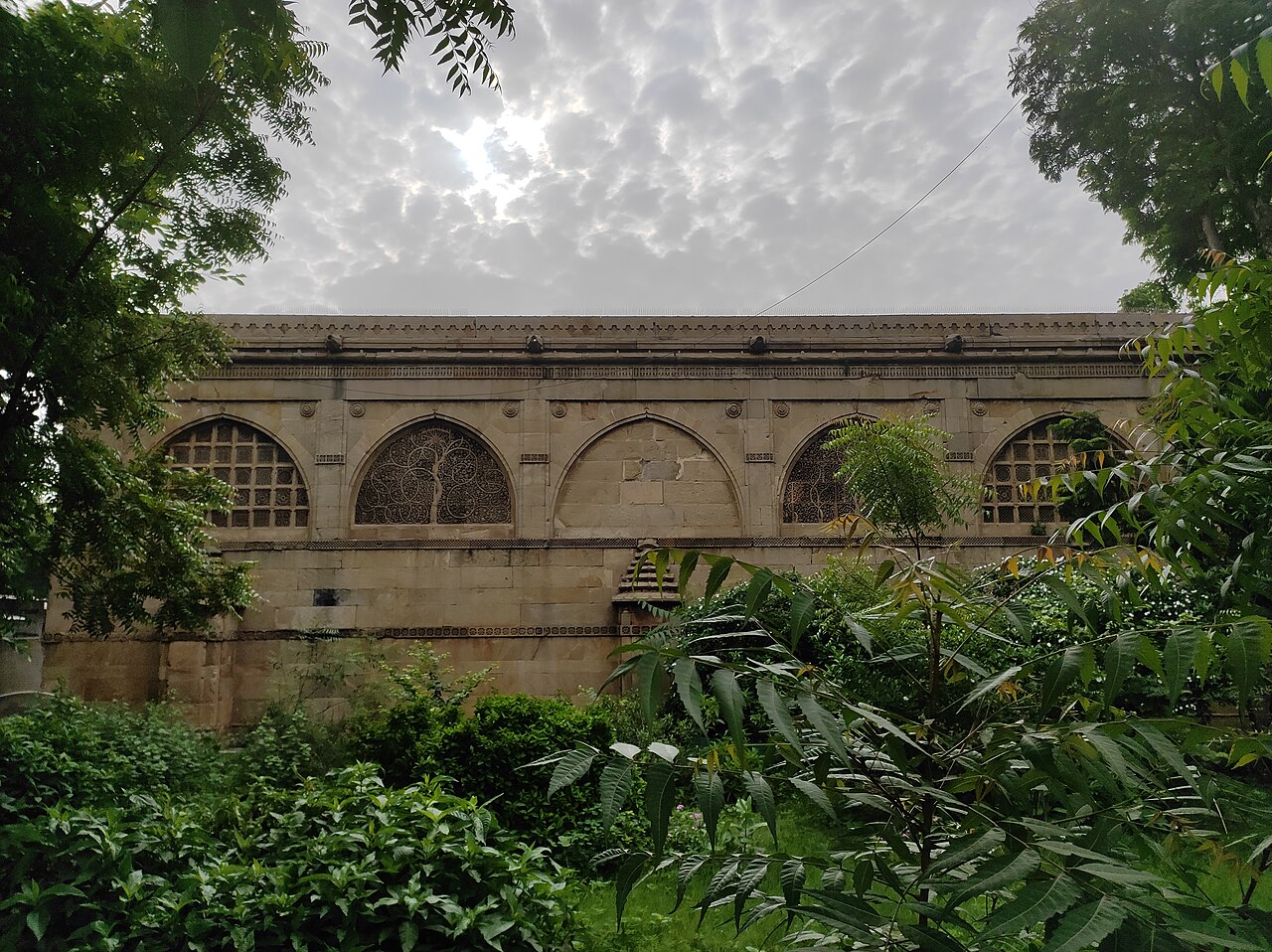
Standing near the old city centre of Ahmedabad, the mosque known in Gujarati as Sidi Saiyyed ni Jali draws worshippers and visitors alike toward a single overwhelming experience: sunlight pressing through intricately pierced stone. Ten lattice windows line the side and rear arches, their patterns ranging from precise geometrical grids to the celebrated pair depicting an intertwined palm whose branches unfurl into foliage across the full expanse of the stone slab, a design so refined that it has never been equalled elsewhere in Indian Islamic architecture.
The rear wall carries square pierced panels in geometrical arrangements, while the two bays flanking the central aisle bear reticulated slabs carved with the tree-and-foliage motif that has made these *jalis* world-famous. Notably, the central window arch, where a comparable *jali* would ordinarily appear, is instead filled with solid stone, a silence widely interpreted as evidence that construction was left incomplete when the Mughal annexation of Gujarat brought the Sultanate to its end.
The mosque was declared a Monument of National Importance, recognising its singular place in India's architectural heritage. The finest of its *jali* screens also gave rise to the logo of the Indian Institute of Management Ahmedabad, carrying Sidi Sayyad's legacy into the visual identity of one of the country's leading institutions.
The mosque remains an active place of prayer, its daily rhythms woven into the life of old Ahmedabad even as visitors pause outside to watch the sky glow through carved stone.
History
A marble tablet on the mosque wall names its builder as Shaikh Sa'id al-Habshi Sultani, remembered as Sidi Sa'id, an Abyssinian who rose from the household of the Turkish general Rumi Khan to become a nobleman in his own right under Sultan Mahmud III and the commander Jhujhar Khan. On his retirement Jhujhar Khan granted him a jagir, and Sa'id used his standing to rebuild a modest earlier brick mosque on this site into the building that stands today, finishing it in 980 AH, 1572 to 1573 CE, the last year of the Gujarat Sultanate before the Mughals took the province. He was buried near the mosque on his death in 1576. Under British administration the building served for a time as a revenue office, its mihrabs converted into storage presses, until Viceroy Lord Curzon ordered the office to vacate as part of his wider policy of preserving India's historic monuments.
Significance
Two bays beside the mosque's central aisle hold the celebrated jali screens, stone carved so finely into an intertwined palm and foliage pattern that it has become the unofficial emblem of Ahmedabad itself, reproduced from souvenir stalls to the crest of the Indian Institute of Management Ahmedabad. The central window arch, where a matching jali would be expected, is instead filled with solid stone, a silence many take as evidence the mosque was left unfinished when Mughal rule arrived. Ahmedabad's inscription as a UNESCO World Heritage City in 2017 drew in part on precisely this concentration of Sultanate-era sacred architecture, and Sidi Saiyyed's mosque, still gathering worshippers for daily prayer more than four centuries on, stands near the centre of it.
Architecture
Gujarat Sultanate mosque architecture; arcuated hypostyle prayer hall with ten carved stone jali lattice screens on the side and rear walls
Visiting
Hours
Hours not listed.
Contact
No contact details listed yet.
Engage with Sidi Saiyyed Mosque
Through the four pathways
Seva सेवा — Service
Offer your time and skills here. The following opportunities are open at Sidi Saiyyed Mosque:
No Seva offerings listed yet.
Sādhana साधना — Practice
Learn the worship and practice associated with Sidi Saiyyed Mosque:
No Sādhana offerings listed yet.
Sandhāna सन्धान — Wisdom
Unite with the wisdom of this tradition:
No Sandhāna offerings listed yet.
Sādhya साध्य — Giving
Support this sacred place according to your means:
No Sādhya offerings listed yet.
All giving flows directly to Sidi Saiyyed Mosque. Adisthan does not take a commission.
Gallery
Related sacred places
 Islam
IslamAbu'l-Fida Mosque
Hama · Syria · mosque
A fourteenth-century Ayyubid mausoleum and Mamluk-era congregational mosque on the banks of the Orontes in Hama, Syria, known locally as the Mosque of the Serpents for the carved pillars at its windows.
 Islam
IslamAdhai Din Ka Jhonpra
Ajmer · India · mosque
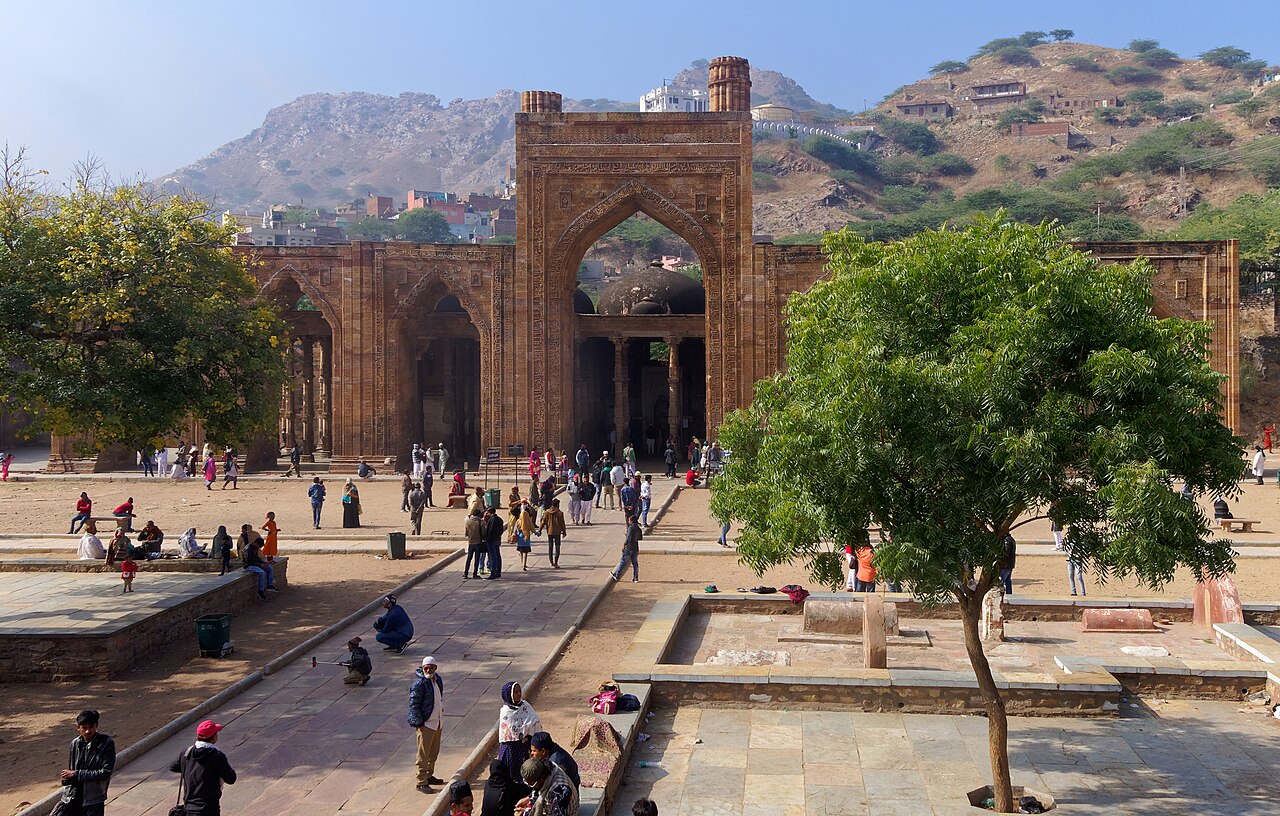
The oldest surviving monument in Ajmer and among the earliest Indo-Islamic mosques in India, its 1199 CE prayer hall and Iltutmish's 1213 CE arched screen rise on 344 pillars carved by Hindu and Jain craftsmen from earlier Temples.
 Islam
IslamAdina Mosque
Pandua · India · mosque
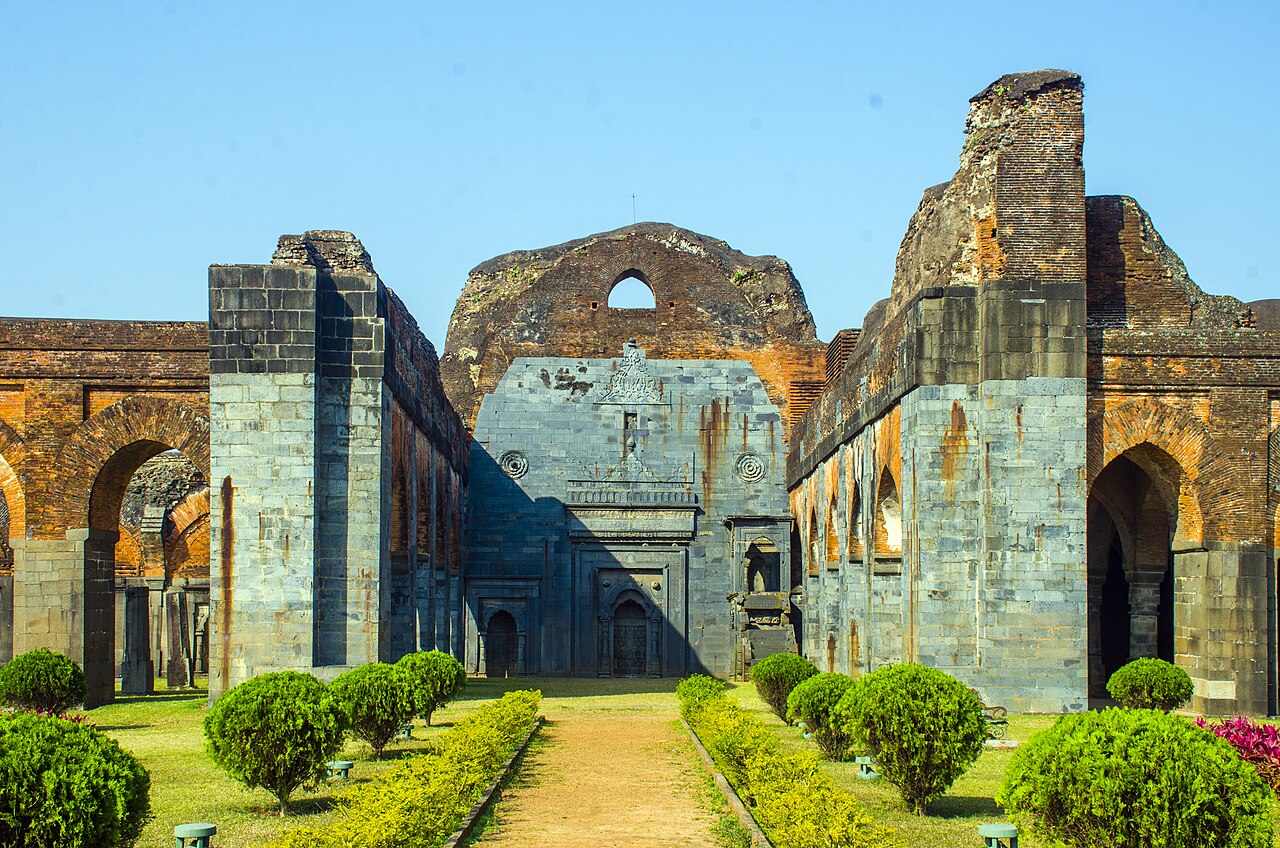
Once the largest mosque on the Indian subcontinent, the Adina Mosque at Pandua in West Bengal was raised by Sultan Sikandar Shah between 1373 and 1375 as the congregational mosque of the Bengal Sultanate, and holds his tomb within its western wall.
 Islam
IslamAjmer Sharif Dargah
Ajmer · India · dargah
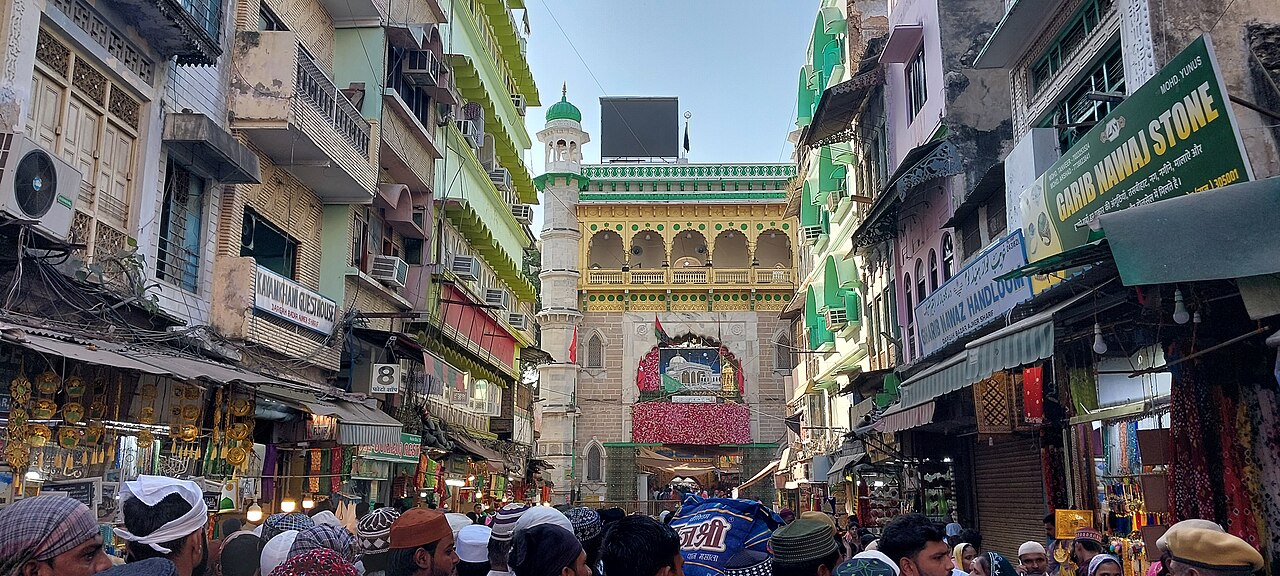
The tomb of Hazrat Khwaja Moinuddin Chishti, Gharib Nawaz, the benefactor of the poor, and the principal Sufi dargah of South Asia, where pilgrims of every community have offered chadars and shared the sweet rice of the great deghs for eight centuries.
Akbarabadi Mosque
Delhi · India · mosque
A mosque raised in 1650 by Akbarabadi Begum, a wife of the Mughal emperor Shah Jahan, in the walled city of Shahjahanabad, demolished by British forces in the aftermath of the 1857 Uprising and today marked only by disputed, unexcavated remains beneath Netaji Subhash Park in Old Delhi.
 Islam
IslamAlamgir Mosque
Varanasi · India · mosque
Raised in 1669 by the Mughal emperor Aurangzeb on the high bank above Panchganga Ghat in Varanasi, the Alamgir Mosque stands where wide stone steps meet the Ganges, its domes and surviving corner turret rising over a site earlier accounts describe as the Hindu Temple of Bindu Madhava.