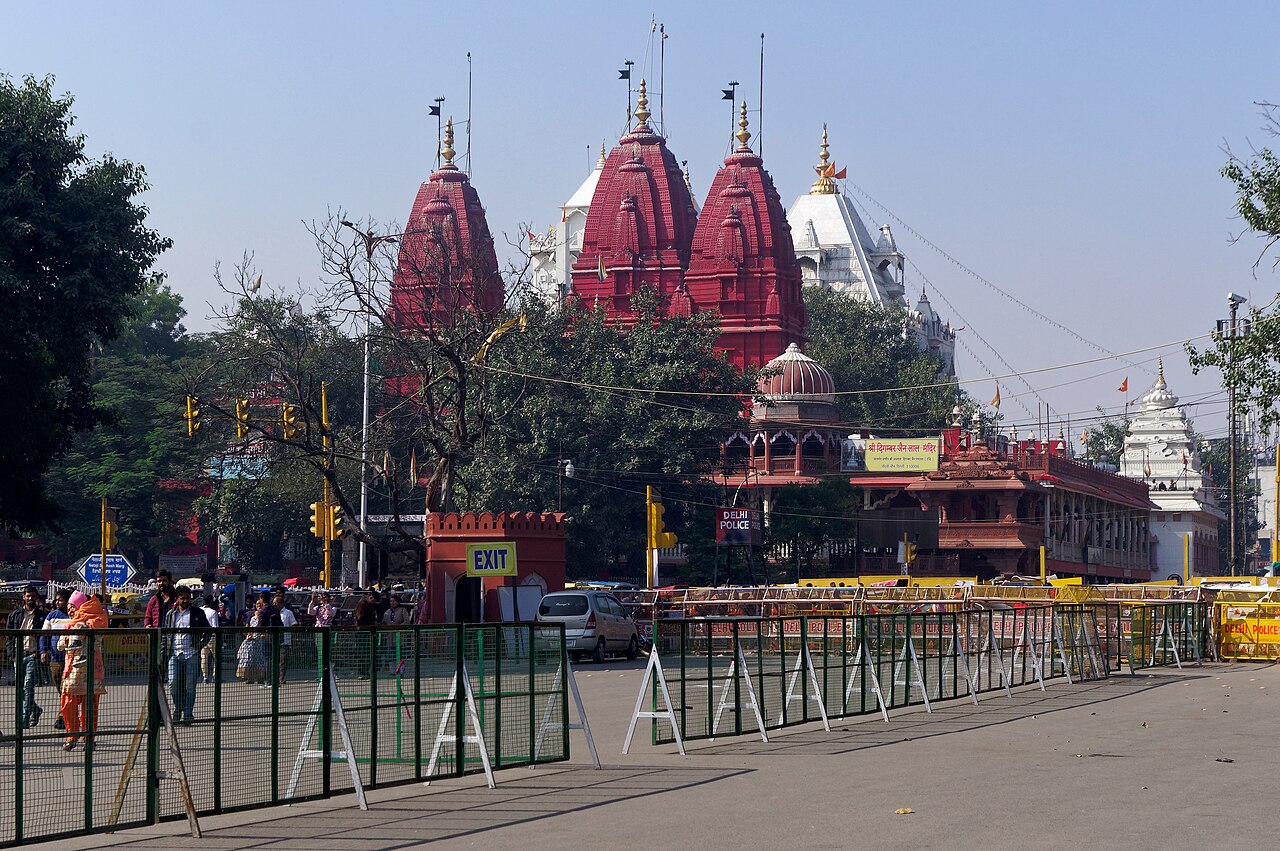
Sri Digambar Jain Lal Mandir
Lal Mandir · Digambar Jain Temple · Urdu Mandir (historic) · Lashkari Mandir (historic)
About
Sri Digambar Jain Lal Mandir stands at the heart of Old Delhi, facing the Red Fort across the historic thoroughfare of Chandni Chowk. Built of red sandstone whose hue gives the Temple its name, the sanctuary is the oldest Jain shrine in the Indian capital and a long-standing focus of Digambar devotion in the city.
The foundation of the Temple is dated by the Jain scholar Balbhadra Jain to 1656, during the reign of the Mughal emperor Shah Jahan, the builder of Shahjahanabad. Tradition relates that a Jain officer in the Mughal army kept a Tirthankara image within his tent for personal worship, and as fellow Jain officers gathered around the small shrine, a permanent Temple gradually took shape upon the site within Shah Jahan's invited Agrawal Jain settlement south of Chandni Chowk.
In its early life the Temple was known by other names that recall its origins in the imperial camp: the Urdu Mandir, after the Urdu Bazaar quarter, and the Lashkari Mandir, from lashkar, the word for an army encampment. The present buildings were raised after the close of the Mughal era, with the principal reconstruction completed in 1878.
A distinctive feature of the precinct is the Jain Birds Hospital located in a building behind the main shrine, where wounded and ill birds are nursed and released. This compassion for all sentient creatures, central to Jain ahimsa, draws visitors from across India and beyond, and lends the Temple a living expression of the principles its rituals proclaim.
History
The Temple's origins trace to 1656, during the reign of Shah Jahan, when a Jain officer in the Mughal army is said to have kept a Tirthankara image in his tent for personal worship within the army encampment south of Chandni Chowk. Fellow Jain officers gathered around the small shrine until a permanent Temple took shape on the site, known in its early years as the Urdu Mandir and the Lashkari Mandir, the camp Temple. The present buildings date largely from a reconstruction of 1878, and the community still recalls how Aurangzeb, after banning musical instruments at the Temple, lifted the ban himself upon witnessing that its drums could not be silenced.
Significance
The Temple's main shrine holds a dark image of Lord Parshvanath, with further shrines to Lord Mahavira and Lord Rishabhanatha within the same hall, drawing Digambara Jains for daily darshan and for the observance of Paryushan and Das Lakshana Parva. Behind the main shrine, the Jain Birds Hospital nurses the sick and injured birds of Old Delhi, carrying the principle of ahimsa into daily practice at the threshold of one of India's oldest streets.
Architecture
Mughal-era Jain Temple architecture in red sandstone, three shikhara-topped spires over a first-floor sanctum reached across a colonnaded courtyard
Visiting
Hours
Hours not listed.
Contact
No contact details listed yet.
Engage with Sri Digambar Jain Lal Mandir
Through the four pathways
Seva सेवा — Service
Offer your time and skills here. The following opportunities are open at Sri Digambar Jain Lal Mandir:
No Seva offerings listed yet.
Sādhana साधना — Practice
Learn the worship and practice associated with Sri Digambar Jain Lal Mandir:
No Sādhana offerings listed yet.
Sandhāna सन्धान — Wisdom
Unite with the wisdom of this tradition:
No Sandhāna offerings listed yet.
Sādhya साध्य — Giving
Support this sacred place according to your means:
No Sādhya offerings listed yet.
All giving flows directly to Sri Digambar Jain Lal Mandir. Adisthan does not take a commission.
Festivals & Events
- Sept
Das Lakshana Parva
16 September 2026 · annual
The Digambara community's ten-day observance of the supreme virtues, marked at the Temple with extended opening hours, fasting and scriptural recitation, distinct from the eight-day Paryushan kept by Svetambara Jains in the same season.
- Apr
Mahavir Jayanti
19 April 2027 · annual
The birth anniversary of Lord Mahavira, the twenty-fourth and last Tirthankara, observed at the Temple with darshan, processions and readings from Jain scripture.
Gallery
Related sacred places
 Jainism
Adinatha Temple
Khajuraho · India · temple
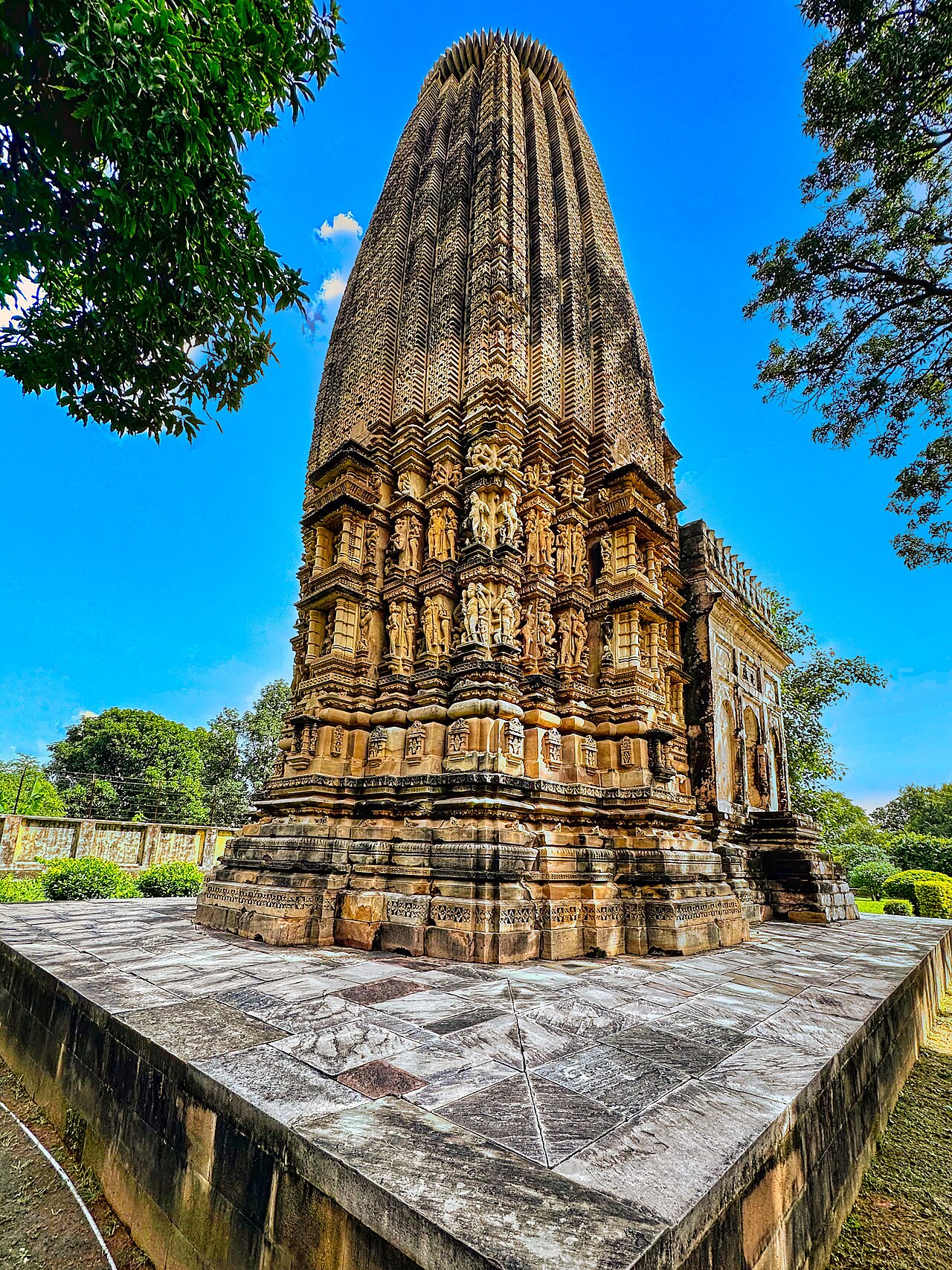
A Digambara Jain shrine within Khajuraho's Eastern Group of Temples, dedicated to Lord Adinatha, the first tirthankara, its curvilinear sandstone tower carved in the late eleventh century for a Hindu patron before passing into Jain hands.
 Jainism
Aharji
Aharji · India · temple
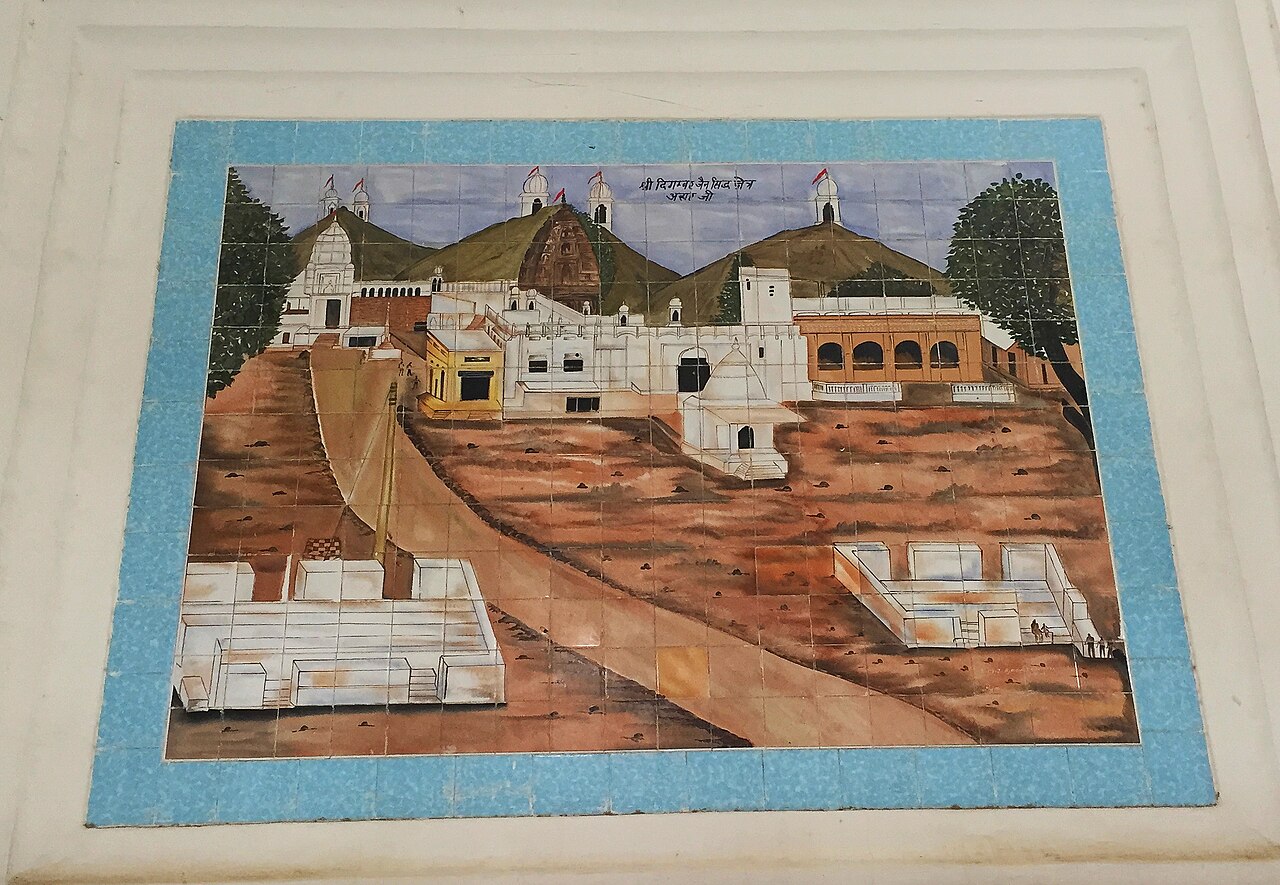
A Digambara Jain tirtha in the Bundelkhand region of Madhya Pradesh, where an eighteen-foot Chandella-era colossus of Lord Shantinatha stands in silent meditation at the heart of a Temple complex raised across three centuries.
 Jainism
Ahinsa Sthal
New Delhi · India · temple
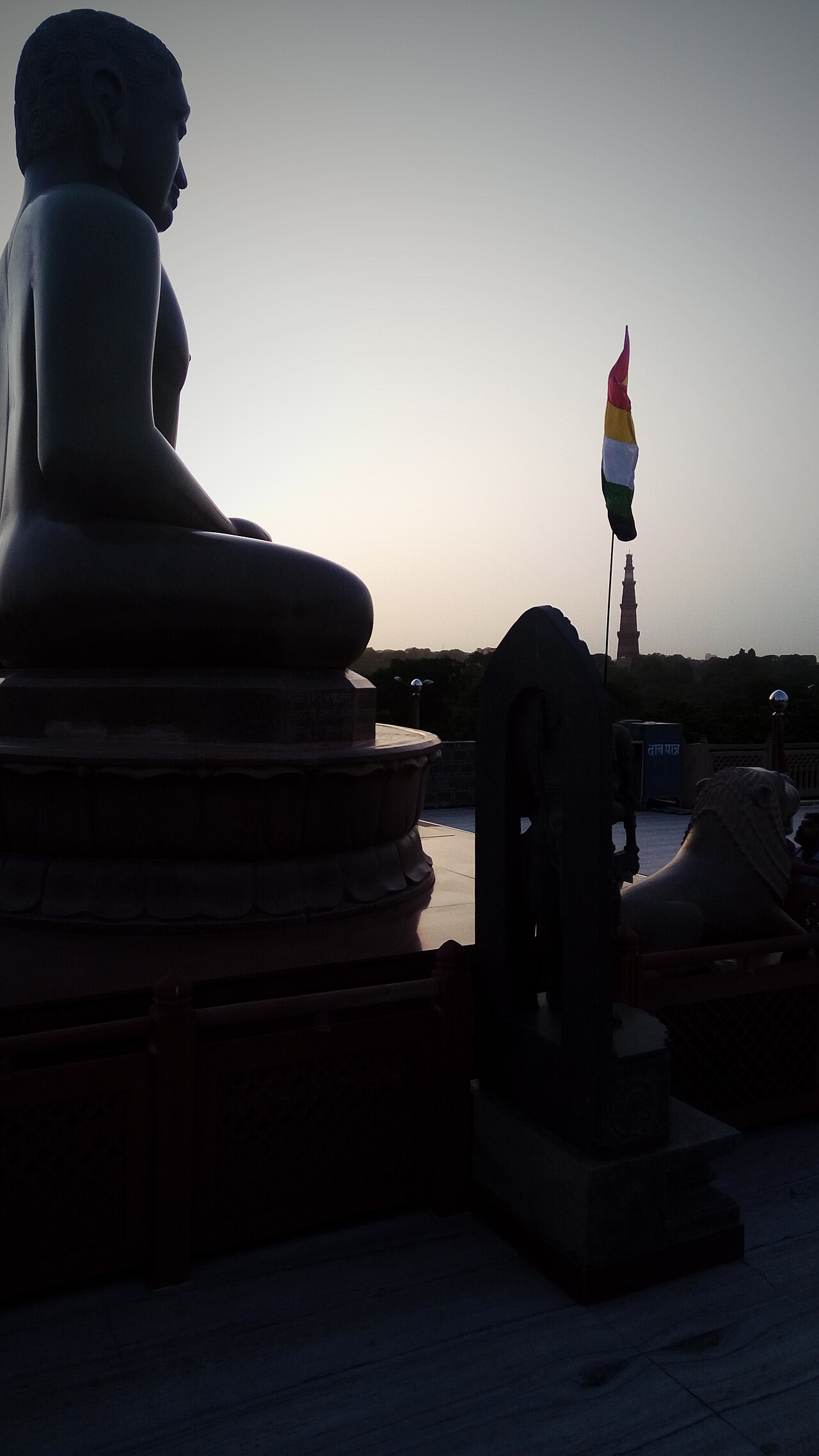
A modern Digambara Jain shrine on a terrace in Mehrauli, New Delhi, built in 1980 around a colossal granite image of Lord Mahavira seated in deep meditation, its very name declaring the tradition's central vow: ahimsa, harmlessness toward every living being.
 Jainism
Ajmer Jain Temple
Ajmer · India · temple
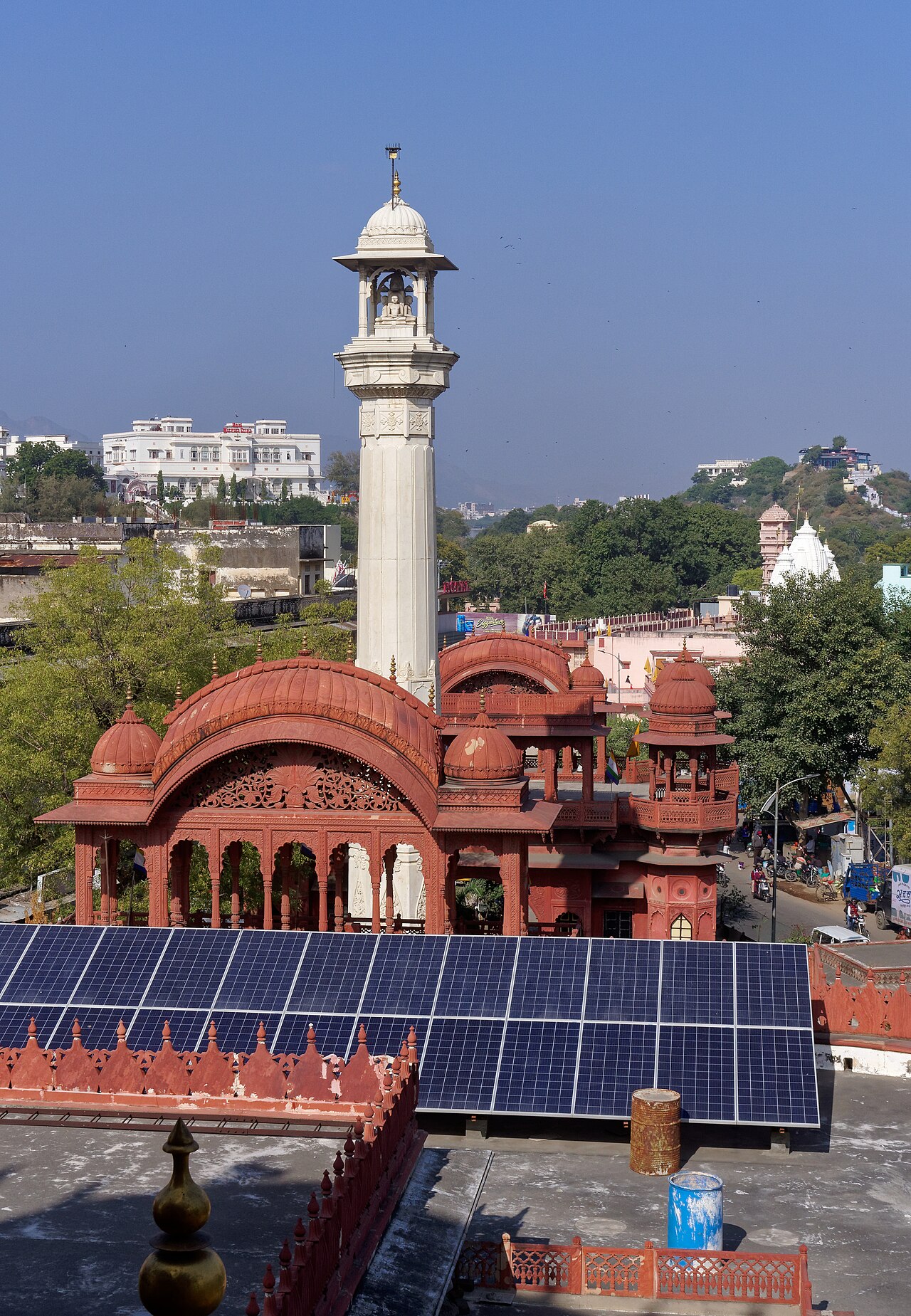
Popularly called Soniji Ki Nasiyan or the Red Temple, this Digambara Jain Temple on Prithviraj Marg in Ajmer pairs a red sandstone sanctuary, crowned by an eighty two foot marble pillar, with a golden upper hall whose gilded tableaux retell the life of Lord Rishabhdev, the first tirthankara.
 Jainism
Akkana Basadi
Shravanabelagola · India · temple
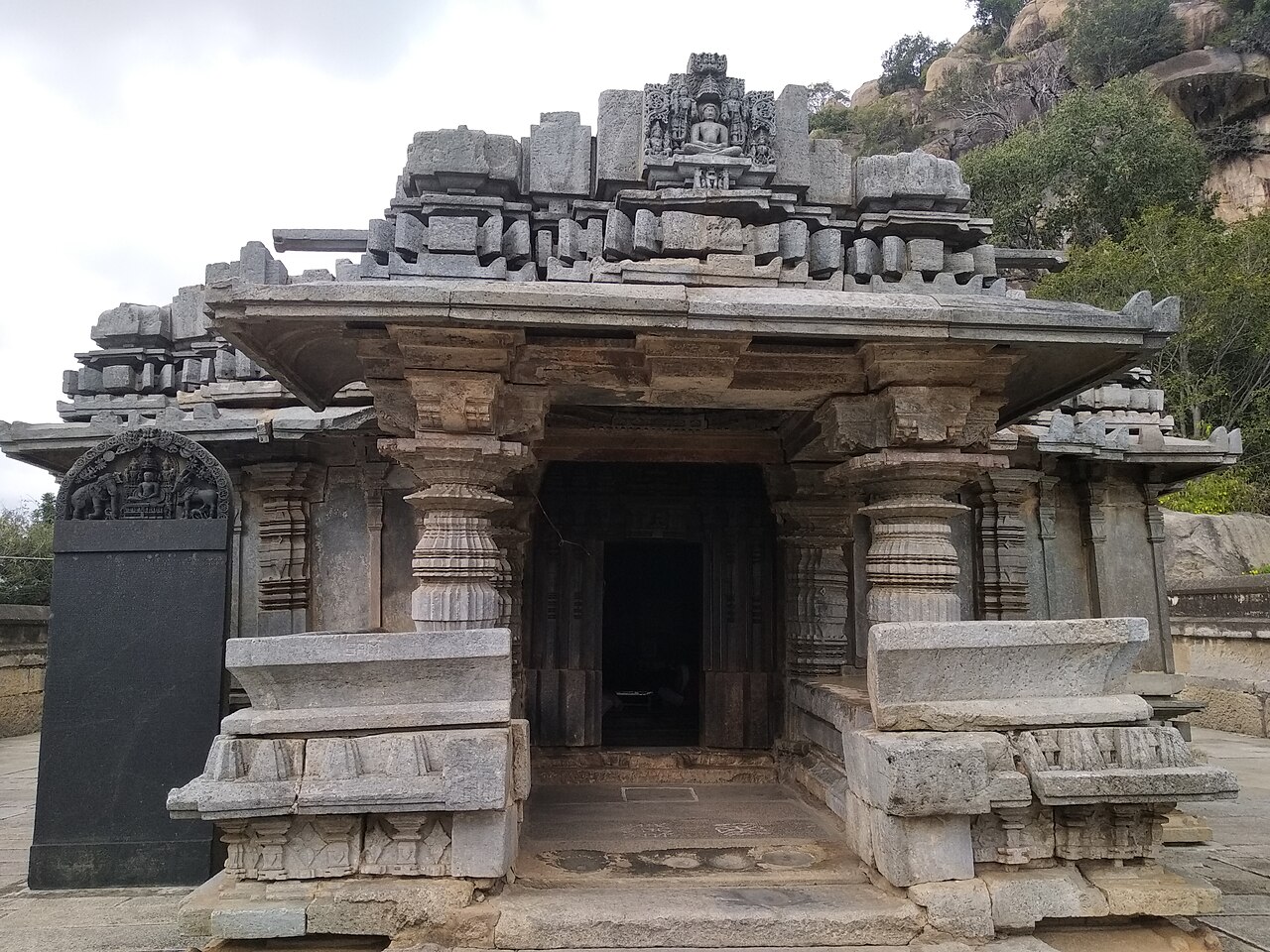
Consecrated in 1181 CE on Chandragiri hill at Shravanabelagola, Karnataka, Akkana Basadi is a Hoysala-era Jain basadi raised by the devout laywoman Achiyakka in honour of Tirthankara Parshvanatha, its deliberately plain stone walls and lathe-turned pillars a quiet expression of Jain austerity.
 Jainism
Bawangaja
Bawangaja · India · temple
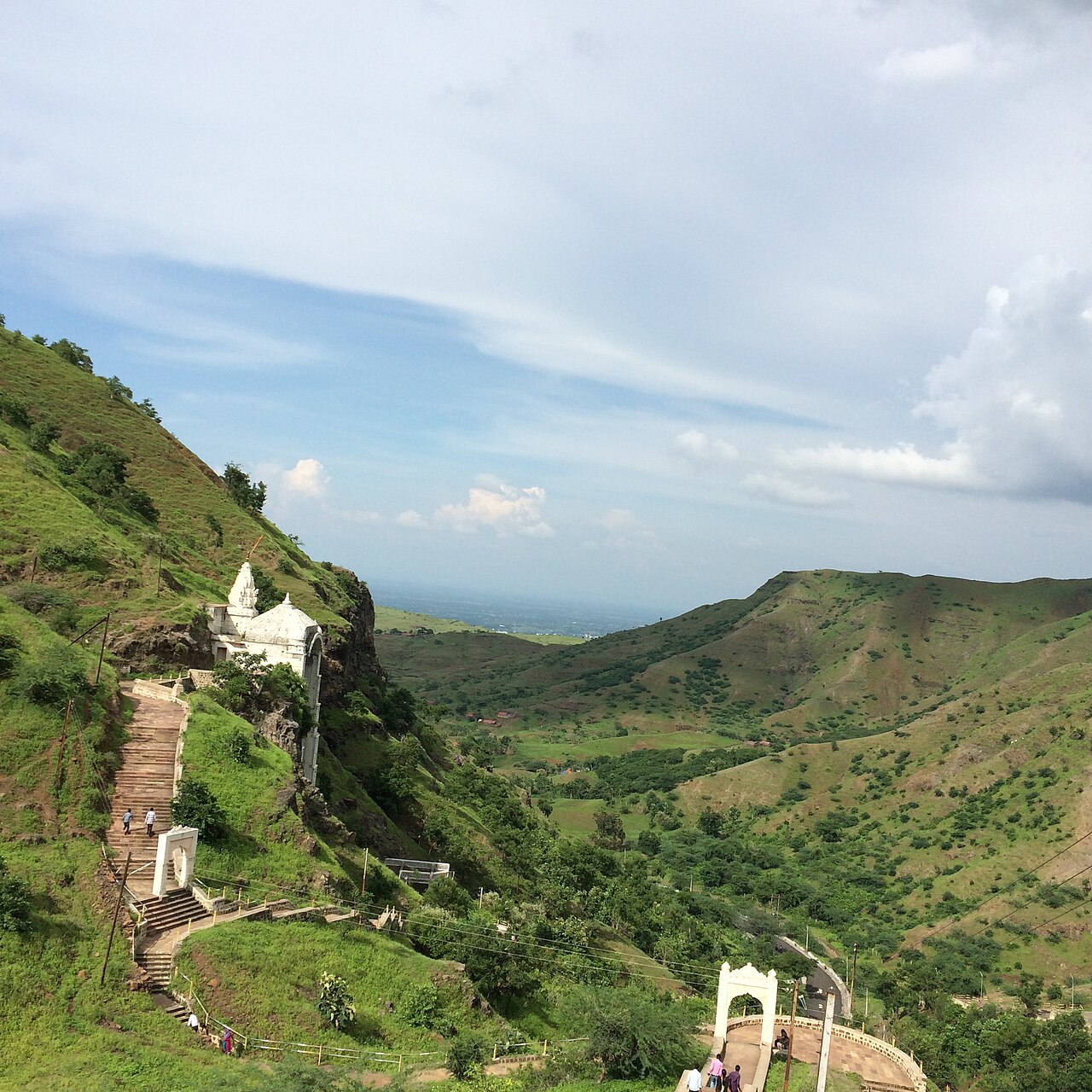
A Digambara Jain tirtha in the Satpura hills of Barwani district, Madhya Pradesh, where an 84-foot monolithic image of Lord Rishabhanatha (Adinatha), the first Tirthankara, stands carved directly from the mountain.