
Sujata Garh
Sujata Stupa · Sujata Kuti Stupa
About
Rising from the village of Senanigrama, also called Bakraur, on the eastern bank of the Phalgu River in Bihar, Sujata Garh stands within easy walking distance of Bodh Gaya, perhaps twenty minutes across the river from that most celebrated of Buddhist sites. Where Bodh Gaya marks the moment of the Buddha's awakening, this weathered stupa of ancient brick marks the act of human kindness that made it possible.
The stupa takes its name from Sujata, a young woman of this village who, according to tradition, came upon the future Buddha seated beneath a Banyan tree after seven years of rigorous fasting and ascetic discipline. Her gift of milk cooked with rice revived him, and it was in the nourishment that followed, and the recognition that extreme mortification was not the path, that Gautama perceived the Middle Way, the balanced course between self-denial and indulgence that would become the bedrock of Buddhist teaching.
The earliest layers of the structure date to around the 2nd century BCE, a chronology supported by Dark Grey polished pottery fragments and a punch-marked coin found at the associated monastic complex nearby. Over many subsequent centuries the monument was rebuilt and enlarged several times, accumulating votive attention from successive generations of devotees and patrons. During the 9th century CE, the Pala dynasty king Devapala appears to have sponsored its final major phase of construction; an inscribed stone plaque recovered by the Archaeological Survey of India, during excavations conducted in 1973–74 and again from 2001 to 2006, bears the Sanskrit dedication "Devapala Rajasya Sujata Griha," meaning "Sujata's House, of King Devapala."
An Ashoka pillar once graced the site but was broken apart for building material during the nineteenth century. What survived was repositioned at the Gol Pather intersection in Gaya and later moved to Bodh Gaya in 1956. For much of the intervening scholarly tradition, the stupa had been tentatively linked to a different legend, the Gandha-hasti, or Perfumed Elephant, a figure from the Jataka stories representing a prior life of the Buddha. That association derived from the 7th-century Chinese pilgrim Hiuen Tsiang, who described in his 大唐西域記 a stupa and column at the spot where this fragrant elephant once dwelt. The Devapala inscription has since established the site's true commemorative purpose beyond reasonable doubt.
History
The earliest brickwork here is dated to around the 2nd century BCE on the evidence of dark grey polished pottery and a punch-marked coin recovered from the adjoining monastic remains, and the seventh-century Chinese pilgrim Xuanzang recorded a stupa and column already standing at this spot on his travels. The mound was enlarged and rebuilt across many centuries, reaching what appears to be its final form under the Pala king Devapala in the 9th century CE, a dating confirmed by an inscribed plaque, uncovered by the Archaeological Survey of India during excavations in 1973-74 and again in 2001-06, reading 'Devapala Rajasya Sujata Griha', Sujata's House, of King Devapala. An Ashoka pillar that once stood beside the stupa was broken up for building stone in the nineteenth century; its surviving fragment was moved to Bodh Gaya in 1956. Before the Devapala plaque came to light, scholars had followed Xuanzang in linking the site to the Jataka legend of the Gandha-hasti, the Perfumed Elephant; the inscription settled the question in favour of Sujata.
Significance
Buddhist tradition holds that it was here that Sujata found the Bodhisattva after his seven years of fasting and offered him rice cooked in milk, nourishment that tradition says opened his eyes to the Middle Way between indulgence and self-denial, the path that carried him onward to awakening at Bodh Gaya. Pilgrims who cross the Phalgu River from the Mahabodhi Temple to this quiet mound of brick retrace that same sequence, from the gift that sustained the Buddha to the tree beneath which he became enlightened.
Architecture
Ancient terraced brick stupa mound, built up across successive phases from the 2nd century BCE to the 9th century CE Pala-era reconstruction
Visiting
Hours
Hours not listed.
Contact
No contact details listed yet.
Engage with Sujata Garh
Through the four pathways
Seva सेवा — Service
Offer your time and skills here. The following opportunities are open at Sujata Garh:
No Seva offerings listed yet.
Sādhana साधना — Practice
Learn the worship and practice associated with Sujata Garh:
No Sādhana offerings listed yet.
Sandhāna सन्धान — Wisdom
Unite with the wisdom of this tradition:
No Sandhāna offerings listed yet.
Sādhya साध्य — Giving
Support this sacred place according to your means:
No Sādhya offerings listed yet.
All giving flows directly to Sujata Garh. Adisthan does not take a commission.
Gallery
Related sacred places
 Buddhism
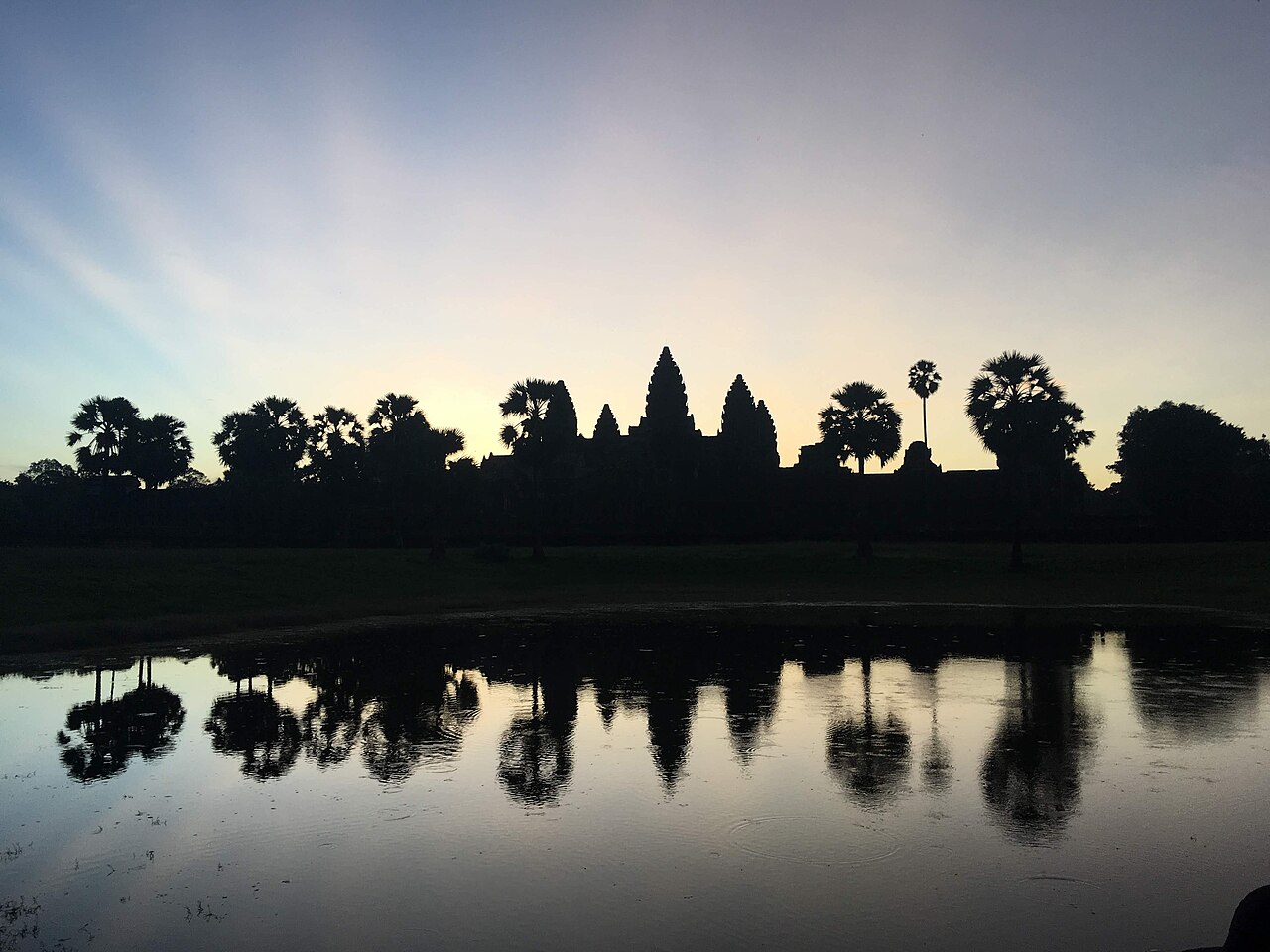
Angkor Wat
Siem Reap · Cambodia · temple
The largest religious monument on earth, built for Lord Vishnu by Suryavarman II in the 12th century and in continuous worship ever since: a living Theravada Buddhist Temple whose five towers stand on the Cambodian flag.
 Buddhism
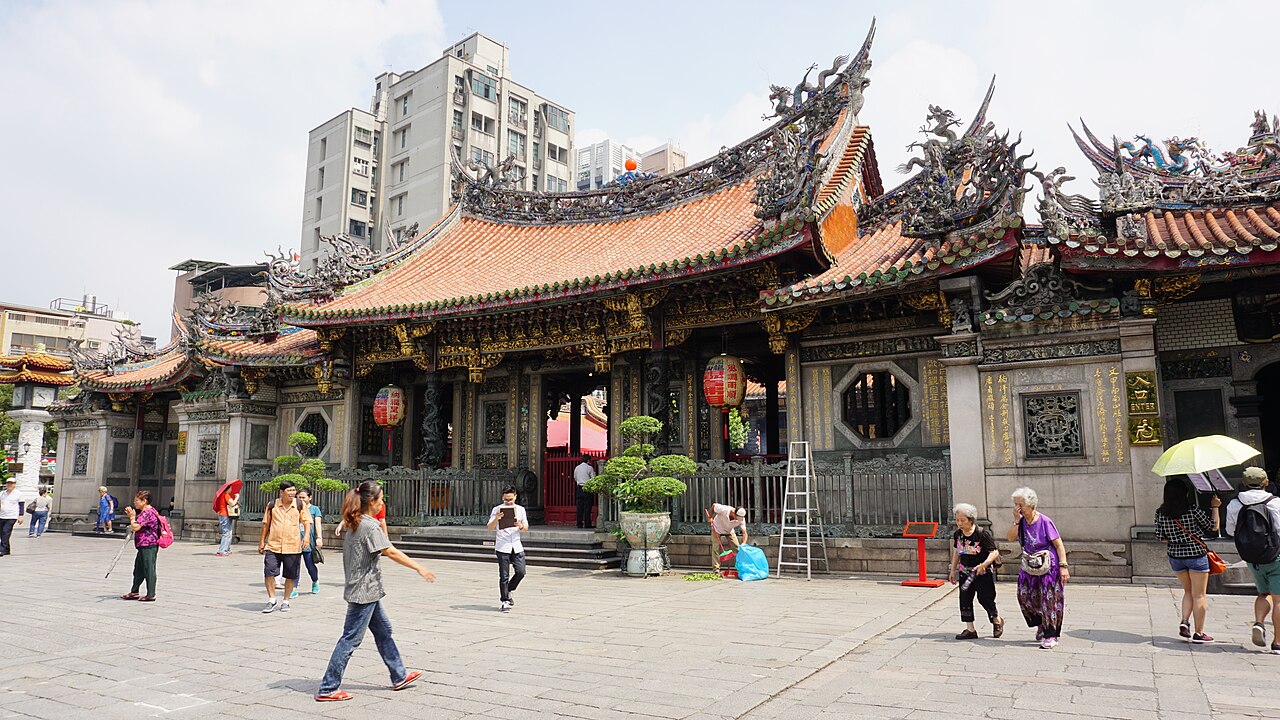
Bangka Lungshan Temple
Taipei (Wanhua) · Taiwan · temple
Taipei's mother Temple to Guanshiyin, founded by Fujian settlers in 1738 in the old Bangka quarter: a front hall to the bodhisattva of compassion and a rear hall of more than a hundred Taoist and folk gods, whose Guanyin statue survived the 1945 bombing intact.
 Buddhism
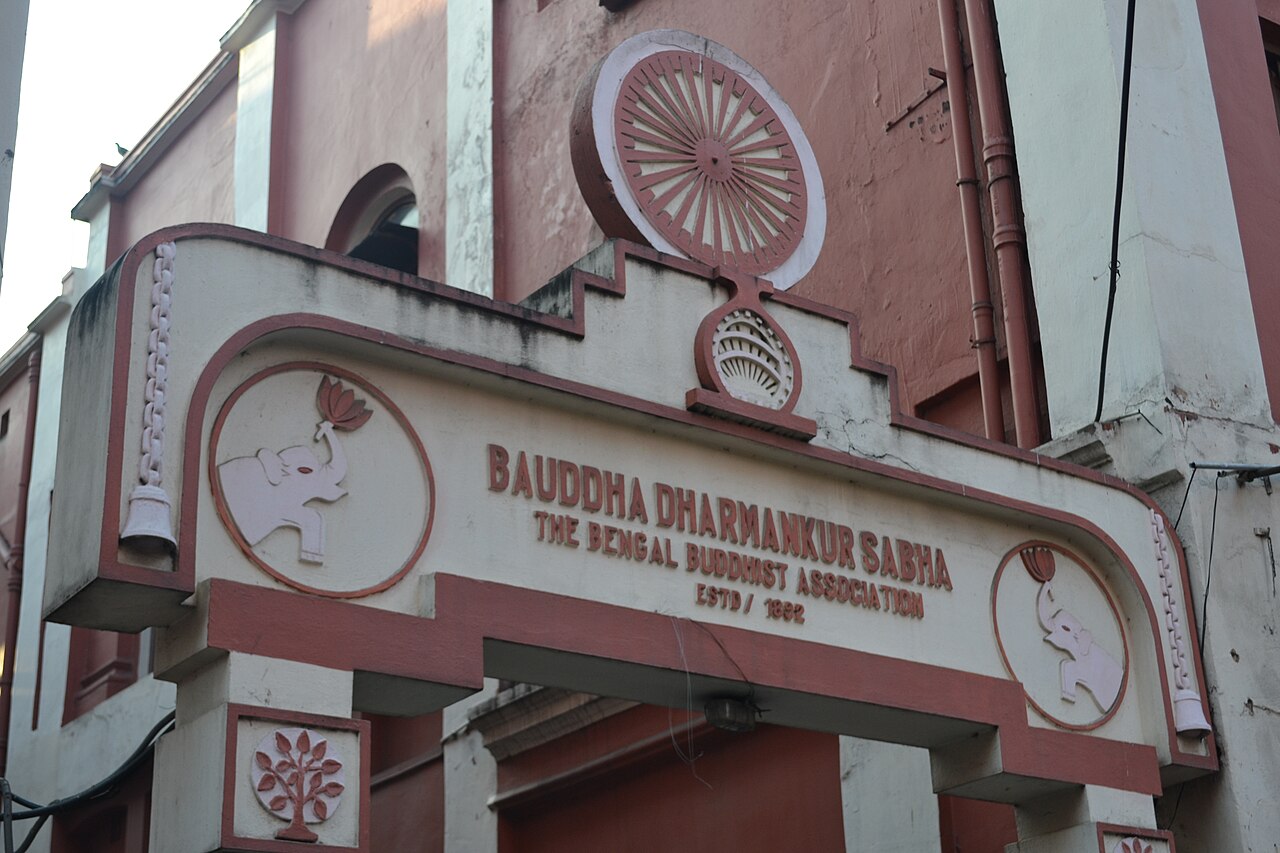
Bengal Buddhist Association
Kolkata · India · monastery
Founded in Kolkata in 1892 by Kripasaran Mahasthavir, the Bengal Buddhist Association, known in Bengali as Bauddha Dharmankur Sabha, raised the Dharmankur Vihara at Bow Barracks in 1903 and has worked for over a century to revive the Dharma in eastern India.
 Buddhism
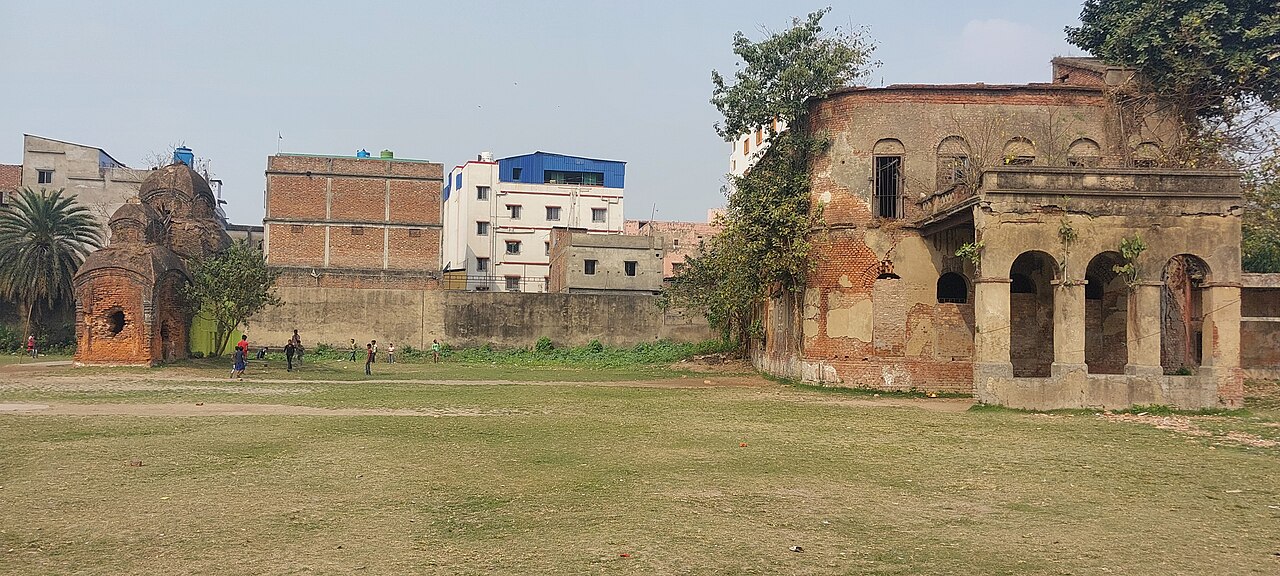
Bhot Bagan Math
Ghusuri · India · monastery
A brick monastery on the Hooghly riverside at Ghusuri, Howrah, founded in 1776 as the first Tibetan Buddhist religious foundation on the plains of India and still known popularly as Mahakal Math for the Tibetan deity images once installed in its sanctum.
 Buddhism
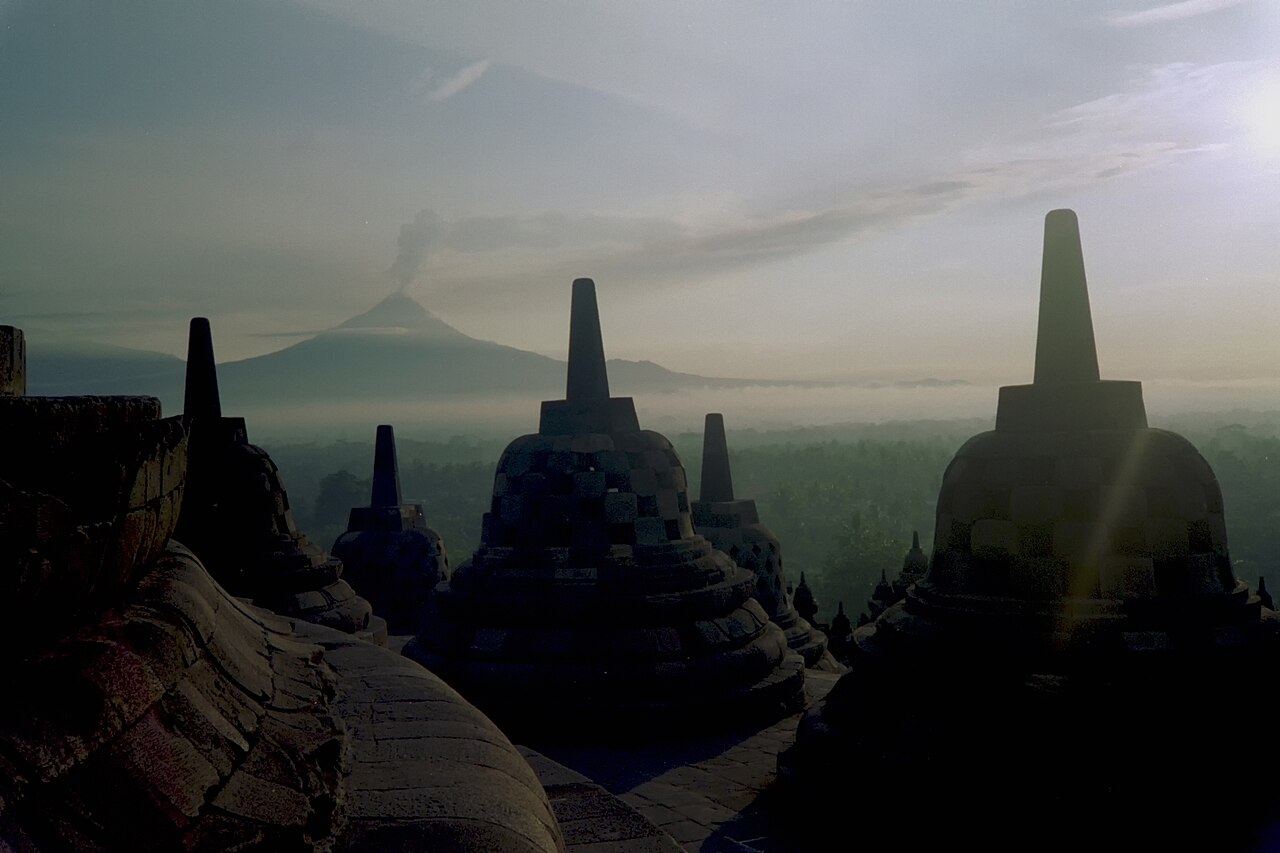
Borobudur
Magelang · Indonesia · temple
The world's largest Buddhist Temple: a ninth-century mandala in stone on Java's Kedu Plain, nine terraces rising through the three realms to 72 latticed stupas, each sheltering a seated Buddha.
 Buddhism
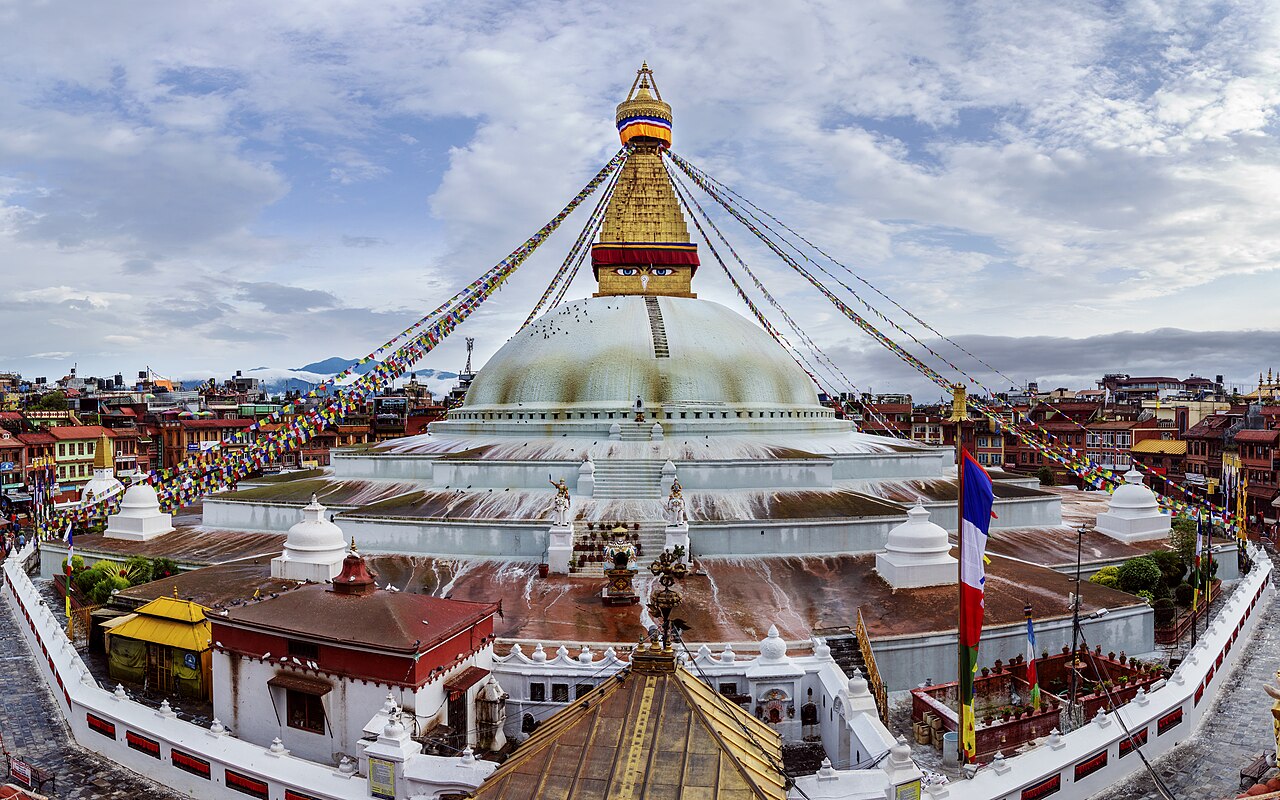
Boudhanath Stupa
Kathmandu · Nepal · stupa
The largest spherical stupa in Nepal, its all-seeing Buddha eyes watching over the kora walked daily by the Tibetan Buddhist community of Boudha, the heart of Vajrayana practice in the Kathmandu Valley.