
Taj-ul-Masajid
Taj-ul-Masjid · Tāj-ul-Masājid (تَاجُ ٱلْمَسَاجِد) · Crown of Mosques
About
Taj-ul-Masajid stands as the grandest place of Muslim worship on Indian soil, capable of accommodating some 26,000 faithful within its expansive prayer halls and open courtyard. Affiliated with the Tablighi Jamaat and rooted in the Deobandi tradition, the mosque belongs to the Sunni community and has served as a major centre of congregational life for over a century. Its full Arabic title, Tāj-ul-Masājid (تَاجُ ٱلْمَسَاجِد), translates simply as "Crown of Mosques", a name it has earned through both scale and spiritual stature.
The structure draws heavily on Mughal architectural precedent, evoking the grandeur of Delhi's Jama Masjid and Lahore's Badshahi Mosque in its proportions and detailing. A rose-hued facade frames the entrance, above which rise two eighteen-storey octagonal minarets crowned with gleaming marble domes. The main prayer hall is distinguished by an array of soaring pillars supporting twenty-seven ornately vaulted ceilings, sixteen of which bear delicate petalled decorations. Nine cusped multi-fold arches open the hall to light and air, while floors of polished marble lend the interior a luminous serenity.
Beyond the prayer hall, a broad courtyard encircles a large central ablution tank where worshippers prepare for prayer. The double-storeyed gateway, adorned with four recessed archways, echoes classical Mughal gateway forms. Notably, the mosque includes a zenana, a dedicated space for women, which was uncommon in mosques of the era when it was built, reflecting a deliberate concern for inclusive worship.
History
Nawab Shah Jahan Begum of Bhopal began the mosque's construction in the newly laid-out quarter of Shahjahanabad, by one estimate around 1871, though the Bhopal journalist Aarif Aziz records 1887 in his study Masajid-e-Bhopal. She died in 1901 with the work unfinished, and her daughter, Sultan Jahan Begum, carried the project forward for the rest of her own life without seeing it completed. The Islamic scholar Imran Khan Nadwi later led the remaining construction, with his brother Salman Khan Nadwi supervising the work day to day, and the mosque was finally completed in 1958. The Emir of Kuwait later donated decorative motifs drawn from thirteenth century Syrian mosques for a renovation of the entrance, given in memory of his late wife.
Significance
With capacity for some 26,000 worshippers across its prayer hall and courtyard, an interior area of roughly 13,000 square metres, Taj-ul-Masajid is the largest mosque in India and ranked, as of 2014, the ninth largest in the world. From 1948 until 2001 it hosted the annual Bhopal Tablighi Ijtema, a three day gathering of the Tablighi Jamaat that eventually outgrew the site and moved to Intkhedi on the city's edge. The mosque includes a zenana, a section reserved for women's prayer, unusual for a mosque of its era, and stands today as both a working Friday mosque and a monument to the Begums whose patronage shaped Bhopal's skyline.
Architecture
Mughal-inspired Indo-Islamic architecture; pink sandstone facade, twin eighteen-storey octagonal minarets (67m) crowned with marble domes, three marble domes over the prayer hall, double-storeyed gateway with four recessed archways
Visiting
Daily worship
| Open to visitors daily (non-Muslim visitors not admitted Fridays) | 06:00 to 20:00 |
Hours
Hours not listed.
Contact
No contact details listed yet.
Engage with Taj-ul-Masajid
Through the four pathways
Seva सेवा — Service
Offer your time and skills here. The following opportunities are open at Taj-ul-Masajid:
No Seva offerings listed yet.
Sādhana साधना — Practice
Learn the worship and practice associated with Taj-ul-Masajid:
No Sādhana offerings listed yet.
Sandhāna सन्धान — Wisdom
Unite with the wisdom of this tradition:
No Sandhāna offerings listed yet.
Sādhya साध्य — Giving
Support this sacred place according to your means:
No Sādhya offerings listed yet.
All giving flows directly to Taj-ul-Masajid. Adisthan does not take a commission.
Gallery
Related sacred places
 Islam
IslamAbu'l-Fida Mosque
Hama · Syria · mosque
A fourteenth-century Ayyubid mausoleum and Mamluk-era congregational mosque on the banks of the Orontes in Hama, Syria, known locally as the Mosque of the Serpents for the carved pillars at its windows.
 Islam
IslamAdhai Din Ka Jhonpra
Ajmer · India · mosque
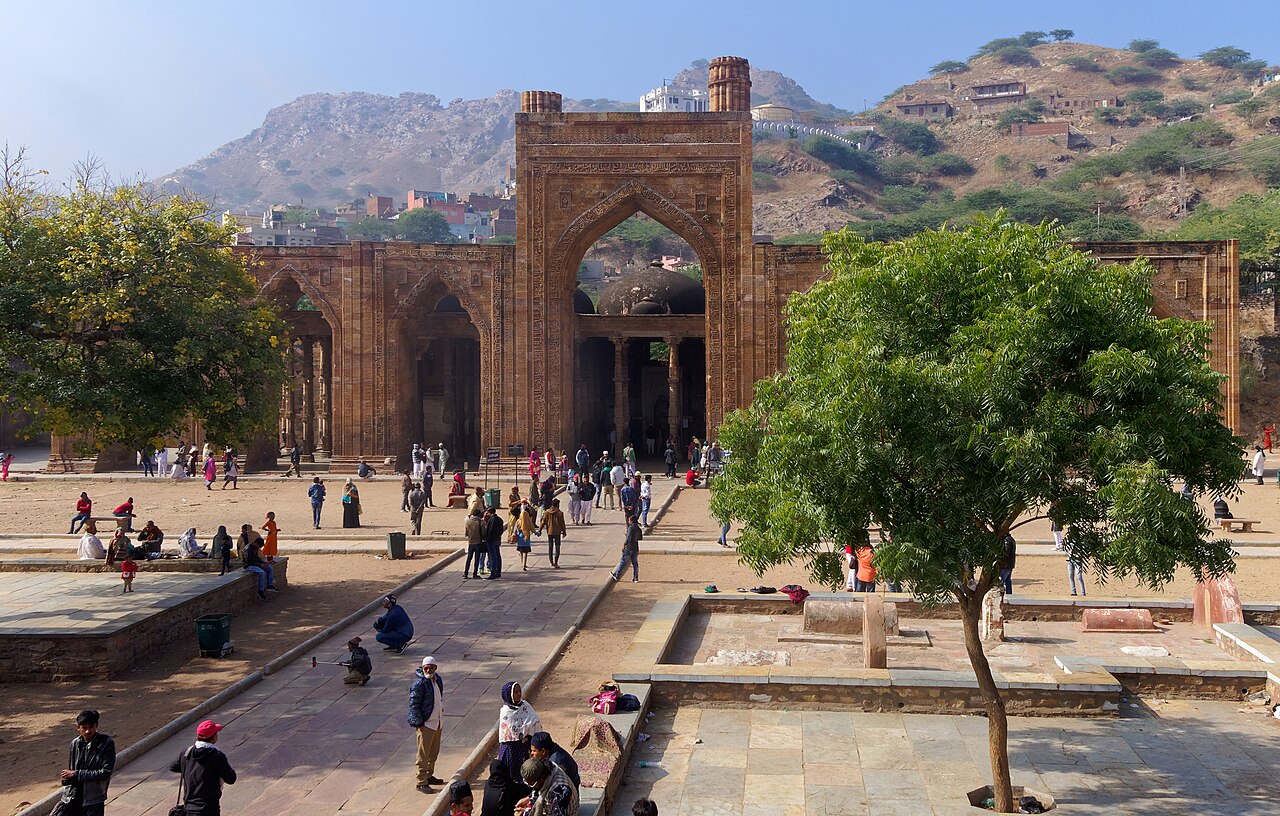
The oldest surviving monument in Ajmer and among the earliest Indo-Islamic mosques in India, its 1199 CE prayer hall and Iltutmish's 1213 CE arched screen rise on 344 pillars carved by Hindu and Jain craftsmen from earlier Temples.
 Islam
IslamAdina Mosque
Pandua · India · mosque
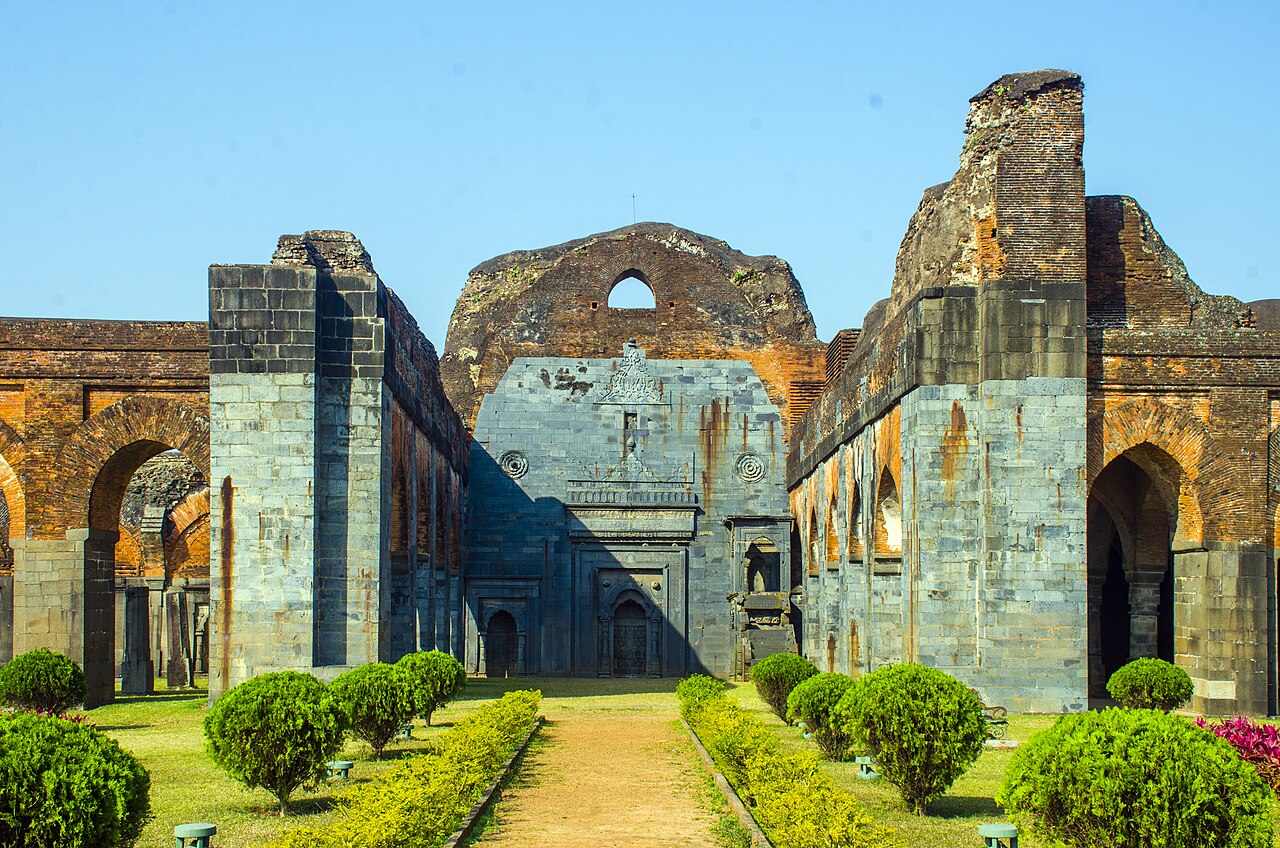
Once the largest mosque on the Indian subcontinent, the Adina Mosque at Pandua in West Bengal was raised by Sultan Sikandar Shah between 1373 and 1375 as the congregational mosque of the Bengal Sultanate, and holds his tomb within its western wall.
 Islam
IslamAjmer Sharif Dargah
Ajmer · India · dargah
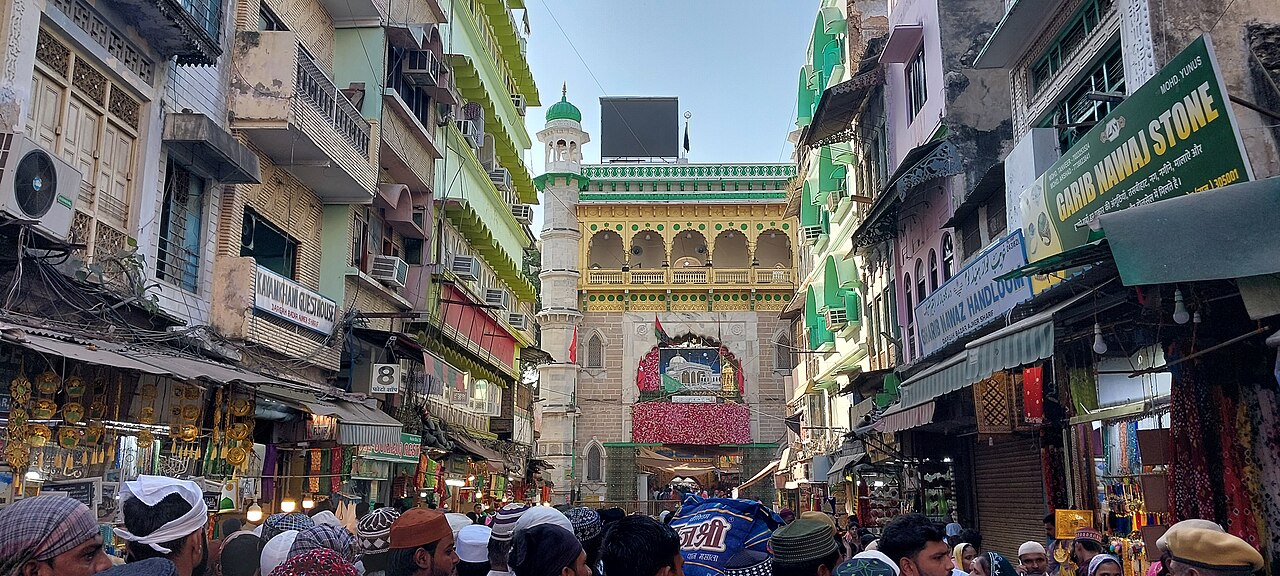
The tomb of Hazrat Khwaja Moinuddin Chishti, Gharib Nawaz, the benefactor of the poor, and the principal Sufi dargah of South Asia, where pilgrims of every community have offered chadars and shared the sweet rice of the great deghs for eight centuries.
Akbarabadi Mosque
Delhi · India · mosque
A mosque raised in 1650 by Akbarabadi Begum, a wife of the Mughal emperor Shah Jahan, in the walled city of Shahjahanabad, demolished by British forces in the aftermath of the 1857 Uprising and today marked only by disputed, unexcavated remains beneath Netaji Subhash Park in Old Delhi.
 Islam
IslamAlamgir Mosque
Varanasi · India · mosque
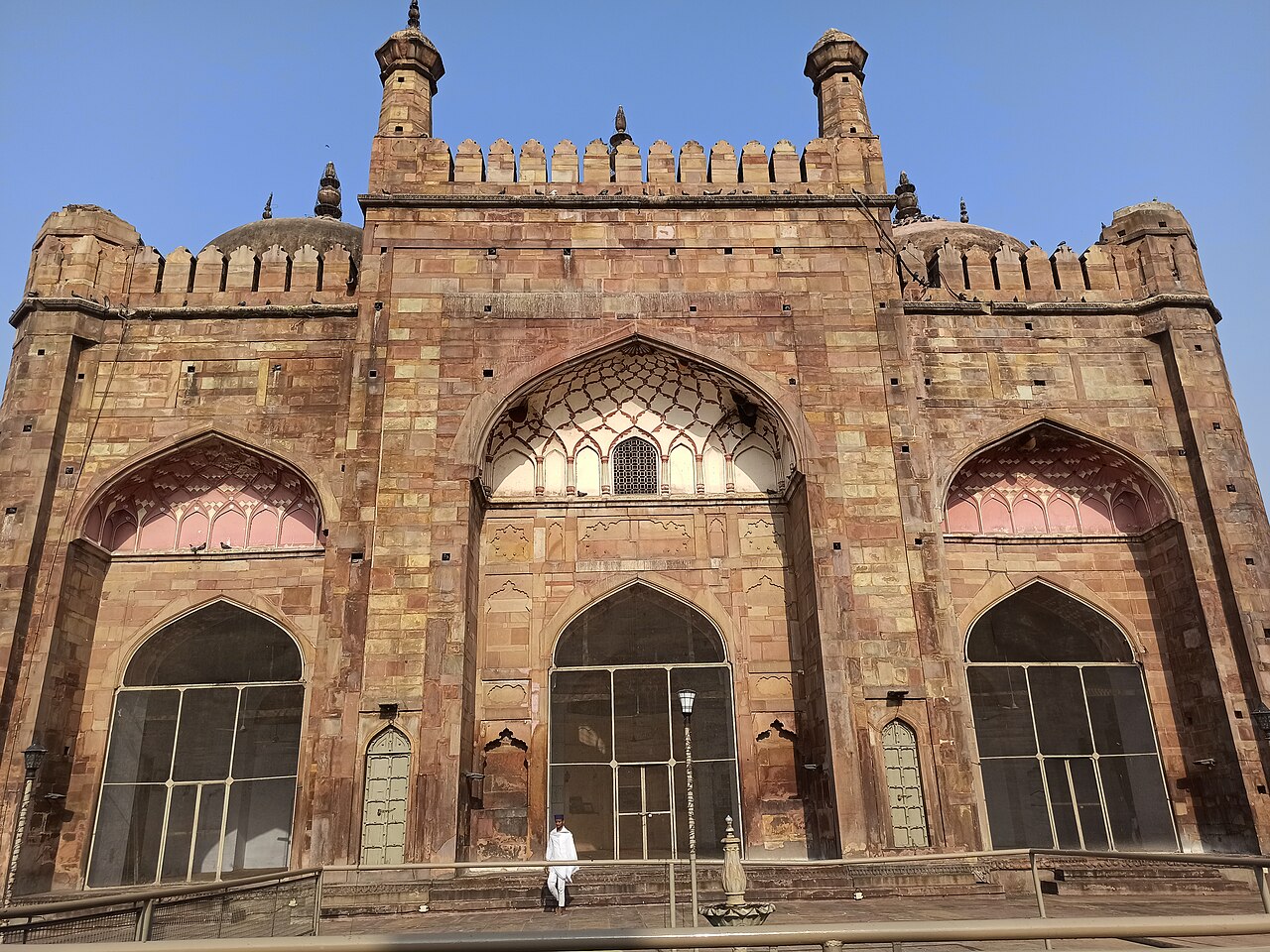
Raised in 1669 by the Mughal emperor Aurangzeb on the high bank above Panchganga Ghat in Varanasi, the Alamgir Mosque stands where wide stone steps meet the Ganges, its domes and surviving corner turret rising over a site earlier accounts describe as the Hindu Temple of Bindu Madhava.