Tulja Bhavani Temple
About
Rising on the Yamunachala hill of the Balaghat range, near where the Bori River (once called the Mandakini) flows past Tuljapur in the Dharashiv district of Maharashtra, the Tulja Bhavani Temple has stood since the twelfth century CE, some 45 kilometres northeast of Solapur.
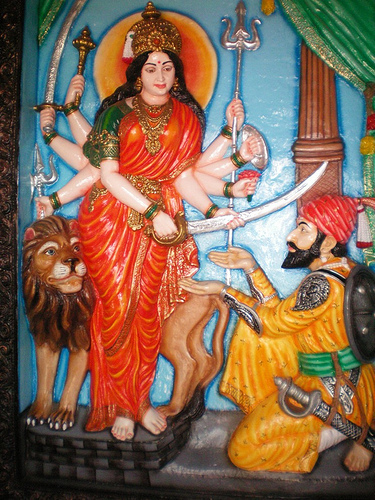
Within the complex, pilgrims pass through three named gateways, the Sardar Nimbalkar entrance and two more honouring Shahaji and Jijabai, parents of the Maratha king Chhatrapati Shivaji, who is remembered as a devoted visitor to this shrine. Along the path stand shrines to Markandeya Rishi, Siddhi Vinayak, and Adi Maya, together with two sacred bathing tanks, Gomukh Theerth and Kallol Theerth, where devotees pause before entering the sanctum. The image of the Goddess herself, three feet in height and carved from granite, bears eight arms and the head of the demon Mahishasura beneath her feet, and is described in tradition as swayambhu, arisen of her own accord rather than fashioned by human hands.
The temple's wider precincts hold further shrines, to Matangi Devi, Annapurna, Datta, and to Yamai Devi, an elder sister of Bhavani in local reckoning, whose presence here lets pilgrims honour both goddesses in a single visit. Daily worship follows an old rhythm: the deity receives a ritual bath, fresh garments, and offerings of food four times over the course of the day, closing each evening as she is ceremonially laid to rest.
Oversight of the temple's daily affairs falls to a trust led by the District Collector, with representation from the local legislative member, the town's mayor, and the subdistrict revenue officer. Unlike many Maharashtrian temples served by Brahmin priesthoods, the principal rites at Tulja Bhavani are performed by priests of the Maratha Palikar and Bhope clans, who also host pilgrims through long-standing hereditary ties, offering lodging, meals, and the ritual articles that accompany worship here.
History
The temple was raised in the twelfth century CE under the patronage of Mahamandaleshwara Māradadeva of the Kadamb line. An early account of the Goddess's arrival at this hillock appears in the Skanda Purana: after the sage Kardama died, his widow Anubhuthi undertook a penance here on the banks of the Mandakini in the Goddess's name, seeking to protect their infant child. When two demons known together as Madhu-Kaitabha tried to break her penance, Bhavani came to Anubhuthi's aid and slew them, and thereafter, answering the prayers of a devoted follower, made her home on the Yamunachala hillock, where in time the temple rose around her.
On the ninth day of the autumn Navratri festival, coinciding with Dussehra, the temple observes a goat sacrifice carried out by priests of the Mahar community, who also serve at the adjoining Matangi Devi shrine within the complex.
Significance
Tuljapur's temple is counted among the fifty-one Shakti Pithas, the scattered seats where devotees believe the Goddess manifests in her fullest power, and is named together with the Renuka temple at Mahur, the Mahalaxmi temple at Kolhapur, and the Saptashringi temple at Vani as one of the four great Shaktipithas of Maharashtra. Bhavani is understood as a form of the goddess Durga, worshipped widely across Maharashtra, Gujarat, Rajasthan, northern Karnataka, Andhra Pradesh, Telangana, and Nepal, and she is revered as kuldevi, or clan goddess, by numerous Maratha lineages and by many other Marathi communities across the social spectrum.
Visiting
Engage with Tulja Bhavani Temple
Through the four pathways
Seva सेवा — Service
Offer your time and skills here. The following opportunities are open at Tulja Bhavani Temple:
No Seva offerings listed yet.
Sādhana साधना — Practice
Learn the worship and practice associated with Tulja Bhavani Temple:
No Sādhana offerings listed yet.
Sandhāna सन्धान — Wisdom
Unite with the wisdom of this tradition:
No Sandhāna offerings listed yet.
Sādhya साध्य — Giving
Support this sacred place according to your means:
No Sādhya offerings listed yet.
All giving flows directly to Tulja Bhavani Temple. Adisthan does not take a commission.
Related sacred places
 Hinduism
Airavatesvara Temple
· India · temple
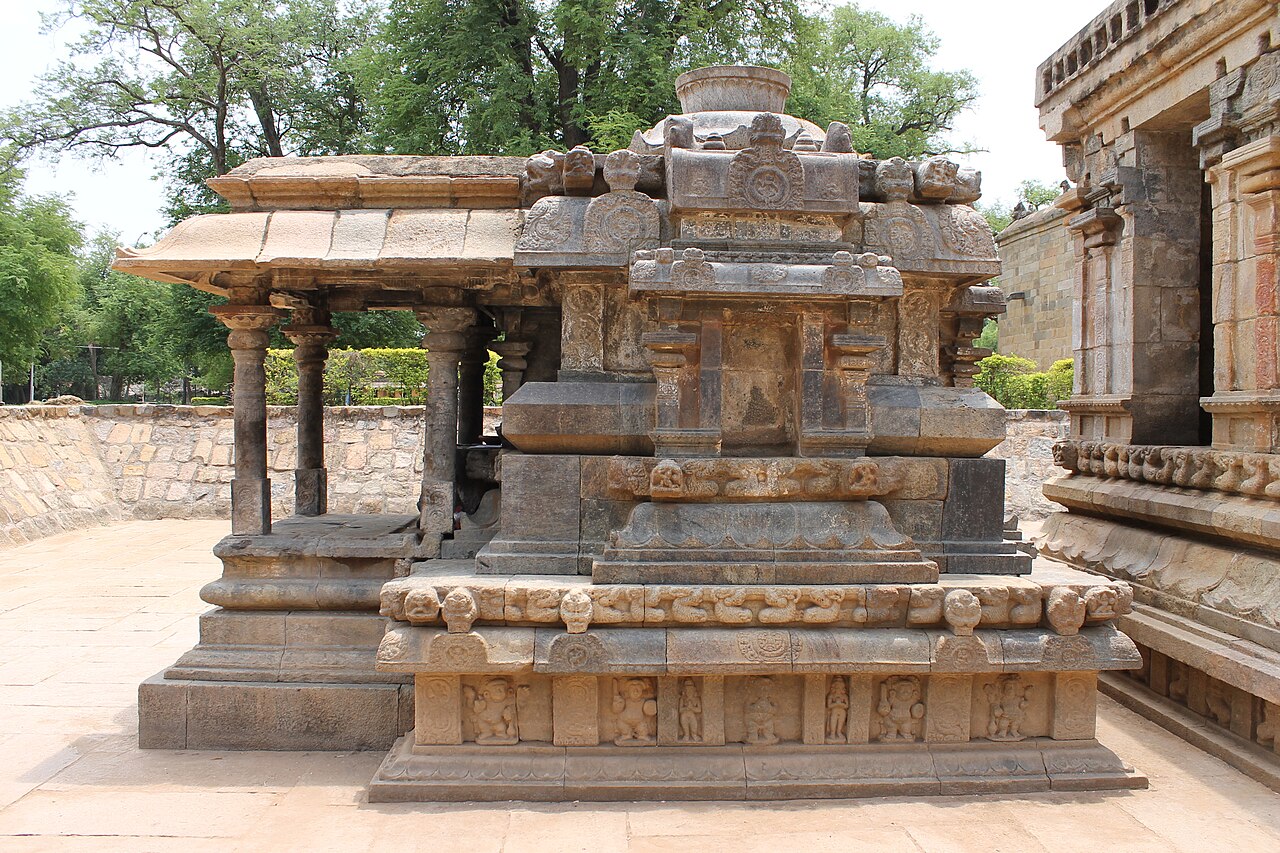
A jewel of 12th-century Chola craftsmanship at Darasuram near Kumbakonam in Tamil Nadu, this Śaiva shrine dedicated to Lord Śiva stands among the UNESCO-listed Great Living Chola Temples for its extraordinary sculptural refinement.
Aisanyesvara Siva Temple
· India · temple
A living Śaiva temple from the thirteenth century, nestled near the western boundary of the great Lingarāja complex in Bhubaneswar, Odisha, where a Śivaliṅgam receives daily worship and the sacred rhythms of the liturgical year continue unbroken.
 Hinduism
Akhadachandi Temple
· India · temple
A 10th-century Hindu temple in the heart of Bhubaneswar's old town, Akhadachandi Temple stands on the southwestern shore of the sacred Bindusagar tank, honouring the goddess Mahiṣāsuramardinī in the ancient Kalinga style.
 Hinduism
Akshardham
· India · temple
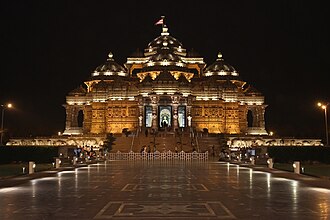
Swaminarayan Akshardham in Delhi is a vast Hindu mandir complex dedicated to devotion, learning, and harmony, drawing millions of pilgrims each year to its intricately carved sandstone and marble monument on the Yamuna's western bank.
 Hinduism
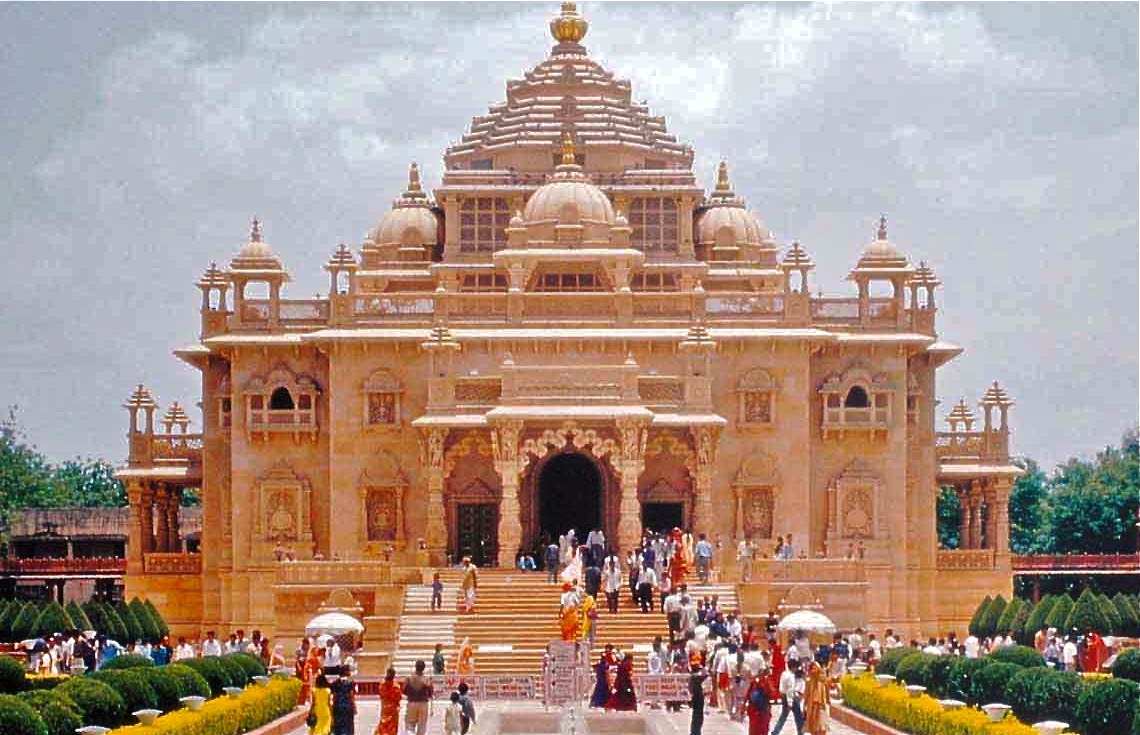
Akshardham (Gandhinagar)
· India · temple
A vast spiritual and cultural complex in Gujarat's capital, Gandhinagar, Swaminarayan Akshardham was conceived through the vision of Yogiji Maharaj and realized by Pramukh Swami Maharaj — a living testimony to the BAPS tradition's commitment to devotion, learning, and harmony.
 Hinduism
Alopi Devi Mandir
· India · temple
Alopi Devi Mandir is a Hindu temple in the Alopibagh neighborhood of Prayagraj, Uttar Pradesh, close to the sacred Sangam where the Ganges, the Yamuna, and the legendary Sarasvati are believed to converge.