
Ugratara Sthan
About
In the village of Mahishi, within the Saharsa district of Bihar, stands Ugratara Sthan, a shrine counted among the Shaktipeethas of the Mithila region. Devotees also know it as Ugratara Mandir, or by the name Tarapith, and its Maithili name, उग्रतारा स्थान, is still spoken by pilgrims from the surrounding countryside. The site lies roughly 17 kilometres to the west of Saharsa Railway Junction, reachable by those willing to journey beyond the town into Mithila's quieter reaches.
The shrine has long been recognized as a place given over to Tantra Sadhana within Hinduism, its age and continuous use marking it as one of the region's most ancient centers of goddess worship. The structure that pilgrims visit today was raised in the 16th century under the patronage of Queen Padmavati of the Raj Darbhanga, the ruling house of Mithila, whose support gave the older shrine the temple form it retains into the present.
The name Ugratara joins two Sanskrit roots: ugra, meaning something difficult or severe, and Tara, one of the forms of the goddess Bhagwati. Tradition holds that the Vedic sage Vashishtha undertook an extraordinarily demanding penance, called an ugratapa, at this spot in order to win the goddess Tara's favor. Because that first devotee's austerity was so exacting, the goddess who answered him came to be called Ugratara, and the shrine has carried her name ever since.
History
The temple that now stands at Mahishi dates to the 16th century, when Queen Padmavati of the Raj Darbhanga, Mithila's royal house, financed its construction. Yet the site's sanctity predates that structure by a great deal, since local memory and Tantric tradition trace its origins to the sage Vashishtha's austerities performed in honor of the goddess Tara, making the present building a comparatively recent expression of a much older devotion.
Significance
Ugratara Sthan holds its place among the Shaktipeethas, the network of sites across the subcontinent sacred to the goddess in her many forms, and within Mithila it is particularly known as a center of Tantra Sadhana, the disciplined practices through which seekers approach the divine feminine. Its name itself preserves a teaching: that Ugratara, the goddess reached through the sage Vashishtha's severe penance, meets fierce dedication with her own grace, a story that continues to shape how pilgrims understand their visit to this shrine.
Visiting
Engage with Ugratara Sthan
Through the four pathways
Seva सेवा — Service
Offer your time and skills here. The following opportunities are open at Ugratara Sthan:
No Seva offerings listed yet.
Sādhana साधना — Practice
Learn the worship and practice associated with Ugratara Sthan:
No Sādhana offerings listed yet.
Sandhāna सन्धान — Wisdom
Unite with the wisdom of this tradition:
No Sandhāna offerings listed yet.
Sādhya साध्य — Giving
Support this sacred place according to your means:
No Sādhya offerings listed yet.
All giving flows directly to Ugratara Sthan. Adisthan does not take a commission.
Related sacred places
 Hinduism
Airavatesvara Temple
· India · temple
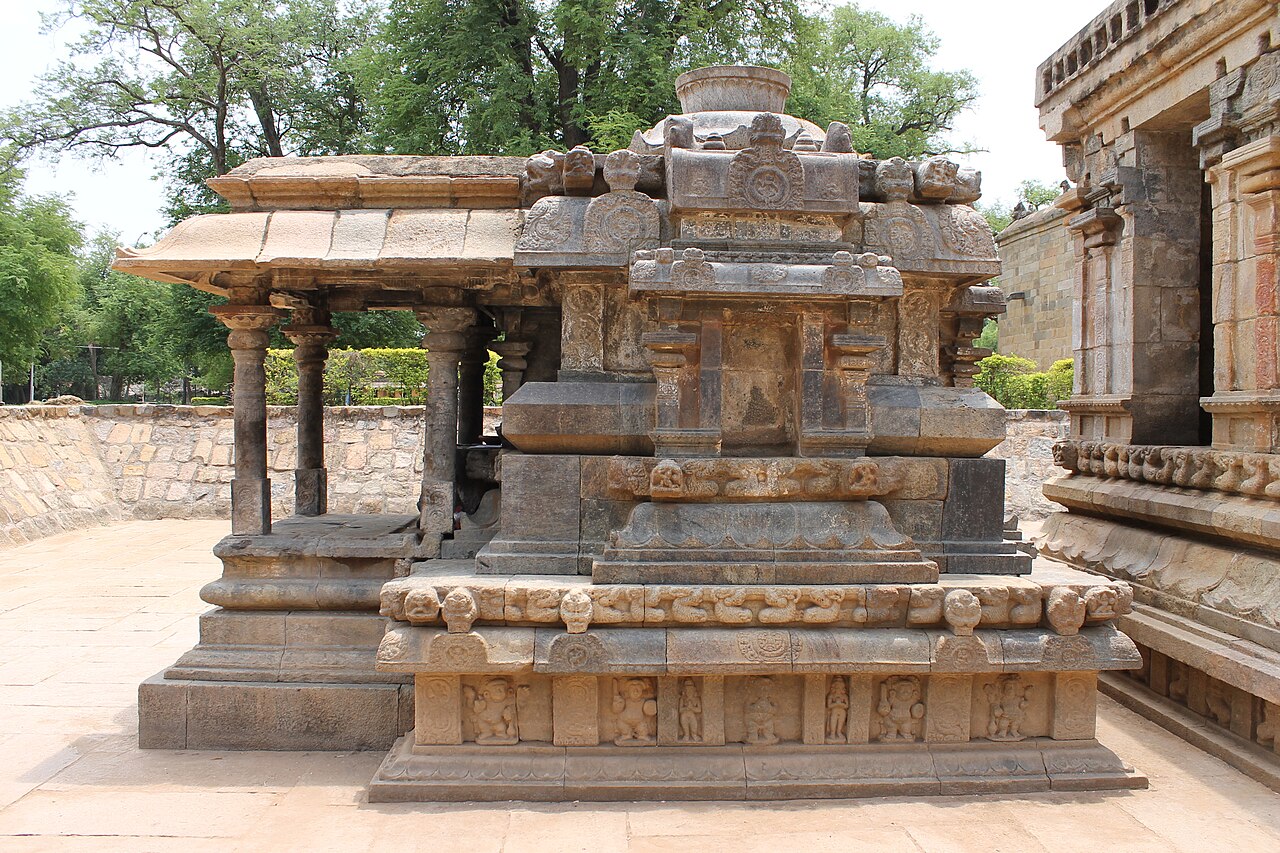
A jewel of 12th-century Chola craftsmanship at Darasuram near Kumbakonam in Tamil Nadu, this Śaiva shrine dedicated to Lord Śiva stands among the UNESCO-listed Great Living Chola Temples for its extraordinary sculptural refinement.
Aisanyesvara Siva Temple
· India · temple
A living Śaiva temple from the thirteenth century, nestled near the western boundary of the great Lingarāja complex in Bhubaneswar, Odisha, where a Śivaliṅgam receives daily worship and the sacred rhythms of the liturgical year continue unbroken.
 Hinduism
Akhadachandi Temple
· India · temple
A 10th-century Hindu temple in the heart of Bhubaneswar's old town, Akhadachandi Temple stands on the southwestern shore of the sacred Bindusagar tank, honouring the goddess Mahiṣāsuramardinī in the ancient Kalinga style.
 Hinduism
Akshardham
· India · temple
Swaminarayan Akshardham in Delhi is a vast Hindu mandir complex dedicated to devotion, learning, and harmony, drawing millions of pilgrims each year to its intricately carved sandstone and marble monument on the Yamuna's western bank.
 Hinduism
Akshardham (Gandhinagar)
· India · temple
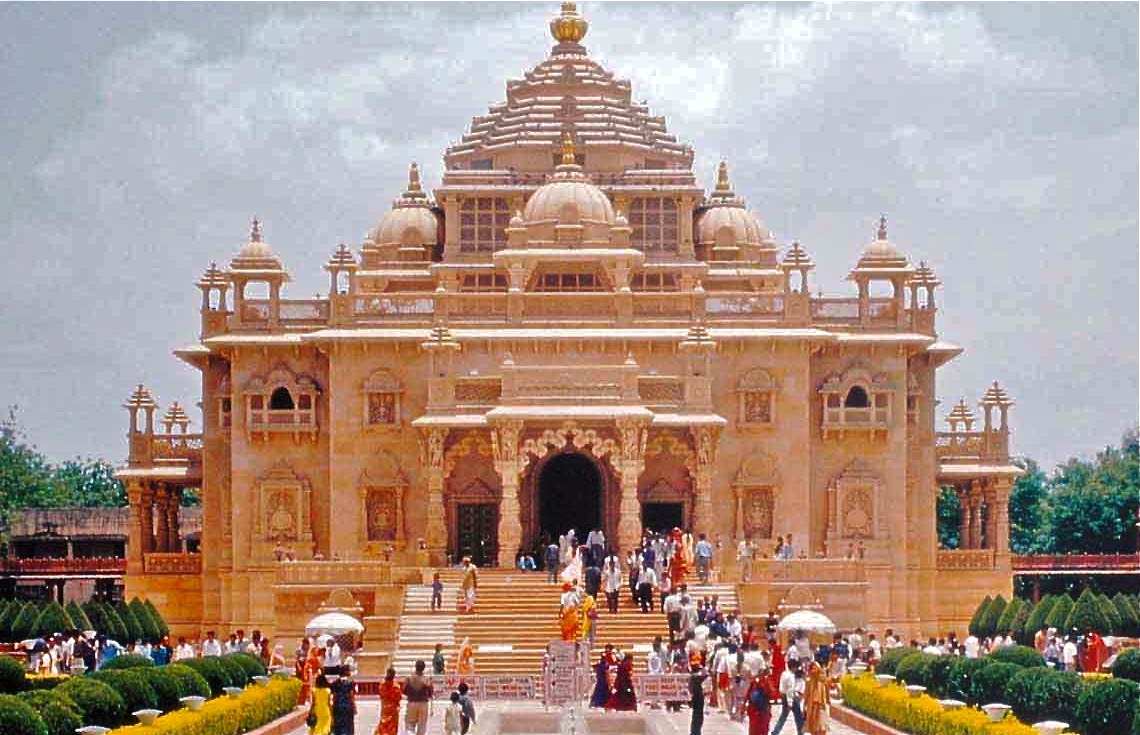
A vast spiritual and cultural complex in Gujarat's capital, Gandhinagar, Swaminarayan Akshardham was conceived through the vision of Yogiji Maharaj and realized by Pramukh Swami Maharaj — a living testimony to the BAPS tradition's commitment to devotion, learning, and harmony.
 Hinduism
Alopi Devi Mandir
· India · temple
Alopi Devi Mandir is a Hindu temple in the Alopibagh neighborhood of Prayagraj, Uttar Pradesh, close to the sacred Sangam where the Ganges, the Yamuna, and the legendary Sarasvati are believed to converge.